


We see small steering and tire issues long before they become big bills. Driving around san antonio can nudge your suspension out of spec, and those changes often show up slowly. Catching them early protects your car, your tires, and your budget.
At Heaven Automotive, our team gives clear, practical answers on whether a check is needed now or can wait. We explain common symptoms—pulling, vibration, uneven wear, and off-center steering—and tell you what each one usually means.
Proper wheel alignment is crucial for longevity and performance. It helps prevent uneven tire wear, improves fuel efficiency, and supports a smoother, safer drive. We preview what an appointment looks like so you know the value of a quick check.
When signs appear, don’t guess. Schedule service with us and get a professional evaluation that keeps your vehicle tracking true on every trip. For local drivers, including those searching for wheel alignment San Antonio, we offer straightforward guidance and reliable results.
Key Takeaways
- Watch for gradual symptoms like pulling and uneven wear.
- Early checks save money and extend tire life.
- Heaven Automotive offers clear, professional evaluations.
- An appointment is a quick way to improve safety and fuel economy.
- Local driving can shift specs over time; routine checks help.
When to Schedule a Wheel Alignment Check
Notice your car drifting on a flat road? That’s a clear prompt to act. Small changes in handling often start as subtle clues. We recommend a prompt check so minor issues don’t become costly repairs.
Vehicle pulling to one side while driving
If yourvehiclepulls left or right on a flat road, competing tire angles are likely at fault. This is one of the strongest reasons to book anappointmentfor professional inspection.
Uneven or rapid tire wear
Look for inner/outer edge wear, feathering, or one tire wearing faster than the others. Misaligned angles change how a tire contacts the road and speed uptire wear.
Off-center steering wheel when driving straight
An off-centersteering wheelwhile driving straight means steering and suspension settings aren’t synchronized. It may feel minor, but it signals a need for an alignmentservice.
Steering wheel vibration
Vibration can come from unevenly worn tires or angle issues. After inspection, we may recommend corrective adjustments as part of the repair plan.
Noisy steering and tire scrub on turns
Squealing or a scrubby sound on turns often means tires meet the road at the wrong angle. If this starts after a curb hit or bump, don’t wait — schedule anappointmentwith us.
- Pulling, uneven wear, off-center steering, vibration, or noise are clear signs to act.
- After any sudden impact on the road, get a prompt check.
- Early service reduces long-term wear and keeps your ride predictable.
What Causes Wheels to Go Out of Alignment Over Time
Everyday driving stresses quietly add up, nudging vehicle angles out of spec over weeks and months. We see slow shifts from routine turns, driving over uneven pavement, and repeated braking that you might not notice at first.
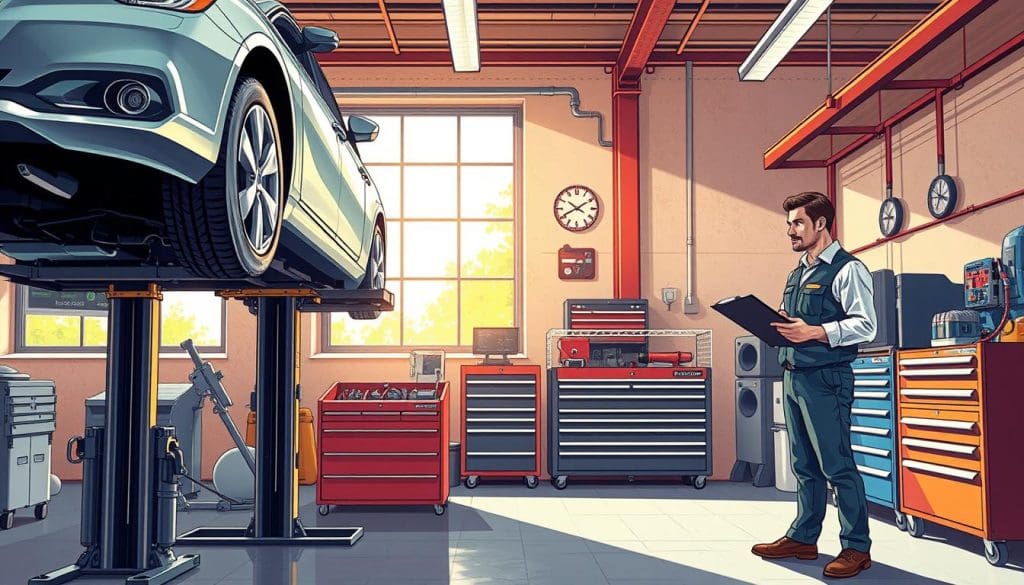
Everyday bumps and turns on local roads
Repeated expansion joints, uneven surfaces, and frequent cornering push suspension parts a little bit each trip. Over time those tiny changes cause uneven tire wear and subtle steering drift.
Potholes, curbs, and minor impacts
A hard hit from a pothole or curb can create an immediate change. Your car may start pulling or the steering can feel light or twitchy right after the event. That sudden shift calls for a quick professional check.
Normal wear in steering and suspension components
Bushings, tie rods, and shocks wear with use. As those parts age, the vehicle struggles to hold correct angles consistently. Braking events can also mimic alignment symptoms, so we rely on a full inspection to find the real cause.
“Rather than guessing, let our experience guide the repair so we fix the root issue the first time.”
Understanding why misalignment happens makes our service steps clearer — what we measure and what we adjust next.
| Cause | Typical Effect | When to Inspect |
|---|---|---|
| Daily bumps and turns | Gradual tire wear, subtle pull | Routine check every few months |
| Pothole or curb impact | Immediate pull, twitchy steering | Inspect right after the event |
| Worn steering/suspension parts | Inconsistent handling, uneven wear | During scheduled maintenance |
Wheel Alignment San Antonio: What We Do During Our Alignment Service
We start by capturing exact angle readings so we know which adjustments your car needs.
Adjusting suspension angles back to factory specs: Our technicians use professional racks and sensors to set caster, camber, and toe to the maker’s specifications. We make careful adjustments until the readings match the factory targets so your vehicle tracks straight and tires wear evenly.
Understanding caster, camber, and toe
Caster is the steering axis tilt that affects straight-line stability.
Camber is the inward or outward tilt of a tire when viewed from the front.
Toe is how much the tires point inward or outward from above. Small angle changes can make big handling or tire wear differences.
Visual inspection of steering and suspension systems
We perform a full inspection of tie rods, bushings, and shocks to find any worn parts. If a component is failing, we tell you before making adjustments so the correction will hold.
Checking tire condition and setting tire pressure as needed
Incorrect tire pressure can mimic handling problems. We check tread, sidewall condition, and set pressure to spec as part of the service.
“We explain what we found, what we adjusted, and our recommendations before you leave.”
- Precise measurement and adjustment to factory specs.
- Inspection to identify worn parts that block a lasting repair.
- Tire checks and pressure settings included in the service.
- Clear explanation of findings and next steps at the end of the appointment.
| Step | What We Do | Why It Matters |
|---|---|---|
| Measure angles | Record caster, camber, and toe with sensors | Shows exact deviations from factory specs |
| Adjust settings | Fine-tune suspension to spec | Improves handling and tire life |
| Inspect components | Check steering, bushings, shocks | Identifies worn parts that can cause repeat issues |
| Tire & pressure check | Assess tread and set correct PSI | Prevents false diagnostics and improves safety |
Why Proper Alignment Matters for Your Car, Tires, and Safety
Small angle corrections deliver big returns: better gas mileage, longer tire life, and steadier handling that you feel every day. Keeping factory specs reduces irregular tread patterns and extends the life of your tires.
More even tire wear and longer tire life
Correct setup spreads road contact evenly across the tread. That stops one edge from wearing fast and helps tires last longer.
Improved fuel efficiency and reduced rolling resistance
When tires roll straight, your car needs less energy to move. That improves fuel efficiency and lowers fuel costs over time.
Better handling, steering response, and ride comfort
A properly set suspension gives more predictable cornering and fewer mid-drive corrections at the steering wheel. That makes daily driving calmer and safer.
Protecting suspension components and overall vehicle longevity
Misaligned angles add stress to parts like tie rods and bushings. Routine checks prevent premature wear and save on bigger repairs later.
- Our technicians measure and correct angles for measurable results.
- We deliver improved efficiency, safer handling, and lower long-term costs.
- Alignment is one of the highest-ROI maintenance services to protect expensive tires and your ride.
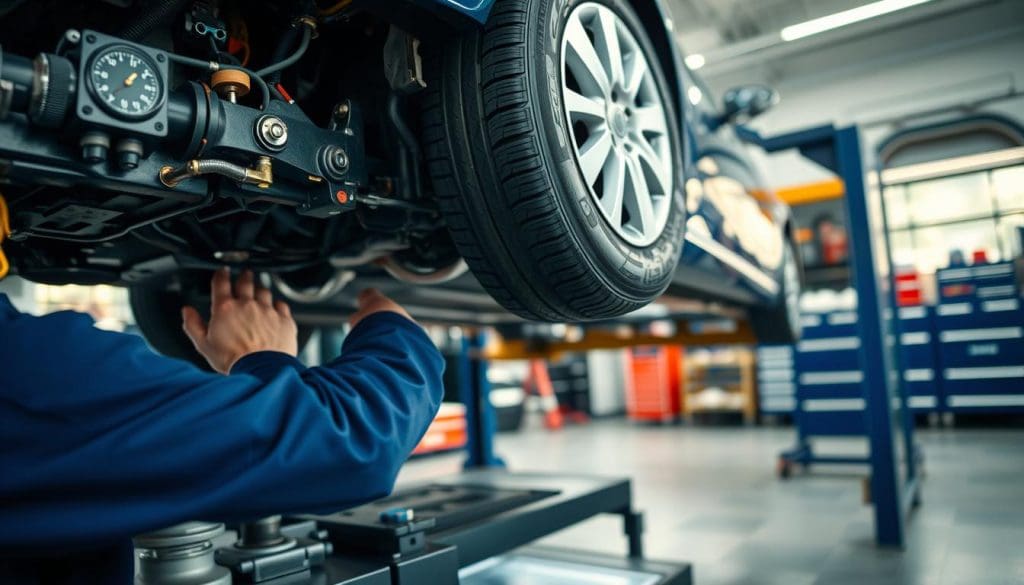
“Choose Heaven Automotive for clear results and a safer, more efficient drive.”
How Often We Recommend Alignment Services
Timing a check makes a big difference for handling and tire life. We recommend regular inspections tied to common maintenance so your car stays predictable on the road.
After new tire installation, rotations, or balancing
Install new tires? Book an inspection right away. Rotations and balancing are perfect times to re-check angles so uneven tire wear doesn’t start on a fresh set.
About every 6,000 miles or at the first sign
We suggest a check roughly every 6,000 miles, or immediately if you notice pulling, vibration, or odd tread wear. Commuters and frequent city driving in san antonio should be especially attentive.
Before longer trips for better stability and efficiency
Check alignment before long drives, and when you pair this with an oil change it’s easy to keep service visits efficient. If you hit a curb, pothole, or have recent brake work, schedule an appointment promptly.
- Protect new tires: inspect after installation.
- Use rotations: catch developing issues early.
- Pair services: combine with oil change for convenience.
Our technicians will confirm whether an adjustment is needed or if another component is affecting your vehicle’s handling.
Conclusion
Catching problems early saves time and money. Look for pulling, uneven tire wear, an off-center steering wheel, vibration, or noise on turns. These signs usually mean an angle issue or worn suspension parts that will shorten tire life if ignored.
Our service includes precise measurement against factory specs, careful adjustments, and a full inspection of steering and suspension so the fix holds. The practical payoff is clear: more even tire performance, better handling, and fewer surprises on the road.
Don’t delay—especially after a pothole, curb hit, or braking pull. Schedule an appointment with our team for a professional inspection and get your vehicle back to smooth, predictable tracking. Hire Heaven Automotive to fix your vehicle.