

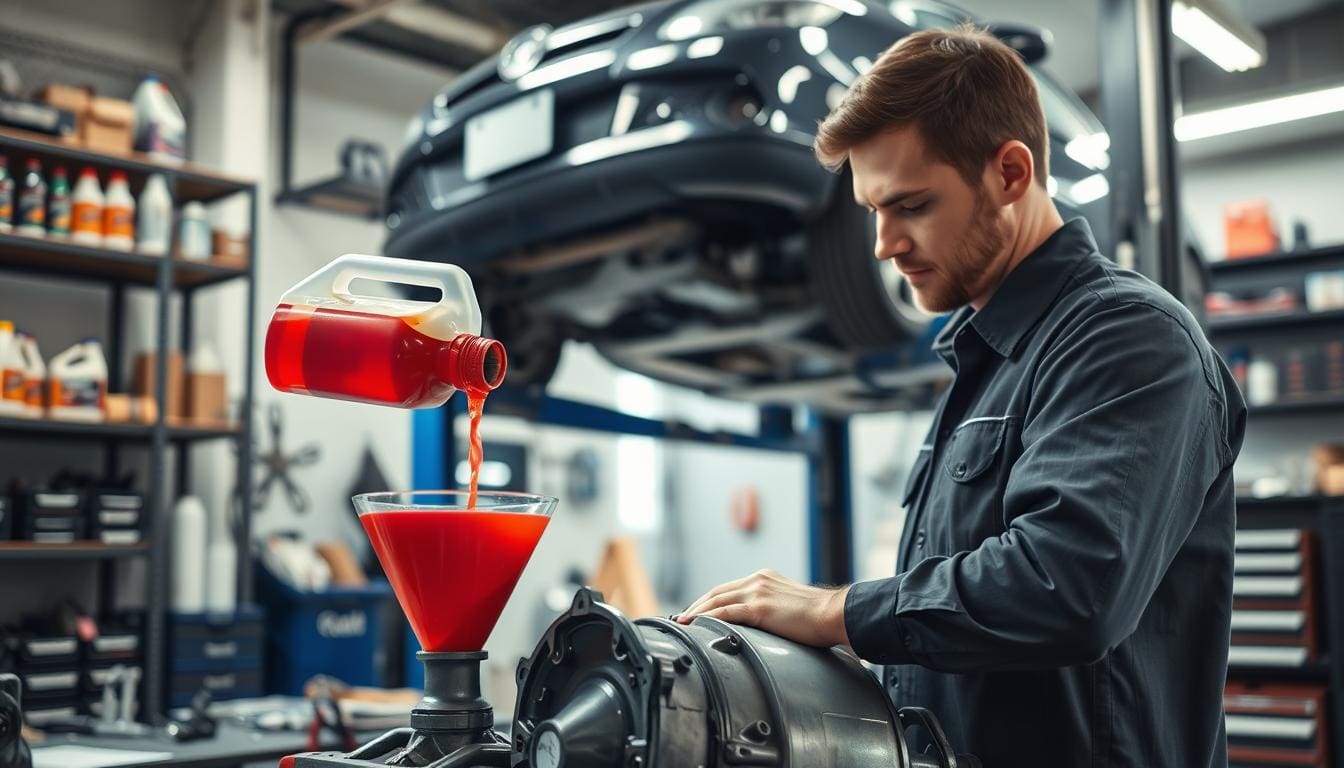
Heaven Automotive defines a routine transmission fluid service as the work we do to keep shifting smooth and prevent costly repairs. Over time, heat, friction, and contaminants make the lubricant less effective. That reduces drivability and can shorten the life of major components.
There is no single perfect interval for every car. Mileage, time, and the manufacturer’s schedule all matter. A common guideline is near 30,000 miles or about every two years, but your owner’s manual is the final word.
We will explain the main options—simple change, flush, and exchange—so you can compare choices before you book. We also describe warning signs that mean you should not wait and outline our process at Heaven Automotive.
Choosing the right work now usually costs far less than repairing a failed unit later. Contact us when you want clear advice and professional care for your vehicle. We invite you to hire Heaven Automotive to inspect and protect your drive train today.
Key Takeaways
- Routine maintenance keeps shifts smooth and avoids major repairs.
- Follow the owner’s manual; many vehicles suggest near 30,000 miles or two years.
- Options include change, flush, and exchange—each fits different needs.
- Bad smells, rough shifts, or leaks are signs you should act now.
- Heaven Automotive offers professional evaluation and repair to save you money long term.
Why Transmission Fluid Matters for Smooth Shifting and Transmission Life
What runs through the valve body and clutch packs determines how well your vehicle shifts. In an automatic setup, the valve body directs hydraulic paths that apply clutch packs or bands at precise moments. Clean, properly conditioned transmission fluid is the medium that makes that timing reliable.
How it supports valve body operation, clutch packs, and bands
We rely on the hydraulic power of the system to transfer pressure and engage the right components. That pressure comes from the lubricant moving through valves and servos.
What heat, friction, and contaminants do over time
Heat and friction break down additives and reduce protective qualities. Small abrasive particles or varnish hamper valve movement and cause sluggish shifts or slipping.
“Routine checks and timely maintenance are the most practical ways to protect transmission life and avoid costly repairs.”
- Roles: lubrication, cooling, pressure transfer, and contaminant suspension.
- Risks: degraded oil raises temperatures and wear, harming component life.
- Reality check: ‘lifetime’ claims depend on driving conditions and definitions; inspections still matter.
When to Service Transmission Fluid Based on Mileage, Time, and Your Manufacturer Schedule
Routine intervals vary by make, model, and how you drive each day. A common industry rule of thumb is near 30,000 miles or about every two years. Still, the owner’s manual is the ultimate schedule for your vehicle.
We follow manufacturer guidance when planning maintenance. That helps us pick the right transmission maintenance services for each make and model. Some cars only need a simple change. Others call for a transmission flush or a full exchange at set milestones.
Hard driving raises heat and shortens lubricant life. Stop-and-go traffic, towing, mountain driving, hot climates, and many short trips all increase temperature cycles. Heat breaks down additives faster, so earlier attention may be wise even with low miles.
- Rule of thumb: ~30,000 miles or ~2 years
- Follow the owner’s manual for exact intervals
- High heat or heavy use can require earlier work
| Factor | Effect on Life | Common Recommendation |
|---|---|---|
| Normal driving | Standard wear | 30,000 miles / 2 years |
| Towing/hauling | Higher heat, faster breakdown | Shorten interval; inspect sooner |
| City stop-and-go | Frequent temp cycles | Consider earlier maintenance |
| Hot climates | Increased oxidation | Monitor and replace sooner |
Symptoms can override mileage and time rules. If the car shows rough shifts, slipping, or warning lights, we recommend an immediate inspection rather than waiting for the next scheduled interval. In the next section we will cover common signs that mean you should act now.
Signs Your Vehicle May Need Transmission Maintenance Sooner
Pay attention to odd behavior from your car—small symptoms often signal a larger problem.

Slipping, surging, or unexpected lunging
Slipping gears or sudden surges under load often point to pressure or control problems. These symptoms can worsen if old fluid has degraded or is contaminated.
Grinding, whining, clunking, or roaring noises
Abnormal sounds during shifts or turns suggest mechanical wear or inadequate lubrication. Prompt attention can prevent a minor issue from turning into a major repair.
Warning lights and diagnostics
A check engine or transmission warning light may reveal codes that indicate specific issues. We recommend a full diagnostic check before choosing work so we confirm the root cause.
- Stop driving if the car lurches severely or slips repeatedly.
- Schedule an appointment for a proper inspection and diagnostic check.
- Let us determine whether the fix is preventive maintenance or a repair to protect your vehicle.
Transmission Fluid Change vs. Transmission Flush vs. Fluid Exchange
We define three common options so you can pick what fits your vehicle and goals. A transmission fluid change (drain-and-fill) is a basic preventive step. A transmission flush uses equipment to move fluid through the whole loop. A fluid exchange replaces nearly all old liquid across the system.
Drain-and-fill basics: what’s removed from the transmission pan
A drain-and-fill accesses the transmission pan and removes the fluid that collects there. That pan holds only part of the total volume.
For many cars, this change refreshes the pan contents and is fine for routine upkeep.
Why a fluid exchange is more complete for automatic transmissions
A proper fluid exchange pushes out fluid from lines, cooler, and the torque loop so nearly all old fluid is replaced. That makes it more thorough than a simple change or a basic flush.
The torque converter and cooler: where old fluid can remain without an exchange
The torque converter and cooler often hide about 30% of the old fluid after a simple pan drain. That leftover can keep contaminants in circulation and harm shift quality and long-term wear.
Practical takeaway: match the work to the vehicle’s condition and the maker’s guidance rather than choosing the most expensive option by default.
What Our Transmission Fluid Service Includes at Heaven Automotive
We begin every appointment with a targeted courtesy check to spot related issues that affect results. This quick inspection looks for visible leaks, wiring faults, and anything that might change what work we recommend.
Pan removal and contaminant inspection
When applicable, we remove the pan and discard old fluid responsibly. We inspect the pan for metal particles or other contaminants that hint at internal wear.
Filter and screen care
Our service includes filter replacement and cleaning of the transmission screen when the design has one. Fresh filters help maintain cleaner flow and protection for internal parts.
Gasket and sealing attention
We replace the pan gasket or renew pan sealing material to ensure a reliable seal. Proper gasket pan sealing reduces leak risk after reassembly.
Final checks and follow-up
We finish with a road test and a leak check to confirm smooth operation. If contaminants suggest deeper problems, we explain options and recommend further diagnostics or repair.
“Clear inspection and honest recommendations are part of our process—so you understand what the work includes and why it matters.”
Choosing the Right Service for Your Car, Truck, or SUV
Picking the correct work starts with a quick check of condition, symptoms, and the vehicle’s history. We combine that evidence with the maker’s recommended schedule to pick the safest plan.

How we match type to condition, symptoms, and guidance
Our expert technicians inspect the dipstick, run a short test drive, and review prior records. We look for leaks, overheating, or odd shifting that point to deeper issues.
When a standard transmission fluid change makes sense
A basic transmission fluid change is ideal when the liquid looks clean and the goal is routine transmission maintenance. It fits many commuter cars and well-kept family SUVs as preventive care.
When a more thorough transmission flush or fluid exchange is recommended
If the liquid is dark, shifting is inconsistent, or overheating occurred, we may recommend a transmission flush or a fluid exchange. Those options remove more contaminants and restore proper operation in affected vehicles.
- We avoid guesswork: diagnosis first, then clear recommendations.
- Practical care: choose work based on condition, use, and maker guidance.
How Transmission Maintenance Helps You Avoid Costly Repairs
A planned maintenance routine saves money by stopping damage that starts from grit and varnish. We focus on practical steps that reduce wear and keep your vehicle running reliably.
Reducing abrasive debris, varnish, and sludge that wear internal components
A full flush can clear debris, varnish, and sludge that abrade bearings and clutches. Removing contaminants early prevents metal wear and helps avoid major repair bills.
Supporting cleaner, quicker shifting and improved drivability
Clean fluid keeps hydraulic pressure stable so shifts stay crisp and predictable. That improves drivability and restores lost power during acceleration.
Protecting your investment by extending transmission lifespan
Routine upkeep in the low hundreds of dollars usually costs far less than a major repair or replacement. We help you keep car ownership predictable with fewer surprises and longer component life.
“Preventive care reduces heat, friction, and costly wear before repair becomes the only option.”
- We explain how timely maintenance reduces abrasive particles and varnish buildup.
- We connect clean lines to quicker shifts and better power delivery.
- We show the financial logic: planned work saves money over a major repair.
What to Expect for Time and Cost When You Schedule Service
Knowing how long a visit will take helps you decide whether to wait or leave your vehicle with us. We aim to give realistic timing and clear cost expectations when you book an appointment.
Typical time ranges
A basic fluid change usually takes about 20–30 minutes. A transmission flush typically runs 30–40 minutes.
Some premium options—flush plus filter and gasket—can take up to 75 minutes depending on access and parts needed.
Cost expectations and repair planning
Routine maintenance services commonly cost in the low hundreds. Major repair work or a full replacement is far more expensive because of parts and labor.
We recommend getting a quote before repair so you know the plan and price. We will never start without your agreement.
How to schedule and what to tell us
When you call to make an appointment, tell us your vehicle make, year, symptoms, and recent history. That helps our advisors prepare and set a realistic schedule.
| Work | Typical Time | Typical Cost |
|---|---|---|
| Drain-and-change | 20–30 minutes | Low hundreds |
| Flush | 30–40 minutes | Low to mid hundreds |
| Flush + filter/gasket | Up to 75 minutes | Depends on parts |
“Clear timing and transparent pricing make it easy to view maintenance as an investment in reliability.”
Conclusion
Making the right call on upkeep starts with clear facts, not guesswork. , We follow the owner’s schedule, note how you drive, and act fast when symptoms appear.
Choose between a drain-and-fill, a transmission flush, or a full fluid exchange by how much old liquid remains and the vehicle’s condition. AAMCO Power Purge® and Power Purge® Plus are industry names for exchange-style work that aim for a more complete replacement and include post-work checks.
Practical takeaway: the best option matches manufacturer guidance and the car’s current state. Timely maintenance reduces heat, friction, and contaminants to improve shifting and extend component life.
Hire Heaven Automotive to inspect and recommend the right service for your car, truck, or SUV. Contact us to schedule today.