Overheating is not a wait-and-see problem. We see how a brief spike in engine temperature can turn a simple cooling issue into major damage in a single drive. At Heaven Automotive, we urge prompt action when warning signs appear.
The engine creates friction and heat as it runs. A properly working radiator and coolant move that heat away so the car stays in a safe range.
Common warning signs include a rising gauge, steam, a sweet smell, or puddles under the vehicle. We focus on accurate diagnosis and targeted repair so the problem does not return. If the temperature climbs or you spot these signs, schedule service quickly with Heaven Automotive to avoid costly damage.
Key Takeaways
- Overheating can cause severe engine damage fast.
- Cooling components and coolant work together to control temperature.
- Watch for rising gauge, steam, sweet odors, or fluid leaks.
- We prioritize precise diagnostics and long-lasting fixes.
- Contact Heaven Automotive promptly to schedule service and protect your vehicle.
How Engine Overheating Damages Critical Components Fast
Heat builds quickly when moving metal surfaces and combustion work together inside an engine. We explain why a functioning heat loop matters and what can fail when it does not.

Why the radiator matters for safe operating temperature
The radiator and coolant are the loop that moves heat away from the block. Without that flow, temperature rises and metal parts overheat.
What overheating can trigger in minutes
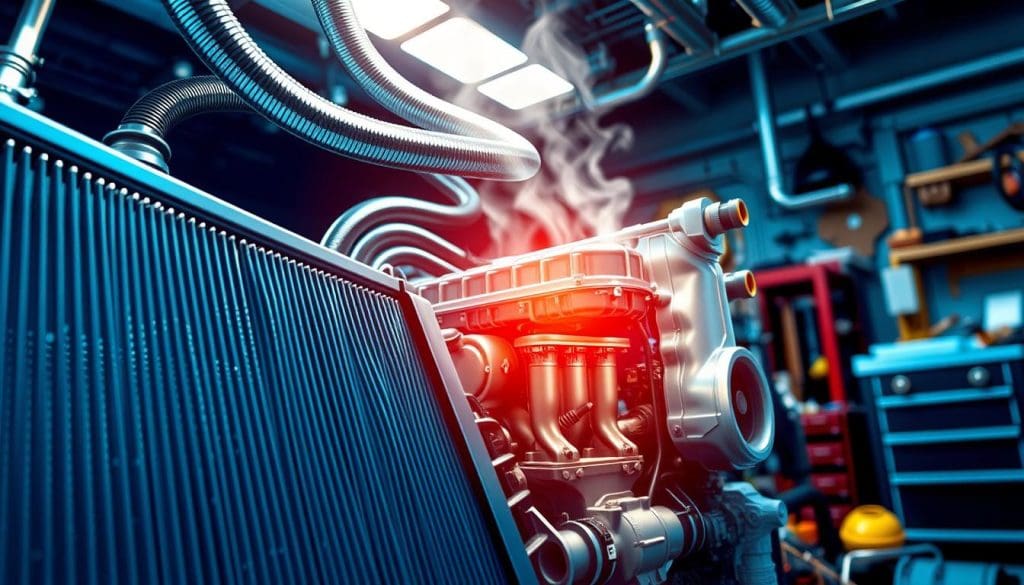
A stuck thermostat can block flow and let the engine overheat within minutes. When coolant can’t circulate, metal warps and seals fail. Oil film breaks down and small issues become major problems.
How one event can snowball into bigger failures
Overheating can damage head gaskets and let exhaust gases force air into the system. That extra pressure makes leaks worse and turns a cooling problem into an engine-level repair.
“Acting fast is the difference between a simple fix and months of engine work.”
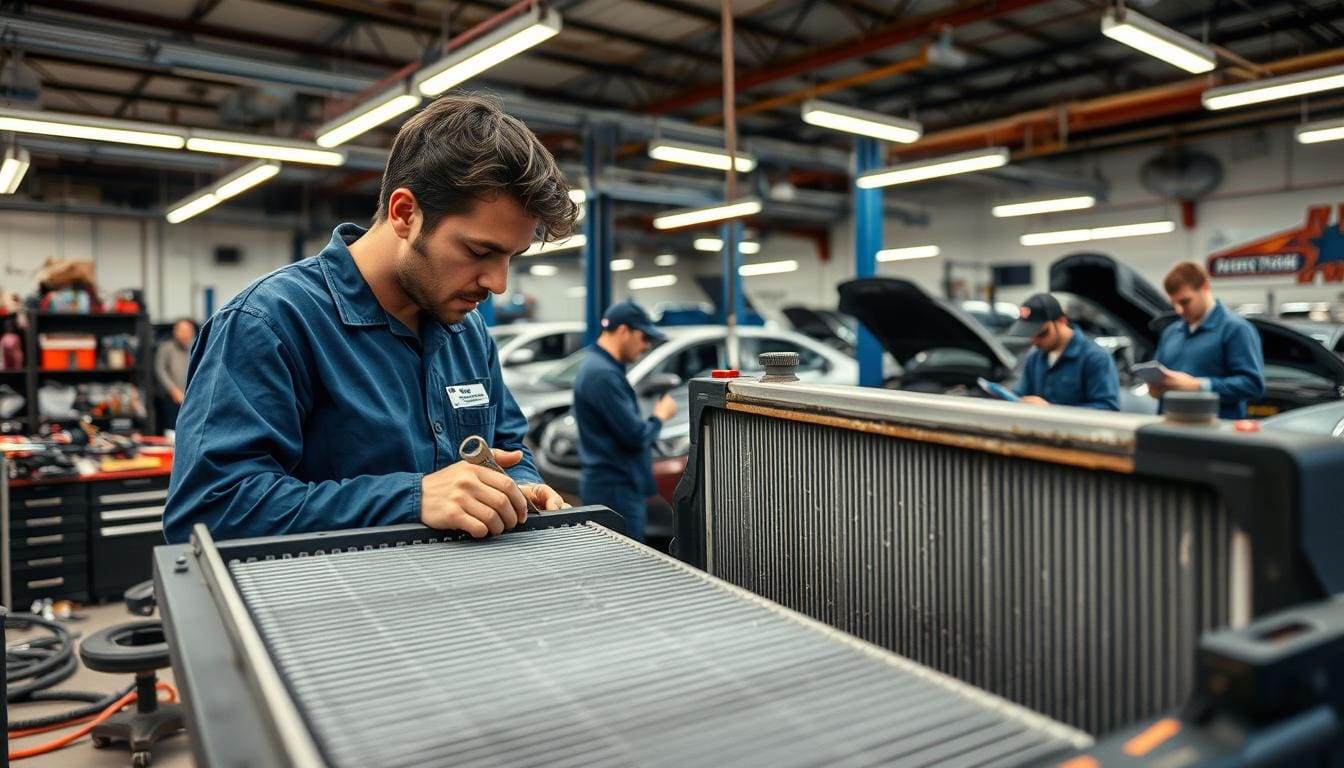
Radiator repair San Antonio: Our Cooling System Diagnostics at Heaven Automotive
When coolant can’t circulate, small faults quickly become costly failures. We begin with a full evaluation so we find the root cause instead of swapping parts and guessing.
Full cooling system evaluation instead of “throwing parts at a problem”
We inspect the whole system — hoses, caps, thermostat, and flow paths — to prevent repeat overheating. Our approach lowers the chance of multiple visits and extra costs.
Pressure testing and leak detection
We use pressure testing to locate coolant loss and weak seals that may not drip when parked. That lets us recommend focused repair and targeted parts replacement.
Fan, pump and air checks
We verify fan operation for overheating in traffic or at idle. We assess the water pump to confirm coolant circulates through the system.
We also bleed trapped air pockets that can cause unstable temperature readings and poor flow.
“Thorough diagnostics stop repeat failures and get your vehicle back on the road with confidence.”
| Diagnostic Step |
What We Check |
Customer Benefit |
| Pressure Test |
Seals, hoses, cap integrity |
Pinpoints leaks without guesswork |
| Flow & Pump |
Pump operation, coolant circulation |
Prevents overheating due to poor flow |
| Fan & Air |
Fan performance, air pocket bleeding |
Solves idle/traffic heat and unstable temps |
| Clog Check |
Sludge, restricted passages |
Restores proper cooling levels and function |
At Heaven Automotive in san antonio, our services focus on accurate diagnosis and lasting outcomes. Schedule a service so we can confirm the real problem and recommend an efficient repair for your vehicle.
Common Radiator and Cooling System Problems We Repair in San Antonio
Cooling problems often start small but become urgent fast when pressure or flow fails. We inspect each component so we fix the root cause, not the symptom.
Leaking cores, cracks, and corrosion
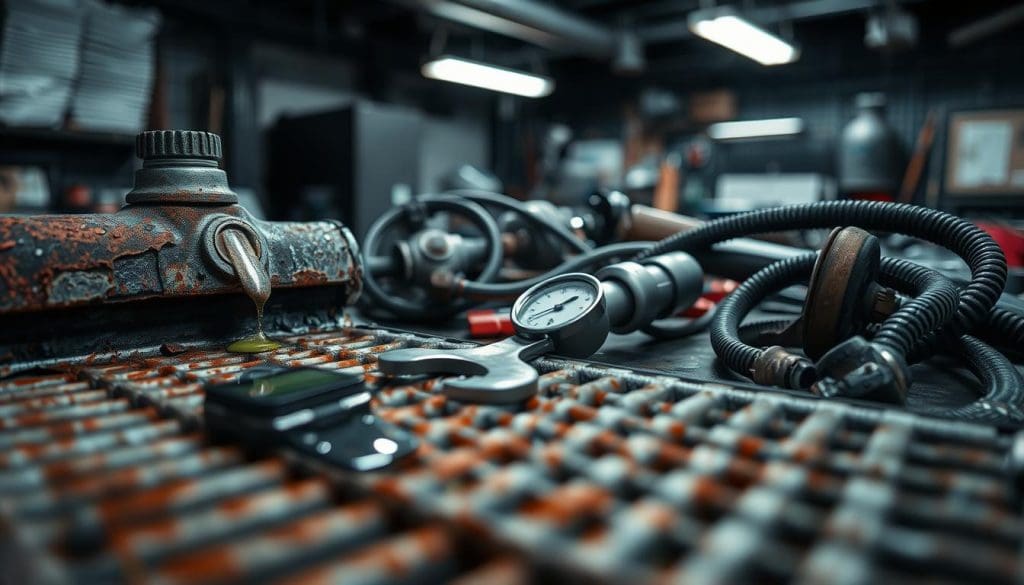
Corrosion and pressure spikes are common causes of coolant leaks. Corroded cores, gasket wear, or impact can force a crack that may need full replacement.
Hoses, caps, and seals
Hose leaks, cracking, or collapse lead to sudden coolant loss. A bad cap that won’t hold pressure also creates collapsed hoses and poor system performance.
Thermostats, sensors, and fans
A stuck thermostat can overheat an engine in minutes. Faulty sensors give false readings, and fan failures cause overheating in traffic or at idle. We test the pump and fan to confirm flow and airflow.
Clogs, sludge and preventive service
Contaminated coolant forms sludge and blocks tiny passages. We recommend a coolant flush about every 30,000 miles or 3–5 years per owner manual guidance to avoid clogs.
Repair vs. replacement decisions
We decide based on damage severity, system condition, and expected lifespan of radiators (often 8–10 years). When parts are worn, we advise a reliable replacement to prevent repeat visits.
- We diagnose first: targeted fixes reduce extra parts and cost.
- We explain options: repair, repairs, or replacement depending on long-term value.
- We make booking easy: schedule service with our team in san antonio.
“Fast, accurate diagnosis keeps costs down and protects your vehicle.”
Conclusion
Overheating can turn a minor cooling fault into a full engine failure in very little time. We recommend immediate attention when warning signs appear to protect your engine and avoid long-term damage.
Proper diagnosis finds the real problem — whether flow, pressure, airflow, or a leak — so the same issues do not return. Timely service preserves coolant quality and system reliability for daily commuting.
If you noticed steam, a hot gauge, or leaks, schedule professional radiator repair with a shop that tests, confirms, and documents the cause. Hire Heaven Automotive for trusted services in san antonio and get your car back to the right temperature with confidence.
FAQ
Why is engine overheating one of the fastest ways to ruin an engine?
Overheating rapidly breaks down lubricants and warps metal, causing scored bearings, seized pistons, and warped cylinder heads. When coolant stops removing heat, clearances change and moving parts abrade. We recommend immediate shutoff and towing to avoid escalating damage.
How does excess heat damage critical engine components so quickly?
High temperatures degrade oil, reducing its ability to protect bearings and camshafts. Thermal expansion warps heads and blocks, and rubber components like hoses and seals harden and fail. That cascade can lead to cracked parts and costly repairs within minutes of sustained overheating.
Why does the cooling unit matter for managing operating temperature?
The cooling unit controls engine temperature by circulating coolant and transferring heat away from combustion areas. Proper flow and pressure keep friction heat within safe limits. If flow stops or pressure drops, temperatures spike and engine protection fails.
What failures can overheating trigger in nearby systems and parts?
Overheating can warp cylinder heads, blow head gaskets, damage pistons and rings, and degrade sensors and wiring. It also accelerates corrosion and sludge formation in the cooling loop, creating recurring problems unless we address the root cause.
How can an overheating event lead to head gasket damage?
When the head or block warps, the head gasket loses sealing integrity. That allows coolant and oil to mix or compressions to leak, producing misfires, white smoke, and rapid loss of coolant. Once that occurs, repairs become significantly more expensive.
What does a full cooling system evaluation include at Heaven Automotive?
We perform a complete inspection: coolant quality, pressure testing, hose and cap checks, thermostat operation, fan performance, water pump condition, and flow assessments. We diagnose root causes rather than replacing parts blindly to prevent repeat failures.
How do pressure testing and leak detection pinpoint coolant loss?
We pressurize the closed system to reveal leaks at seams, hoses, and the cooling unit. Dye and electronic sniffers help find small weeps. Pinpointing the exact source lets us fix the leak accurately and restore proper pressure and boiling point.
Why inspect hoses, caps, and the thermostat during diagnosis?
Hoses can swell, crack, or collapse; caps can fail to hold pressure; thermostats can stick open or closed. Any of these issues cause poor flow or incorrect operating temperature. Replacing weak components prevents repeat overheating.
How do we check fan performance for overheating at idle or in traffic?
We test fan motors, relays, temperature sensors, and wiring under load conditions. A failing fan or control circuit often shows no airflow at idle, which leads to overheating in slow driving. We repair or replace the faulty parts to restore cooling at low speeds.
What role does the water pump play and how do we assess it?
The water pump circulates coolant through the engine and radiator. We inspect for bearing play, leaks at the shaft seal, and proper impeller flow. A failing pump reduces circulation and causes hotspots and temperature spikes.
How do clogs or sludge form and how do they affect cooling?
Contaminated or old coolant and corrosion produce deposits that restrict passages in the cooling unit and heater core. Reduced flow causes uneven temperature control and localized overheating. We remove blockages and recommend a coolant flush if needed.
Why is bleeding trapped air important after service?
Air pockets block coolant flow and produce overheating even when all parts are otherwise fine. We properly burp the system to restore continuous circulation and stable temperature control.
What common problems do we repair related to leaks and cracks caused by corrosion or impact?
We fix pinhole leaks, replace cracked cores, and patch areas damaged by rust or collision. We assess whether a targeted fix or full unit replacement provides the best long-term result based on extent of corrosion and structural condition.
How do hose failures typically present and how do we address them?
Hoses show bulges, soft spots, hardening, or splits. They may leak under pressure or collapse and restrict flow. We replace aged or damaged hoses with OE-quality parts to restore reliable plumbing and pressure containment.
How do failed thermostats and sensors cause rapid overheating?
A stuck thermostat can prevent coolant circulation or force continuous flow when not needed, both of which upset temperature regulation. Faulty temperature sensors can misreport data to the ECU or fans. We test and replace these components to reestablish correct control.
What happens when a cap fails to seal properly?
A leaking cap reduces system pressure and lowers the coolant boiling point, increasing vapor formation and loss. That yields overheating and frequent top-offs. We replace caps that no longer hold the specified pressure.
How do clogged passages and contaminated coolant affect performance?
Sludge and scale restrict flow through the cooling unit and heater core, causing poor heat transfer and hotspots. We recommend and perform coolant flushing, cleaning, and refilling with the correct mixture to restore efficiency.
What causes cooling fan failures and how do they impact stop-and-go driving?
Motor wear, failed relays, damaged blades, or sensor issues prevent proper airflow at low speeds. Without adequate fan operation, engines overheat quickly in traffic. We diagnose the electrical and mechanical causes and repair or replace components.
When is a coolant flush and refill recommended as preventive service?
We follow manufacturer intervals based on mileage and time, typically every 2–5 years depending on coolant type. Regular flushing removes contaminants, preserves corrosion inhibitors, and prevents sludge buildup.
How do we decide between repairing a cooling unit and replacing it?
We evaluate damage severity, corrosion level, cost of parts, and likelihood of future leaks. Minor leaks or isolated damage may justify repair; extensive corrosion, multiple failures, or compromised core structure usually calls for replacement to ensure reliability.