

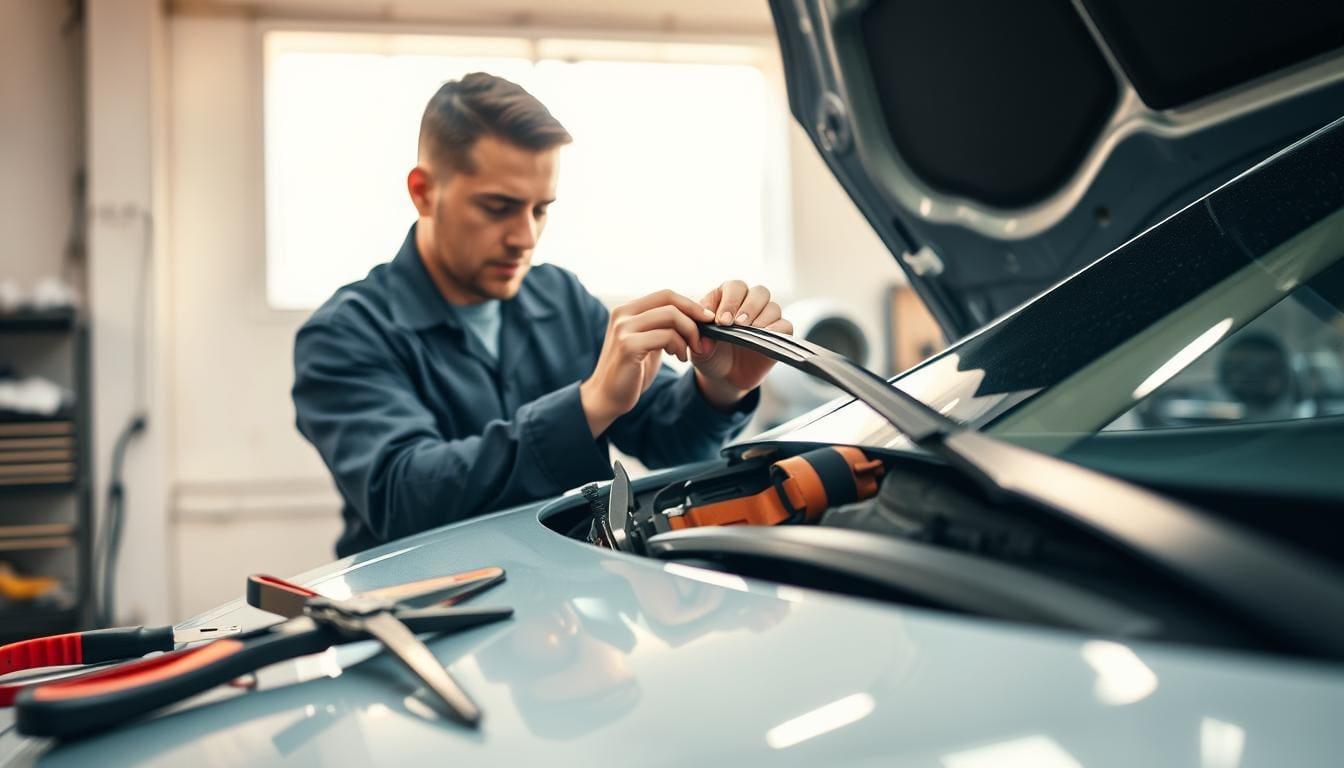
Clear view through the windshield is a daily safety need, not just a rainy-day concern. At Heaven Automotive, we help drivers spot early signs that a component has worn out so visibility stays strong in storms, at night, and during heavy spray.
In this short guide, we explain how to tell when parts are failing, why routine change once a year is smart in the United States, and how choosing the right technology improves overall performance.
Small declines in wiping can cut reaction time and make driving risky. We treat these parts as normal wear items—planned maintenance, not surprise repair—and we focus on practical checks like signs to watch for, sizing and connector basics, and simple installation tips that protect the windshield wiper system.
Read on for hands-on steps and honest advice, and when you want a trained team to inspect or fit the correct components, trust Heaven Automotive to do the job right.
Key Takeaways
- Maintain clear view daily—visibility affects safety in all weather.
- Look for smearing, films, or uneven contact as early warning signs.
- Plan annual change in the U.S.; wear is normal and expected.
- Choose the right technology and check sizing/connector fit for your vehicle.
- Heaven Automotive offers inspections and proper fitment when you need help.
Why maximum windshield visibility matters for safety and performance
A sharp, unobstructed view ahead reduces reaction time and keeps our vehicle control steady during storms and spray. We prioritize clear sight because it directly affects how we steer, brake, and respond to hazards.
How worn wipers reduce your view in rain, snow, and road spray
Worn parts commonly smear water, leave a film, or wipe unevenly. These issues create haze, glare, and streaking that hide lane markings and road signs.
In heavy downpours or slushy snow, reduced view forces us to slow and make abrupt moves. That raises the risk of collisions, especially at night when headlights highlight streaks.
What “good” wiping should look like on today’s windshields
Good wiping means consistent contact, quiet operation, minimal streaks, and fast clearing after each pass. On modern curved glass, even pressure and full sweep coverage matter for true performance.
Simple benchmark: if the windshield wiper cannot clear the glass cleanly in one or two passes, inspect the wiper blades and plan for service. Keeping visibility high is a practical step toward safer driving.
Clear signs your wiper blades need replacement
A few simple checks reveal whether worn parts are reducing visibility and slowing our response on the road.
Smearing water and leaving a film on the windshield: When the glass looks hazy after a pass, smearing is often the cause. Light rain should clear in one or two passes. If a film lingers, the wiping edge has lost contact or the rubber has hardened.
Uneven wiping, streaks, or missed spots: Look for streaks, bands, or corners that stay wet. These patterns mean uneven pressure, warped frames, or worn edges on the blades. Poor contact reduces our clear view at night and in heavy spray.
Quick visual and sound checks
- Inspect the rubber: cracked, split, or hardened edges are a clear failure sign.
- Listen for chattering, skipping, or squeaking—these sounds show poor glide and friction.
- If streaks persist after cleaning the windshield and topping washer fluid, plan for replacement.
| Symptom | Likely cause | Action |
|---|---|---|
| Smearing/film | Hardened or torn rubber | Inspect rubber; replace if damaged |
| Streaks/missed spots | Uneven pressure or worn edges | Check fit and edge condition; replace as needed |
| Chatter/squeak | Contamination or hardened material | Clean glass; if noise continues, replace for better performance |
Wiper blade replacement timing: how often we recommend changing them
We set a clear service rhythm so our windshield view stays reliable when weather turns bad. A steady schedule reduces surprises and keeps visibility strong on every trip.
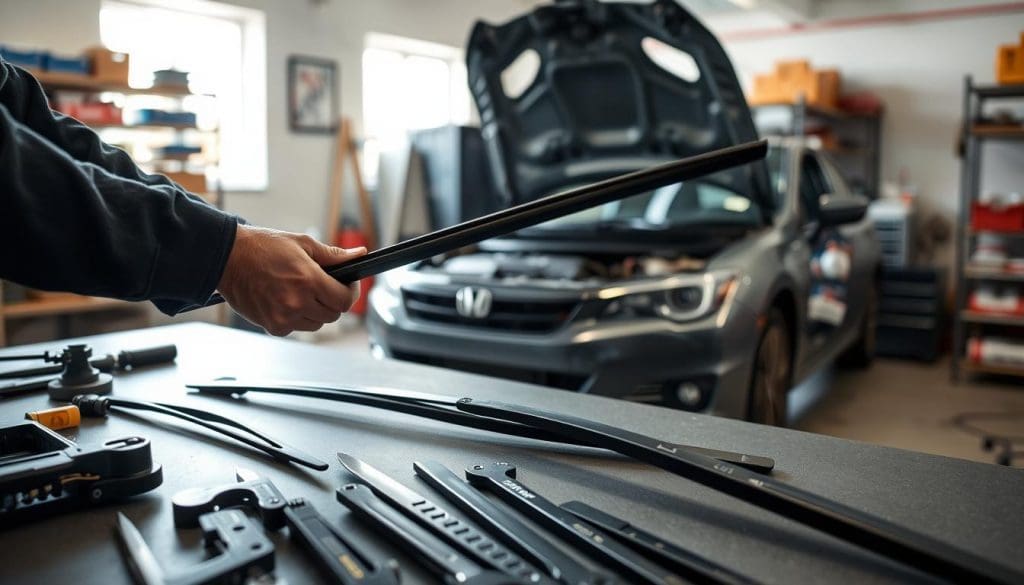
Baseline guideline: replace at least once a year
At minimum, we recommend changing both parts once per year. Annual service matches typical life for many drivers across the United States and restores even pressure and consistent wipe.
Tip: replacing both wiper blades at the same time improves overall performance and balance.
Seasonal triggers that shorten useful life
Real-world conditions often demand earlier service. Intense sun dries rubber, winter ice and spring pollen abrade edges, and summer storms or heavy highway miles speed wear.
- Inspect monthly and clean the windshield to extend life.
- Replace proactively before winter storms or monsoon-like summer rain.
- Pair timing with symptom checks so we never wait until visibility is compromised.
What causes wiper blades to wear out faster
A few common factors make these components age faster than we expect, cutting useful life and reducing our view on the road.
Heat, UV, and ozone: drying out the rubber
Sun and high under-hood heat cause rubber to harden, crack, and stiffen. Ozone and UV speed this process. When rubber loses flexibility, wipe quality and overall performance drop.
Ice scraping, sand, and road grit
Physical damage from scraping ice or removing frozen debris can nick the edge. Sand and grit act like sandpaper and shorten useful life, especially on highways and windy roads.
Windshield contamination: sap, bugs, and fluid buildup
Tree sap, bug residue, and sticky washer-fluid film create drag and smearing that mimic failure. Regular cleaning prevents abrasion and keeps our view clear.
“Small habits—cleaning the glass and avoiding dry use—extend service life and restore reliable visibility.”
- Clean the windshield often.
- Use quality washer fluid and avoid dry wiping gritty glass.
- Inspect after winter and long trips behind trucks.
Choosing the right wiper blade type for your vehicle and driving conditions
Not every wiping solution works for every windshield; we match design to conditions for safer, clearer driving.
Conventional frame-style construction
Conventional wiper designs use a metal frame to support the rubber along the glass. They are widely available and cost-effective.
These work well in mild climates and for everyday commuting. The frame spreads pressure but can lift at high speed or in heavy snow.
Beam: modern technology for consistent pressure
Beam designs use a one-piece profile to follow curved glass. That maintains even pressure across the sweep and reduces streaking.
Beam options usually improve clearing at highway speeds and in heavy rain. For steep, curved windshields, they are often our top pick.
Hybrid: frame support with beam flexibility
Hybrid choices blend a slim beam element with a partial frame. They give better contact than conventional models without a full beam swap.
Drivers who want improved performance but prefer familiar fitment often favor hybrids.
Specialty categories and when they make sense
Specialty and twin types suit unusual windshield shapes or extreme climates. Consider them when fitment or weather limits standard options.
“Match fitment, climate, and consistent contact—not marketing—to get the best performance.”
Quality and materials that improve wiper performance and visibility
Material choices directly affect wipe quality, noise, and how long parts keep our view clear.
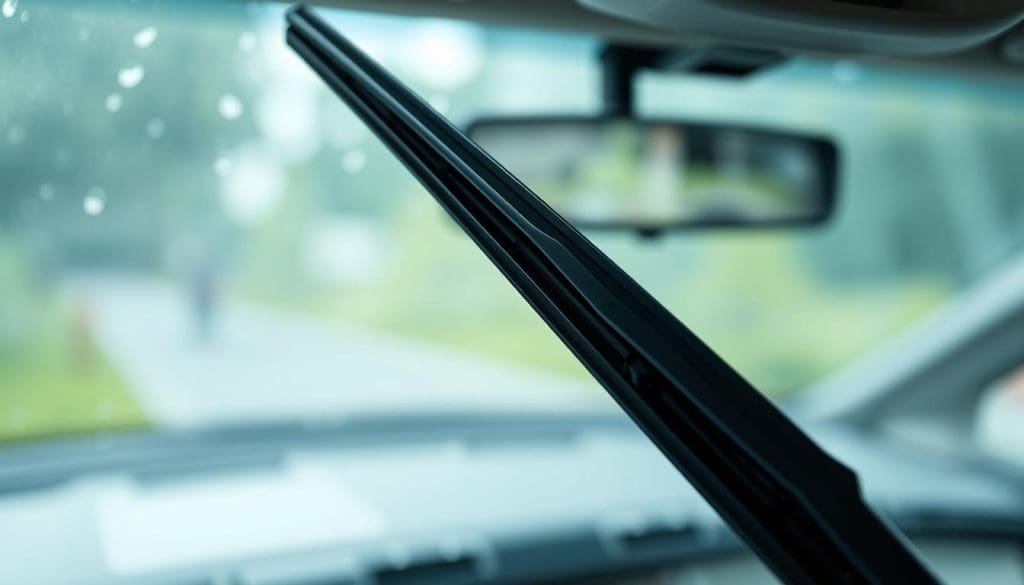
Quality means consistent contact, quiet wiping, durable edges, and reliable clearing that boosts visibility in changing weather.
We assess materials by real outcomes: how they glide, resist wear, and shed water.
Rubber vs. silicone: water repellency and long-lasting results
Traditional rubber offers good initial contact and cost value. It performs well in mild climates and wipes cleanly when maintained.
Silicone resists sun and heat better and usually repels water longer. That can reduce streaking and extend useful service life for many drivers.
Practical tip: silicone often shines in hot or coastal regions where UV and salt cause faster wear on rubber.
Frame and support materials: steel construction and durability
Frame design and support parts matter as much as the wiping edge.
Steel construction holds shape under load, heat, and repeated cycles. Good steel reduces lift at speed and keeps even pressure across the sweep.
Beam, hybrid, and conventional blades use different support methods. Matching steel strength to your climate and driving style improves overall performance.
| Material | Key benefit | Best for | Durability notes |
|---|---|---|---|
| Rubber | Good initial contact, quiet | Temperate climates, budget-conscious drivers | Moderate; UV shortens life |
| Silicone | Water repellency, longer life | Hot, coastal, or varied climates | High; resists ozone and heat |
| Steel frame | Holds shape, steady pressure | Highway driving, heavy use | High; resists deformation |
| Composite supports | Lightweight, flexible | Moderate climates, hybrids | Good; varies by construction |
“Combine quality materials with correct sizing and proper installation for the best visibility and long-term value.”
How to find the correct wiper blade sizes and connection type
A precise match between the arm and the part ensures steady contact and clear sight lines. Correct sizing gives full windshield coverage and steady wiping across curved glass.
Why size matters
Too short leaves gaps and reduces our view. Too long can hit trim, lift at speed, or wipe outside the designed arc.
Common arm styles
In the U.S., J-hooks are the most common connector. Small J-Hooks (9×3) and Large J-Hooks (9×4) look similar but differ in fit and locking geometry.
Pin arms and other standards
Pin arms use a 1/4″ x 3/16″ post. Matching that size prevents loose attachment and poor performance.
Other connector families
I & L, P & H, PTB, plus narrow versions and clone variants, also exist. Visual confirmation matters—sizes often differ between driver and passenger sides.
| Connector | Identifier | Common issue | Fit note |
|---|---|---|---|
| Small J-Hook | 9×3 | Loose snap if wrong size | Verify clip opening width |
| Large J-Hook | 9×4 | Incorrect latch engagement | Measure hook thickness |
| Pin Arm | 1/4″ x 3/16″ | Wobble or detachment | Match post diameter precisely |
| I & L / P & H / PTB | Various | Adapter mismatch | Compare old parts or consult us |
Quick tip: note each side’s length, bring the old parts, or let Heaven Automotive verify fitment when connector style is unclear.
How to install wiper blades properly for maximum replacement value
A careful installation protects the windshield and gives the parts their best chance to perform. We follow a tight routine so new parts deliver quiet, even wiping and long-term performance.
Before we start
Inspect the rubber for cracks or hard edges. Clean debris and grit from the windshield so we do not abrade the new edge.
Safe removal
Lift the arm slowly and support it while detaching the old unit. Avoid letting the bare arm snap down on glass—this can crack the windshield and cost much more than a simple replacement.
Attach, lock, and test
Match the connector (J-hook, pin arm, or other standard) and click the new part until it locks. Pull lightly to confirm the latch holds, then lower the arm gently.
Best practice
Install both wipers at once for balanced performance. Mixing old and new blades often causes uneven clearing and extra noise.
Post-install checks
Run washer fluid, observe the full sweep, listen for chatter, and ensure full contact across the arc. If streaking remains, surface film or contamination may be the cause and we can diagnose it in-shop.
| Step | What to check | Why it matters |
|---|---|---|
| Pre-check | Rubber condition, glass cleanliness | Prevents early wear and smear |
| Removal | Support arm, avoid snap-down | Protects windshield from chips or cracks |
| Attachment | Lock connector; test pull | Secures parts for safe operation |
| Final test | Wipe pattern, noise, full contact | Confirms correct installation and view |
“Proper installation is the simplest step to extend service life and keep your view clear.”
Conclusion
Clear, reliable glass performance starts with small, routine checks that save time and prevent hazards.
We summarize: wiper blades are simple maintenance items that protect view, safety, and driving confidence in rain, snow, and road spray. Watch for smearing, streaking, noise, or cracked rubber and act early instead of waiting for total failure.
We recommend an annual baseline but note that climate and road debris can shorten useful life. Choosing the right technology — from conventional wiper to beam designs — and correct fitment improves performance and cuts annoying chatter.
Prioritize safe visibility now. If you want the right blades, correct connector fit, and a clean, quiet wipe, hire Heaven Automotive to inspect your vehicle and handle service promptly.