

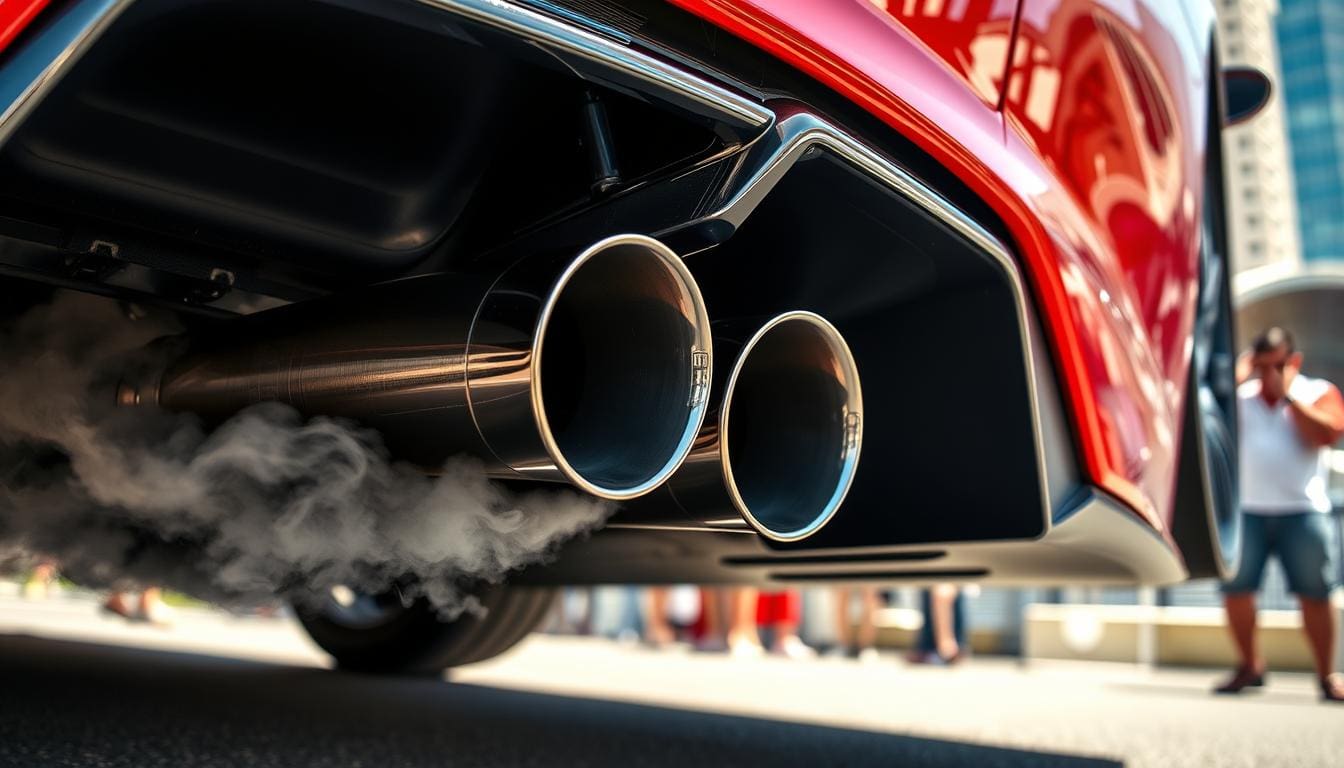
We know a loud noise under your car is more than an annoyance. A sudden change in tone, constant rumble, or intermittent bang can point to a problem that affects safety, emissions, and overall performance. The underbody system both muffles engine sound and routes hot, harmful gases away from the cabin.
For drivers in San Antonio, we offer clear, practical steps. We explain what different sounds usually mean, why you shouldn’t ignore leaks, and how small issues can grow into costly ones. Our approach is thorough and safety-first because a leak can expose occupants to dangerous fumes.
At Heaven Automotive, we diagnose the system, pinpoint the cause, and recommend the right service to restore quiet, compliance, and performance. If your vehicle gives you loud warnings, trust our team to inspect and act quickly. Hire Heaven Automotive to fix your vehicle.
Key Takeaways
- A loud underbody noise often signals a real problem, not just sound.
- The system quiets the engine and routes hot gases away from the cabin.
- Ignoring new tones can raise costs and risk safety and emissions.
- We diagnose causes and recommend the correct auto repair or service.
- Heaven Automotive focuses on thorough, safety-first fixes for lasting performance.
Why your exhaust system matters for noise, safety, and performance
A healthy exhaust system keeps noise low and routes hot gas away from the cabin.
Beyond sound control, the system directs harmful fumes under the vehicle so occupants stay safe. When components work together—from the manifolds near the engine through piping and the muffler—they reduce noise and manage flow.
How the system quiets the engine and moves gas safely
The system uses chambers and baffles in the muffler and long piping to lower perceived engine noise. It also channels hot gas to the rear, keeping fumes out of the cabin.
Why louder-than-normal sound often signals trouble
Louder sound usually means a leak, loose connection, or worn part. That reduces performance and can let fumes into the passenger area.
- Leaks or holes let sound escape and reduce backpressure, hurting performance.
- Corroded joints or missing mounts create vibration and louder tone.
- Allowing noise to persist is not a maintenance plan; address it early.
We encourage noting when a loud sound appears—startup, idle, or acceleration—before you schedule service with Heaven Automotive. Clear notes shorten diagnosis time and help us prioritize safety and proper maintenance.
| Function | What it does | Risk if failing |
|---|---|---|
| Muffle & noise control | Reduces engine sound and vibration | Louder cabin noise, driver distraction |
| Gas routing | Moves hot gas to rear exit | Fumes entering cabin, health hazard |
| Flow management | Maintains backpressure for performance | Poor acceleration, reduced fuel efficiency |
Common loud exhaust noises and what they usually indicate
Distinct sounds at startup or while driving can speed diagnosis when you know what each one often means. We list common noises, what they usually signal, and when to book service with us.
Roaring on startup and acceleration
Roaring at startup or under throttle is often a sign of a leak or a failed component that no longer dampens sound. This reduces backpressure and hurts performance.
Rattling under the vehicle
Rattles usually point to loose heat shields, broken hangers, or a muffler that has come apart inside. Damaged parts create vibration and a metallic sound at speed.
Ticking near the engine
Ticking close to the engine is a classic sign of a manifold leak. It’s most noticeable when the engine is cold or under load and can let fumes enter the cabin.
Hissing and popping
Hissing or popping often means small cracks, pinholes, or loose connections and failing gaskets. Note where and when the sounds occur; that detail speeds an accurate diagnosis.
| Noise | Likely cause | Immediate risk |
|---|---|---|
| Roaring | Leak or failed silencing component | Loss of performance, louder cabin |
| Rattling | Loose shields, hangers, internal muffler damage | Vibration, potential part loss |
| Ticking | Manifold leak | Fumes in cabin, engine efficiency loss |
| Hissing/Popping | Cracks, pinholes, loose joints | Escalating damage, safety concern |
Safety note: Any change in sound can also change where gases exit the vehicle. We recommend a professional diagnosis — guessing can add cost and time, so contact us to schedule a check and possible repair.
Other warning signs that often show up with exhaust problems
When your car shows new warning signs, the cause may lie in the components that manage gases and flow. Early detection saves time and money. We urge a quick inspection when multiple signs appear.
Check engine light tied to emissions components
The check engine light often links to emissions-related sensors and modules. Reading codes gives clear clues and prevents guessing. We recommend scanning codes promptly so we can target the true issue.
Decreased gas mileage and higher fuel use
Lower fuel efficiency often means the engine must work harder because a system is failing. That raises operating cost and can mask other problems. Tracking mpg helps spot issues early.
Vibration in the steering wheel or gas pedal
Unusual vibration can come from loose hangers or broken components that let the assembly move. These motions produce feelable shakes at the wheel or pedal and signal a need for fast attention.
Smell of fumes inside the car
Smelling fumes inside the cabin is a serious safety concern. A leak can let gases enter the passenger area and requires immediate inspection.
- If fumes are present in the cabin, stop driving and seek service right away.
- If symptoms escalate quickly—loss of power, strong odors, or new vibrations—get the vehicle checked immediately.
- Bring your car to Heaven Automotive for a full inspection. We confirm the root cause and present clear options to fix the issue.
| Sign | What it often means | What we do |
|---|---|---|
| Check engine light | Faulty sensor or emissions component | Scan codes, diagnose affected part |
| Decreased gas mileage | Poor flow or sensor issues forcing engine work | Inspect sensors, catalytic path, and fuel systems |
| Vibration | Loose mounts or broken hangers | Inspect mounts, secure assembly, replace worn parts |
| Fumes in cabin | Leak in routing or failed seal | Immediate safety inspection and isolation of leak |
What causes exhaust and emissions failures over time
Over time, normal wear and road exposure quietly degrade key components that control emissions and engine flow.
Worn systems and corrosion: Age, salt, and moisture cause rusted pipes, corroded joints, and broken mounts. One small leak can be fixed quickly, but widespread corrosion often means more extensive system repair.
Faulty oxygen sensor and fuel delivery
A failing oxygen sensor sends bad data to the engine control unit. That skews fuel delivery, reduces fuel efficiency, and raises emissions even before drivability drops.
Damaged or missing catalytic converter
The catalytic converter keeps vehicles compliant. Damage or theft that removes the converter harms performance and can fail emissions checks. We assess condition and recommend repair or replacement based on overall value.
Vacuum leaks and ignition faults
Leaky vacuum lines or misfires also raise emissions. These issues can look like sensor faults, so accurate diagnosis matters to avoid replacing good parts.
“Accurate testing prevents unnecessary parts changes and helps vehicles pass emissions more reliably.”
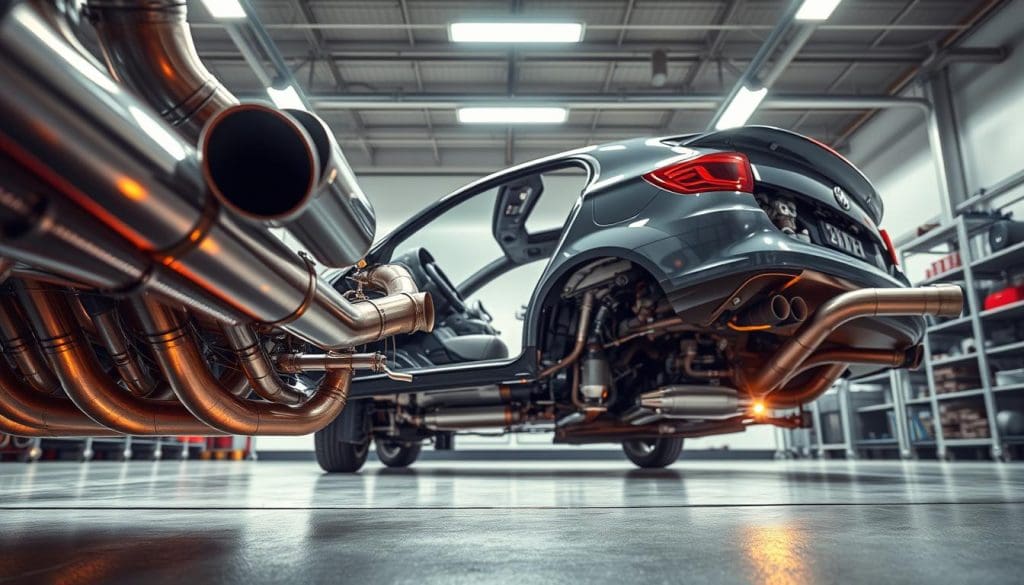
| Cause | Effect | Typical service |
|---|---|---|
| Corrosion / age | Leaks, broken hangers, multiple failures | Section assessment, targeted replacements |
| Oxygen sensor | Poor fuel efficiency, higher emissions | Sensor testing, replacement if out of spec |
| Catalytic converter | Failed compliance, reduced performance | Inspect, replace or clean, advise on legality |
| Vacuum / ignition | Misfires, incorrect sensor readings | Smoke test, ignition tune, hose replacement |
Our approach: We test the full path—from manifold to tailpipe—and the related sensors. That saves time, avoids needless parts swaps, and gets your vehicle back to safe, efficient operation.
Exhaust repair San Antonio: how we diagnose the source of loud exhaust noise
We combine hands-on inspection and targeted diagnostics to find the true cause of loud noise and emissions faults. Our process documents what we see and shows you the safest, most cost-effective path forward.
Full inspection from manifold to tailpipe
We start at the engine-area manifold and follow the piping to the tailpipe. That lets us spot cracks, holes, and broken hangers fast.
Leak detection and hardware checks
Small leaks and failing gaskets can create big sound and raise emissions. We pressure-test joints, inspect flanges, and evaluate mounts to stop rattles before they worsen.
Emissions diagnostics and cabin safety
Our technicians read check engine light codes to link noise with emissions faults. We also test for fumes entering the cabin and treat that as an immediate safety issue.
Clear communication and next steps
We document findings, explain options, and recommend a practical system repair or replacement based on value and condition.
| Step | Purpose | What we check |
|---|---|---|
| Visual & hands-on inspection | Locate visible damage | Manifold, piping, muffler, mounts |
| Leak & pressure testing | Find cracks and pinholes | Gaskets, joints, welds |
| Code scan | Identify emissions faults | Sensors, converter, engine codes |
| Cabin fume assessment | Ensure occupant safety | Seals, routing, cabin air checks |
Next step: Schedule an appointment with our mechanic team at Heaven Automotive. With our experience and clear reporting, we deliver a verified diagnosis before replacing parts.
Exhaust services we provide at Heaven Automotive
We offer a full range of services to stop noise, restore flow, and keep your vehicle compliant.
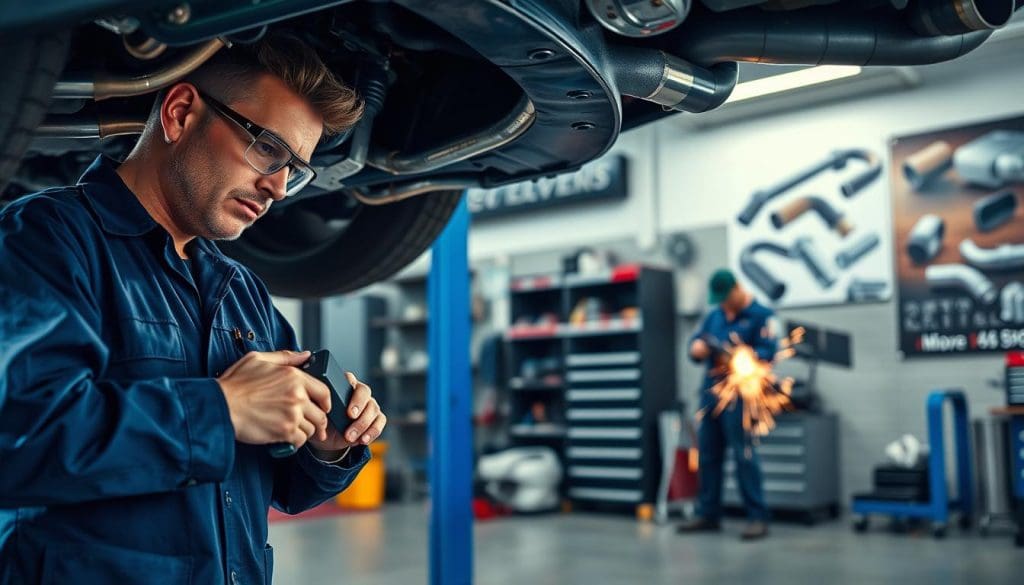
Exhaust leak repair and sealing connections
We seal or replace compromised sections to stop leaks, reduce noise, and prevent fumes from reaching the cabin. Tight connections restore safe routing and quiet operation.
Muffler replacement to restore quiet operation and proper backpressure
Replacing a worn muffler brings back proper backpressure and preserves drivability. That protects engine performance and reduces cabin sound.
Catalytic converter repair or replacement for emissions compliance
We assess converters for function and recommend service that meets emissions rules and improves overall efficiency.
Exhaust manifold repair to stop engine-bay leaks
Targeted manifold fixes eliminate ticking noises and stopping fumes near the engine. We focus on clear, lasting solutions.
Oxygen sensor replacement to improve fuel efficiency
New sensors stabilize fuel trim, reduce emissions triggers, and improve fuel efficiency. This is a cost-effective way to restore proper running.
Repair vs. replacement recommendations
Our technicians follow a diagnostic-first approach. We weigh corrosion, extent of damage, and parts availability to recommend the best path.
- Minor damage: targeted repairs and seals.
- Widespread corrosion: system replacement for lasting value.
- Mixed condition: phased service to fit budgets and goals.
| Condition | Typical recommendation | Why |
|---|---|---|
| Localized leak | Repair or seal | Less cost, quick fix |
| Multiple corroded parts | Replace section or system | Better long-term value |
| Sensor faults | Part replacement | Restores efficiency and emissions compliance |
Heaven Automotive documents findings and explains each option so you choose the right service for your vehicle and budget.
Emissions testing, compliance, and why repairs matter in the United States
Emissions testing often uncovers hidden faults that normal driving never reveals. States set testing schedules and thresholds differently, and compliance depends on where your vehicle is registered.
How emissions tests can reveal system failures
Inspections measure sensor readings and tailpipe outputs that point to failing components in the exhaust system and related modules. Tests find issues you might not notice while driving, like an out‑of‑spec oxygen sensor or a partial catalytic failure.
What to do if you fail and how a failure report helps diagnosis
If you fail, you receive a report listing the failed items or readings. Bring that report to us — it narrows the diagnostic path and saves time.
- State rules: Testing frequency and limits vary by state.
- Faster fixes: The failure report points technicians where to start.
- Legal timeframes: Some jurisdictions restrict road use until compliance is restored.
We help drivers in San Antonio interpret results, perform the necessary inspections, and recommend targeted repairs. Timely service restores fuel economy, steadies drivability, and reduces recurring warning lights. If you have questions about your results, schedule an inspection so we can confirm the cause and map out next steps.
Conclusion
,Sudden changes in tone or new vibrations are strong signals that your vehicle needs an inspection. A loud noise often shows up alongside warning lights, reduced fuel efficiency, or cabin fumes—these are clear signs to act.
Addressing issues early keeps maintenance simple and limits time and cost. Our team inspects the full system, confirms the cause, and explains service options to restore quiet, performance, and fuel efficiency.
Heaven Automotive handles noise and emissions concerns with experienced mechanics and clear reporting. San Antonio drivers: book an appointment today so we can inspect your car and recommend the right repair. Hire Heaven Automotive today to fix your vehicle and get you back on the road with confidence.