

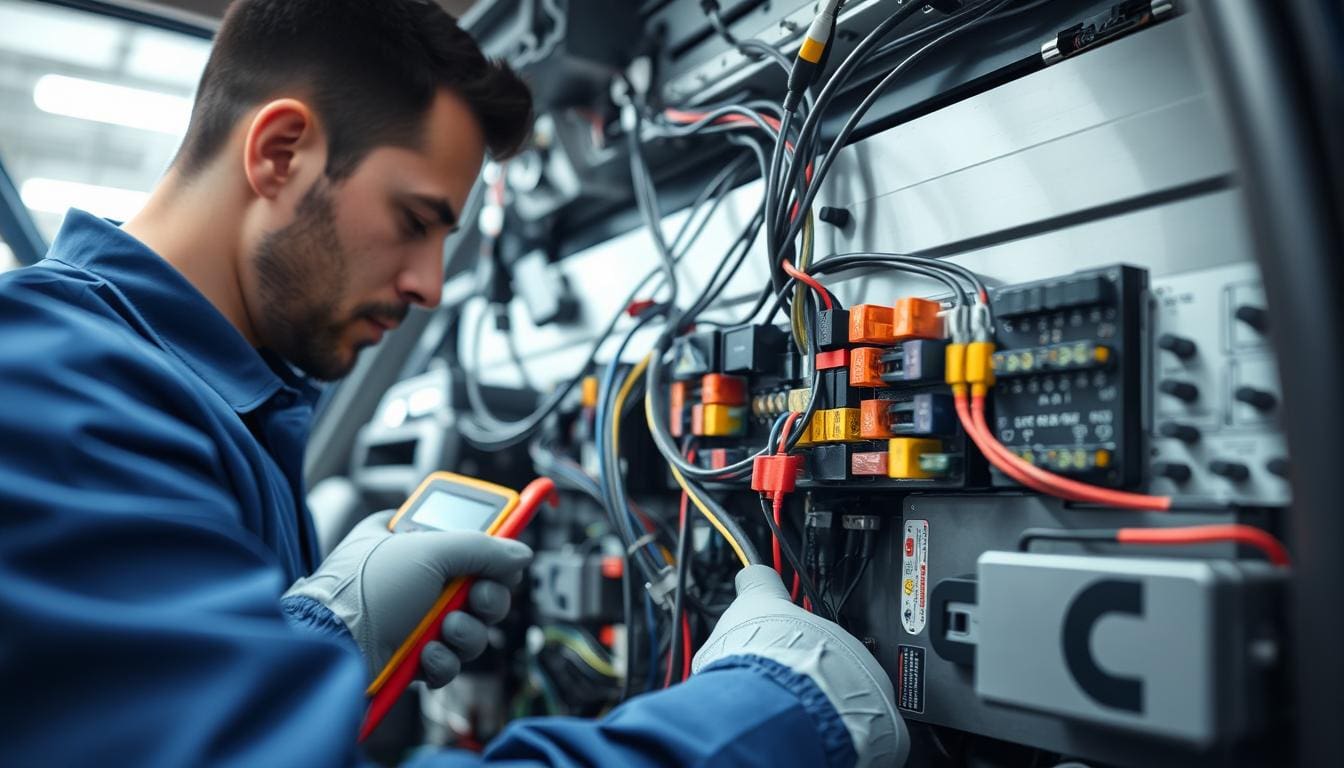
Modern cars rely on a tight network of battery, alternator, and starter parts to run the ignition, starter motor, and lights. When one piece fails, drivability can fall apart fast.
We explain why auto electrical repair matters today and how small symptoms often hide bigger faults. Starting and charging trouble, ignition misfires tied to spark, and wiring faults can stop power to key systems.
At Heaven Automotive in New York, we focus on clear communication, accurate testing, and dependable workmanship. Our technicians use targeted diagnostics to separate weak batteries from failing alternators and to spot wiring issues before a no‑start occurs.
We want you to move from uncertainty to a practical next step: testing, diagnosis, and a repair plan that fits your schedule. If you notice a slow crank, dim lights, or reduced engine performance, contact us and hire Heaven Automotive to fix your vehicle.
Key Takeaways
- Modern vehicles depend on linked electrical parts; one fault can cause big issues.
- Look for slow cranks, dim lights, or misfires as early warning signs.
- We use precise testing to identify batteries, alternators, and wiring faults.
- Heaven Automotive offers expert technicians and dependable workmanship in New York.
- Fast diagnosis reduces breakdown risk and restores proper performance.
- Contact us for a clear plan and timely service to get you back on the road.
Why modern electrical systems fail and what it means for your vehicle
A vehicle’s power network ties sensors, modules, and batteries together; one weak link creates trouble. Today’s power management needs stable voltage, clean grounds, and steady charging to run ignition, infotainment, and safety systems.
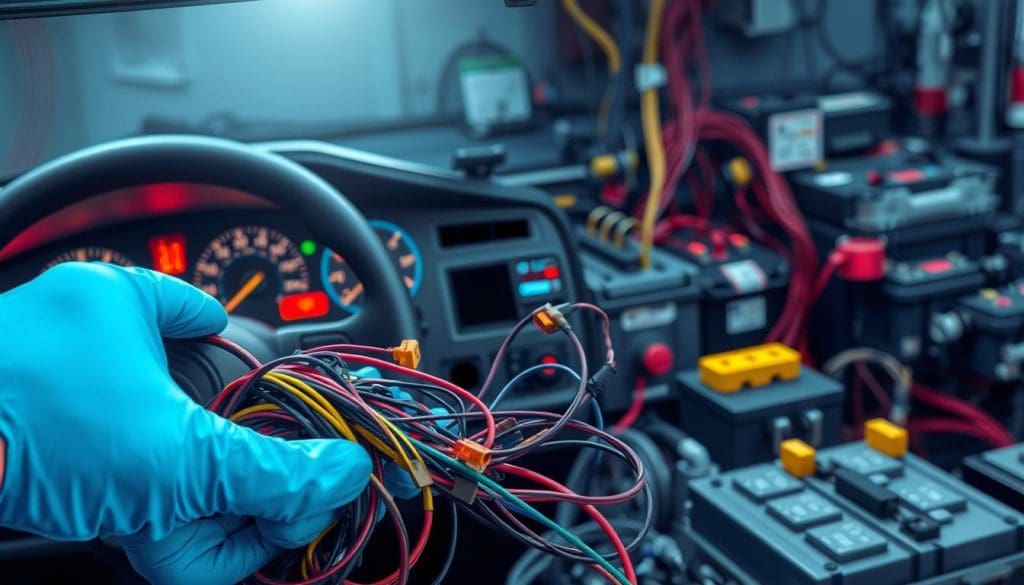
How today’s vehicles depend on interconnected systems and power management
Modules and controllers coordinate energy flow. The alternator charges the battery while the engine runs.
Heat, vibration, corrosion, and heavy accessory load stress components. Frayed wiring or a worn spark plug tip can cause unreliable starts or reduced performance.
Warning signs drivers notice first: no-starts, dim lights, misfires, and intermittent accessories
Drivers often see dim or flickering lights, no-starts, or misfires under load. Accessories may work only sometimes, and warning lights can appear then vanish.
If a problem is intermittent, worse in cold, or returns after a jump, don’t guess. Accurate testing is essential to distinguish battery, alternator, starter, or wiring causes.
We at Heaven Automotive isolate the root cause so the chosen repair permanently fixes the issue, not just the symptom. Contact us for professional testing and a clear service plan.
Auto electrical repair services we provide at Heaven Automotive
We offer a full range of shop services to diagnose and fix starting and charging problems. Our work combines modern diagnostics with protective care to keep your vehicle safe during service.
Battery testing, charging, replacement, installation, and recycling
We test battery health and reserve capacity. When charging helps, we top up; when age or damage matters, we replace and install the correct unit.
We also recycle old batteries responsibly to meet environmental standards.
Alternator diagnostics and replacement
The alternator keeps the battery charged while the engine runs. We check charging output and voltages under load.
If output is weak, we replace the alternator so the battery stays healthy on the road.
Starter testing and repair
When a car won’t crank or only clicks once, the starter circuit needs careful checks.
We test solenoids, motor draw, and connections to find the true cause before any repair.
Spark plug inspection and replacement
Worn plugs cause hard starts and rough running. We inspect gaps, fouling, and replace plugs to restore reliable ignition.
Wiring and connection repairs
We repair frayed wiring, corroded terminals, loose grounds, and damaged connectors. These fixes stop intermittent faults and false warnings.
“We aim to fix the root cause, not just hide the symptom.”
| Service | What we do | Why it matters | Typical time |
|---|---|---|---|
| Battery | Test, charge, replace, install, recycle | Ensures reliable starts and accessory power | 30–90 minutes |
| Alternator | Output test, load check, replacement | Keeps battery charged during drive | 1–2 hours |
| Starter | Draw test, solenoid check, repair or replace | Restores engine cranking | 1–3 hours |
| Wiring | Inspect, repair connectors, secure grounds | Prevents intermittent faults and shorts | Varies by damage |
Ready to schedule? Book an appointment and we will protect your vehicle during service, explain the needed repairs, and deliver careful workmanship.
Hire Heaven Automotive to fix your vehicle and restore dependable performance.
Most common electrical problems we diagnose in New York drivers’ cars
City driving and winter starts often reveal hidden faults that stop a car from running reliably. At Heaven Automotive, we see the same failure patterns in local vehicles. We diagnose them quickly so repairs are targeted and effective.
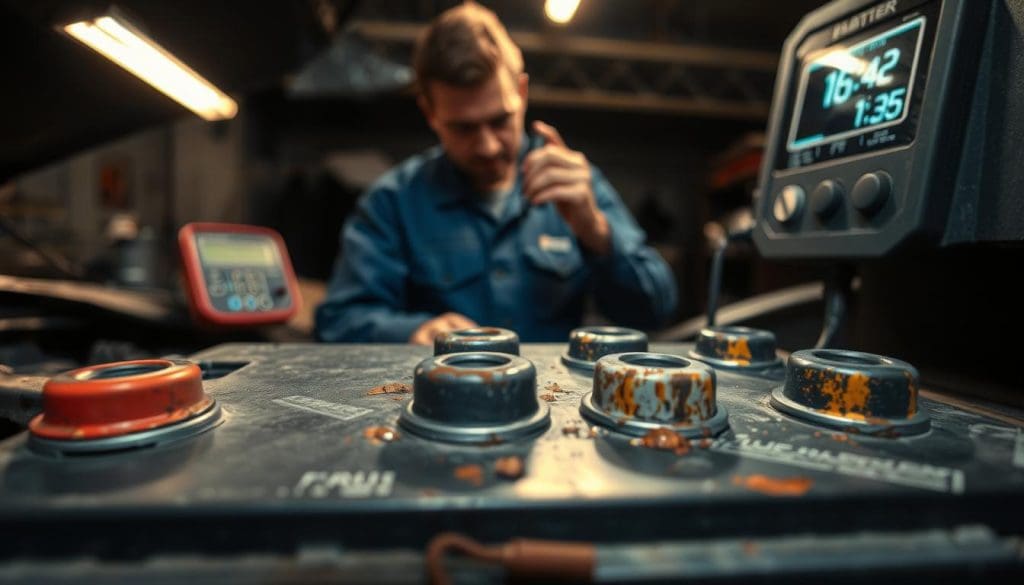
Dead or failing battery
Causes: age (about three years on average), accidental drain from lights or accessories, and corroded terminals that block current.
Bad alternator
A failing alternator can let the engine start, then drain the battery while driving. The common sign is a battery light on the dash or a car that runs for a short time then dies.
Starter issues and spark problems
Starter failure often shows as a click, repeated clicking, whirring, or grinding when turning the key. Worn spark plugs cause hard starts and rough running by reducing ignition quality.
Wiring, flood, and rodent damage
Frayed or chewed wiring creates intermittent faults and short circuits. Flood exposure can corrode connectors and damage modules, producing unpredictable electrical systems issues.
| Problem | Common sign | Typical cause |
|---|---|---|
| Battery | Slow crank, won’t start | Age (~3 years), drain, terminals corroded |
| Alternator | Battery light, runs then dies | Weak charging output under load |
| Starter & ignition | Clicking, grinding, rough idle | Worn starter, fouled plugs |
| Wiring | Intermittent accessories, shorts | Fray, rodents, water damage |
We at Heaven Automotive localize tests for New York conditions—stop-and-go traffic and cold mornings—and recommend targeted fixes so the next failure won’t be guesswork.
Our testing process for pinpointing electrical issues quickly
Our technicians follow a clear diagnostic order so issues are found fast and fixed right. We begin with basic checks and move to deeper tests only if needed. This saves time and prevents unnecessary parts replacement.
System checks for battery condition, charging output, and starting draw
First we test battery condition and terminal health. A weak battery may only need a charge, or it may require replacement based on capacity results.
Next we verify alternator output while the engine runs to spot undercharging or overcharging. This confirms whether the charging system keeps the battery healthy over time.
We also perform starter draw testing. Measuring current under crank helps us tell a failing starter from a weak battery or high resistance in cables and grounds.
Visual and circuit-level inspection of wiring, terminals, and affected components
We inspect connectors, grounds, and visible wiring for corrosion, heat damage, or rodent chewing.
For hidden faults we run continuity and voltage-drop checks at the circuit level. These tests find frayed wiring, shorts, and open circuits that cause intermittent faults.
| Step | What we do | Why it matters |
|---|---|---|
| Battery check | Load test, terminal inspection | Determines if charging or replacement is needed |
| Charging test | Alternator output under load while running | Confirms steady voltage and protects components |
| Starting draw | Current draw, solenoid and cable checks | Distinguishes starter failures from electrical resistance |
| Circuit inspection | Continuity and voltage-drop diagnostics | Finds frayed wiring, shorts, and open circuits |
We translate test results into a clear plan so you only pay for what’s truly needed. Schedule an appointment with Heaven Automotive and we will confirm the problem and complete the repairs with minimal downtime.
Conclusion
A steady supply of power keeps modern cars running and stops minor issues from escalating.
Make sure you address early warning signs like slow cranks or dim lights. Common patterns we see include battery aging or drain, alternator charging failure, starter wear, worn spark plugs, and wiring faults.
DIY jump‑starts or battery swaps can create new problems if cables are mixed or a tool shorts both terminals. Use black for negative and red for positive, and if you are unsure, call an expert.
We offer fast testing, accurate diagnosis, and focused services to fix the real problem. Call to schedule an appointment with our team and make sure your vehicle gets the right tools and attention. Hire Heaven Automotive to fix your vehicle—contact us today.