

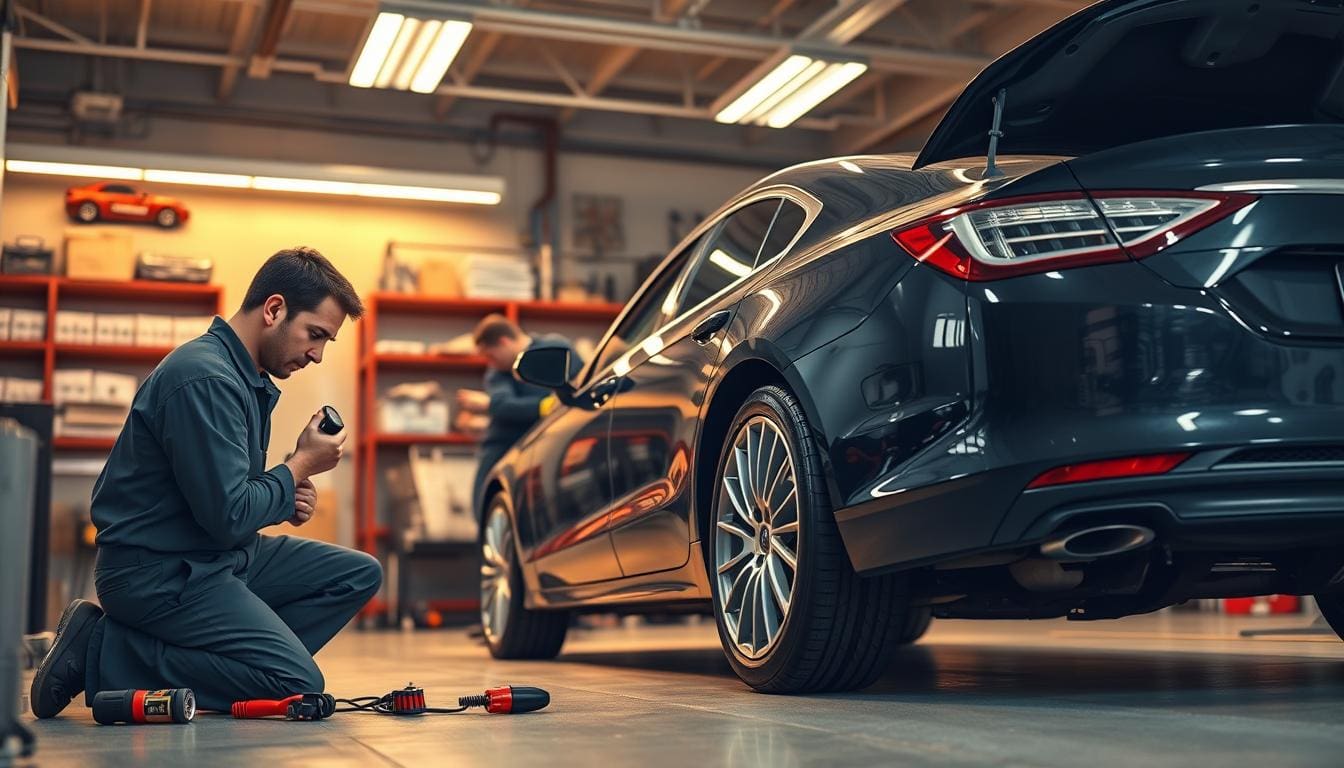
At Heaven Automotive, we perform clear, buyer-focused pre-purchase reviews so you can decide with confidence. Our goal is to deliver decision-grade information about safety, reliability, and near-term costs—not to sell you on a specific vehicle.
We start with document checks, then move to an exterior walkaround, under-hood checks, underbody evaluation, and a road test when appropriate. Each phase focuses on observable condition, test results, and documented history.
What we can do: identify current faults, highlight warning signs, and estimate likely repairs in a written report. What we can’t do: guarantee future performance or find every hidden fault without disassembly.
This approach protects your budget, reduces purchase risk, and gives clear steps you can take before money changes hands. We keep our process objective, repeatable, and easy to act on.
Key Takeaways
- Heaven Automotive gives clear, buyer-first vehicle evaluations.
- We provide a written summary of condition and likely repairs.
- Our process: documents, exterior, under-hood, underbody, and road test.
- We identify warning signs but cannot promise future fault-free use.
- Findings help protect your budget and reduce buying risk.
Why We Recommend a Pre-Purchase Vehicle Inspection Before You Buy
An independent assessment shows what photos and promises often miss, so you buy with evidence. We focus on clear findings that help you weigh safety, near-term costs, and resale risk.
How outside eyes find what a seller or dealer may miss
Dealership service teams and private sellers can miss subtle signs of damage or deferred maintenance. An outside mechanic spots inconsistencies like fresh detailing hiding leaks or cosmetic fixes masking mechanical faults.
“An outside mechanic can find damage or potential repairs a dealer repair shop might have missed.”
How a written report supports negotiation and repair planning
We deliver a concise report with photos and cost estimates. Typical checks cost about $100–$150, and a clear report gives leverage for price adjustments or repair requests.
| Outcome | What it shows | How you use it |
|---|---|---|
| Minor service need | Fluids, brakes, tires | Ask seller to repair or deduct price |
| Major repair | Engine, transmission, frame | Renegotiate price or walk away |
| Clean bill | No immediate issues | Buy with confidence and plan routine maintenance |
We translate findings into clear next steps, help you ask better questions, and make sure the vehicle matches your expectations before purchase.
What to Gather Before We Inspect the Car
Before our visit, a small packet of details helps us work efficiently and align expectations. We ask for basic items that let us focus the physical checks on what matters most.
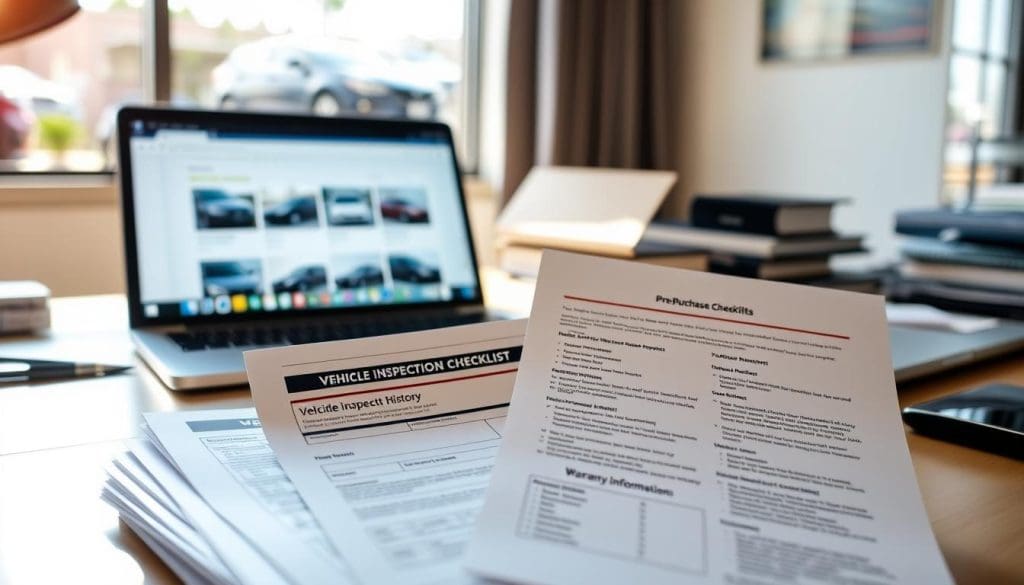
VIN, listing details, and seller communication
Please send the VIN, the online listing link, recent photos, and any messages from the seller. We review claimed options and maintenance notes so we know what to verify on site.
Why this matters: the VIN anchors configuration, helps confirm the vehicle matches paperwork, and highlights recalls or mismatched options.
Vehicle history sources we use
For VINs from 1982 onward we check CARFAX-style reports to see accidents, ownership patterns, service entries, and open recalls.
These reports flag issues that affect safety and near-term cost and help us prioritize systems during our hands-on review.
Title and record checks we recommend
We advise buyers to run NMVTIS and state title-status tools to verify no liens, salvage branding, or theft records. This step reduces unexpected legal or financial risk.
- Send VIN, listing, photos, claimed options, maintenance notes, and seller messages.
- We use the VIN to confirm configuration, recalls, and match to paperwork.
- We review seller communication for red flags and helpful context.
- Run CARFAX-style reports for 1982+ VINs and check NMVTIS/state title resources.
Bottom line: good inputs save time and make our evaluation more targeted, but paperwork does not replace a hands-on check. Bring documentation and plan questions so we can make sure priorities are clear when we arrive.
Our Used Car Inspection Walkaround and Body Condition Checks
We begin the visible review of a vehicle with a methodical walkaround that highlights safety and repair risks. Our approach gives a clear read on exterior condition and helps buyers spot issues that affect value and safety.
Paint, panel alignment, and prior repairs
We assess the body in consistent light, checking panel gaps and reflections for mismatched paint or overspray. These are common signs of prior repairs and can point to hidden damage.
Rust-prone areas and underbody clues
We focus on rust where road salt is used. Surface rust near pinch welds may be cosmetic, but corrosion on subframes or seams is a structural concern.
Glass, lights, and exterior hardware
We verify headlights, brake lights, and turn signals work and that lenses sit tight. Cracked glass or loose trim often lead to visibility or replacement costs.
Water-damage signals and odors
Musty smells, damp carpets, silt in crevices, or unexpected corrosion are red flags for water entry. Flood indicators can change the whole buying decision.
What this means for buyers: minor scuffs and paint wear are fixable, but structural rust, clear flood signs, or poor repairs can be deal-breakers. We document findings and explain repair scope so you can negotiate or walk away with confidence.
Under the Hood: Engine, Fluids, and Computer Diagnostics
We open the hood to focus on systems that most affect long-term reliability and near-term repair costs.
First, we check fluid levels and sample condition: oil, coolant, brake fluid, and transmission fluid where accessible. Oil color, a burnt smell, or a milky appearance can signal serious engine trouble or coolant mixing. Low or contaminated fluid often points to neglect.
Belts, hoses, radiator, and battery
We inspect belts and hoses for cracking, swelling, softness, and signs of age or wear. Small failures here can cause major breakdowns if ignored.
Radiator fins, clamps, and battery terminals get a close look for corrosion or damage. Battery condition affects starting and charging, while cooling issues can lead to engine overheating and costly repairs.
OBD-II scan and interpreting codes
We run an OBD-II scan to read DTCs for engine, transmission, ABS, and airbag systems. Codes point to systems that need attention, but they don’t tell the whole story.
How we combine results: scan data plus visible leaks, fluid condition, and road-test behavior give us context. That lets us classify issues into immediate repairs, expected maintenance, or items to monitor.
| Check | What we look for | Buyer impact |
|---|---|---|
| Oil & fluids | Level, color, smell, contamination | Signals engine health and service needs |
| Belts & hoses | Cracks, softness, swelling, clamps | Replacement cost and failure risk |
| OBD-II codes | Engine, transmission, ABS, airbags | Pinpoints systems needing diagnosis or repair |
Bottom line: our under-hood checklist turns observable clues into clear guidance so you know what work is likely now, and what can wait.
Underbody, Brakes, Suspension, Tires, and Steering Checks
We crawl under to find rust, brake wear, and suspension faults that affect safety and cost. Our underbody review shows real life: road-salt exposure, impact damage, and neglected maintenance leave clear traces beneath the vehicle.
Brake wear indicators and safety risks
We look for pad thickness, rotor scoring, and heat discoloration. Poor brake feel—soft pedals, grabbing, or pulsation—often means pads, rotors, or calipers need near-term repair.
Suspension and steering warning signs
We inspect shocks, struts, control arms, and tie rods for leaks, torn boots, or looseness. Uneven tire wear patterns—inside edge wear, cupping, or feathering—point to alignment or suspension problems that also affect steering control.
Tread depth and quick testing
We read tires for tread depth and damage. A simple penny-style test is quick: if Lincoln’s head is fully exposed, replacement is likely. Tread links directly to wet-weather traction and short-term replacement planning.
- We document undercarriage rust, especially in salted-road regions.
- We flag braking items that are safety priorities, not just negotiation points.
- We report suspension and steering issues that cause clunks or rapid wear.
Bottom line: our hands-on checks convert visible clues into clear next steps so you can weigh safety, immediate cost, and longer-term maintenance with confidence.
Road Test: What We Evaluate While Driving
We validate how the vehicle behaves on the road to uncover faults that only appear while driving.
Our road test covers acceleration, steady cruising, and braking so we can see real-world performance. We note how the vehicle responds from a stop and how it holds speed on the highway.
Transmission, acceleration, and braking behavior
We watch for smooth transmission shifts, hesitation, flare on downshifts, or harsh engagement. Those signs often point to tune-up or deeper service work.
Braking feel is checked for pedal firmness, grab, and fade during repeated stops. That reveals brake-pad condition and hydraulic health.
Noises, vibrations, and suspension checks
We listen for pops, creaks, squeals, and roaring that show under load. These sounds can indicate worn suspension parts, tire defects, or other issues that affect handling.

Operating temperature and post-drive recheck
We bring the vehicle to operating temperature and then recheck under the hood for leaks, new smells, or fluid loss. Some cooling or seal problems only appear when systems are heat-soaked.
| What we test | What we look for | Buyer impact |
|---|---|---|
| Acceleration & transmission | Smooth shifts, hesitation, harsh engagement | May signal transmission service or engine tuning |
| Braking response | Pedal feel, grab, fade | Safety priority; immediate work may be needed |
| Highway readiness | Stability at speed, steering tracking | Confirms confidence for interstate travel |
| Noises & vibrations | Pops, creaks, squeals, roaring | Often indicates suspension, tires, or brake issues |
Practical note: the road test often reveals problems that paperwork misses. We recommend waiting for our report before finalizing any purchase plans to avoid surprises on the day you drive it home.
Conclusion
We finish by connecting document checks, the walkaround, under-hood tests, underbody review, and the road test into one concise verdict. That summary shows the vehicle’s safety and near-term service needs in plain terms.
Our written report turns hands-on findings and history checks into usable information you can use to negotiate price, plan repairs, or walk away. We highlight hidden damage, rust, water signs, low fluid condition, and drivability issues so you know what matters now versus later.
Keep the report, ask pointed questions of the seller or dealer, and budget repairs by safety priority. If you want the work done, hire Heaven Automotive and we will bring the vehicle up to a reliable baseline.