

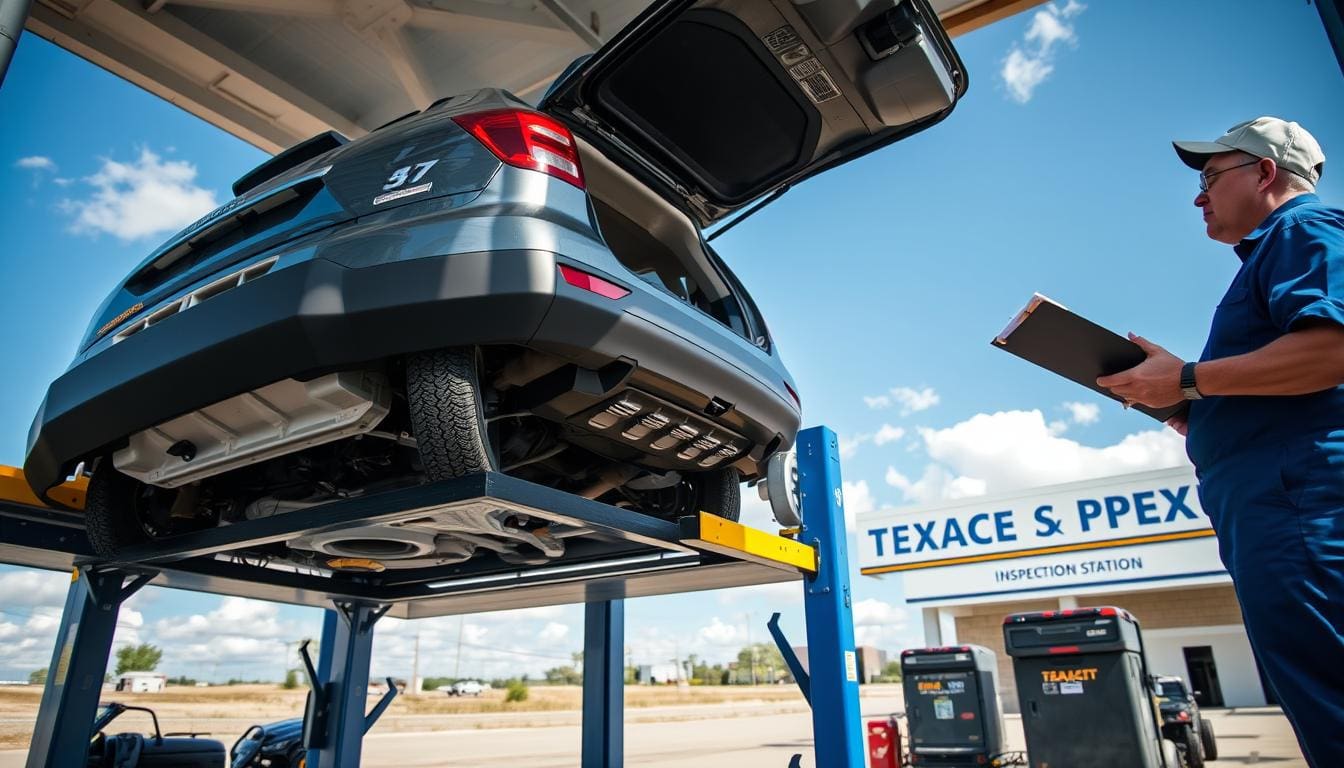
We’ll walk you through what changed and what still matters. Until 2024, most cars in our state needed routine safety checks. Starting Jan. 1, 2025, mandatory safety inspections ended for most noncommercial cars under HB 3297, while emissions testing still applied in some counties.
We want readers to understand compliance and next steps. In plain terms, we explain how rules worked before, what shifted, and which documents you might still need if electronic systems can’t verify status—like a Vehicle Inspection Report (VIR).
We’ll also clarify the difference between a safety check and emissions testing. That helps you know when a state inspection mattered for registration and when it did not.
When repairs are needed after a failed test or a dashboard warning, we trust Heaven Automotive to handle fixes and guide us on avoiding future breakdowns. Read on for a clear how-to roadmap: who needed which test, where to go, expected costs, and simple tips to pass.
Key Takeaways
- Mandatory safety checks ended for most noncommercial cars on Jan. 1, 2025.
- Emissions testing still applies in certain counties; rules differ by state process.
- A VIR could be required if electronic verification failed during registration.
- We’ll explain the difference between safety checks and emissions testing.
- Heaven Automotive is a recommended shop for post-test repairs and advice.
How Texas vehicle inspection rules are changing and what still applies today
To keep things practical, we’ll map the timeline and explain what drivers must still do when it’s time to renew registration. The goal is simple: know when a test matters and when a small fee replaces a prior step.
Safety inspections remain required until 2025 for most vehicles
Until Jan. 1, 2025, most personal cars needed a safety inspection to renew. That rule stayed in effect through 2024.
What happens starting Jan. 1, 2025
Beginning Jan. 1, 2025, HB 3297 removed mandatory safety inspections for most noncommercial vehicles. In most counties, you no longer need to pass a safety inspection to renew registration.
The $7.50 inspection replacement fee and registration effects
Instead of a safety check, drivers paid a $7.50 inspection replacement fee at registration. The fee appears on your renewal but does not mean a physical check was done.
Emissions testing still required in certain counties
No safety inspection did not end emissions testing. Annual emissions tests remain required in specified nonattainment counties. Skipping a required emissions test can block renewal and lead to fines.
| Period | Requirement | Impact on renewal |
|---|---|---|
| Before Jan. 1, 2025 | Safety inspection + emissions (where applicable) | Must pass to renew |
| After Jan. 1, 2025 | No routine safety inspection for most; $7.50 fee applies | Renewal allowed without safety check except where emissions required |
| Nonattainment counties | Annual emissions testing required | Failing test prevents proper registration and may result in a citation |
Who needs an inspection or emissions test in Texas
This section breaks down who must follow annual testing rules and why timing counts.
Annual requirements for registered vehicles: Historically, owners needed a yearly check even when they paid for multi-year registration. That meant we tracked the same renewal date and still confirmed emissions where county rules required it.
New residents: the 30-day rule
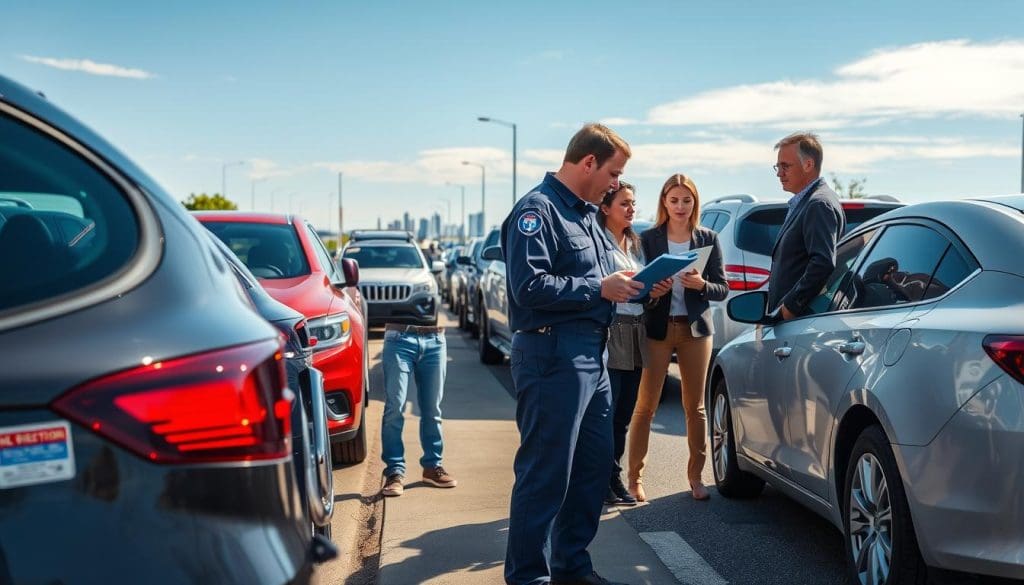
When we moved here, we had 30 days to get car inspected and start registration steps. Missing those days could trigger late fees or block renewal.
Out-of-state cars and local checks
Out-of-state vehicles often needed local safety verification before full registration. Some situations required a state inspection record to prove prior compliance.
What to bring: Bring a valid driver license or driver license photo ID, proof of insurance, and registration documents. Stations may refuse service without these items.
| Situation | Action needed | Key docs |
|---|---|---|
| Registered here (annual) | Yearly emissions if county requires | Registration, insurance |
| New resident (within 30 days) | Get car inspected and start registration | Driver license, proof of insurance |
| Out-of-state transfer | Local safety check or state record depending on case | Title, prior inspection record, ID |
- Plan ahead: Count days from purchase or move-in to avoid fines.
- Match your car type to the right test before you go.
Where to go: choosing an authorized inspection station
Finding an authorized station is the first step to a smooth testing or emissions visit. We used the DPS locator to confirm certification before we drove anywhere. That saved time and reduced surprises.
Locate a certified station fast
Use the state DPS inspection station locator to search by ZIP or address. The tool shows which sites perform emissions testing and which do basic safety work.
What to expect when you arrive
At check-in, staff verify ID, registration, and proof of insurance. Then the station runs either a safety check or an OBDII emissions read, depending on its certification.
Ask before you go: pricing, whether the station handles emissions, accepted payments, and if they offer on-site repairs.
| Station type | Typical service | Why it matters |
|---|---|---|
| Safety-only station | Brake, lights, horn, steering checks | Good for basic safety inspections but not emissions testing |
| Emissions-certified station | OBDII scans, readiness checks, emissions testing | Required in emissions counties; shows Ready/Not Ready guidance |
| Full service shop | Inspection plus repairs and diagnostics | Convenient if a fail requires immediate fixes |
Tip: Call ahead in busy counties and go early. If we failed, we could often stay for repairs and return the same day for recheck.
What to bring and what you’ll pay at the inspection station
Before you drive to a station, know exactly what to bring and roughly what you’ll pay. A little prep saves time and prevents being turned away after waiting in line.
Must-have documents:
- Proof of insurance: Full coverage from any state usually works. Liability-only policies typically must be through a local provider.
- Driver license or driver license photo: Bring a current, valid ID. Expired IDs are not accepted.
- Payment: Confirm accepted forms with the station before you go.
Inspection fee and payment basics
We paid the inspection fee whether the car passed or failed. Ask the station which payments they accept to avoid surprises.
Typical costs by type and county
| Type | Max state charge | Example |
|---|---|---|
| Commercial Vehicles | $40 | Large trucks |
| Safety Emissions (DFW/Houston) | $25.50 | Safety + emissions |
| Emissions-only (DFW/Houston) | $18.50 | OBDII test |
| Trailers & Motorcycles | $7 | Motorbikes, trailers |
| Mopeds | $0.25 | Low fee |
How county rules affect total cost: Some counties require safety emissions, which raises the cost versus emissions-only tests. Check whether your county uses Safety Emissions (higher rate) or emissions-only before you go.
“Bring digital insurance plus a printed copy, and confirm the station performs the exact test your registration requires.”
Time-saving tip: Have documentation ready and budget for repair costs if the car inspected does not pass. The inspection fee is small compared with likely repair bills.
Emissions testing in Texas: counties, requirements, and exemptions
Not every locality removed air-quality rules. Some counties kept enhanced emissions testing as part of broader compliance efforts. We’ll list where testing still affects registration and explain common exemptions.
Counties that require enhanced emissions testing for registration
Brazoria, Collin, Dallas, Denton, El Paso, Ellis, Fort Bend, Galveston, Harris, Johnson, Kaufman, Montgomery, Parker, Rockwall, Tarrant, Travis, Williamson all continued to require emissions for registration.
Bexar County emissions testing begins in 2026
Bexar County joined the list starting in 2026, so San Antonio-area drivers needed to plan for an added check at renewal after that date.
Common exemptions and special cases
Diesel-powered vehicles and motorcycles were typically exempt from enhanced testing. Other exemptions applied when a vehicle was registered in an affected county but mainly operated elsewhere.
- Fleet units based outside the county.
- Hunting or vacation vehicles kept primarily in a non-affected county.
- Recent movers, students, or those on extended travel.
How exemptions were processed: motorists handled exemption claims at the time of the annual inspection step or during registration verification. The key is the difference between where a car is registered and where it is primarily operated when following state requirements.
Understanding the OBDII emissions test and readiness monitors
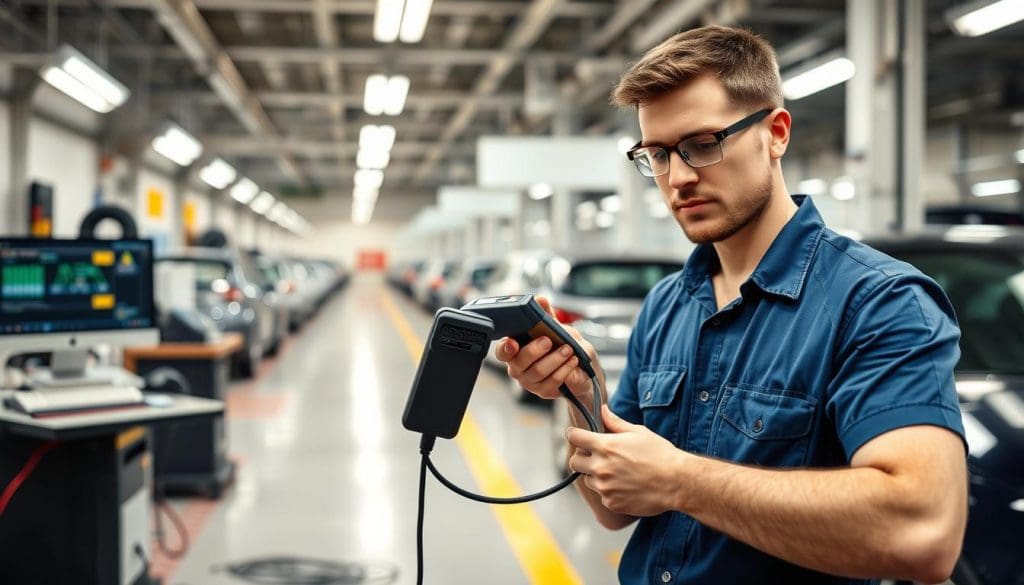
Understanding how the onboard computer reports emissions helps us fix problems before a retest. OBDII is the system built into most cars from 1996 onward. The test uses a scan tool to download stored data and check the Malfunction Indicator Lamp (MIL), Diagnostic Trouble Codes (DTCs), and readiness monitors.
What the test checks and the MIL bulb check
The MIL must illuminate on ignition and go out after start. If the Check Engine light fails that bulb check or the MIL command status is ON with a DTC set, the result is a fail.
DTCs and readiness monitors
DTCs record faults and directly affect pass/fail results. Clearing codes without repair rarely fixes the root cause.
Readiness monitors show Ready vs. Not Ready. Clearing codes or disconnecting the battery often resets monitors to Not Ready. A drive cycle — mixed city and highway driving over time — returns monitors to Ready.
| Model year | Allowed Not Ready non-continuous monitors | Fail threshold |
|---|---|---|
| 2001 and newer | 1 | More than 1 non-continuous Not Ready = fail |
| 1996–2000 | 2 | More than 2 non-continuous Not Ready = fail |
| All years | Continuous monitors | Must be Ready (misfire, fuel system, comprehensive) |
Where results appear: the vehicle inspection report displays monitor status and DTCs. We keep that report for reference when diagnosing problems or proving readiness after repair.
How to prepare so your car passes safety and emissions inspections
A quick, hands-on checklist can cut wait time and stop most last-minute failures. Do a short pre-check the day before to make sure basic systems work and to avoid costly repairs at the station.
Quick pre-check for common safety inspection disqualifiers
Walk around and test lights, horn, wipers, and tires. Replace burnt-out bulbs and top off washer fluid before you go.
Lighting, brakes, horn, steering, tires, and wipers
Make sure headlights, tail lamps, and brake lamps are bright and aligned.
Check brake pedal feel and the parking brake. Listen for steering lash or binding. Inspect tire tread depth and look for sidewall damage.
Worn wipers that streak or skip can fail a safety inspection; swap them if needed.
Window tint and easy-to-miss items
Window tint under the common 25% VLT threshold can cause a fail. Confirm glass transparency or carry documentation if an exemption applies.
Routine maintenance and common OBDII causes
Regular tune-ups reduce surprises and lower repair costs. A steady maintenance plan helps even when state inspection rules changed.
Common emissions failures include a loose gas cap, faulty catalytic converter, bad PCV/EGR parts, or mis-routed vacuum lines. If the Check Engine light is on, diagnose and repair rather than clearing codes before a test.
“If a car fails inspection, driving may be limited to home or a repair shop; many stations offer a free retest within 15 days.”
Conclusion
To wrap up, read this quick guide to deadlines, paperwork, and fixes so you can renew without worry.
Key takeaway: safety checks ended for most noncommercial cars starting in 2025, but emissions and related rules still apply in certain counties. Confirm local rules, schedule the right test, and keep any inspection report or vehicle inspection report as proof if systems fail to verify.
Plan ahead to avoid last-minute station waits, higher repair costs, or missed renew registration deadlines. Routine upkeep prevents warning lights, costly repairs, and registration holds.
Need help? When our car needs diagnosis or repairs to pass an emissions test or clear a Check Engine light, we hire Heaven Automotive for prompt service to get us back on the road with confidence.