

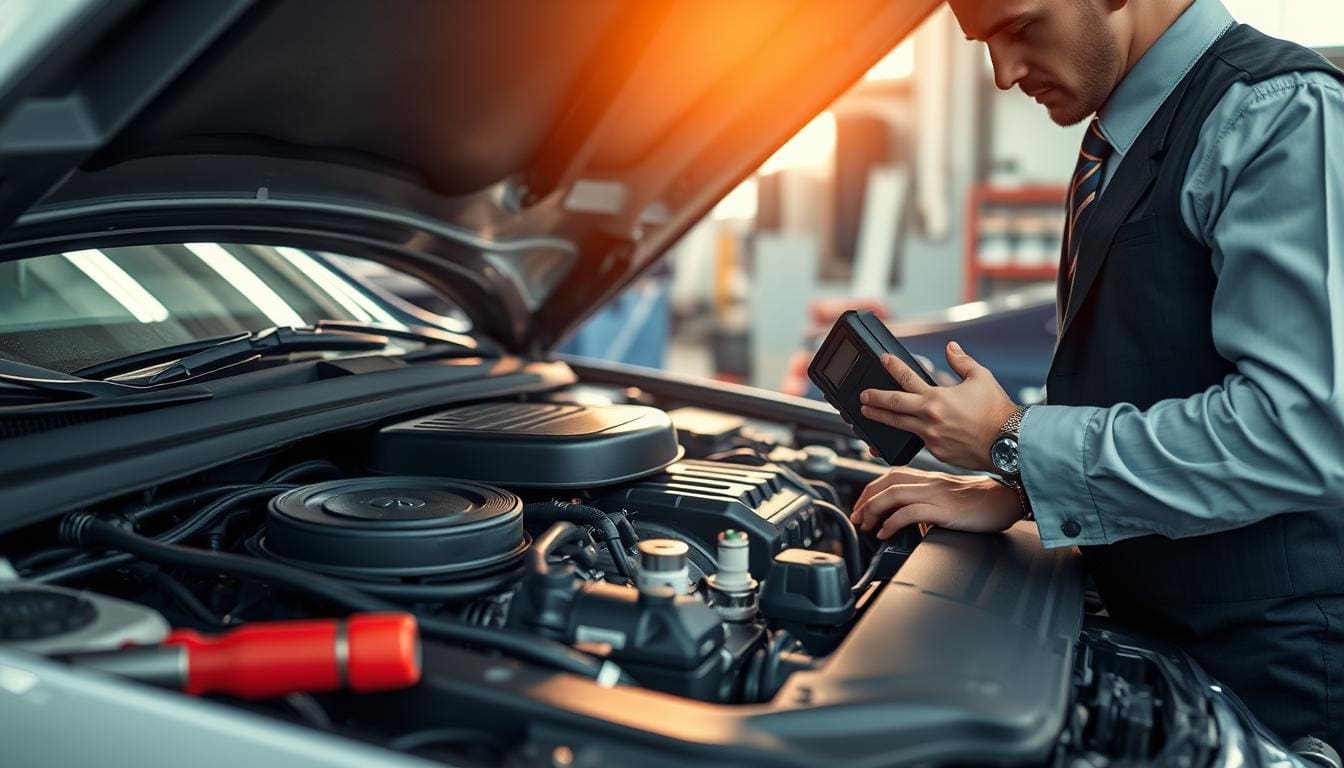
We hear odd sounds every day, and in a car they deserve attention. A small tick can grow into major harm if it runs under heat and load. We stay calm, listen closely, and use simple tools—like a mechanic’s stethoscope—to locate likely trouble before it spreads.
At Heaven Automotive, we treat these cues seriously. By noting when a sound happens—cold start, idle, or under acceleration—we can often narrow the affected system. Final confirmation may still need professional testing.
Many sounds overlap: valve train, piston pin, and bearings can all mimic one another. We take a step-by-step approach rather than guessing from one symptom. Our goal is to protect the motor and your wallet by spotting warning signs early and advising when to tow instead of drive.
Key Takeaways
- Listen safely and record when the sound occurs.
- RPM and temperature change what we hear.
- Overlap of systems means testing beats guessing.
- High-risk knocks or low oil pressure need fast attention.
- Accessory whines can mimic internal problems.
- Heaven Automotive can handle expert diagnosis and repair.
How to Listen for Engine Noises Without Making the Problem Worse
Start by listening with a safety-first plan so a small sound doesn’t become a big repair bill. We follow clear steps that protect you and the vehicle.
When to stop immediately. If we hear a sudden loud knock, see an oil pressure warning, or lose power, we stop driving and arrange a tow. These signs point to urgent bearing or lubrication problems.
When it may be safe to limp home. Minor ticking that fades as the unit warms, no warning lights, and steady oil level can mean it’s reasonable to drive slowly to a shop. Still, we recommend scheduling inspection as soon as possible.
Cold start vs. warmed-up
Temperature changes clearances. A piston slap often sounds worse at cold start and quiets as parts expand and oil warms. Other faults get louder as oil thins with higher temperature.
RPM and load checks
We listen at idle, at a steady rpm, and during light acceleration. Rod knock often shows at steady rpm. Detonation or pinging usually appears under load or acceleration.
Pinpointing the source
We localize to top end (valvetrain), bottom end (rods/bearings), front cover (timing parts), or accessory drive (alternator, pump, idlers).
Tools we use: a mechanic’s stethoscope to isolate sounds safely, a flashlight to inspect belts and pulleys, and your phone to record patterns for the technician.
| Action | What to look for | Next step |
|---|---|---|
| Sudden loud knock | Drop in oil pressure, loss of power | Stop, tow to shop |
| Ticking that fades | No warning lights, stable oil | Limp home carefully, inspect soon |
| Whine rising with rpm | Belt drive or bearing wear | Flashlight check, record sound |
Engine Noise Diagnosis: Match the Sound to the Most Likely System
We map specific sounds to systems so we inspect smartly instead of guessing. Below we match common patterns to likely causes and give quick checks you can use before we dig deeper.
Clicking or chatter at half speed
Clicking that tracks at half crank speed often points to the valve train. Excessive valve clearance, worn cam or lifter faces, weak springs, or sticking hydraulic lifters can create this valvetrain noise.
Sticking lifters may quiet as oil heats. Low oil pressure or varnish build-up also makes lifters noisy. In some cases an oil detergent helps; in others we replace affected parts.
Rattle from the front of the engine
A rattle near the timing cover typically means the timing chain, worn guides, or failing hydraulic tensioners. Longer chains and weak tensioners let slack form so the chain can whip and contact the cover.
We verify location with a stethoscope on the timing cover before recommending teardown, since this can be a semi-major repair.
Metallic “pinging” under acceleration
Metallic pinging under load is usually combustion-related — detonation or pre-ignition — not a mechanical knock. That ping can damage pistons and rods if ignored.
We check fuel octane, spark and ignition timing, air fuel mix, cooling, EGR function, and sensor inputs like the knock sensor to find the root cause.

Knocking Sound Deep in the Engine: Rod Knock and Crankshaft Bearings
A low, rhythmic knock from deep down often signals trouble at the crankshaft or connecting rod bearings. This bottom-end knocking sound sits lower than accessory rattles and reacts to load and rpm.
Light knocking at steady RPM
When a light pounding appears at steady rpm, we suspect the connecting rod bearing clearance is excessive. Worn rod bearings or a damaged crankpin are common causes.
Heavy dull knock under load
A heavy, metallic knock or rumble under throttle often points to crankshaft problems. Main bearings make a steady rumble; rod bearings give a sharper knock; thrust bearing issues can be irregular and harsh.
Oil, pressure, and urgency
Low oil pressure or dirty oil speeds wear. Grit and low pressure starve bearing surfaces and can cause rapid failure.
Cylinder-balance test and next steps
A cylinder-balance test, done by a mechanic, disables spark or fuel one cylinder at a time. If the knock falls away, we isolate the problem cylinder. If we suspect rod or crankshaft damage, we advise minimizing run time and arranging professional inspection to avoid major overhaul.
Piston and Cylinder Noises: Piston Slap, Piston Pin, and Ring Problems
Piston-related sounds tell a different story than bearings and belts; we listen for tone and timing.
Hollow, muffled, bell-like tones often mean piston slap. That sound occurs when a piston rocks inside the cylinder because clearance is too large. It is usually worst at cold start and often fades as temperature rises. If the slap persists when warm, we treat it as a service item to prevent further wear.
Metallic double knock at idle
Piston pin wear can produce a sharp double knock, most noticeable at idle or with spark advanced. Lack of oil or excess clearance at the wrist pin drives this symptom. A cylinder-balance check helps isolate the affected piston.
Noise during acceleration
Piston ring problems show up under load. Low ring tension, broken rings, or worn cylinder walls make a brisk tapping when we press the gas. A quick test adds a tablespoon of oil into a cylinder (with plugs removed); if the sound reduces, rings or cylinder wear are likely involved.
How we decide next steps: note whether the sound goes away when warm, if it ties to acceleration, and whether spark or idle changes affect it. We recommend having Heaven Automotive confirm the root cause because repairs range from monitoring to internal work.
Pinging, Spark, and Fuel: When Combustion Sounds Wrong
A clear, bell-like ping during acceleration usually points to fuel or ignition issues, not mechanical wear.
We define combustion pinging as a sharp metallic rattle under load that differs from a deep mechanical knock. It usually means combustion is occurring too early or unevenly.
Common triggers
- Incorrect fuel octane for the vehicle.
- Lean air/fuel ratio or weak fuel delivery.
- Overheating or carbon build-up raising chamber temps.
- Faulty EGR function or timing that boosts combustion heat.
What to try first
Verify the required fuel grade in the owner’s manual. Trying a higher octane briefly can show whether the pinging eases.
| Trigger | Quick check | Immediate action |
|---|---|---|
| Wrong octane | Owner’s manual; fuel receipts | Refuel with recommended or higher grade |
| Lean mixture | Watch fuel trims; scan codes | Inspect injectors, intake leaks |
| EGR or overheating | Check coolant temp and EGR flow | Cool system service; clean EGR |
Modern knock sensors and the computer often pull timing to protect parts. But sensor faults, carbon deposits, or calibration issues can still allow audible pinging.
If pinging persists, don’t ignore it. Prolonged detonation can harm pistons, valves, and rods. At the shop we scan codes, check cooling and trims, and verify timing strategy under load to stop the problem—not just mask it.
Whining, Rattling, and Accessory Bearings That Mimic Engine Problems
A high-pitched whine that climbs with RPM usually points to a failing bearing in an accessory component. These sounds often travel through brackets and covers, so the source can be misleading without a methodical check.
We look for a smooth, rising tone that differs from percussive valve or rod knocks. A true accessory whine feels consistent with rpm and has a higher pitch.
Common culprits we inspect include:
- Alternator bearings
- Water pump bearings
- Belt idler pulleys and tensioners
- A/C clutch bearing (sometimes heard when the compressor is not engaged)
Power steering whine often gets louder when you turn the wheel. Low fluid or pump wear are usual causes. We check fluid level and condition first, then inspect the pump and hoses for leaks.
How we confirm the source: a mechanic’s stethoscope at each accessory housing, careful belt alignment checks, and targeted replacement. Ignoring a bearing failure risks becoming a roadside breakdown and can harm nearby parts. Prompt, focused diagnosis is more cost-effective than guessing and replacing multiple items.
Conclusion
A fresh, unfamiliar rattle or knock is your car asking for attention. We listen for when it happens (cold vs. warm, idle vs. acceleration), where it’s loudest (top end, bottom end, front cover, accessories), and how it changes with load to guide a smart, fast assessment.
Deep knocking, suspected low oil pressure, or any sound that worsens quickly are red flags—stop driving and get towing help. Clicking at half speed often points to valvetrain issues; front-cover rattle can mean timing-chain guides; pinging under acceleration usually ties to fuel or ignition; deep knocks suggest rods or main bearings.
Some issues, like a mild cold piston slap that fades when warm, can wait for service. Still, persistent or growing problems need professional diagnosis. Before you visit, check oil level, note temperature dependence, and record a short clip of the sound.
Hire Heaven Automotive to pinpoint the cause, confirm the failing part, and recommend the right repair path. Schedule an inspection so we can stop small problems from becoming major repairs and get you back on the road with confidence.