

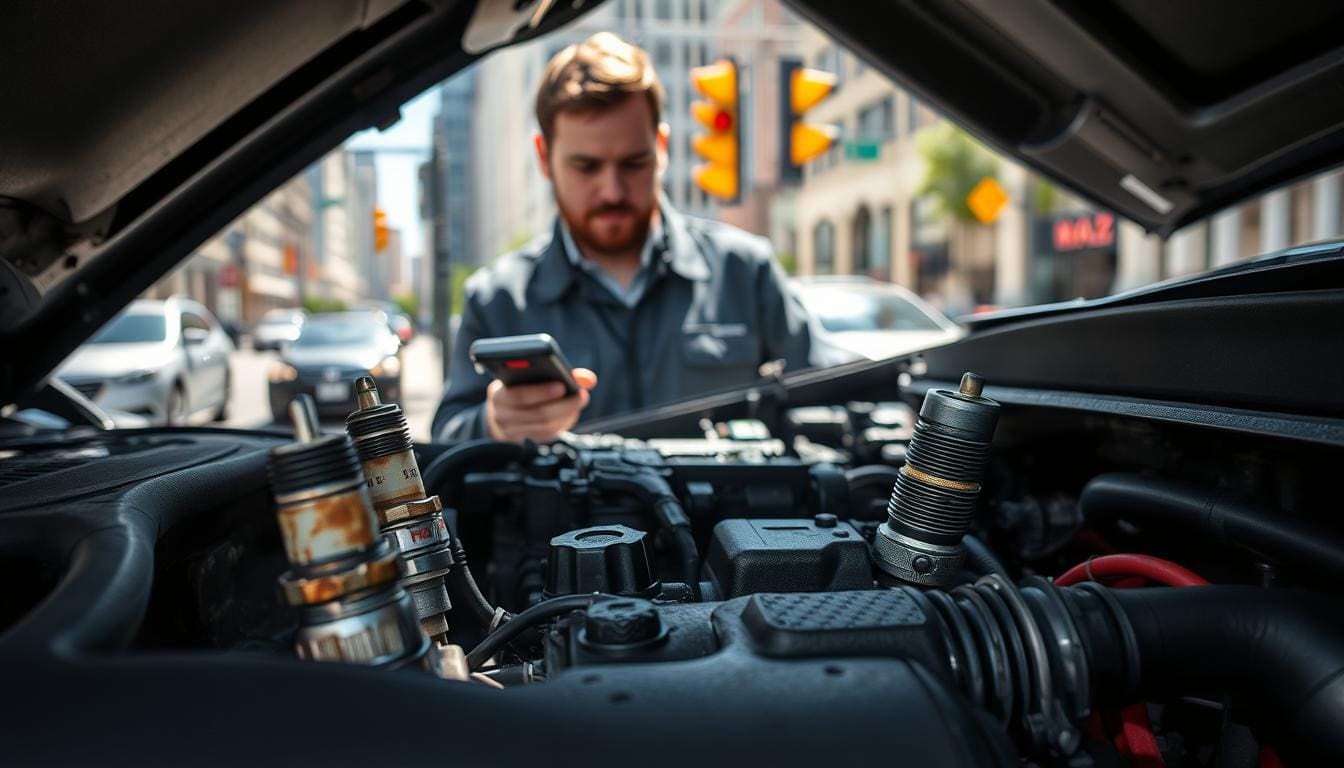
At Heaven Automotive, we see drivers pull up to a red light and tell us their engine feels like it’s shivering. That fluttering or stalling sensation is a sign the engine isn’t running smoothly at a stop. We treat this as an early warning that can save the car from bigger damage.
When idling should feel steady and consistent, any shaking points to uneven combustion, fuel or air imbalance, or control issues. We explain the symptoms, list the likely causes, and show how we diagnose each fault in our shop.
Some cases are maintenance-related and simple to fix; others hint at mechanical or compression trouble that needs faster attention. We preview the systems involved—spark and ignition, fuel delivery, air intake and vacuum, sensor feedback, and sealing inside the engine—so you know why the solution depends on the root cause.
Key Takeaways
- We spot engine shuddering at lights as a common early warning sign.
- Normal idle is steady; any shaking suggests fuel, air, or ignition faults.
- Problems range from routine service to serious mechanical issues.
- We diagnose with targeted tests on ignition, fuel, air, sensors, and sealing.
- Early action reduces the risk of further engine damage.
What Rough Idling at Stoplights Feels Like and What It Tells Us
At a stoplight, an unsettling shake or a bouncing tachometer can tell us the engine isn’t firing evenly. These sensations give us immediate clues about combustion, fuel delivery, or air metering issues that show up when the engine load is low.
Common signs you’ll notice
You may feel the steering wheel vibrate or sense a low-frequency buzz through the seat. The RPM needle can hunt up and down instead of holding a steady value.
Each of these symptoms points to uneven cylinder contribution. At idle, every misfire or mixture swing feels larger because the engine has little load to mask it.
When a rough idle turns into stalling
An unstable idle can dip low enough that the engine stalls at a red light. That becomes a safety risk and a reliability concern if it repeats over time.
Repeated stalls usually mean the underlying condition is getting worse, not better, and prompt diagnosis prevents secondary damage.
Why the check engine light matters
The check engine light can be the first objective clue. Stored codes and sensor data often reveal misfires, a lean or rich mixture, or airflow sensor faults—even when the car still drives.
Documenting conditions—cold start vs warm, A/C on vs off, in gear vs park—helps us trace the fault faster and set the right fix without guesswork.
Common Causes of Car Idling Rough
A trembling engine at low throttle can flag failing ignition parts or an imbalanced fuel-air mixture. We walk through the likely systems so you know when a simple check is enough and when to bring the car to our shop.
Spark plugs and ignition
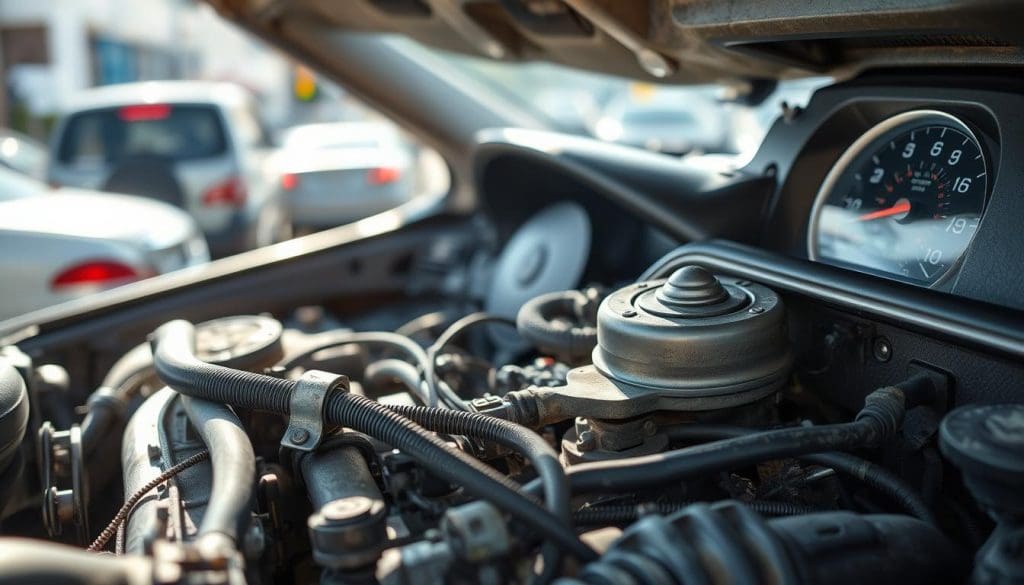
Worn spark plugs, failing coils, or damaged wires cause misfires that show up worst at idle. Combustion becomes uneven and the engine can shake, pop, or smell from the exhaust.
DIY tip: Inspect plugs and wires for obvious wear. Replace per the manufacturer schedule. For repeated misfires, we recommend professional testing to avoid catalytic damage.
Sensors and valves that affect mixture
Bad MAF, O2, or temperature sensors or a stuck PCV/EGR valve give the engine computer wrong data. That skews fuel trims and creates an unstable idle and surging.
Vacuum leaks and intake problems
Cracked vacuum hoses, loose clamps, or intake manifold gasket leaks let unmetered air in. That lean condition destabilizes idle and can lead to stalling.
Fuel delivery and idle control
Dirty injectors, a clogged filter, or a weak pump reduce accurate fuel flow. An IAC valve or its equivalent can stick from carbon buildup and fail to hold steady idle speed.
Air filter and serious mechanical causes
A clogged air filter can upset mixture control at transitions into stop-and-go traffic. More severe issues—bad valve sealing, compression loss, or a blown head gasket—cause imbalance between cylinders and often add white smoke or coolant loss.
Note: Multiple small faults can stack. We test systems methodically to avoid parts swapping and to restore smooth operation quickly.
How We Approach Rough Idle Repair at the Shop
We start every diagnostic with data because what the engine control sees guides the whole fix.
Computer diagnostics and live data
We scan for stored trouble codes and watch live sensor streams to narrow issues quickly. The check engine light may be off, but hidden codes often point to failing sensors or misfires.
Hands-on inspection
Next we inspect plugs, coils, connectors, and the air filter area for obvious wear or leaks. We pressure-test lines and check the intake manifold area so cracked hoses or loose clamps aren’t missed.
Fuel and airflow testing
We test injectors, measure fuel pressure, and verify MAF and O2 sensor accuracy. Comparing commanded values to actual readings tells us if the problem is fuel delivery, air measurement, or mechanical combustion loss.
Confirming the fix
After parts or adjustments, we verify stable idle behavior, smooth combustion, and improved drivability on a test drive. Confirming results prevents comebacks and protects the exhaust and emissions system.
Our goal: find the root cause and complete the correct fix the first time so engine performance and fuel mixture return to spec.
How to Fix a Rough Idle at Home With Preventive Maintenance
Small, regular checks on fluids and service items often stop in‑city drivability problems before they start. We share simple steps you can do at home to keep the engine smooth and reduce the chance of a rough idle at lights.
Follow manufacturer intervals for fluids, spark plug service, and inspections
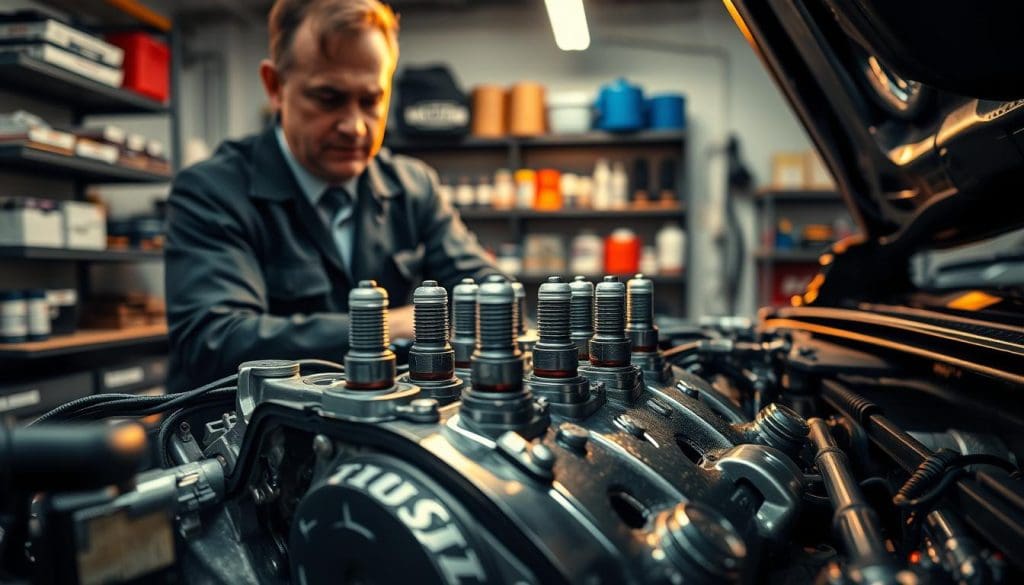
Check your service schedule. Track oil, coolant, and scheduled spark plug replacement. Replacing worn plugs and old fluids on time is the fastest way to protect combustion and mileage.
Inspect hoses and wiring for wear, cracks, and loose connections
Visually inspect vacuum hoses, connectors, and wiring harnesses. Look for cracked rubber, loose clamps, or corroded terminals. Tighten or replace damaged parts before they cause intermittent problems.
Keep fuel system parts cleaner with proper injector care
Use a reputable fuel additive now and then to help keep injectors and the fuel system clean. Cleaner injectors restore proper spray patterns and stabilize fuel delivery for consistent idling.
Address issues early to avoid bigger engine and emissions repairs later
Fix small symptoms early. A short checklist helps us diagnose faster if you bring the car in: note when it happens, recent service, and the fuel brand used. Early action often prevents costly emissions and exhaust damage.
| Action | How Often | What it Helps | DIY Difficulty |
|---|---|---|---|
| Oil & filter change | Per manufacturer | Combustion stability, mileage | Low |
| Spark plug inspection/replacement | Every 30k–100k miles | Fewer misfires, smoother idle | Medium |
| Hose & wiring check | At every oil change | Prevents intermittent faults | Low |
| Fuel injector additive | Every few tanks | Cleaner injectors, stable fuel delivery | Low |
Tip: If sensors, persistent misfires, or internal engine signs appear, bring the car to Heaven Automotive so we can test systems and complete the correct fix.
When Rough Idling Shouldn’t Be Ignored
When one or more cylinders fail to fire cleanly, unburned fuel can overheat downstream components and raise emissions. That escalation can move a simple drivability concern into an expensive exhaust problem.
How misfires and a bad mixture can hurt the catalytic converter and emissions
Misfires send raw fuel into the exhaust. That fuel ignites in the catalytic converter and drives temperatures high enough to melt its substrate.
The check engine light or misfire codes are designed to warn us before the converter is damaged. Ignoring those codes risks costly aftertreatment replacement and higher emissions output.
Why rough idle can reduce gas mileage and accelerate engine wear
An uneven idle wastes fuel and forces components to absorb uneven loads. Over time this lowers gas economy and speeds wear on bearings, mounts, and ignition parts.
Red-flag symptoms: overheating, white smoke, coolant loss, or repeated stalling
Watch for repeated stalling at stops, overheating, white smoke, or unexplained coolant loss. Oil/coolant mixing or persistent stalling often signals head gasket or internal damage.
Our advice: If rough idling becomes frequent or severe, schedule a professional diagnosis with Heaven Automotive to protect the catalytic converter, emissions systems, and the long-term health of the engine.
Conclusion
,We close by saying a quiver at a red light usually points to a short list of root causes we can test: ignition, fuel delivery, air leaks or restrictions, sensor control errors, or internal sealing faults.
The key: the right fix depends on finding the actual fault, not swapping parts. The engine needs the correct amount of air and fuel and steady ignition to stay smooth.
Acting early protects drivability, emissions, and long-term reliability. If your car shakes at stoplights, stalls, or shows a warning light, schedule a diagnostic so we can confirm the cause quickly.
Hire Heaven Automotive for professional rough idle repair and we’ll get your vehicle and car running smoothly again.