

As a car owner, keeping your brake functionality in top shape is key for safety. Ignoring brake care can cause serious problems, like accidents and expensive fixes. The brakes work closely with the coolant system, which keeps the engine cool and affects how well your car runs.
It’s vital to know when your brakes need help. If you hear odd sounds, feel vibrations, or notice your car doesn’t stop as well, act fast. At Heaven Automotive, we know how important it is to keep your brakes working right. Our skilled team can find and fix any brake issues, keeping you safe on the road.
Key Takeaways
- Regular brake maintenance is key for safety.
- Unusual noises or vibrations mean brake trouble.
- Less effective braking is a warning sign.
- The coolant system affects your car’s overall performance.
- Heaven Automotive offers top-notch brake repair services.
Understanding Brake Functionality
Knowing how your car’s brakes work is key to keeping it running well. The braking system is made up of many parts that work together. They help your car stop safely and effectively.
How Your Braking System Works
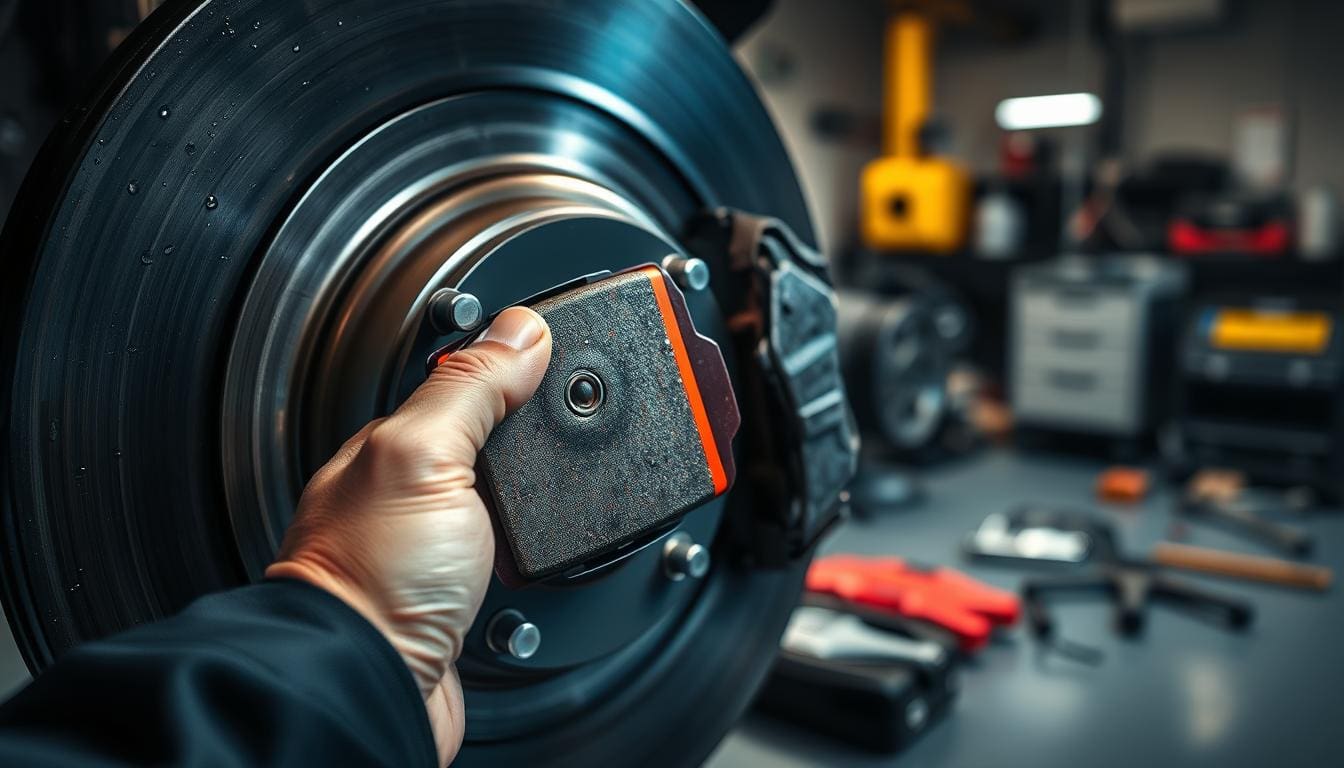
Your car’s brakes turn kinetic energy into heat, which is then released. This process involves several important parts. These include the brake pedal, master cylinder, brake fluid, brake calipers, and brake pads or shoes.
When you press the brake pedal, it starts the process. The master cylinder sends pressure through the brake fluid to the brake calipers. The calipers then squeeze the brake pads onto the rotor, slowing your car down.
Common Components of Brakes
The performance of your brakes depends on the condition of its parts. Some key components are:
- Brake Pads or Shoes: These are the materials that press against the rotors or drums to slow your car.
- Brake Rotors or Drums: These are the surfaces that the brake pads or shoes press against to create friction.
- Brake Calipers: These hold the brake pads and pistons that clamp onto the rotors.
- Master Cylinder: This part changes the pressure from the brake pedal into hydraulic pressure for the brake calipers.
- Brake Fluid: This fluid carries pressure through the system. It’s important to check the transmission fluid and brake fluid levels often, as they are vital for your car’s performance.
| Component | Function | Signs of Wear |
|---|---|---|
| Brake Pads | Create friction to stop the vehicle | Noise when braking, reduced stopping power |
| Brake Rotors | Surface for brake pads to contact | Vibration when braking, visible scoring |
| Brake Fluid | Transmits hydraulic pressure | Low fluid level, contaminated fluid |
If you have brake issues, it’s best to see a professional mechanic. At San Antonio Brake Repair, we focus on brake repair and maintenance. Call us today at (210) 123-4567 for a detailed brake check and to keep your car safe on the road.
Warning Lights on Your Dashboard
It’s key to know what the lights on your dashboard mean. These lights warn you of problems before they get worse. This helps keep your car running smoothly and safely.
Importance of Dashboard Indicators
Dashboard lights, like those for brakes and power steering, are very important. They tell you when something’s not right or when it’s time for a check-up. If you ignore these signs, you could face serious issues, like accidents or being stuck on the side of the road.
Key Systems Monitored by Dashboard Indicators:
- Brake System
- Power Steering
- Engine Performance
- Airbag System
What the Brake Warning Light Means
The brake warning light is very important. If it lights up, it might mean your brakes are not working right. This could be because of worn-out brake pads, low brake fluid, or a problem with the ABS system.
| Brake Warning Light Indication | Possible Cause | Recommended Action |
|---|---|---|
| Steady Light | Worn brake pads or low brake fluid | Check brake fluid level; inspect brake pads |
| Flashing Light | ABS system malfunction | Have your ABS system checked by a professional |
If your brake light comes on, you need to act fast. Take your car to Heaven Automotive for brake services. This way, you can be sure your car is safe to drive.
Unusual Noises When Braking
Brake noise can be alarming, and understanding its cause is key for your safety. If you hear unusual sounds when braking, it means something might be wrong with your vehicle’s brakes.
Types of Noises to Watch For
Different noises can point to different problems. For example:
- Squealing or Squeaking: Often related to worn-out brake pads or worn brake pad clips.
- Grinding: This could mean your brake pads are completely worn out, and metal is grinding against metal, which is a serious issue.
- Clicking or Clunking: Might be due to worn-out brake components or improper brake pad installation.
When to Seek Brake Repair
If you notice any unusual brake noise, it’s wise to have your vehicle checked by a professional mechanic. At Heaven Automotive, skilled technicians can find the problem and suggest the right fixes. Ignoring brake noise can lead to bigger problems, including safety risks. Some signs you need brake repair right away include:
- Persistent grinding noises.
- Squealing sounds that don’t stop after applying the brakes.
- Vibrations or pulsations when braking.
Fixing these issues quickly ensures your vehicle’s brakes work right and safely.
Decreased Stopping Power
One of the most alarming signs of brake trouble is a decrease in stopping power. When you press the brake pedal, you expect your vehicle to stop quickly. But if it takes longer, it’s a sign something’s wrong.
Signs of Fading Brakes
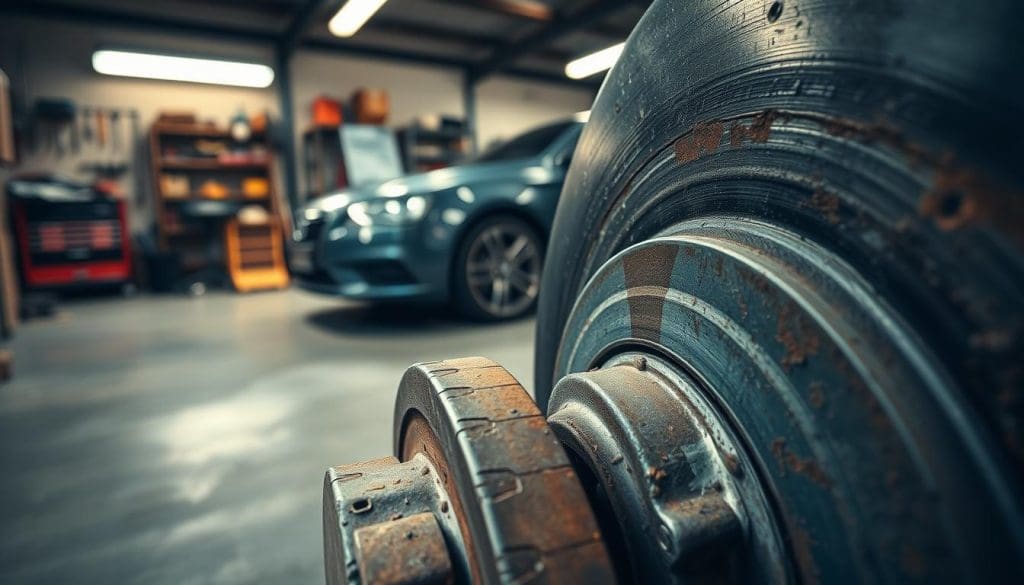
Fading brakes are a serious safety risk. Signs of fading brakes include a spongy brake pedal and longer stopping distances. If you notice these, get your brakes checked by a pro.
Your brake pads, rotors, and fluid are key to stopping power. Worn-out pads or warped rotors can slow you down. Low or dirty brake fluid also hurts performance.
Factors Affecting Stopping Distance
Many things can change your stopping distance. This includes brake condition, brake fluid quality, and tire type. Transmission fluid is important for overall performance and can affect stopping indirectly.
Other factors like road conditions, load, and driver reaction time also play a part. But regular brake maintenance is essential for safe stopping.
If you notice your car stops slower, get it checked by a mechanic. At Heaven Automotive, our experts can fix your brakes. Contact us today for a brake check and drive safely.
Vibration or Pulsation When Braking
Feeling vibration or pulsation when you brake is scary and usually means something’s wrong. This feeling can show up as a shake in the brake pedal or a pulsing feel when you press the brakes.
What Causes Brake Vibration?
Brake vibration can come from a few things, like warped brake rotors, uneven brake pad wear, or brake caliper problems. Warped brake rotors often happen because of too much heat when you brake. This heat can warp the rotors, causing a vibration when you press the brakes.
Uneven brake pad wear is another reason. When brake pads wear down unevenly, it makes the braking surface uneven. This uneven surface can cause vibration. Problems with the brake calipers, like sticking or being off-kilter, can also cause vibration.
How to Diagnose This Issue
To figure out brake vibration, you need to check the brakes closely. First, look at the brake rotors for warping or too much wear. Then, check the brake pads for uneven wear. Make sure the brake calipers are working right too.
If you’re not sure how to check, it’s best to get a brake check at Heaven Automotive. Their skilled techs can find out why you’re feeling vibration and fix it. They’ll make sure your brakes work well.
Also, remember that brake vibration might be linked to other car problems, like the power steering system. A full check can find any related issues. This keeps your car safe and running smoothly.
Pulling to One Side
If your car pulls to one side when you brake, it’s a sign of a problem. This issue can be annoying and might mean a bigger problem if you don’t fix it fast.
Possible Causes of Pulling
There are a few reasons why your car might pull to one side when braking. These include uneven brake pads, warped brake rotors, or suspension issues. Also, if your wheel alignment is off, it could cause this problem. It’s important to get your car checked by a pro to find out what’s wrong.
Importance of Wheel Alignment
Having the right wheel alignment is key. It keeps your car from pulling to one side and helps your tires wear evenly. It also makes your car handle better. At Heaven Automotive, our team can align your wheels perfectly.
Keeping your car in good shape, like checking the coolant levels, helps your brakes too. A well-kept engine runs better and improves your car’s performance, including braking.
Brake Fluid Leaks
Your vehicle’s brake fluid is as important as its transmission fluid. A leak in the brake fluid system can cause serious braking problems. Brake fluid is key to your vehicle’s braking system. It acts as a hydraulic fluid, moving pressure from the brake pedal to the brake calipers.
Signs of a Leak in the System
Spotting a brake fluid leak early is key to avoid damage to your vehicle’s brakes. Look out for these signs:
- A noticeable decrease in the brake fluid level.
- A spongy brake pedal or soft brakes.
- A fluid leak under your vehicle, with an oily look and feel.
- The brake warning light on your dashboard coming on.
Why a Leak Requires Immediate Action
A brake fluid leak is not a small problem; it’s a big safety risk. Brake fluid leaks can make your brakes less effective, leading to longer stops or even brake failure.
If you think you have a brake fluid leak, get your car checked by a pro right away. At Heaven Automotive, we’re here 24/7 for emergencies. Call us at [insert contact information] for quick help.
| Signs of Brake Fluid Leak | Consequences of Ignoring | Recommended Action |
|---|---|---|
| Low brake fluid level | Reduced braking performance | Check brake fluid level regularly |
| Spongy brake pedal | Increased stopping distance | Inspect brake system for leaks |
| Fluid leak under the vehicle | Brake failure | Contact a professional mechanic immediately |
In summary, keeping your vehicle’s brake fluid system in check is vital for safe driving. Regular checks and quick fixes can stop bigger problems. Remember, at Heaven Automotive, we’re ready to help with all your brake repair needs.
Brake Pad Wear
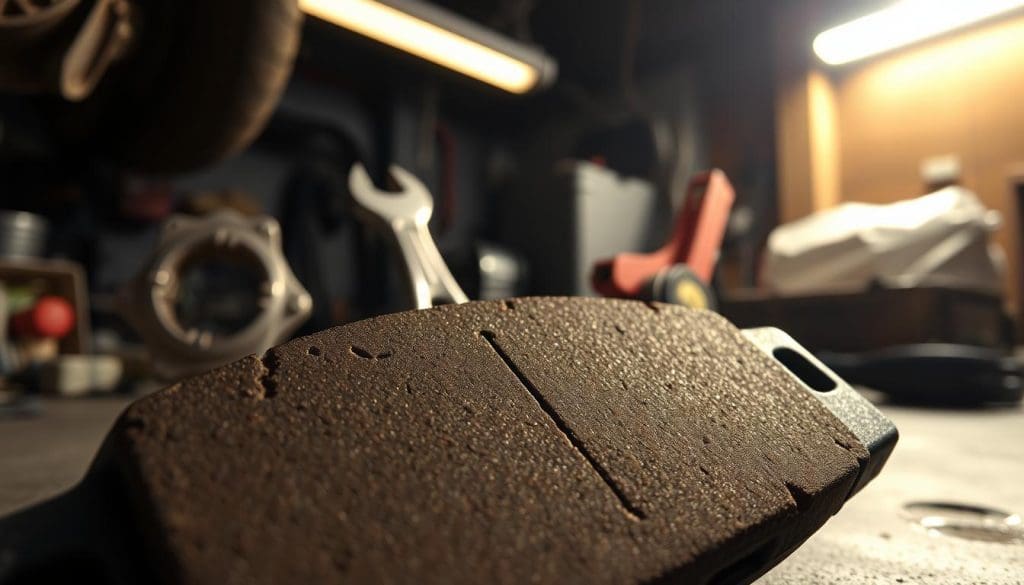
Your vehicle’s brake pads are key to safe stopping. Brake pad wear happens with regular driving. It’s important to check this wear to keep your car safe.
Indicators of Worn Brake Pads
There are clear signs when your brake pads need a change. Look out for:
- Squealing or grinding noises when you apply the brakes
- A spongy brake pedal or one that feels soft when pressed
- Vibration or pulsation when braking
- Reduced stopping power or longer stopping distances
If you see these signs, get your brake pads checked. Ignoring them can cause bigger problems, like damage to other brake parts.
How to Inspect Your Brake Pads
Checking your brake pads is easy, either at home or with a mechanic. Here’s how to do it:
- Remove the wheel to access the brake caliper.
- Inspect the caliper and brake pads for signs of wear or damage.
- Measure the thickness of the brake pads. If they’re below the manufacturer’s minimum, they need to be replaced.
Regular brake pad checks are part of keeping your car in good shape. This also includes checking your power steering system. Both systems are important for your car’s performance and safety.
At Heaven Automotive, our skilled technicians can check your brake pads and suggest any needed repairs or replacements. Don’t wait; book your brake inspection today to ensure your car stays safe and runs well.
Heat Build-Up During Use
Braking turns kinetic energy into heat, which can overheat your brakes. The friction between brake pads and rotors or drums creates heat. This heat usually dissipates quickly, but it can build up in certain situations.
Signs of Overheating Brakes
There are several signs that indicate your brakes are overheating. These include:
- A burning smell when you apply the brakes
- Brake fade, where the brakes become less effective
- A vibrating or pulsating brake pedal
- Visible signs of smoke or flames (in extreme cases)
Coolant is key for your vehicle’s temperature management. It’s mainly for engine cooling, but a good cooling system helps your brakes too. It keeps your vehicle running safely.
Risks of Ignoring Heat Issues
Ignoring overheating brake signs can cause big problems. These include:
| Risks | Consequences |
|---|---|
| Brake Failure | Complete loss of braking capability, leading to accidents |
| Warped Rotors or Drums | Expensive repairs due to warping or excessive wear |
| Reduced Stopping Power | Longer stopping distances, risking safety |
If you’re having brake overheating issues, act fast. At Heaven Automotive, our experts can fix brake problems. They make sure your vehicle is safe to drive. Contact us today to book a service.
Odor and Smoke When Braking
Braking should be smooth and quiet. But, odd odors or smoke mean there’s a problem. These signs often point to issues that need fixing.
Types of Odors to Beware Of
Different smells can mean different things for your brakes. A burning smell might mean your brakes are overheated or worn out. Sweet or syrupy smells could mean a fluid leak.
It’s important to find out where the smell is coming from. This helps you know what to do next.
Some common odors to watch out for include:
- Burning smells, which could indicate worn or overheated brake components
- Sweet or syrupy smells, potentially signifying a fluid leak
- Musty or moldy smells, which might suggest moisture accumulation within the braking system
What to Do in Case of Smoke
If you see smoke when braking, act fast. First, pull over to a safe spot. Then, turn off the engine and let it cool down.
Smoke can mean overheated brakes. This could be from driving too hard, worn-out pads, or rotor problems.
If you see brake smoke, follow these steps:
- Pull over to a safe location as soon as possible
- Turn off the engine and let it cool down
- Check for any visible signs of damage or wear on the brake components
- Consult a professional mechanic for a thorough inspection and necessary repairs
Going to a trusted auto repair shop like Heaven Automotive is a good idea. They can check your brakes and fluid levels. They’ll fix any problems to make sure your brakes work right.
| Symptom | Possible Cause | Recommended Action |
|---|---|---|
| Burning smell during braking | Worn or overheated brake pads | Inspect and replace brake pads if necessary |
| Sweet or syrupy smell | Leak involving transmission fluid | Check transmission fluid level and inspect for leaks |
| Smoke during braking | Overheated brakes or brake rotors | Let the vehicle cool down, then inspect brake components |
Frequency of Brake Service
Many car owners forget about the importance of brake service. It’s key for your vehicle’s safety and performance. Regular brake checks are a must.
Ignoring your brakes can cause problems. You might lose stopping power, face more accidents, and spend a lot on repairs. Knowing when to service your brakes can avoid these issues.
Recommended Service Intervals
Most car makers suggest brake checks every 12,000 to 15,000 miles. But, this can change based on your car and how you drive. For example, driving in heavy traffic or carrying heavy loads means you might need brake checks more often.
- Check your vehicle’s owner’s manual for brake service advice.
- Adjust service frequency based on your driving habits.
- Watch for brake issues like unusual noises or poor stopping.
It’s smart to check your brakes during routine maintenance, like oil changes or tire rotations. This can catch problems early.
When to Schedule Brake Inspections
Follow the recommended service intervals and watch for other signs. If you notice vibration or pulsation when braking, get your brakes checked right away.
Other important car care tasks, like checking power steering fluid levels, can be done during a brake check. This all-in-one approach keeps your car safe and reliable.
To book a brake service, contact Heaven Automotive. Their skilled team will inspect and repair your brakes, ensuring your safety on the road.
Choosing the Right Brake Repair Shop in San Antonio
When your car’s brakes need fixing, picking the right shop is key. You want a place that not only repairs your brakes but also checks your car’s safety. This includes looking at your coolant system.
Key Considerations for Brake Repair
Find a brake repair shop with skilled technicians and the latest tools. They should be able to find problems quickly and give clear prices. A good shop will also check other important systems, like your coolant, to avoid future issues.
Questions to Ask Before You Choose
Before you pick a brake repair shop, ask about their experience with your car’s make and model. Also, ask about their warranty and the parts they use. A trustworthy shop will answer these questions and give you a detailed cost estimate.
For top brake repair services in San Antonio, check out Heaven Automotive. They are at 6645 Poss Rd. San Antonio, TX 78238, and you can call them at (210) 682-3898. Their team is ready to fix your brakes and make sure your car is safe and running well.