

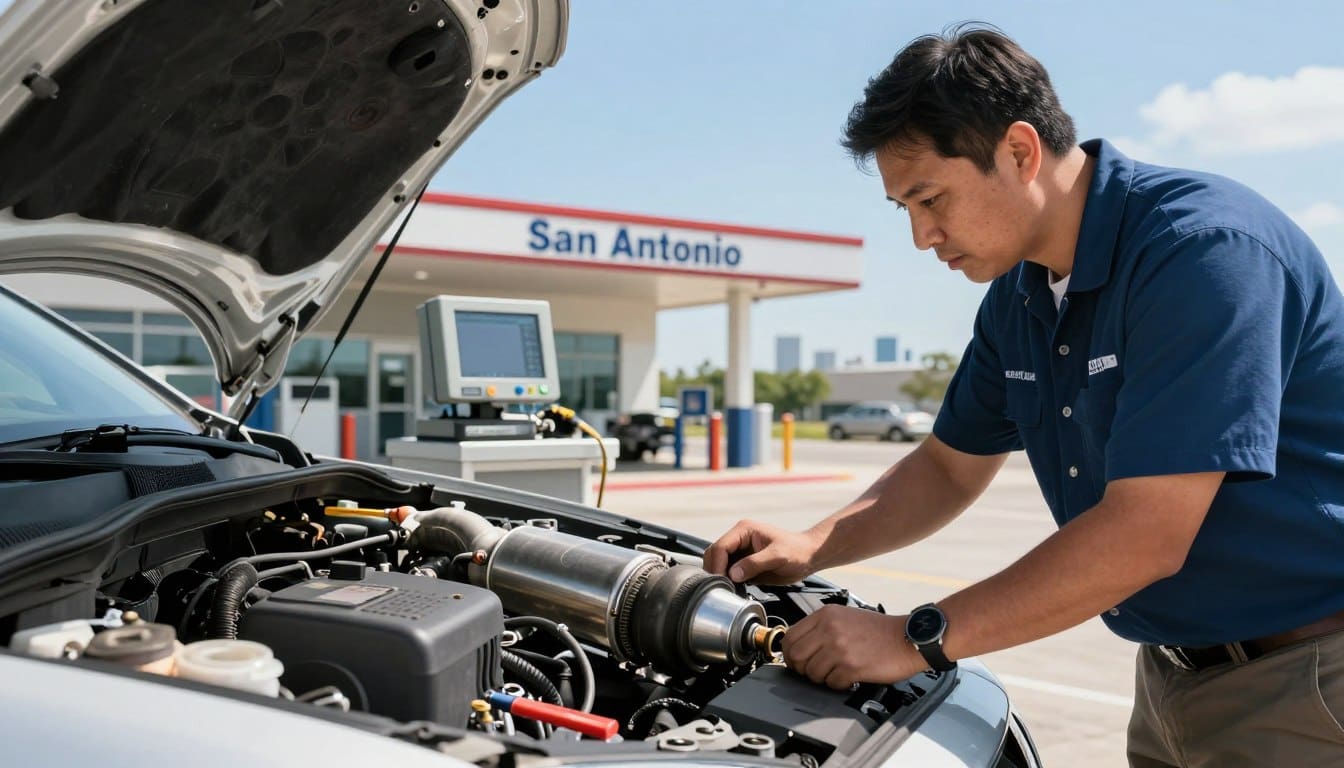
Your car relies on a smart system to keep the air clean and the engine running smoothly. If a part of the exhaust system fails, you might notice slow acceleration or a bad smell. These signs often mean you need expert help right away.
This important part filters out harmful gases from your drive. Over time, it can get clogged or damaged. This leads to poor fuel economy and failed inspections. Our team offers expert emissions repair San Antonio to keep your car eco-friendly and safe.
Identifying warning signs early can save you a lot of money and stress. If you think your car needs a catalytic converter repair, our experts are ready. You should call Heaven Automotive to fix your car and get it running strong again today.
Key Takeaways
- Watch for a noticeable drop in engine performance.
- Notice any unusual sulfur or “rotten egg” smells.
- Check for the illumination of your check engine light.
- Listen for rattling noises underneath the vehicle cabin.
- Monitor your fuel consumption for any sudden increases.
- Trust local specialists for all your exhaust system needs.
Understanding the Role of Your Catalytic Converter
Your vehicle’s catalytic converter is key to keeping our air clean. It’s a vital part of your car’s exhaust system. It helps cut down on harmful emissions that pollute our air.
The catalytic converter changes bad stuff in your car’s exhaust into safer stuff. It does this through chemical reactions. These reactions turn nitrogen oxides, carbon monoxide, and unburned hydrocarbons into nitrogen, carbon dioxide, and water vapor.
What Does a Catalytic Converter Do?
A catalytic converter uses special helpers to start chemical reactions. These reactions make emissions less harmful. It turns nitrogen oxides into nitrogen and oxygen, carbon monoxide into carbon dioxide, and unburned hydrocarbons into carbon dioxide and water. This makes your car’s emissions much cleaner.
Importance in Emissions Control
The catalytic converter is key for controlling emissions and reducing air pollution. It helps keep our air and health safe. Keeping your car, including the catalytic converter, in good shape is important. This ensures it works well and keeps emissions low.
| Pollutant | Conversion Process | Result |
|---|---|---|
| Nitrogen Oxides (NOx) | Catalytic reduction | Nitrogen (N2) and Oxygen (O2) |
| Carbon Monoxide (CO) | Oxidation | Carbon Dioxide (CO2) |
| Unburned Hydrocarbons (HC) | Oxidation | Carbon Dioxide (CO2) and Water (H2O) |
Knowing how important your catalytic converter is can help you see why it needs regular care. It’s vital for reducing exhaust emissions problems. And it needs to be replaced when it’s time.
Common Symptoms of Catalytic Converter Failure
Knowing the signs of a failing catalytic converter is key. It can cause your engine to run poorly and increase harmful emissions. Catching these issues early can prevent bigger problems.
Decreased Engine Performance
A failing catalytic converter often means your engine won’t perform as well. You might feel a reduced power when you try to speed up. Or, your car might feel slow and sluggish.
This happens because the converter can’t handle exhaust gases properly. It creates a backup that hurts your engine’s performance. If your car isn’t running right, check the converter.
Unusual Engine Noises
Strange sounds from your engine or exhaust system can signal a problem. You might hear rattling or clattering noises. These sounds suggest the converter’s parts are damaged or broken.
These noises are louder when you start the engine or speed up. It’s important to find out why you’re hearing these sounds. Ignoring them can cause more damage.
Increased Exhaust Emissions
A failing catalytic converter can also make your car emit more pollutants. This not only hurts your car’s performance but also harms the environment. You might see more pollutants coming out of your car or fail emissions tests.
Fixing exhaust emissions issues quickly is important. It keeps the air clean and ensures your car meets emissions standards. If you think your catalytic converter is failing, get it checked and fixed by a pro.
Warning Lights to Watch For
Modern cars alert you to catalytic converter problems with dashboard lights. These lights are important for catching issues early. This can save you from expensive repairs, like a catalytic converter replacement. Knowing these signs helps keep your car running well.
Check Engine Light Indicators
The check engine light often shows a problem with your catalytic converter. Cars today have sensors that watch the converter’s work. If they find a problem, they turn on the check engine light.
Seeing this light means you should get your car checked by a pro. Often, this is for emissions repair in San Antonio. It makes sure your car meets environmental rules.
Dashboard Warning Symbols
Other dashboard symbols can also point to catalytic converter issues. These might include lights for temperature or emissions problems.
If you see these lights, check your car’s manual or talk to a mechanic. Ignoring these signs can cause bigger problems. This might mean you need a catalytic converter replacement.
Physical Signs of a Failing Catalytic Converter
A failing catalytic converter shows signs that you should know. These signs help you fix the problem quickly and prevent more damage to your car.
Overheating Components
One sign is overheating components. A clogged or broken catalytic converter makes the engine run too hot. This heat can harm other parts under the hood.
You might see your engine temperature gauge is up or notice damage near the catalytic converter.
Unpleasant Odors
Another sign is unpleasant odors, like a sulfur smell. This smell comes from the exhaust when the catalytic converter can’t handle exhaust gases right. It lets out harmful and smelly pollutants.
If you see these signs, get your catalytic converter checked by a pro. They can find and fix any exhaust emissions problems.
Testing Your Catalytic Converter
Checking your catalytic converter for problems is key. You can use different ways to find out if it’s working right. This helps you fix any issues quickly.
Visual Inspection Method
Looking at your catalytic converter is a simple first step. Look for any damage like dents, rust, or leaks. Make sure the connections are tight. Also, check the exhaust system for leaks or damage.
Key areas to inspect include:
- The catalytic converter’s exterior for any signs of physical damage
- The connections and welds for any signs of leakage or rust
- The exhaust system for any damage or leaks
Using an OBD-II Scanner
An OBD-II scanner is another good tool for checking your catalytic converter. It can find trouble codes in your car’s computer. If your converter is bad, it might show specific codes about emissions or engine performance.
Steps to use an OBD-II scanner:
- Connect the OBD-II scanner to your vehicle’s OBD-II port
- Turn on the ignition and follow the scanner’s instructions to retrieve trouble codes
- Interpret the trouble codes to identify possible issues with your catalytic converter
Here’s a comparison of the two methods:
| Method | Advantages | Limitations |
|---|---|---|
| Visual Inspection | Easy to perform, no special equipment needed beyond a visual check | Might not detect internal issues |
| OBD-II Scanner | Can detect a wide range of issues, including those not visible externally | Requires an OBD-II scanner, interpretation of trouble codes |
Using these methods can help you test your catalytic converter well. If you’re not sure about the results or need help, talk to a mechanic. They can help with emissions repair in San Antonio or advice on replacing your catalytic converter.
Diagnosing Catalytic Converter Problems
You can find out if your catalytic converter is bad by using professional tools or trying it yourself. Knowing the signs is important for fixing it right. If your car is acting up, finding the main problem is key for catalytic converter repair.
Professional Diagnostic Procedures
Experts use special tools to check your catalytic converter. They start with an OBD-II scan to find trouble codes. This scan helps spot exhaust emissions problems that might be causing the converter to fail.
They also do a visual check. Mechanics look for damage or leaks in the exhaust. They might test for backpressure to see if the converter is blocked.
DIY Diagnosis Tips
If you want to try to figure it out yourself, start by looking for signs like poor engine performance or strange sounds. Use an OBD-II scanner to find trouble codes. These codes can point to problems with the catalytic converter or other parts.
Another way to check is by looking at the converter itself. Look for damage or wear. But, be careful with DIY checks. If you’re not sure, it’s safer to get a pro to do the catalytic converter repair.
Factors That Contribute to Catalytic Converter Failure
Knowing what affects your catalytic converter is key to keeping it working well. Many things can impact its performance and lifespan. If not managed, these can lead to its failure.
Fuel Quality and Type
The fuel you use greatly affects your catalytic converter. Low-quality fuel can clog it with contaminants. The wrong fuel type can also make your engine run poorly, hurting the converter’s efficiency.
Always use the fuel type your car’s maker recommends. Choose fuel from trusted sources to avoid contamination.
Engine Performance Issues
Engine problems can also harm your catalytic converter. Issues like misfiring spark plugs, faulty oxygen sensors, or clogged fuel injectors can make your engine run badly. This can increase emissions and stress the converter.
| Engine Performance Issue | Impact on Catalytic Converter |
|---|---|
| Misfiring Spark Plugs | Increased unburned fuel can overheat the converter |
| Faulty Oxygen Sensors | Incorrect air-fuel mixture can reduce converter efficiency |
| Clogged Fuel Injectors | Poor engine performance can lead to increased emissions |
If your engine isn’t running right, fix it fast to protect your catalytic converter. Regular maintenance, like replacing spark plugs and checking oxygen sensors, can help avoid these problems.
By managing these factors, you can make your catalytic converter last longer. This ensures your car runs smoothly. If you need emissions repair in San Antonio, a professional can help find and fix any converter issues.
The Importance of Regular Vehicle Maintenance
Regular vehicle maintenance is key to keeping your catalytic converter in good shape. It helps avoid expensive repairs. By doing routine checks, you can spot problems early.
Conducting Routine Inspections
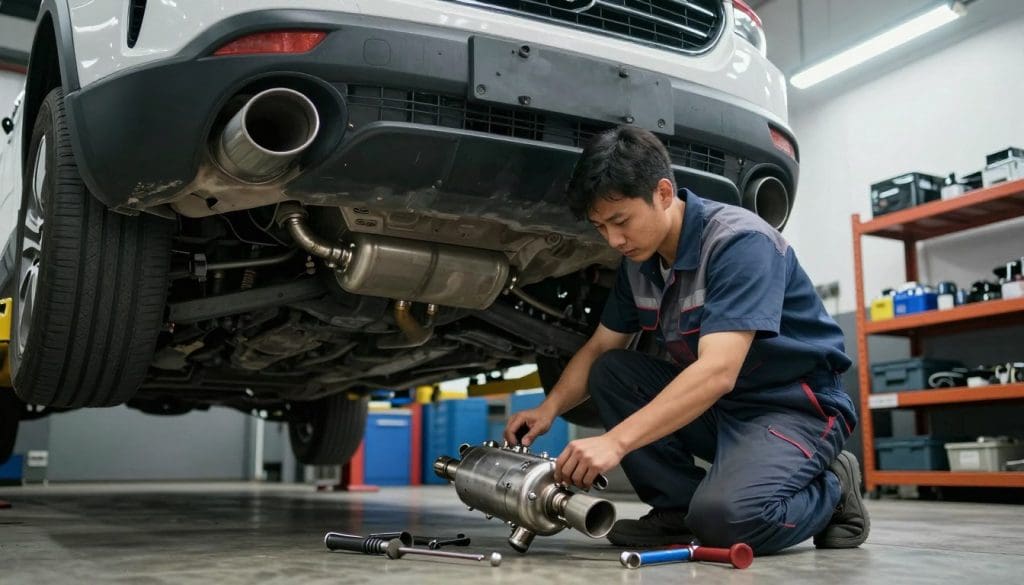
Regular inspections are important to find wear or damage on your vehicle. Mechanics can look for leaks, damage, or excessive wear. This helps spot issues with the catalytic converter or other systems.
Key areas to inspect include:
- Exhaust system for leaks or damage
- Catalytic converter for signs of physical damage
- Oxygen sensors for proper function
Keeping Up with Oil Changes
Regular oil changes are vital for your engine’s health. This health affects your catalytic converter. Dirty or low oil can make your engine run poorly. This can increase exhaust emissions and stress your catalytic converter.
| Maintenance Task | Frequency | Benefit |
|---|---|---|
| Oil Changes | Every 5,000 to 7,500 miles | Reduces engine wear and tear, lowering emissions |
| Exhaust System Inspection | During routine maintenance visits | Identifies problems before they get big |
| Catalytic Converter Inspection | During routine maintenance visits | Finds damage or wear early |
By sticking to a maintenance schedule, you can make your catalytic converter last longer. This avoids exhaust emissions problems. Regular care saves money and keeps your vehicle running well and green.
Consequences of Ignoring Catalytic Converter Issues
Ignoring catalytic converter problems can make your car less efficient and cost more to fix. Your car’s catalytic converter is key to cutting down emissions and keeping it running well. If it starts to fail, fixing it quickly is important to avoid bigger issues.
Not paying attention to a failing catalytic converter can cause big problems. Two major issues are reduced fuel efficiency and engine damage.
Reduced Fuel Efficiency
A bad catalytic converter makes your car use more fuel. This is because it can’t reduce emissions well, which hurts your car’s performance and fuel use. You might see your fuel economy go down, which means you’ll spend more on gas.
Here’s a table showing how a faulty catalytic converter affects fuel efficiency:
| Condition | Fuel Efficiency (miles/gallon) | Annual Fuel Cost |
|---|---|---|
| Functioning Catalytic Converter | 25 | $1,500 |
| Faulty Catalytic Converter | 20 | $1,875 |
Potential Engine Damage
A failing catalytic converter can also harm your engine if not fixed. The extra pressure from a clogged converter can stress your engine, leading to expensive repairs. In bad cases, it might even cause your engine to fail, needing a new one.
If you’re having trouble with your catalytic converter, getting help for emissions repair in San Antonio is key. A quick catalytic converter replacement can stop more damage and keep your car running smoothly.
Cost of Catalytic Converter Repair or Replacement
Wondering about the cost of fixing a faulty catalytic converter? The price can change a lot. It depends on your car’s make and model, and how bad the damage is.
Understanding the costs involved is key to making smart choices for your car. Several things can affect the price. These include the type of converter needed, labor costs, and whether you choose repair or replacement.
Average Repair Costs
The average repair cost for a catalytic converter is between $300 and $1,500 or more. This depends on the problem’s complexity. For small issues, the cost might be lower. But for serious damage, replacing it might be cheaper in the long run.
Factors Affecting Cost
Several things can change the cost of fixing or replacing a catalytic converter. These include:
- The type and quality of the replacement converter
- Labor costs, which can vary based on the mechanic’s rates and the job’s complexity
- The extent of the damage to the catalytic converter
- Whether any extra repairs are needed for related issues
Knowing these factors can help you guess the costs of catalytic converter repair. This way, you can make better choices for your car’s maintenance.
When to Seek Professional Help
Knowing when to get a professional for your catalytic converter is key. If your car shows unusual signs or you think the converter is failing, it’s time to act. Understanding when to get help is vital.
Signs That Require Immediate Attention
Some signs mean you need to get help right away. These include:
- Severe decrease in engine performance: If your car’s performance drops a lot, it might be a sign of a failing catalytic converter.
- Unusual noises: Loud rattling or clattering sounds from under the car could mean a serious problem with the catalytic converter.
- Dashboard warning lights: If the check engine light is on, it might be because of a catalytic converter issue.
If you see any of these signs, it’s important to see a professional mechanic. They can do an emissions repair in San Antonio to avoid more damage to your car.
Myth vs. Fact: DIY Repairs
Many people think about fixing their catalytic converter themselves. But, it’s important to know the truth:
- Myth: DIY repairs are cost-effective. While DIY might seem cheaper at first, it can actually cost more in the long run if done wrong.
- Fact: Professional help is often necessary. Fixing or replacing a catalytic converter needs special tools and knowledge. So, getting a professional is usually the best choice for a catalytic converter replacement.
By knowing the signs that need quick attention and understanding DIY repairs, you can decide when to get professional help for your catalytic converter problems.
Choosing Heaven Automotive for Your Repair Needs
Heaven Automotive is a top choice for fixing catalytic converters. They focus on you, the customer, and are experts in their field. If your car has exhaust emissions problems, they’re the ones to call.
Expertise in Catalytic Converter Repair
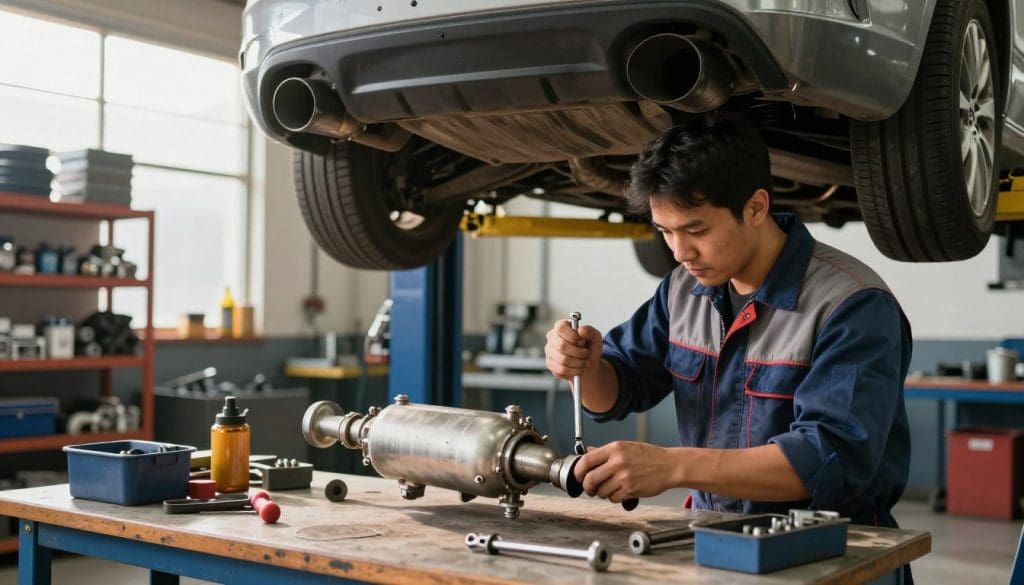
At Heaven Automotive, you’ll get expert diagnosis and repair for your catalytic converter. Their team knows how to work on many different cars. So, you can trust that your vehicle is in safe hands.
They offer:
- Accurate diagnosis of catalytic converter issues
- Efficient repair and replacement services
- Use of high-quality parts to ensure durability
Customer Testimonials and Trust
Heaven Automotive has built a strong reputation for quality service and customer happiness. Here’s what some happy customers have to say:
| Customer | Testimonial | Rating |
|---|---|---|
| John D. | “Heaven Automotive fixed my catalytic converter issue quickly and efficiently. Highly recommended!” | 5/5 |
| Emily R. | “The team at Heaven Automotive is professional and courteous. They explained everything clearly.” | 5/5 |
| Michael T. | “I was impressed with the quality of service and the price. I’ll be back for future repairs.” | 5/5 |
Choosing Heaven Automotive means you’re in good hands. They’ll take care of your catalytic converter repair needs with skill and care.
Convenient Location and Accessibility
Our facility at 6645 Poss Rd. San Antonio, TX 78238, is easy to get to for all your car needs. This includes catalytic converter replacement and emissions repair in San Antonio.
We know how important it is to have a convenient place for car repairs. That’s why we picked a spot that’s easy to find from anywhere in San Antonio.
Directions to Heaven Automotive
To find us, just go to 6645 Poss Rd. San Antonio, TX 78238. Our location is perfect for quick access, no matter where you’re coming from.
Hours of Operation
At Heaven Automotive, we aim to fit into your busy life. Our hours are flexible for both morning and afternoon people.
- Monday to Friday: 8 AM – 6 PM
- Saturday: 9 AM – 2 PM
- Sunday: Closed
Feel free to call us to book a time that works for you. Our team is here to help with your emissions repair and other car needs.
Contact Heaven Automotive for Assistance
If you’re having trouble with your catalytic converter or exhaust emissions, you need help. Heaven Automotive has experts ready to fix your catalytic converter. They offer services that fit your needs.
Phone Consultation Options
Call Heaven Automotive at (210) 682-3898 to talk about your car’s issues. They can help you figure out what to do next. Their team is ready to assist you.
Don’t ignore problems with your catalytic converter. It could harm your car more. Reach out to Heaven Automotive today. Let their pros take care of your vehicle.