


Ever been driving and felt your car vibrate? It’s a common problem that starts small. But, a shaky wheel can become a big issue if ignored.
Maybe your car pulls to one side or drifts after hitting a curb. These signs your vehicle needs a wheel alignment. A steering system diagnosis by a pro is the best way to find the problem.
If your car feels loose or unstable, don’t wait. Get the steering repair San Antonio drivers rely on. Heaven Automotive at 6645 Poss Rd. San Antonio, TX 78238, offers expert help. Call (210) 682-3898 to fix your car and stay safe.
Key Takeaways
- Unusual vibrations often indicate worn-out suspension components.
- Hitting potholes can shift your vehicle’s wheel alignment significantly.
- A loose control feel reduces your ability to handle the car safely.
- Professional inspections prevent small mechanical issues from becoming costly.
- Proper maintenance ensures even tire wear and better fuel economy.
- Timely intervention keeps your vehicle reliable for long trips.
Understanding the Mechanics of Your Steering System
To fix steering problems, knowing how your car’s steering system works is key. Modern cars have complex steering systems for a smooth ride.
How Modern Steering Systems Function
Modern steering systems aim for precision and control. They have parts like the steering column, steering gear, and tie rods. The steering column links the wheel to the steering gear, turning the wheels.
It’s important for these parts to work right for a stable steering wheel.
What kind of steering system your car has matters a lot. Some use hydraulic power steering, while others have electric power steering. Electric power steering is getting more popular because it’s efficient and reliable.
The Connection Between Steering and Suspension
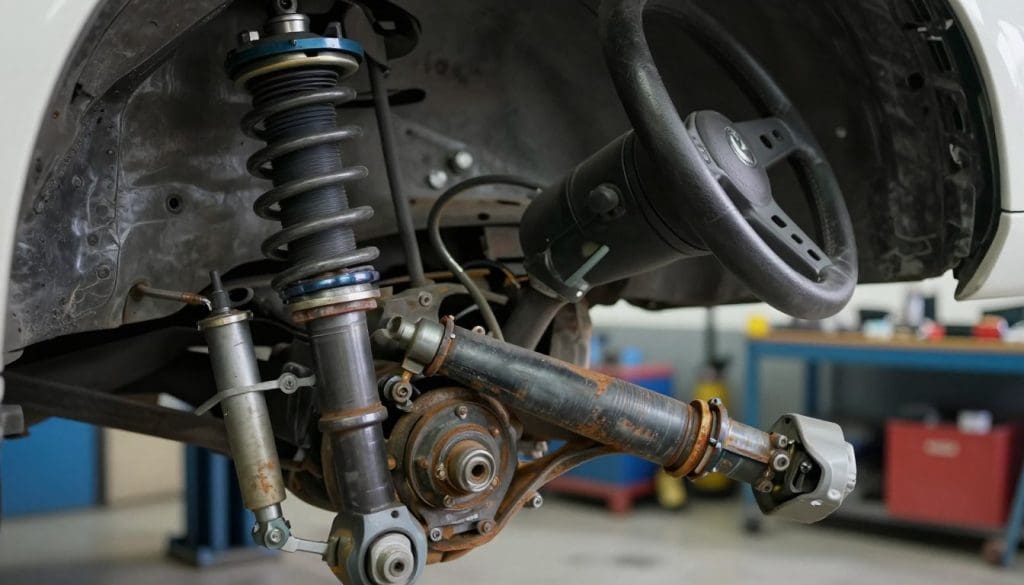
Your car’s steering and suspension systems work together. The suspension handles the car’s weight and road bumps. The steering system guides the wheels.
When the suspension is bad or off, it can mess with the steering. This can make the steering wheel shaky. It’s important to check both systems often for your car’s safety and performance.
Knowing how your steering system works and its link to suspension helps spot problems early. This knowledge is the first step in steering system diagnosis and keeping your car in top shape.
Common Causes of Steering Wheel Vibration
Steering wheel vibration is a common issue with many causes. Finding the root cause is key for safety and to avoid vehicle damage.
Tire Imbalance and Tread Wear
Unbalanced tires are a common cause of a shaking steering wheel. Tires can lose balance over time due to uneven wear or hitting potholes. Regular balancing and rotation can help.
Uneven tread wear also causes steering wheel vibration. This can happen from improper inflation, misaligned wheels, or worn-out suspension parts.
Brake Rotor Warping and Its Impact on Steering
Warped brake rotors can cause vibrations when braking, felt through the steering wheel. Warped rotors make the brake caliper vibrate, which is then felt in the steering wheel.
If you feel vibration when braking, check your brake rotors. Learn more about this issue by visiting this page about brake shaking.
| Cause | Symptoms | Solution |
|---|---|---|
| Tire Imbalance | Vibration in steering wheel, at high speeds | Regular tire balancing |
| Uneven Tread Wear | Steering wheel vibration, uneven tire wear | Tire rotation, proper inflation, wheel alignment |
| Brake Rotor Warping | Vibration when braking | Brake rotor inspection, resurfacing or replacement |
Identifying Loose Steering Components
If your car’s steering wheel feels loose or unstable, finding the cause is key to avoid more damage. Loose parts can cause uneven tire wear and even loss of control. Knowing the signs of worn steering parts is vital for your car’s safety and performance.
Worn Tie Rod Ends and Their Symptoms
Worn tie rod ends often cause loose steering. They link the steering rack to the steering knuckle, essential for steering. Signs of wear include:
- Vague or loose steering
- Uneven tire wear
- Clunking or rattling noises when turning
Regularly checking tie rod ends can prevent major problems. Look for looseness or play in the joint. Replace them when needed.
Ball Joint Failure and Safety Risks
Ball joints are key in your car’s steering and suspension. They connect control arms to the steering knuckle for smooth movement. Failure can lead to:
- Loss of steering control
- Uneven tire wear
- Clunking or creaking noises
Ball joint failure can cause loss of control, even at high speeds. Regular checks can spot worn ball joints before they fail.
| Component | Symptoms of Wear | Safety Risks |
|---|---|---|
| Tie Rod Ends | Loose steering, uneven tire wear, clunking noises | Loss of steering precision, increased risk of accident |
| Ball Joints | Clunking or creaking noises, uneven tire wear, loss of steering control | Loss of control while driving, increased risk of accident |
The Role of Steering Alignment Issues
Misaligned steering can cause many problems, like uneven tire wear and poor handling. When your car’s steering isn’t aligned right, it can impact how well it performs and how safe it is. Having the right steering alignment means your car will steer smoothly and stay stable on the road.
How Misalignment Affects Handling
A misaligned steering system can make your car pull to one side. This makes it hard to drive straight and can wear out your tires unevenly. It can also cause your steering wheel to vibrate, which is uncomfortable and distracting.
Signs Your Vehicle Needs Professional Alignment
If your car pulls to one side or the steering wheel vibrates, it might need alignment. Other signs include uneven tire wear and a crooked steering wheel when driving straight. If you see these signs, get your car’s alignment checked by a pro.
A professional alignment can fix your car’s angles to their original settings. This ensures your car handles well and your tires last longer.
Regular checks and adjustments of your car’s steering alignment can stop bigger problems. Keeping your alignment right means you’ll have a smoother, safer drive.
Expert Steering Repair San Antonio Services
Looking for expert steering repair services in San Antonio is key. If your car’s steering system is off, it’s a safety risk and can cause more damage if not fixed fast.
San Antonio’s professional mechanics know how to handle modern steering systems. They can spot problems accurately. This skill is important for finding the real cause of steering issues, like problems with the steering column or rack-and-pinion system.
Why Professional Diagnosis Matters
Getting a professional diagnosis is critical for fixing steering problems. Experts use special tools and methods to find issues that aren’t obvious at first glance. This detailed approach makes sure the real problem gets fixed, not just its symptoms.
- Accurate identification of the root cause
- Prevention of misdiagnosis and unnecessary repairs
- Efficient repair process, saving time and money
The Importance of Using Quality Replacement Parts
Choosing quality replacement parts is essential for a lasting fix. Good parts make sure your car’s steering works right, giving you a safe and smooth drive.
Benefits of Quality Parts:
- Longer lifespan of the repaired component
- Improved performance and safety
- Reduced likelihood of future repairs
By picking expert steering repair services in San Antonio, you’re in good shape. Pros will not only find the problem but also use top-notch parts to fix it. This keeps you safe on the road.
Suspension Problems Car Owners Often Overlook
Suspension issues can be easy to overlook, but they’re key to your vehicle’s performance. As you drive, your suspension system absorbs bumps, ensuring a smooth ride and stable handling.
When suspension parts start to fail, you might notice a bumpy ride or uneven tire wear. It’s important to fix these problems quickly to avoid more damage to your vehicle.
Shock Absorber and Strut Degradation
Shock absorbers and struts are vital for your vehicle’s suspension. They absorb shocks and keep tires in contact with the road. Over time, they can wear out, affecting your vehicle’s stability and handling.
Signs of shock absorber and strut degradation include:
- Increased stopping distance
- Uneven tire wear
- A bumpy or uncomfortable ride
- Nose diving when braking
Control Arm Bushing Wear
Control arm bushings are also key to your vehicle’s suspension. They keep control arms aligned and prevent metal-to-metal contact. When these bushings wear out, you might notice:
Common signs of control arm bushing wear:
- Clunking or creaking noises when driving over bumps
- Loose or unresponsive steering
- Uneven tire wear
- Vibrations when driving
If you’re experiencing these symptoms, get your suspension checked by a mechanic. They can find the problem and fix it, ensuring your vehicle is safe to drive.
Steering System Diagnosis Procedures
Fixing steering system problems needs a careful approach. You’ll use both visual checks and advanced tests. Knowing how your car’s steering works helps spot problems.
Visual Inspections vs. Diagnostic Testing
Start with a visual check to find obvious damage. Look at tires, tie rod ends, and ball joints.
Visual checks can show issues like uneven tire wear or loose parts. But, they might miss complex problems. That’s when you need diagnostic testing to really check the system.
Key Components to Inspect Visually:
- Tire condition and wear
- Tie rod ends and ball joints for looseness or wear
- Steering rack and pinion for leaks or damage
The Role of Diagnostic Testing
Diagnostic testing gives a deeper look at the steering system. It uses special tools to measure steering wheel play, check for vibrations, and test hydraulic or electronic parts.
When to Seek Immediate Professional Help
Big steering wheel vibrations, hard steering, or odd noises mean you need help fast. These signs point to serious issues that could be dangerous.
Professional mechanics have the right tools and know-how. They can find and fix complex problems. They’ll give you a detailed report and suggest the best fixes for your car.
The Dangers of Ignoring Steering Instability
Ignoring steering instability is risky. It can cause you to lose control while driving. This issue affects your comfort and safety on the road.
Steering problems can make your steering wheel vibrate or feel loose. These signs often point to deeper issues. Suspension problems in your car can be a common cause.
Not paying attention to these signs can lead to serious problems. It’s important to understand the risks and take action.
Increased Risk of Loss of Control
Steering instability raises the risk of losing control of your vehicle. It makes it hard to turn corners or react to sudden road events. This is even more dangerous at high speeds or in bad weather.
For example, on a wet or icy road, a car with unstable steering is more likely to skid. This could cause an accident. So, it’s key to fix any steering problems quickly to stay safe.
Accelerated Wear on Other Vehicle Components
Steering instability also wears down other car parts faster. It puts extra stress on your tires, brakes, and suspension. This can lead to these parts failing sooner, costing you money.
For instance, uneven tire wear from bad steering can mean you’ll need to replace your tires sooner. The same goes for your suspension system, which may need more repairs or replacements.
| Component | Effect of Steering Instability | Potential Consequences |
|---|---|---|
| Tires | Uneven wear due to misalignment | Premature tire replacement |
| Brakes | Increased strain due to imbalance | Reduced braking efficiency, possible brake failure |
| Suspension | Extra stress on suspension parts | More frequent repairs or replacement of suspension parts |
Preventative Maintenance for Steering Longevity
Preventative maintenance is key to extending the lifespan of your steering components. Regular checks and maintenance of your vehicle’s steering system can prevent issues. This ensures a smoother driving experience.
Regular maintenance tasks can significantly impact the longevity of your steering system. One important task is regular tire rotations and balancing. This helps distribute wear evenly across your tires, reducing strain on your steering components.
Regular Tire Rotations and Balancing
Tire imbalance can lead to uneven wear and vibrations that affect your steering. Regular tire rotations and balancing can prevent these issues. This keeps your steering system stable.
Routine Suspension System Checks
Your vehicle’s suspension system works closely with the steering system. Routine checks can help identify worn or damaged components. This allows you to address these issues before they impact your steering.
By incorporating these maintenance tasks into your routine, you can prevent steering issues. This helps prolong the lifespan of your steering components.
Technological Advancements in Steering Systems
Modern cars have advanced steering systems that make driving more comfortable and safe. These new systems improve how cars handle and reduce driver tiredness.
The steering system is key for a car’s response and stability. With technology growing, so are steering systems. Electric power steering (EPS) is now common, replacing old hydraulic systems.
Electric Power Steering vs. Hydraulic Systems
Electric power steering uses electric motors for help, unlike hydraulic systems that use pressure. EPS is better for fuel and needs less upkeep because it has fewer parts than hydraulic systems.
| Feature | Electric Power Steering (EPS) | Hydraulic Power Steering |
|---|---|---|
| Power Source | Electric Motor | Hydraulic Pump |
| Fuel Efficiency | Improved | Lower |
| Maintenance | Reduced | Higher |
Common Issues in Modern Electronic Steering
Even with progress, modern electronic steering can face problems. Common issues include faulty sensors, software bugs, and electrical failures. It’s vital to diagnose these issues accurately for quick fixes.
Signs of steering trouble include odd noises, shakes, or unpredictable steering. If you notice these, get your car checked by a pro for quick and right repairs.
How Weather and Road Conditions Impact Steering
Driving in San Antonio can expose your car’s steering system to many challenges. Weather and road conditions play a big role in how well your car steers. Your car’s steering and suspension face many environmental stressors that can affect their performance and lifespan.
Driving on roads with potholes and rough terrain is tough on your car’s steering parts. The constant bumps and shocks can wear out parts like tie rods, ball joints, and control arms. This can lead to suspension problems in your car.
The Effect of Potholes and Rough Terrain
Potholes and rough roads can damage your steering system right away and over time. When you hit a pothole, it can loosen your steering parts or cause them to become misaligned. This can make your steering wheel feel loose or shaky, making it harder to control your car.
| Road Condition | Impact on Steering | Potential Issues |
|---|---|---|
| Potholes | Loosens steering components | Misalignment, loose steering |
| Rough Terrain | Increased wear on suspension | Suspension problems car, uneven tire wear |
Corrosion and Environmental Factors in San Antonio
San Antonio’s climate can also affect your steering system. High temperatures and humidity can cause metal parts to corrode, weakening them. It’s important to check your car regularly and fix any problems early on.
To keep your steering system in good shape, regular check-ups and maintenance are key. Look for signs of wear and tear, fix issues quickly, and make sure your car is aligned properly.
Choosing the Right Automotive Repair Partner
Finding the right repair partner for your vehicle is as important as fixing steering alignment issues. Your car’s steering system needs careful attention. So does the choice of the right repair service.
A certified mechanic with local knowledge can be a game-changer. They can spot and fix complex problems like steering alignment issues quickly. They have the skills and experience to do it right.
What to Look for in a Certified Mechanic
Search for mechanics who are certified by well-known organizations. They should also know your car’s make and model well.
The Value of Local Expertise and Trust
Local repair shops usually have a good reputation to keep up. They are more likely to offer reliable service. They also know the local roads and how they affect your car’s steering.
| Qualities | Good Repair Partner | Average Repair Shop |
|---|---|---|
| Certification | Certified by reputable organizations | May lack certification |
| Local Expertise | Familiar with local conditions | Limited local knowledge |
| Trust | Transparent and trustworthy | May lack transparency |
Conclusion
Your vehicle’s steering system is key for safe and efficient driving. A loose or shaky steering wheel can signal deeper problems. We’ve looked at many causes, like tire imbalance and brake rotor warping.
Knowing these causes helps fix steering issues. Regular checks, like tire rotations and suspension inspections, can stop many problems. If issues happen, getting professional help is vital for the right fix.
If you’re having steering trouble in San Antonio, look for a reliable repair service. Heaven Automotive at 6645 Poss Rd, San Antonio, TX 78238, is a top choice. Their certified mechanics use quality parts for lasting repairs. Call (210) 682-3898 to book a service.