

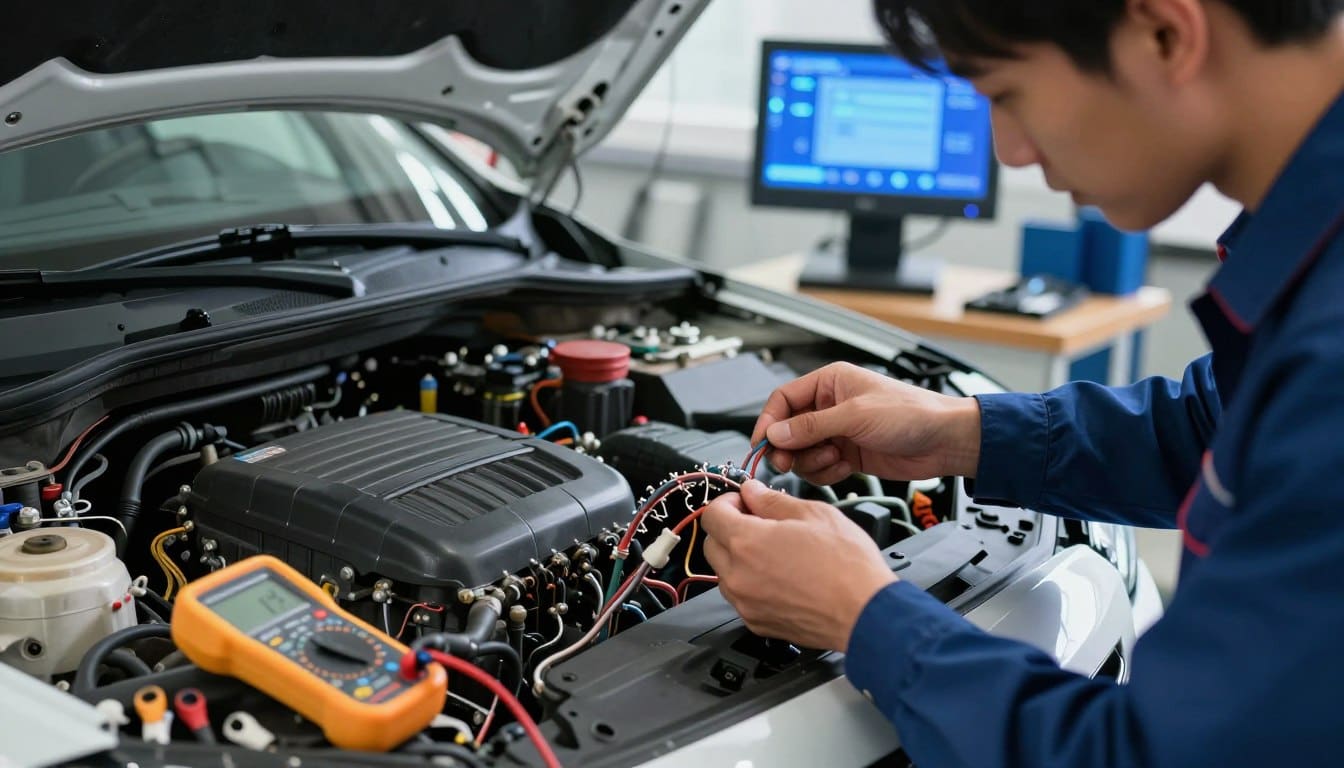
Modern cars use complex wiring to work right. Spotting car electrical problems early saves you a lot of money and stress. If you ignore small issues, you might end up stuck on the side of the road.
Today’s cars are like computers on wheels. Finding vehicle electronics issues needs advanced tools and a keen eye. Heaven Automotive has the specialized skills you need for these tasks.
Our techs know these complex systems better than anyone. We fix your car right the first time, without guessing. Visit our local shop at 6645 Poss Rd. San Antonio, TX 78238.
Don’t wait until your battery dies or the dashboard lights start flashing. Hire Heaven Automotive to fix your vehicle. Call us at (210) 682-3898 to book your service today.
Key Takeaways
- Early detection prevents extremely costly future repairs.
- Modern vehicles utilize highly complex wiring systems.
- Small warning signs alert you to major underlying issues.
- Expert diagnostics ensure your daily reliability.
- Heaven Automotive offers professional support for all systems.
- Proper maintenance keeps repair bills from skyrocketing.
The Evolution of Automotive Electrical Systems
The automotive industry has changed a lot in how electrical systems work. No longer are there just simple circuits. Today’s cars have complex networks that control everything from engine performance to comfort features.
As cars got more advanced, they needed better electrical systems. This led to the creation of complex networks. These networks handle tasks like engine control, safety features, and comfort options all at once.
From Simple Circuits to Complex Networks
Older cars had basic electrical systems. These systems powered things like headlights and radios. But, with new technology, these systems have become much more complex.
Now, modern cars use many electronic control units (ECUs). These units talk to each other to make sure the car runs well and safely. This makes automotive electrical repair more challenging, needing techs to understand these systems better.
- Multiple ECUs for various vehicle functions
- Advanced communication protocols between ECUs
- Increased reliance on software for system control
The Rise of CAN Bus Systems
One big change in car electrical systems is the use of Controller Area Network (CAN) Bus Systems. CAN Bus lets different ECUs talk to each other easily. This makes wiring simpler and the system more reliable.
CAN Bus Systems are now common in cars. They help put together engine control, transmission control, and safety features into one network. Knowing how CAN Bus Systems work is key for fixing vehicle electronics issues.
- CAN Bus enables efficient communication between ECUs
- Reduces wiring complexity and enhances reliability
- Essential for integrating various vehicle functions
Understanding Modern Car Electrical Problems
Modern cars have complex electrical systems. This makes them more prone to electrical faults and repair challenges. As a car owner, you might face various electrical issues that can be confusing and frustrating.
These problems often start small but can grow if ignored. For example, a faulty sensor or a malfunctioning control module can turn on warning lights on your dashboard. This indicates a problem that needs to be fixed.
Why Modern Vehicles Are More Susceptible to Electrical Faults
Modern cars have many electronic parts. These parts work together to make driving safe, comfortable, and efficient. But, this complexity also means there’s more that can go wrong. The many wires and connections between parts create several possible failure points.
Some key factors contributing to the increased susceptibility to electrical faults include:
- Increased reliance on electronics for critical vehicle functions
- Complexity of modern wiring harnesses
- Integration of advanced driver-assistance systems (ADAS)
- Use of lightweight materials that can be more prone to damage
The Complexity of Integrated Control Modules
Integrated control modules are key to modern car electrical systems. They control everything from engine performance to entertainment systems. But, their complexity makes fixing them hard. Finding the problem without the right tools and knowledge can be tough.
The interconnected nature of these systems means that a fault in one area can have a ripple effect, causing seemingly unrelated problems elsewhere in the vehicle. It’s important to understand this complexity for effective repair.
The Role of Advanced Diagnostic Tools in Modern Repair
Advanced diagnostic tools have changed how we fix cars today. Modern cars have complex electronics that need special tools to find and fix problems. Old ways of finding issues don’t work well anymore, leading to longer repairs and higher costs.
OBD-II scanners are a big step forward in car repair. They let you see trouble codes in your car’s computer. This is key for finding problems in today’s cars, which use computers for everything from engine control to safety features.
Using OBD-II Scanners Effectively
To use an OBD-II scanner well, follow these steps:
- Connect the Scanner: Plug it into your car’s OBD-II port, under the steering column.
- Turn On the Ignition: Start your car’s engine to power the scanner.
- Read Trouble Codes: Use the scanner to find trouble codes in your car’s computer. These codes help you start fixing the problem.
- Interpret the Codes: Look up the codes in the scanner’s database or a repair manual to understand them.
- Clear Codes: After fixing the problem, clear the codes with the scanner. This turns off the warning lights and confirms the fix.
Interpreting Manufacturer-Specific Diagnostic Trouble Codes
OBD-II scanners give a standard way to check car problems. But, some car makers use special codes that need special tools and knowledge. These codes give more detailed info on car problems.
For special codes, you need the car maker’s repair info and guides. This might mean using tools approved by the maker or looking at detailed repair manuals. Some common steps include:
- Consulting Repair Manuals: Car maker repair manuals explain special codes and how to fix them.
- Using Manufacturer-Approved Tools: Tools from the maker can do more advanced checks and find special codes.
- Staying Updated: Car makers often change their diagnostic methods and code lists. Keeping up with these changes is key for correct diagnosis.
Learning to use tools like OBD-II scanners and understanding all kinds of trouble codes helps you fix cars better. It saves time and makes repairs more accurate. This means your car will be fixed quickly and safely.
Common Symptoms of Failing Vehicle Electronics
Failing vehicle electronics can cause a range of problems, from small annoyances to serious safety issues. It’s important to know the warning signs. Modern cars have complex electrical systems that control everything from the engine to comfort features. When these systems fail, they often show specific symptoms. Recognizing these early can prevent more damage and expensive repairs.
Dashboard Warning Lights and Their Meanings
Dashboard warning lights are a clear sign of car electrical problems. These lights alert you to issues in your vehicle’s electrical and mechanical systems. For example, the check engine light can mean anything from a loose gas cap to a serious engine problem. Knowing what these lights mean is key for quick repairs.
Some common dashboard warning lights include:
- Check Engine Light: Indicates issues with the engine or emissions system.
- Battery Light: Signals a problem with the charging system, potentially indicating a failing alternator or battery.
- ABS Light: Warns of issues with the anti-lock braking system.
Intermittent Power Loss and Accessory Failures
Intermittent power loss and accessory failures are common signs of failing vehicle electronics. You might see dim or flickering headlights, slow or unresponsive power windows and locks, or trouble starting the car. These problems can stem from faulty wiring, corroded connectors, or failing control modules.
Diagnosing these issues involves checking the electrical system’s performance under different conditions. The table below lists some common symptoms and their possible causes:
| Symptom | Potential Cause |
|---|---|
| Dim or Flickering Headlights | Low voltage, faulty alternator, or poor connections |
| Unresponsive Power Windows/Locks | Faulty wiring, corroded connectors, or failing control modules |
| Difficulty Starting the Car | Weak battery, faulty starter motor, or ignition switch issues |
By spotting these symptoms and knowing their causes, you can act early to fix car electrical problems. Regular maintenance and quick repairs are essential for your vehicle’s electrical system to last long and work well.
Battery Health and Charging System Failures
Vehicles today rely a lot on electronics. This makes a good electrical system very important. Your car’s battery and charging system need regular care to avoid electrical problems.
Battery health is key, as batteries get weaker over time or from short trips. Extreme temperatures can also hurt battery performance and life.
Impact of Start-Stop Technology
Start-stop tech aims to save fuel by turning off the engine at stops. But, it puts more stress on the battery. This can shorten its life if not maintained well.
To keep your battery healthy with start-stop tech, make sure it’s made for it. Also, keep your car’s electrical system in good shape.
Testing Alternator Output
Checking your alternator’s output is vital for spotting charging system problems. A good alternator keeps the voltage steady, between 13.5 and 14.5 volts when the engine is on.
| Condition | Voltage Reading | Interpretation |
|---|---|---|
| Engine Off | 12.4 – 12.7 volts | Battery Health Check |
| Engine Running | 13.5 – 14.5 volts | Alternator Functioning Properly |
| Electrical Load | 13.0 – 14.0 volts | Alternator Handling Load |
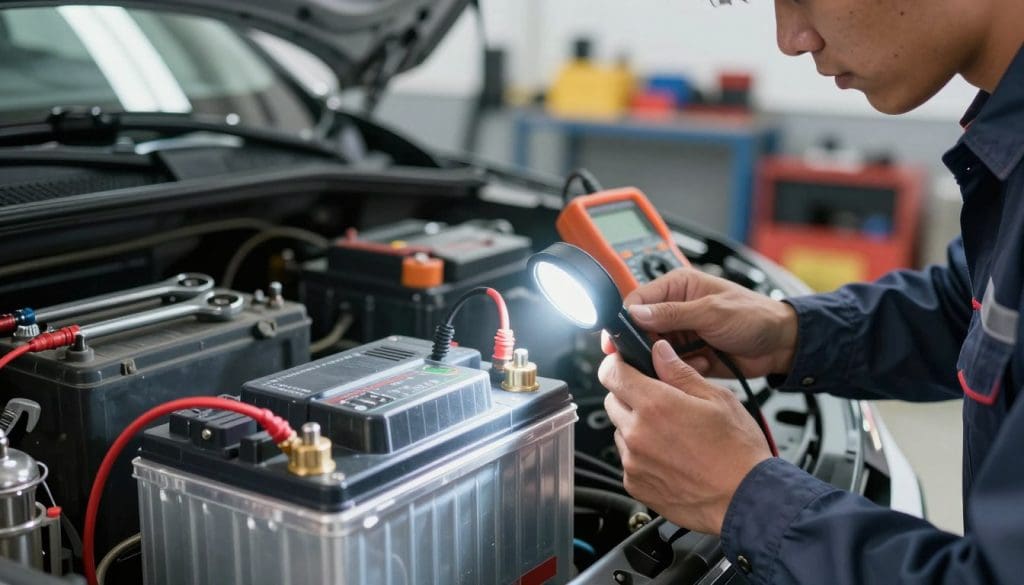
Checking your battery and alternator often can stop sudden failures. It keeps your car’s electrical system running well. Knowing about start-stop tech and how to check your alternator helps you keep your car in top shape.
Troubleshooting Modern Wiring Repair Car Issues
Modern cars have complex electrical systems. This makes fixing wiring issues both tough and very important. Knowing what usually goes wrong is key.
Corrosion, rodent damage, and wear from heat and vibration are common problems. To fix these, you need to know where they come from.
Identifying Corroded Connectors and Damaged Harnesses
Corrosion is a big threat to your car’s electrical system. It can happen at connectors, terminals, and in wiring harnesses. To spot corroded connectors:
- Look at battery terminals and ground points for corrosion.
- Check connectors for rust or greenish spots.
- Use a multimeter to test connections for resistance.
Damaged harnesses can also cause big electrical problems. Look for frayed wires or cracked insulation. These are often from vibration or heat.
The Dangers of Rodent Damage to Wiring
Rodents can chew through insulation and expose wires. This can cause short circuits, fires, and expensive fixes. To avoid this:
- Park in rodent-free spots when you can.
- Use rodent repellents or deterrents around your car.
- Check your car’s wiring often for rodent damage.
By knowing these common problems and taking steps to prevent them, you can keep your car’s electrical system working well.
The Impact of Software Glitches on Vehicle Performance
Modern cars use a lot of software, and glitches can really mess with how they work. As cars get more advanced, they need more complex electronic systems. Sometimes, these systems can have problems that affect how your car runs.
Software glitches can cause many different problems. For example, issues with the CAN bus system can mess with the engine and transmission. It’s very important to fix these glitches quickly to keep your car running well and safely.
Firmware Updates: A Necessary Maintenance Task
Firmware updates are key to keeping your car’s electronics in good shape. Just like your phone or computer, your car’s ECUs need updates to fix bugs and improve performance. Not updating can make your car more vulnerable to glitches and malfunctions.
When updates are needed, they can fix current problems and prevent new ones. Manufacturers often release updates to solve specific issues or to make systems work better. Keeping up with these updates is important for your car to run its best.
Recognizing ECU Communication Errors
ECU communication errors can show up in many ways, like dashboard lights or strange car behavior. Spotting these signs early is key to finding and fixing the problem. If you see any odd lights or behavior, get your car checked by a pro.
ECU communication problems can come from software glitches, bad wiring, or hardware issues. Finding the exact cause needs special tools and knowledge. Getting a pro to diagnose can help find the problem and fix it.
Understanding how software glitches affect your car and knowing when to update firmware and spot ECU errors can help keep your car in top shape.
Sensor Malfunctions and Their Electrical Consequences
Sensors in today’s cars are like the behind-the-scenes heroes. They help keep your vehicle running smoothly and safely. These sensors check everything from fuel to emissions, keeping your car in balance.
But, when sensors go wrong, problems can arise. You might see less performance, use more fuel, or even face safety risks. Knowing how sensors work and what happens when they fail is key to fixing electrical issues in modern cars.
Oxygen Sensor and Mass Airflow Sensor Faults
The Oxygen Sensor and Mass Airflow Sensor are vital in your car. The Oxygen Sensor checks exhaust gases to adjust fuel for better performance and emissions. A bad Oxygen Sensor can hurt fuel efficiency and emissions, and might even cause your car to fail emissions tests.
The Mass Airflow Sensor measures air intake for fuel injection. A faulty Mass Airflow Sensor can cause issues like rough idling or stalling. For example, if your engine idles roughly, a bad sensor might be the cause. Learn more about this in our article on why your engine idles rough.
How Faulty Sensors Trigger Limp Mode
When a key sensor fails, your car might go into “limp mode.” This is a safety feature that limits your car’s performance to prevent damage. It can happen with sensors like the Oxygen Sensor or Mass Airflow Sensor.
The table below shows common sensors, what they do, and what happens if they fail:
| Sensor | Function | Consequences of Failure |
|---|---|---|
| Oxygen Sensor | Monitors oxygen levels in exhaust gases | Decreased fuel efficiency, increased emissions |
| Mass Airflow Sensor | Measures air entering the engine | Rough idling, hesitation, stalling |
| Crankshaft Position Sensor | Monitors engine speed and position | Engine stalling, failure to start |
Knowing about sensors and their failure can help you fix problems faster. Regular checks and quick repairs are important to keep your car running well and avoid bigger issues.
Navigating Complex Automotive Electrical Repair Challenges
Dealing with complex automotive electrical repairs requires understanding modern vehicle electronics. As cars get more advanced, their electrical systems become more complex. This makes fixing them harder.
One big challenge is finding intermittent electrical faults. These “gremlins” are tricky because they don’t always show up.
The Difficulty of Intermittent Electrical Gremlins
Intermittent electrical issues can stem from many things like loose connections or corroded wiring. Finding these problems takes patience and a careful testing process. Advanced diagnostic tools and knowing your vehicle’s wiring diagrams are key to solving these issues.
Grounding Issues and Their Hidden Effects
Ground connections are vital for your vehicle’s electrical circuit. A bad ground can lead to many vehicle electronics issues. This includes faulty accessories and odd dashboard behavior. Keeping ground connections clean and tight is essential for your vehicle’s electrical health.
To tackle grounding problems, technicians must grasp the importance of proper grounding. They need to test ground integrity. This means checking for voltage drops and ensuring grounds are attached to clean metal.
Why DIY Electrical Repairs Often Fail
Modern cars have complex electrical systems. They include everything from engine control to entertainment systems. This makes fixing them harder.
DIY electrical repairs often fail because of a lack of knowledge and tools. Automotive electrical repair needs a deep understanding of complex circuits and modern car electrical issues.
The Risks of Improper Wiring Splices
DIY electrical repairs often involve wiring splices. If done wrong, these can cause short circuits and even fires. Modern cars have advanced wiring systems that need precise splicing.
To avoid these dangers, it’s key to use the right splicing methods and materials. But many DIY folks lack the training and experience. This leads to poor repairs that can be unsafe and unreliable.
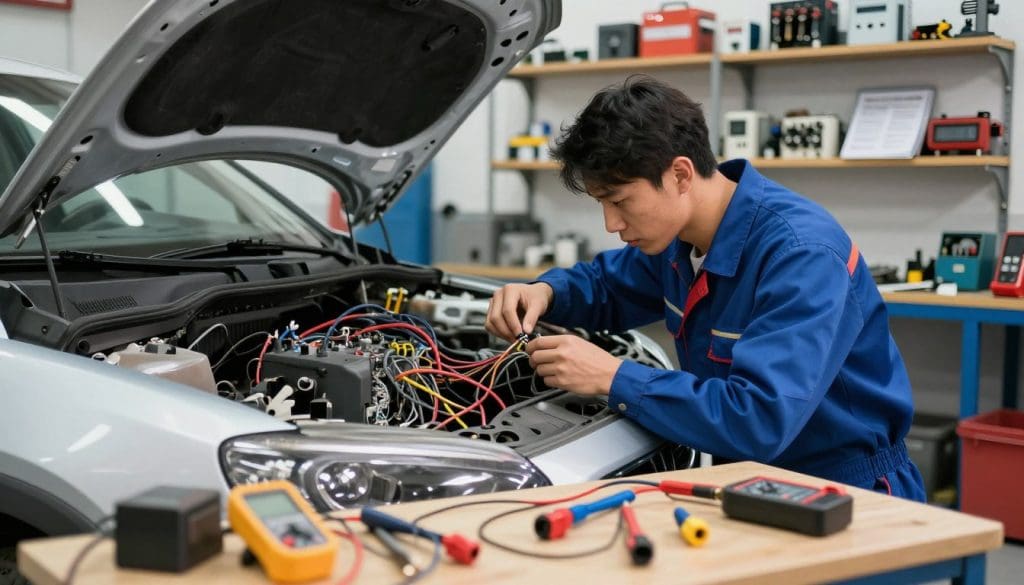
Why Specialized Equipment is Required for Modern Systems
Modern car electrical systems need special tools for diagnosis and repair. Car electrical problems often require advanced diagnostic tools that talk to the car’s computer.
Without these tools, DIY repairs won’t work. Using the wrong equipment can also cause more harm to the car’s electrical system.
In summary, while DIY repairs can save money for some car issues, automotive electrical repair is best left to the pros. The complexity and risks of modern car electrical problems make it wise to get professional help for repairs.
The Importance of Professional Diagnostics for Modern Vehicles
Modern cars have complex electrical systems that need a pro to fix. These systems are so advanced that even experts find it hard to diagnose and repair them.
Today’s cars have advanced computers, many sensors, and complex wiring. This makes it tough for anyone without the right skills and tools to find and fix electrical problems.
Expertise Required for Modern Vehicle Electronics Issues
Technicians get a lot of training to handle modern car electronics. They use the latest tools and have the experience to solve tough electrical problems.
Some key areas where professional expertise is key include:
- Understanding manufacturer-specific diagnostic trouble codes
- Interpreting data from advanced diagnostic tools
- Identifying and repairing complex wiring issues
For example, a pro can use a scan tool to find problems with a car’s CAN Bus system. They can then fix the issue.
Ensuring Safety and Compliance with Manufacturer Standards
Getting repairs done by a pro ensures they are safe and right. Modern cars have many safety features that rely on complex electronics. Wrong repairs can harm these features.
Also, pros know the rules set by car makers. They make sure repairs follow these rules. This keeps the car’s warranty valid and ensures it works as it should.
| Benefits of Professional Diagnostics | Description |
|---|---|
| Accurate Diagnosis | Professional technicians use advanced tools to accurately diagnose complex electrical issues. |
| Safety Assurance | Repairs are done with safety in mind, ensuring that the vehicle’s safety features remain intact. |
| Compliance with Standards | Technicians ensure that all repairs meet manufacturer standards, maintaining warranty validity. |
Choosing professional diagnostics means your car gets fixed right, safely, and meets the maker’s standards.
Preventative Maintenance for Your Vehicle Electrical System
Preventing car electrical problems starts with taking care of your vehicle. Regular checks and maintenance of your electrical system can lower the chance of failures and expensive fixes.
Cleaning your battery terminals regularly is a simple yet effective step. Corrosion can cause poor connections, leading to issues like dim lights or system failures.
Regular Battery Terminal Cleaning
To clean the terminals, start by disconnecting the negative (black) cable, then the positive (red) cable. Use a wire brush to remove corrosion. Reconnect the cables in the reverse order. This keeps your starting and electrical systems working well.
Monitoring Electrical Loads and Accessory Add-ons
Keeping an eye on your electrical system’s load and add-ons is also key. Too many aftermarket accessories can strain your system. This might cause blown fuses or wiring damage, needing wiring repair car services.
Checking your battery and alternator regularly is important. Make sure your battery holds a charge and your alternator works right. Doing this can prevent electrical problems and save you from expensive repairs later.
By following these tips, you can keep your vehicle’s electrical system running smoothly. This avoids common car electrical problems and the need for costly wiring repair car services.
Identifying Signs of Short Circuits and Blown Fuses
A blown fuse might seem like a small problem, but it often points to a bigger electrical issue in your car. Knowing how to spot signs of short circuits and blown fuses is key to keeping your car’s electrical system running smoothly. This helps avoid serious problems like electrical fires.
When a fuse blows, it means there’s too much current in the circuit. This could be because of a short circuit, too much load, or a faulty part. Regularly checking your fuse box can help you catch these problems early.
How to Safely Inspect Fuse Boxes
Checking your car’s fuse box is easy and can give you important info about your electrical system. Here’s how to do it:
- Find your car’s fuse box, usually under the dashboard or in the engine area.
- Turn off the engine and all electrical stuff to avoid shorts or injuries.
- Use a fuse puller or needle-nose pliers to take out fuses for a look.
- Look at each fuse for signs of a blow, like a broken wire or discoloration.
Tracing Electrical Shorts Before They Cause Fires
Finding an electrical short can be tough, but it’s vital to stop fires. Here are steps to help you find and fix electrical shorts:
- Find the circuit with the short by seeing which parts or accessories don’t work.
- Use a multimeter to check for continuity and voltage drops in the circuit.
- Look at wiring and connectors for damage, corrosion, or wear.
- Get a pro if you can’t find or fix the short, as it’s a big safety risk.
By being proactive and checking your car’s electrical system often, you can spot and fix problems early. This keeps your car reliable and safe on the road.
Technological Advancements in Automotive Circuitry
The world of car technology is changing fast. Modern cars have more complex electrical systems. This is because people want cars that are better, safer, and more reliable.
These changes will affect how cars are made and fixed. Electric cars are becoming more popular. They are good for the environment and efficient.
The Future of Electric Vehicle Electrical Architecture
Electric cars are changing how cars work. They use electricity instead of gas, needing better electrical systems. These systems need robust wiring and circuitry to handle high power.
The future of electric cars will focus on being more efficient and lighter. New battery systems and better charging tech are key to this.
How Autonomous Systems Rely on Electrical Integrity
Autonomous cars need stable electrical systems. They use many sensors and cameras that need a steady power supply. Any electrical issue can be dangerous.
Keeping autonomous cars’ electrical systems working is essential. This means using strong wiring and circuitry, and tools to find and fix car electrical problems quickly. Skilled technicians are needed for wiring repair car tasks.
Conclusion
Modern cars have complex electrical systems. This makes fixing electrical problems very important for car care. It’s key to understand these systems well to spot and solve issues early.
We’ve looked at how car electrical systems have changed, common signs of problems, and why getting a pro’s help is vital. Knowing the signs of electrical faults and acting early can prevent bigger issues later.
If your car has electrical issues or you’re not sure about its electrical health, getting expert advice is a must. Heaven Automotive is ready to help with all kinds of electrical repairs. Their skilled team can find and fix problems quickly, keeping your car running well and safely.
For top-notch automotive electrical repair, visit Heaven Automotive at 6645 Poss Rd, San Antonio, TX 78238. Or call (210) 682-3898 to book an appointment today.