

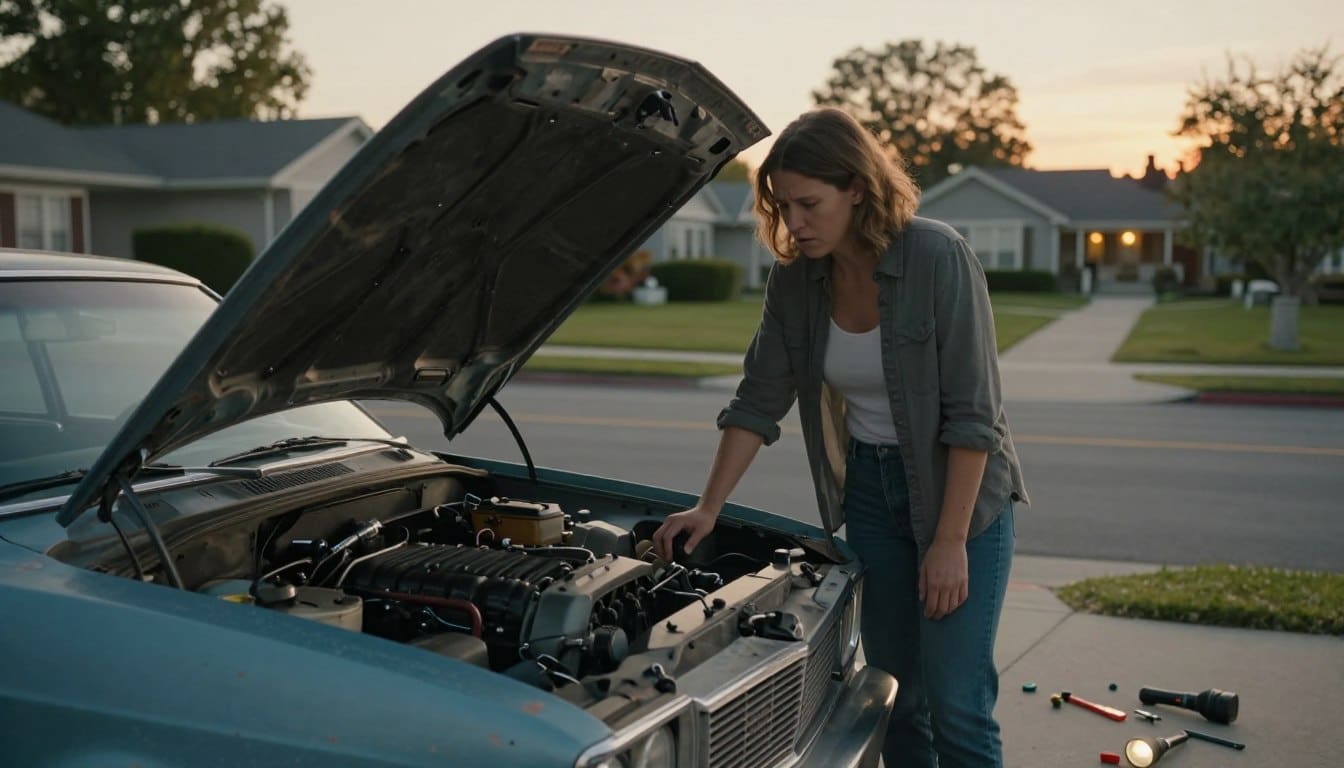
When you turn the ignition key, the engine barely turns over. This can be really stressful, making your car hard to start. It usually happens when you least expect it. Understanding what causes these issues can help keep your car running smoothly.
Weak batteries, worn-out starter motors, or problems with fuel delivery are common reasons. These parts need to work together perfectly to start the engine right away. If one part doesn’t work, your vehicle may be hard to move, even in mild weather.
You don’t have to deal with these problems alone. Heaven Automotive offers expert services to find and fix your ignition issues fast. If your car hard to start, visit us at 6645 Poss Rd. San Antonio, TX 78238 or call (210) 682-3898. Let Heaven Automotive fix your car today.
Key Takeaways
- Battery health is a primary factor in reliable vehicle ignition.
- Starter motor failure often leads to sluggish or no-start conditions.
- Fuel system blockages can prevent the engine from receiving power.
- Professional diagnostics help identify the root cause of starting issues.
- Heaven Automotive specializes in engine and ignition repair services.
- Timely maintenance prevents small starting problems from becoming costly repairs.
The Rising Trend of Starting Failures
Have you noticed more cars having trouble starting? This trend is interesting to explore. A big reason for this is battery problems car owners often miss.
When your car won’t start, it’s usually because of battery issues. Signs of a bad battery include:
- Dim dashboard and interior lights
- Slow windshield wipers
- Corroded battery terminals
These signs mean your battery isn’t working right. A dead or faulty battery is a top reason cars won’t start. Keeping your battery in good shape is key for your car to run well.
To avoid being stuck with a car that won’t start, watch your battery’s health. Regular checks can spot problems early. Important things to check include:
- Checking for corrosion on battery terminals
- Ensuring the battery is properly secured
- Monitoring the battery’s age and condition
By taking care of your car’s battery, you can lower the chance of starting failures.
Understanding Why Your Car Hard to Start
Many things can make your car hard to start. It’s important to look at battery health, starter motor function, and fuel system integrity. These parts are key to a smooth start.
First, check the battery. A weak or dead battery often causes starting problems. Make sure the terminals are clean and free of corrosion.
The starter motor is also critical. If it’s faulty, starting can be tough. The fuel system must work right too. Issues like a clogged fuel filter or a bad fuel pump can stop the engine from starting.
| Component | Potential Issue | Symptoms |
|---|---|---|
| Battery | Weak or Dead Battery | Difficulty starting, dim lights |
| Starter Motor | Faulty Starter Motor | Clicking sound when turning the key |
| Fuel System | Clogged Fuel Filter or Faulty Fuel Pump | Engine stalls or fails to start |
Knowing these possible causes helps you find and fix the problem. Regular checks on the battery, starter motor, and fuel system can stop hard starting issues.
Battery Health and Electrical Integrity
Your car’s electrical system is key to avoiding hard starting issues. A good battery and electrical system are essential for your vehicle’s performance. If they fail, you might face starter motor failure and other problems that could leave you stranded.
Two main factors that can harm your battery and electrical system are corrosion on battery terminals and voltage drops in cold weather. Knowing about these can help you keep your vehicle’s electrical system in top shape.
Corrosion on Battery Terminals
Corrosion on battery terminals is a common problem that can make starting your car hard. When terminals corrode, it stops the battery from powering the starter motor. This leads to battery problems car owners often see. Regularly checking and cleaning the terminals can prevent this.
To check the terminals, follow these steps:
- Turn off the engine and ensure the car is in park (automatic) or neutral (manual).
- Locate the battery and identify the terminals.
- Check for signs of corrosion, such as a green or white powdery substance.
- Clean the terminals using a wire brush and a mixture of baking soda and water.
| Corrosion Level | Description | Recommended Action |
|---|---|---|
| Low | Minor corrosion visible | Clean terminals |
| Moderate | Noticeable corrosion affecting performance | Clean terminals and check for underlying issues |
| High | Severe corrosion preventing engine start | Replace battery and clean or replace terminals |
Voltage Drops During Cold Weather
Cold weather can lower your battery’s voltage, making it harder to start your car. Cold temperatures slow down the battery’s chemical reactions, reducing its charge. This can lead to starter motor failure or other starting problems in winter.
To fight cold weather’s impact on your battery:
- Make sure your battery is fully charged before cold weather starts.
- Use a battery blanket or insulation to keep the battery warm.
- Avoid short trips that can prevent the battery from fully charging.
By understanding and tackling these issues, you can keep your vehicle’s battery and electrical system in good shape. This reduces the chance of battery problems car owners face.
Starter Motor Failure Mechanics
Understanding starter motor failure is key to fixing hard starting problems. The starter motor starts the engine. Its failure can be due to several mechanical problems.
If your car won’t start, look for signs like slow cranking or clicking sounds. For more info, check this resource.
Solenoid Engagement Issues
The solenoid is essential for the starter motor’s work. It acts as an electromagnetic switch that starts the starter when you turn the key. Solenoid problems can stop the starter motor from working right.
A clicking sound when turning the key but the engine doesn’t start is a sign. It means the solenoid might not be working right or there’s an electrical issue.
Internal Wear and Electrical Shorts
Worn parts inside the starter motor, like brushes or a commutator, can cause it to fail. Electrical shorts can also make it malfunction.
Regular checks and maintenance can spot these problems early. Fixing electrical issues quickly is also important to avoid damage to the starter motor and other parts.
| Symptom | Possible Cause | Recommended Action |
|---|---|---|
| Slow cranking or clicking sounds | Solenoid engagement issues or internal wear | Inspect solenoid and starter motor for wear or damage |
| No response when turning the key | Electrical shorts or faulty wiring | Check electrical connections and wiring for damage |
| Intermittent starting issues | Internal wear or solenoid issues | Perform regular maintenance and inspect starter motor |
Fuel System Issues and Delivery
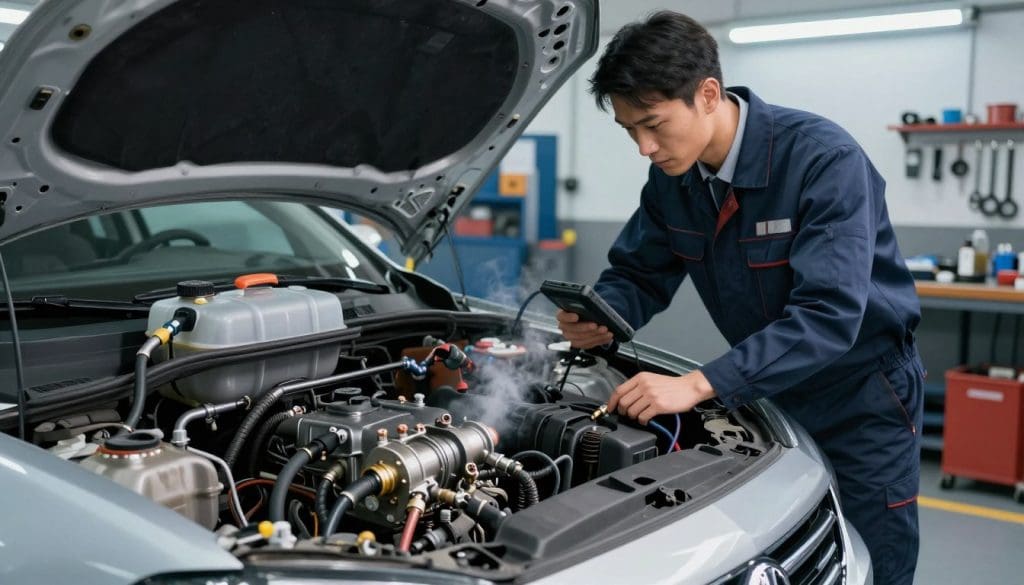
Fuel system problems often cause hard starting in vehicles. This affects how well your car drives. The fuel system must deliver fuel to the engine without trouble.
A good fuel system is key for the engine to work right. It has parts like the fuel pump, filters, and injectors. These must work together to give the engine the right fuel.
Fuel Pump Pressure Deficiencies
Fuel pump pressure deficiencies are a big problem. The fuel pump makes the pressure needed for fuel delivery. If it fails, starting the engine gets hard.
Signs of a bad fuel pump include hard engine starts, sputtering, and less power. Keeping the fuel pump in check can stop these problems.
Clogged Fuel Filters and Injectors
Clogged fuel filters and injectors are another big issue. Fuel filters clean the fuel before it gets to the engine. But they can get clogged over time. Fuel injectors also get dirty or clogged, making it hard for fuel to get to the engine.
Changing fuel filters often and cleaning or replacing injectors helps. This keeps the fuel system working well and stops hard starts.
In short, a healthy fuel system is essential for avoiding hard starts. Regular checks and maintenance of fuel system parts help your car start easily and run well.
Ignition System Complications
Ignition system problems can make starting your car hard. This system is key for your engine to run smoothly. Any issues can cause starting troubles.
A good ignition system sparks the fuel-air mix in the engine’s cylinders. When it fails, starting your car becomes a challenge.
Spark Plug Degradation
Spark plugs ignite the fuel-air mix in your engine. They wear out over time, affecting your engine’s performance. This can lead to hard starts.
Signs of spark plug wear include hard starts, misfires, and lower fuel efficiency. It’s important to check and replace spark plugs regularly.
Ignition Coil Pack Failures
The ignition coil pack creates the spark for the spark plugs. If it fails, you might face hard starts or engine misfires.
Symptoms of coil pack failure include hard starts, misfires, and sometimes, the engine won’t start. Replacing a bad coil pack can fix these problems.
Knowing about ignition system issues helps you fix them early. Regular checks and maintenance keep your ignition system working well.
Air Intake and Sensor Malfunctions
Air intake and sensor problems can really hurt your car’s performance, making it hard to start. The air intake system is key for getting air to the engine. If it breaks down, many issues can arise.
The mass air flow sensor is a big part of this system. It measures air going into the engine and tells the engine control unit (ECU). A bad sensor can mess up the air-fuel mix, hurting the engine and making it hard to start.
Mass Air Flow Sensor Errors
A bad mass air flow sensor can make the engine run too rich or lean. This can lead to poor performance and hard starts. Signs of a failing sensor include hesitation when accelerating, stalling, and trouble starting the engine. If you see these signs, check your sensor. Learn more about engine issues in our article on why your engine idles rough.
| Symptoms | Possible Causes | Recommended Action |
|---|---|---|
| Engine hesitation | Faulty Mass Air Flow Sensor | Check and replace the Mass Air Flow Sensor if necessary |
| Difficulty starting | Incorrect air-fuel mixture | Inspect the air intake system for leaks or blockages |
| Stalling | Clogged air filter | Replace the air filter |
Throttle Body Carbon Buildup
Carbon buildup on the throttle body is another problem. The throttle body controls air flow to the engine. Over time, it can get clogged, causing performance issues and hard starts. Cleaning the throttle body regularly can help avoid this.
Also, battery problems car owners face can be linked to air intake and sensor issues. A weak battery can mess with sensor operation and engine performance.
Regular maintenance is key to avoiding hard starts. Make sure your air intake system is clean and working right. This keeps your car running well and reliably.
The Role of Modern Engine Control Units
Modern engine control units (ECUs) are the brain of your vehicle’s engine. They manage key functions like fuel injection and ignition timing. If they fail, starting your car can become a problem.
Understanding ECU Functions: The ECU uses sensor data to adjust engine performance. It controls the air-fuel mixture and ignition timing. If it malfunctions, your car may have trouble starting.
Software Glitches and ECU Resets
Software glitches in the ECU can cause starting issues. These glitches might be due to bugs or corrupted data. An ECU reset can sometimes fix these problems by clearing faults and resetting the unit.
But, finding the real cause of the glitch is key. This might mean updating the ECU software or replacing faulty parts.
| Issue | Description | Potential Solution |
|---|---|---|
| Software Glitch | Erratic ECU behavior due to software bugs or corrupted data | ECU Reset or Software Update |
| Corrupted Data | Faulty data from sensors causing ECU malfunction | Sensor Replacement or Data Clearance |
| Hardware Failure | Physical failure of ECU components | ECU Replacement |
Communication Errors Between Modules
Modern cars have a network of modules that talk to each other through the CAN bus. The ECU is a key part of this network. Any communication problems can cause starting issues.
Diagnosing Communication Errors: Technicians use special tools to check the CAN bus for problems. Fixing or replacing faulty modules or wiring can solve these issues.
Understanding the ECU’s role and fixing issues can prevent starter motor failure. This ensures your car starts reliably.
Environmental Factors Affecting Ignition
Environmental factors can really affect your car’s start-up. Different outside conditions can change how well your car’s ignition works.
Humidity and Electrical Arcing
High humidity can cause problems with electrical arcing in your car’s ignition. Moist air makes electrical current arc more easily. This can lead to misfires or trouble starting the engine.
Key issues related to humidity include:
- Corrosion on electrical components
- Increased risk of electrical shorts
- Misfires due to improper arcing
Extreme Temperature Effects on Fluids
Extreme temperatures can really mess with your car’s fluids. This includes engine oil, transmission fluid, and fuel. These fluids are key for your car’s engine and ignition system to work right.
Effects of extreme temperatures include:
- Thickening of engine oil in cold temperatures, making it harder for the engine to turn over
- Degradation of fuel quality in high temperatures, potentially leading to fuel system issues
- Changes in battery performance, as extreme temperatures can reduce battery efficiency and lifespan
Maintenance Neglect as a Primary Driver
Not keeping up with regular maintenance can cause hard starting issues in your car. It’s key to ensure your car starts well and runs smoothly.
Staying on top of scheduled tune-ups is important. These tune-ups include checks and replacements to keep your engine and systems working right.
The Importance of Scheduled Tune-ups
Scheduled tune-ups are vital for your car’s health. A mechanic will replace spark plugs, air filters, and fuel filters during a tune-up. This helps avoid hard starting, rough idling, and poor fuel efficiency.
| Tune-up Component | Function | Consequence of Neglect |
|---|---|---|
| Spark Plugs | Ignite fuel-air mixture | Hard starting, misfires |
| Air Filters | Clean airflow to engine | Reduced performance, decreased fuel efficiency |
| Fuel Filters | Clean fuel supply to engine | Clogged injectors, hard starting |
Fluid Contamination and Filter Life
Fluid contamination can also cause hard starting problems. Engine oil, coolant, and fuel can get dirty over time. This can harm your engine and other parts.
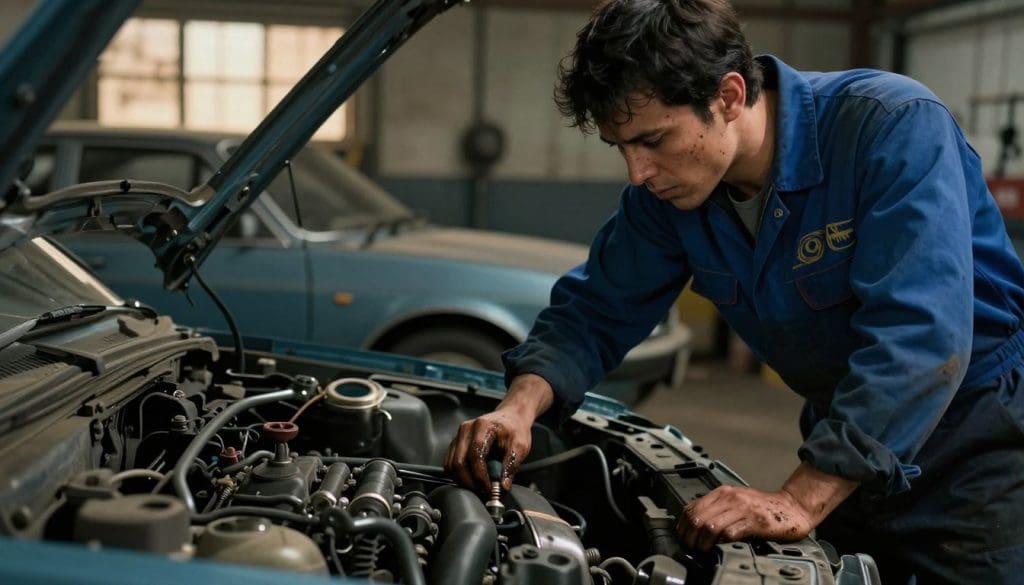
It’s important to check and keep these fluids clean. Also, replace filters when needed. Doing these tasks helps keep your car reliable and easy to start, even when it’s hard.
Diagnostic Procedures for Modern Vehicles
When your car has trouble starting, knowing how to use diagnostic tools is key. Modern cars have advanced systems that give you insights into their health. These tools help find the main problem fast.
The On-Board Diagnostics II (OBD-II) system is a main tool in today’s cars. It lets you check your car’s performance and find problems.
Using OBD-II Scanning Tools
OBD-II scanners talk to your car’s computer, showing trouble codes. These codes tell you what’s wrong. To use one, plug it into the OBD-II port under the steering column. It will show you codes and real-time data on your car’s systems.
Key benefits of using OBD-II scanning tools include:
- Quick identification of trouble codes related to hard starting issues
- Real-time data monitoring to help diagnose intermittent problems
- The ability to clear trouble codes after repairs, resetting the check engine light
Interpreting Check Engine Light Codes
The check engine light means something’s wrong with your car’s engine or emissions. When it lights up, it’s because of a trouble code in the computer. Knowing these codes is key to fixing hard starting and other problems.
Codes for hard starting might show battery problems or starter motor failure. For example, codes about the crankshaft or camshaft sensors might mean hard starting. You need to know about engine systems and use an OBD-II scanner well.
With OBD-II tools and knowledge of your car, you can quickly find and fix hard starting issues. This gets your car running smoothly again.
When to Seek Professional Intervention
Knowing when to call for professional help can save you time and prevent damage to your car. Some hard starting issues can be fixed by car owners. But, others need a professional mechanic’s skills.
Complex electrical faults often cause hard starting problems. This includes starter motor failure and wiring issues. If you think it’s an electrical problem, get professional help. A mechanic has the tools and knowledge to fix these complex issues.
Recognizing Complex Electrical Faults
Modern cars have complex electrical systems. Finding faults in these systems is hard without the right tools and knowledge. Signs of electrical faults include intermittent starts, dim dashboard lights, and strange starter motor noises.
Safety Risks of DIY Repairs
Trying to fix complex electrical or fuel system issues yourself can be dangerous. You might cause a short circuit or fuel leak. This can lead to fires or other dangers.
If you’re not sure about your car’s hard starting problem, don’t try to fix it yourself. It’s safer to get a professional mechanic’s help. They can diagnose and repair your car safely and efficiently.
Preventing Future Starting Issues
By setting up regular inspection schedules and choosing top-notch parts, you can lower the chance of fuel system issues and other starting problems.
Regular checks can spot issues early. This means looking at the battery, starter motor, and fuel system health.
Routine Inspection Schedules
Having a set schedule for inspections is key to keeping your car in good shape. You should check the battery terminals for corrosion, the starter motor’s condition, and the fuel system’s performance regularly.
| Component | Inspection Frequency | Importance Level |
|---|---|---|
| Battery Terminals | Every 3 months | High |
| Starter Motor | Every 6 months | Medium |
| Fuel System | Every 12 months | High |
Quality Parts Selection
Choosing quality parts is vital to avoid future starting issues. Pick high-quality batteries, starter motors, and fuel system parts that fit your vehicle well.
The Cost of Ignoring Starting Symptoms
Ignoring starting symptoms can lead to big problems with your car. It can cause minor issues or serious damage to your engine and other parts. This can make your car perform poorly and not last as long.
One big risk is secondary damage to engine components. For example, battery problems car can hurt the alternator. Issues with the starter motor can also stress the battery and electrical system, causing more failures.
Secondary Damage to Engine Components
Ignoring starting issues can cause even bigger problems, like fuel system issues. A bad fuel pump or clogged filter can harm your engine. It can damage cylinders, pistons, or valves. A faulty ignition system can also cause incomplete combustion, making engine wear worse.
Long-term Financial Implications
Ignoring starting symptoms can cost a lot of money. Costly repairs for secondary damage can be much more than fixing the starting issue. For example, fixing a damaged engine or a failed alternator is expensive. Fixing starting symptoms early can save you money in the long run.
Also, ignoring starting issues can make your car less reliable and shorten its life. A well-kept car keeps its value and is safer to drive. So, it’s important to take starting symptoms seriously and fix them quickly to avoid long-term problems.
Conclusion
Knowing why your car is hard to start is key to keeping it running well. Problems like a weak battery, a broken starter motor, or fuel system issues can cause this.
If your car won’t start, get help fast. Heaven Automotive at 6645 Poss Rd, San Antonio, TX 78238, offers expert help. Call them at (210) 682-3898 to book a check-up and fix.