

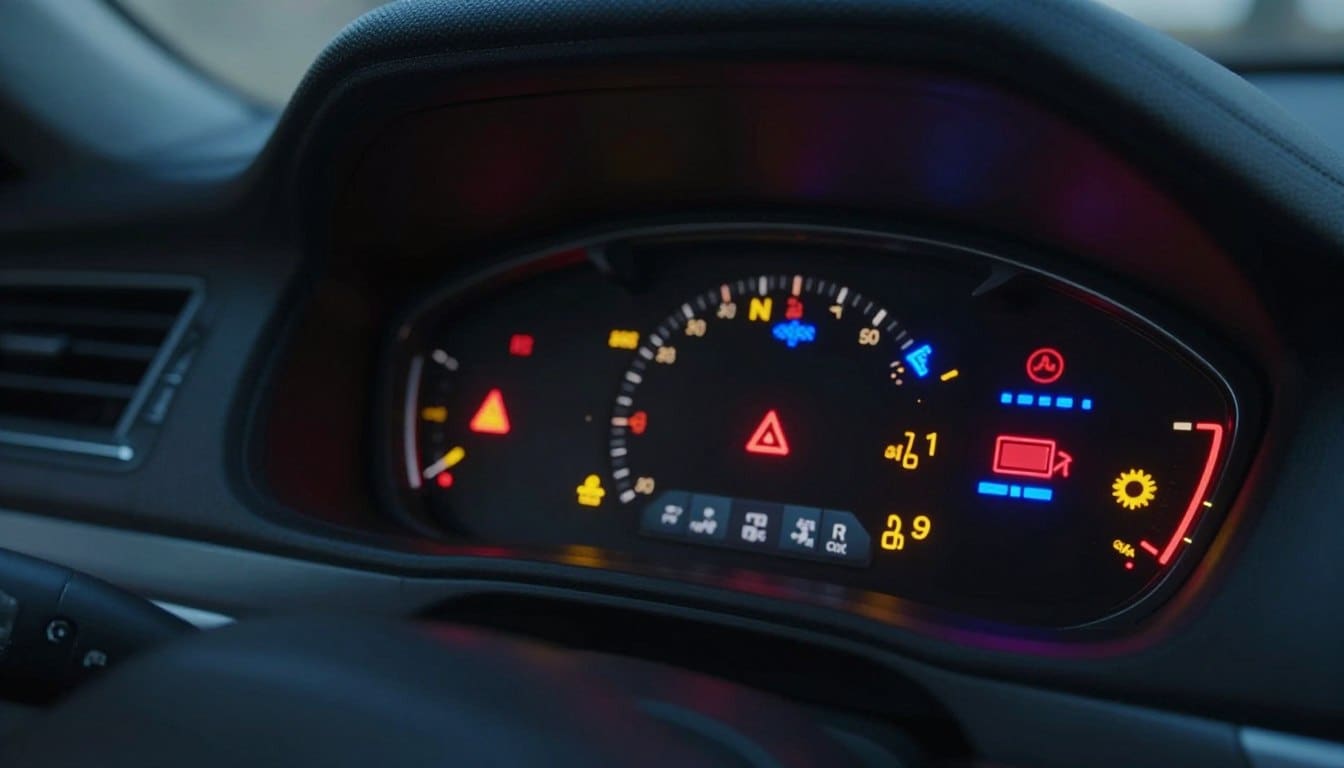
Driving in the United States means you need a car that works well. When a light comes on, your car is trying to tell you something. It could be a simple message or a serious warning that needs your quick action.
Knowing what vehicle warning symbols mean is key for drivers. These lights tell you about your car’s health. They help you decide if it’s safe to keep driving or if you should stop to avoid problems.
At Heaven Automotive, we help you understand these messages. Our team is here to fix any issues and keep your family safe. We encourage you to hire our professionals for your car’s needs as we dive into these signals.
Key Takeaways
- Visual icons serve as the primary communication tool between you and your vehicle.
- Quickly addressing new alerts can prevent expensive mechanical failures over time.
- Not every signal on your panel indicates a critical emergency or total breakdown.
- Learning the color-coded system helps you make informed safety decisions quickly.
- Scheduled professional inspections ensure your car remains dependable for years to come.
The Evolution of Dashboard Warning Lights
When you look at your car’s dashboard, you see lights that have a long history. This history is linked to the growth of car technology.
The first dashboard warning light was in a 1933 Hudson, as Matt Anderson from the Henry Ford Museum in Dearborn, Michigan, shared. This early light was simple but started a journey to more complex systems.
Today, dashboard lights have changed a lot. They now watch over many parts of your car. They alert you to engine alerts car owners about possible issues early on.
These lights have come a long way thanks to car tech advancements. Now, cars have advanced computers that spot many problems. They might even ask for a diagnostic scan to find the issue.
- Early warning systems were simple and limited.
- Modern systems are complex and all-encompassing.
- Today’s vehicles rely on advanced computer systems for monitoring.
As car tech keeps getting better, dashboard warning lights will keep being key. At Heaven Automotive, our experts can figure out and fix problems shown by these lights. This keeps your car running smoothly.
Decoding Dashboard Warning Lights and Their Meanings
The dashboard warning lights in your car are very important. They tell you about your car’s health, from simple checks to serious problems. Knowing what each light means can help you fix issues fast, saving you money later.
Color-Coded Alerts: What Green, Yellow, and Red Mean
Dashboard lights are colored to show how serious a problem is. Green lights mean everything is working fine, like your cruise control. Yellow or amber lights warn you of a problem that needs fixing soon. Red lights mean you need to act fast because it’s a big issue.
Here’s a quick guide to the colors:
| Color | Indication | Recommended Action |
|---|---|---|
| Green | System active or functioning | No action required |
| Yellow/Amber | Cautionary condition | Check and address soon |
| Red | Serious issue | Immediate action required |
The Importance of Immediate Action for Red Indicators
Red lights mean serious problems, like engine overheating or low oil pressure. If you ignore these, you could damage your car badly. This could cost a lot to fix or even make your car unusable.
Also, if your warning lights don’t turn on when you start the car, it’s a problem. You might not know about a serious issue.
It’s key to understand and act on your car’s warning lights. This keeps your car running well and keeps you safe. If you’re not sure about a light or need help, call Heaven Automotive. Our team is ready to help you fix problems and get you driving safely again.
Engine Alerts Car Owners Should Never Ignore
Your car’s engine is like its heart. Any problems with it can cause big issues if not fixed fast. Ignoring engine alerts can lead to expensive repairs later on.
The Check Engine Light: Causes and Consequences
The check engine light is a big worry for car owners. It can mean anything from a loose gas cap to a serious problem like a bad catalytic converter. Knowing what it means and why is key.
Causes of the Check Engine Light:
- Loose or Faulty Gas Cap
- Faulty Oxygen Sensor
- Catalytic Converter Issues
- Mass Airflow Sensor Problems
Not paying attention to the check engine light can hurt your car’s fuel efficiency and emissions. It can even damage your engine badly. A scan at a place like Heaven Automotive can find the problem and fix it.
Oil Pressure Warnings and Engine Lubrication
Oil pressure warnings are very important. Low oil pressure can make your engine seize up, which is very costly to fix. Things like low oil, worn engine parts, and bad oil pumps can cause this.
| Cause | Effect | Action |
|---|---|---|
| Low Oil Level | Insufficient Lubrication | Check and Top Up Oil |
| Worn-Out Engine Parts | Reduced Engine Performance | Replace Worn-Out Parts |
| Faulty Oil Pump | Engine Seizure Risk | Replace Oil Pump |
Keeping your oil levels right is key to your engine’s health. If your oil pressure light comes on, stop and check your oil. If it’s low, get it fixed at Heaven Automotive.
Fixing engine alerts fast and keeping up with car care can stop small problems from getting big. For help, visit Heaven Automotive. They can fix your car and keep you safe on the road.
Braking System Indicators and Safety Concerns
Your vehicle’s braking system is key to safety. When warning lights come on, it’s time to pay attention. It includes parts like the Anti-lock Braking System (ABS), brake pads, and fluid. Knowing what these lights mean is vital for your safety and car’s performance.
Anti-lock Braking System (ABS) Malfunctions
The ABS stops your wheels from locking up during hard braking. This keeps your car stable and prevents skidding. If the ABS light comes on, it means there’s a problem. This could be a bad sensor, a damaged sensor, or a faulty ABS module.
Common causes of ABS malfunctions include:
- Faulty ABS sensors
- Damaged wheel speed sensors
- Problems with the ABS module
- Low brake fluid levels
Ignoring an ABS warning light can make braking worse, which is dangerous on slippery roads. It’s important to get your ABS checked by a pro, like those at Heaven Automotive. They can find and fix any issues.
Brake Pad Wear and Fluid Level Alerts
Brake pad wear and low fluid levels are also important. Worn-out pads mean your car brakes less well. Low fluid levels also hurt your car’s braking power.
| Indicator | Cause | Consequence |
|---|---|---|
| Brake Pad Wear Alert | Worn-out brake pads | Reduced braking efficiency |
| Brake Fluid Level Alert | Low brake fluid levels | Compromised braking ability |
One common mistake is pulling away with the parking brake on. This can light up the warning light. Make sure your parking brake is off before driving to avoid these alerts.
If you’re having trouble with your brakes, fix it fast. At Heaven Automotive, our skilled team can find and fix any brake issues. Your car will be safe and reliable again. Contact us for help with your braking system problems.
Battery and Charging System Notifications
When your car’s dashboard shows a battery or charging system warning, it means you need to check it out. These systems are key to your car’s health. Problems here can range from small to serious, even leaving you stranded.
It’s important to understand these warnings to keep your car in good shape. They can point to issues with the battery, alternator, or electrical system. Ignoring them can cause bigger problems, like engine failure or safety risks.
Understanding the Battery Charge Warning Symbol
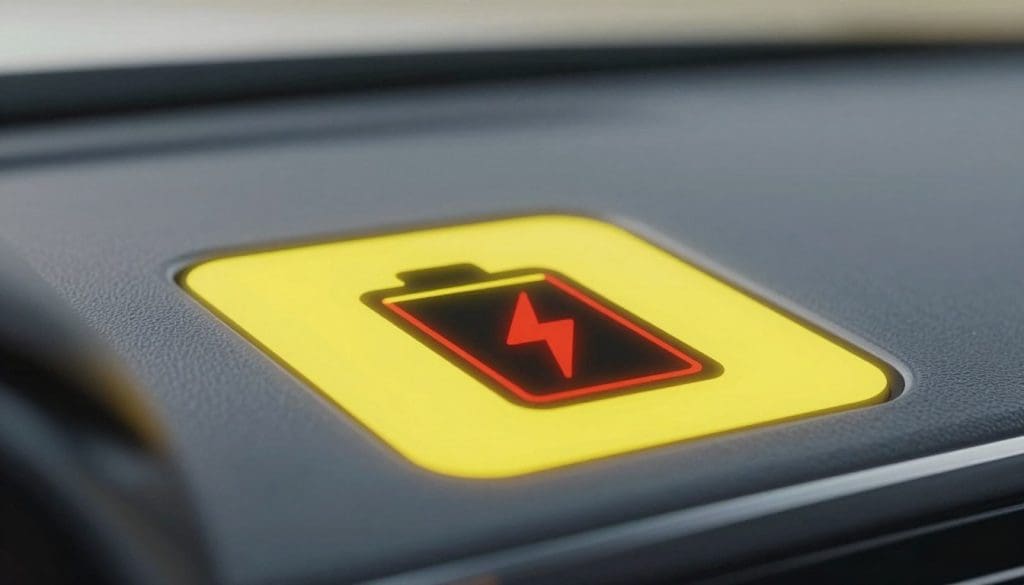
The battery charge warning symbol means your battery isn’t charging right. This could be because of a bad alternator, a failing battery, or wiring problems. If this light turns on while driving, get your charging system checked fast.
Even if the battery light comes on but your car starts and runs, don’t ignore it. There might be a problem with the battery or electrical system. Driving without fixing this could cause your battery to die or other parts to fail.
Alternator Issues and Electrical System Failures
The alternator is key for charging your battery and powering electrical systems when the engine is on. Problems with it can cause a dead battery, dim lights, and other electrical issues.
A failing alternator can lead to many problems. If not fixed, it can cause serious electrical failures. Regular checks can catch issues early.
| Symptom | Possible Cause | Recommended Action |
|---|---|---|
| Battery light on dashboard | Faulty alternator, bad battery, or wiring issues | Have the charging system checked |
| Dim or flickering lights | Alternator not charging properly | Inspect the alternator and electrical system |
| Dead battery | Alternator failure or battery issue | Check the battery and alternator |
If you see these problems, get your car checked by a pro. At Heaven Automotive, our experts can find the issue with a detailed scan. They’ll fix it to make your car run well and safely.
Temperature and Cooling System Warnings
It’s important to know what the temperature and cooling system warnings on your dashboard mean. These warnings help prevent your engine from overheating. Your car’s cooling system keeps the engine at the right temperature.
The coolant temperature warning light looks like a thermometer. It turns on when your car gets too hot. You need to fix this problem fast to avoid engine damage.
Engine Overheating Risks and Prevention
Engine overheating can really hurt your car’s engine. It might even cost a lot to fix. Some problems that can happen include:
- Damage to the engine block or cylinder head
- Failure of the head gasket
- Premature wear on engine components
To stop your engine from overheating, take care of your cooling system. Check the coolant level often. Make sure the coolant is good and change it when needed.
| Causes of Engine Overheating | Prevention Measures |
|---|---|
| Low Coolant Level | Regularly check and top off coolant |
| Faulty Thermostat | Replace thermostat at recommended intervals |
| Leaks in the Cooling System | Inspect the cooling system for signs of leaks |
Coolant Level and Sensor Malfunctions
A low coolant level can turn on the coolant temperature warning light. This means your engine might overheat. Always check the coolant level and add more if it’s low.
Problems with the coolant sensor can also light up the warning light. A bad sensor might not show the right coolant level or temperature. This can lead to false warnings or missing real problems.
If you’re seeing these warnings, take your car to a mechanic. Heaven Automotive can check it out and fix any issues. They’ll make sure your car runs well and safely.
Tire Pressure Monitoring System (TPMS) Explained
The Tire Pressure Monitoring System (TPMS) is a key safety feature in today’s cars. It alerts you to low tire pressure. This system checks your tire air pressure and tells you when it’s off, which is vital for safety and performance.
Why Tire Pressure Matters for Fuel Efficiency
Right tire pressure is key for better fuel use. Low tire pressure makes your engine work harder, using more fuel. Keeping your tires at the right pressure, as shown by your TPMS, boosts your car’s fuel efficiency and cuts down on emissions.
- Improved Fuel Efficiency: Properly inflated tires reduce rolling resistance, leading to better fuel economy.
- Enhanced Safety: Correct tire pressure improves handling and braking performance, reducing the risk of accidents.
- Tire Longevity: Underinflated tires wear out faster, so maintaining the right pressure extends their lifespan.
Handling Sudden Pressure Drops on the Highway
If your TPMS alerts you to a sudden pressure drop while driving on the highway, handle it calmly and safely. First, slow down gradually and avoid sudden turns or hard braking. Signal and move to a safe spot to check your tires.
- Check your tires for any visible signs of damage or punctures.
- If you find a tire is underinflated, check the pressure and inflate it to the recommended level if possible.
- If a tire is damaged, consider calling for roadside assistance or seeking help from a professional mechanic, such as those at Heaven Automotive.
Regularly checking your tire pressure and understanding your TPMS can greatly improve your driving experience. For any complex issues or if you’re unsure about how to address a TPMS alert, consult with experts. They can do a diagnostic scan and fix your vehicle to keep it in top shape.
Transmission and Drivetrain Warning Symbols
Understanding your vehicle’s transmission and drivetrain warning symbols is key. These systems are essential for your car’s smooth operation. Ignoring issues can cause serious damage.
Transmission Temperature Alerts
Transmission temperature alerts mean your transmission is too hot. This can happen due to low fluid, towing too much, or wear and tear. Ignoring this warning can lead to transmission failure, which is very expensive.
The reasons for high transmission temperature include:
- Low transmission fluid levels
- Excessive towing or hauling
- Clogged transmission cooler or faulty thermostat
- Internal transmission damage
If you see the transmission temperature warning light, check your fluid levels and condition. If the problem doesn’t go away, get a professional mechanic’s help.
Drivetrain and All-Wheel Drive System Errors
Drivetrain and all-wheel drive system errors show up as dashboard warning lights. These issues can impact your car’s performance and safety. Problems include faulty sensors, software bugs, or mechanical failures.
| Error Type | Description | Potential Cause |
|---|---|---|
| Drivetrain Malfunction | General drivetrain issue | Faulty sensor, software issue, or mechanical failure |
| All-Wheel Drive (AWD) Warning | AWD system not functioning correctly | Faulty AWD controller, sensor issue, or mechanical failure |
| Drivetrain Mode Error | Incorrect drivetrain mode | Software glitch or mode switch failure |
If you see these warnings, get your car checked by a pro like Heaven Automotive. They can find and fix the problem, ensuring your car runs well.
Don’t ignore these important warning symbols. Fixing transmission and drivetrain problems quickly can prevent bigger, more costly repairs. If you’re facing these issues, contact Heaven Automotive today for a diagnostic and repair service.
Airbag and Supplemental Restraint System (SRS) Alerts
It’s important to know about the alerts for your vehicle’s airbag and SRS. The airbag system is a key safety feature. It helps protect you and your passengers in a crash.
When you start your car, many dashboard lights turn on briefly. The airbag light, part of the SRS, should go off quickly. But if it doesn’t, it means there might be a problem with your airbag system.
Why Your Airbag Light Stays On
The airbag light staying on can mean several things. It could be a problem with the airbag itself, the SRS computer, or the crash sensors. Sometimes, it’s just a small issue like a faulty clock spring or a loose connection.
Safety Implications of Ignoring SRS Warnings
Ignoring the SRS warning light is very dangerous. If your airbag system isn’t working right, it might not deploy in an accident. Or, it might deploy when it shouldn’t. Both can cause serious injuries or even death. So, if the airbag light stays on, get your car checked by a pro like those at Heaven Automotive.
A diagnostic scan by experts at Heaven Automotive is key. They use advanced tools to find and fix the problem. This keeps you safe and prevents future airbag and SRS issues.
If you’re having trouble with your airbag or SRS, call Heaven Automotive right away. Our team can diagnose and fix any problems. This makes sure your car is safe to drive. Visit us today for a check-up and drive with confidence.
Stability and Traction Control System Indicators
Modern cars have advanced safety features like stability and traction control systems. These systems help prevent skidding and loss of control. They are key for keeping your car stable, even in bad weather or on slippery roads.
How Traction Control Works in Adverse Weather
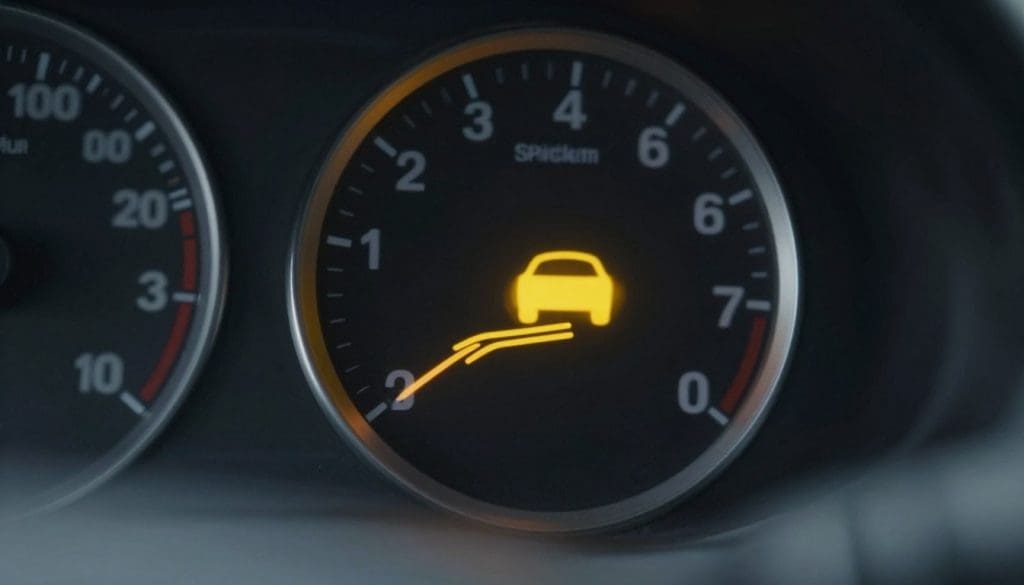
Traction control systems stop your car’s wheels from slipping on the road. In rain, snow, or ice, they help keep your car stable by adjusting engine power and applying brakes. This makes your car safer and easier to handle.
In bad weather, traction control works with anti-lock braking (ABS) to keep your car stable. Knowing how it works helps you react when warning lights come on.
Troubleshooting Stability Control System Faults
If the stability control system light turns on, it means there’s a problem. Issues can include faulty sensors, problems with the control module, or ABS system problems.
- Check your car’s manual to understand the light’s meaning.
- If the light stays on, get your car checked by a mechanic, like Heaven Automotive.
- Ignoring this warning can reduce safety and cause bigger problems later.
For help with your car’s stability and traction control systems, visit Heaven Automotive. Their experts can make sure your car is safe and runs well.
The Role of a Professional Diagnostic Scan
When your car’s dashboard lights turn on, you face a big choice. You can try to figure it out yourself or get help from a pro. DIY code readers are out there, but they might not give you the full picture.
Why DIY Code Readers May Not Tell the Whole Story
DIY code readers can show you why your dashboard lights are on. But they might not tell you everything you need to know for a fix. For example, an OBD scan might say your engine has a problem. But it might not say what’s causing it.
Something simple like tightening the gas cap might fix it. But sometimes, it could mean a bigger issue.
Limitations of DIY Code Readers:
- Limited depth of diagnosis
- May not cover all vehicle systems
- Interpretation of codes can be challenging without expert knowledge
The Value of Expert Diagnostics at Heaven Automotive
At Heaven Automotive, we do more than just read codes. Our techs use top-notch tools to find and fix problems. This way, we make sure repairs are done right the first time. It saves you time and money.
| Diagnostic Aspect | DIY Code Reader | Professional Diagnostic Scan |
|---|---|---|
| Depth of Diagnosis | Limited to basic code reading | In-depth analysis of vehicle systems |
| Equipment Used | Basic OBD-II scanners | Advanced, manufacturer-specific tools |
| Expertise | Requires owner to interpret codes | Performed by trained technicians |
If your car keeps giving you engine alerts or dashboard warnings, don’t wait. Bring it to Heaven Automotive. Our team is ready to give your car the expert care it needs. We’ll get you back on the road safely and quickly.
Common Misconceptions About Dashboard Symbols
Vehicle dashboard symbols are more than just annoying lights; they are critical indicators of your car’s health. Many car owners misunderstand or overlook these warnings, potentially leading to serious issues with their vehicles. At Heaven Automotive, we aim to clarify these misconceptions and guide you through the proper interpretation and response to dashboard alerts.
Can You Reset Warning Lights Without Repairs?
A common misconception is that dashboard warning lights can be simply reset without addressing the underlying issue. While it is technically possible to reset some warning lights using a code reader or by disconnecting the battery, this action does not fix the problem that triggered the light in the first place. In fact, ignoring the root cause can lead to more severe problems down the line.
Resetting warning lights without repairs is not a solution. It is akin to silencing a fire alarm without extinguishing the fire. The issue remains, and potentially, the situation could escalate. For instance, resetting the check engine light without diagnosing the cause might lead to overlooking a critical engine issue.
| Action | Consequence |
|---|---|
| Resetting warning lights without repairs | Ignoring underlying issues, potentially leading to more severe problems |
| Diagnosing and addressing the root cause | Resolving the issue, ensuring vehicle safety and performance |
The Dangers of Ignoring Intermittent Alerts
Another misconception is that intermittent dashboard warnings can be ignored. Some drivers believe that if a warning light flickers on and off or appears only under specific conditions, it’s not a significant concern. But, intermittent alerts can be indicative of an underlying issue that needs attention.
Ignoring intermittent alerts can be risky. For example, an occasional ABS light might indicate a problem with the anti-lock braking system that could become critical when needed most. Similar to intermittent temperature warnings, which could signal a cooling system issue that might lead to engine overheating.
If you’re unsure about the meaning of a dashboard symbol or how to address it, consulting a professional mechanic is the best course of action. At Heaven Automotive, our experts are equipped to diagnose and repair issues indicated by your dashboard warning lights, ensuring your vehicle remains safe and reliable.
Don’t let misconceptions about dashboard symbols put your vehicle at risk. Contact Heaven Automotive today to have your car checked and enjoy peace of mind on the road.
Preventative Maintenance to Avoid Warning Lights
Keeping up with routine checks can greatly lower the chance of engine alerts car owners fear. It’s key to keep your vehicle running well and safely.
Routine Inspections and Fluid Checks
Regular checks can spot problems early. This means looking at your vehicle’s fluids like engine oil, coolant, and brake fluid. Make sure they’re at the right levels. A diagnostic scan can also find hidden issues.
Here’s a quick guide on fluids to check and their levels:
| Fluid Type | Recommended Level | Check Frequency |
|---|---|---|
| Engine Oil | Between MIN and MAX marks | Monthly |
| Coolant | Between MIN and MAX marks | Every 3 months |
| Brake Fluid | Between MIN and MAX marks | Every 6 months |
Following Your Vehicle Manufacturer Service Schedule
Following your vehicle manufacturer’s service schedule is essential. It tells you when to do maintenance tasks to keep your vehicle in great shape. By sticking to this schedule, you can avoid problems that might turn on your dashboard lights.
At Heaven Automotive, our experts can guide you on your vehicle’s maintenance needs. Don’t wait for a warning light to appear – schedule a diagnostic scan today and keep your vehicle in top shape.
When to Pull Over and Call for Assistance
Knowing when to pull over is key for your safety. Your car’s dashboard warning lights alert you to problems early.
Look out for signs like unusual noises, vibrations, or performance changes. If you see these, pull over safely and turn off the engine.
Signs of Immediate Mechanical Failure
Some vehicle warning symbols mean you need to act fast. For example, an engine temperature warning light means your engine might be overheating. This can cause serious damage if not fixed quickly.
- Unusual or loud noises from the engine or brakes
- A significant loss of power or difficulty accelerating
- The illumination of critical dashboard warning lights such as the engine or oil pressure lights
Safe Practices for Roadside Emergencies
When you pull over, safety comes first. Move to a safe spot away from traffic as fast as you can.
After stopping, turn off the engine and use hazard lights to warn others. If you’re in a bad spot, call for roadside help or a tow truck. Keep a basic emergency kit in your car, with a flashlight, first aid kit, and reflective triangles.
If you’re unsure about what to do, it’s better to be safe. At Heaven Automotive, our team can help with any car issues. We ensure your safety on the road. Contact us for professional help.
Conclusion
Dashboard warning lights tell you when something’s wrong with your car. They alert you to engine issues, among others. By understanding these alerts, you can fix problems early and avoid expensive repairs later.
A diagnostic scan is a key step in finding out what’s wrong. It helps pinpoint the issue, making repairs more effective.
At Heaven Automotive, they’re all about keeping your car in great shape. Their team helps you deal with dashboard warning lights quickly and right. For more on dashboard warning lights, check out their comprehensive guide.
Heaven Automotive’s experts make sure your car runs smoothly and safely. They help you drive without worry, knowing your car is well-cared for.