

Keeping your car in good shape is key for safety and longevity. Experts say you should get a professional check-up every year or after 12,000 miles, whichever is sooner.
Not following these maintenance tips can lead to serious problems. These issues are not only dangerous but also very costly. By being proactive, you protect your investment and keep your daily drives reliable.
Knowing the subtle warnings your car gives can prevent expensive repairs later. Timely action helps keep your engine running well for many years.
Key Takeaways
- Schedule maintenance annually or every 12,000 miles.
- Early detection prevents major mechanical breakdowns.
- Consistent care preserves your vehicle’s resale value.
- Pay attention to unusual noises or dashboard alerts.
- Proactive repairs are cheaper than emergency fixes.
The Importance of Proactive Vehicle Maintenance
Proactive maintenance is like a health check for your car. It makes sure all parts work well and safely. Fixing small problems early can prevent big breakdowns on the road. Spotting car needs service signs early helps your engine stay smooth for years.
Keeping up with maintenance is more than just fixing things. It’s an investment in your car’s long life. A car with a good service history is more valuable when you sell or trade it. This can help you get a better price later on.
Being proactive with repairs has many benefits for drivers:
- Enhanced Safety: Regular checks keep your brakes, tires, and steering in top shape.
- Cost Savings: Fixing small issues early saves you from big, expensive repairs later.
- Improved Reliability: Your car is less likely to break down, giving you peace of mind.
- Better Fuel Economy: A well-tuned engine uses less fuel, saving you money.
By paying attention to car needs service signs, you can keep your car healthy. Don’t wait for a big problem to take it in. Being proactive means your car will be a reliable friend for all your trips.
Understanding Overdue Car Service Signs
Your car tries to tell you when it needs help through different signs. Modern cars have computers that watch over every important system. By noticing these signs early, you can avoid costly repairs.
Dashboard lights and symbols work together to show you what’s wrong. A warning light is like a message from your engine to you. If you ignore it, you might end up broken down on the side of the road.
Regular car care keeps your vehicle running well for a long time. Spotting overdue car service signs early means you can fix things when it’s convenient. Check out the table below to see how different signs tell you about your car’s health.
| Indicator Type | Common Symptom | Potential Issue | Urgency Level |
|---|---|---|---|
| Dashboard Light | Check Engine Symbol | Emission or Sensor Fault | Moderate |
| Auditory Signal | Squealing or Grinding | Brake Pad Wear | High |
| Physical Feedback | Steering Wheel Pull | Alignment or Tire Issue | Moderate |
| Visual Evidence | Fluid Puddles | Leak in Vital Systems | Critical |
Acting on these warning indicators is a wise choice for your safety. Regular checks keep your car running smoothly and efficiently. If you’re not sure about a light, always ask a professional mechanic.
Warning Sign One: Unusual Dashboard Indicator Lights
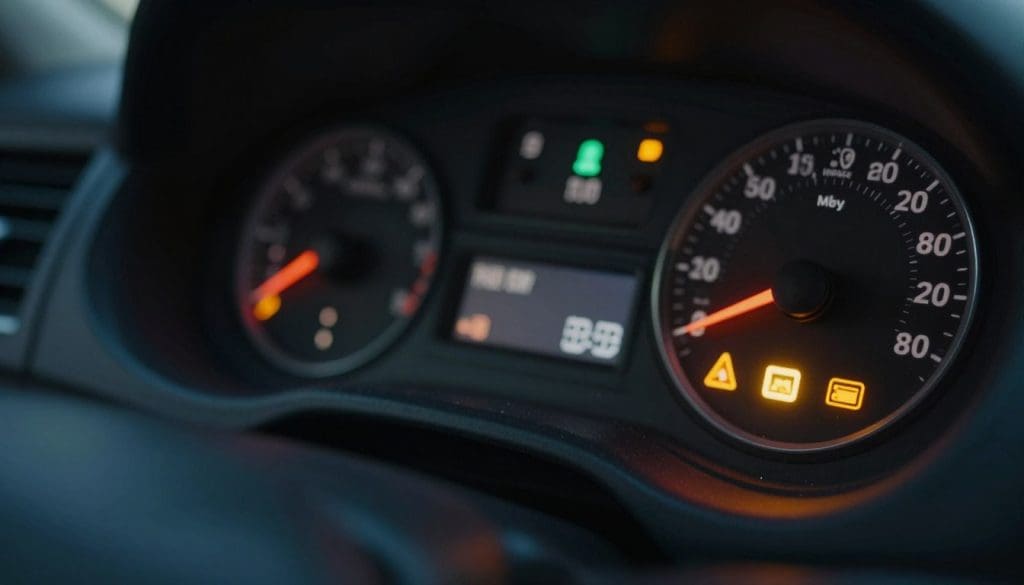
When your dashboard lights up unexpectedly, it’s a clear car needs service sign. Your vehicle has sensors that tell you about its health. These lights connect your car’s computer to your driving experience.
Some lights remind you of maintenance, like a spanner icon or “SERVICE”. Others show immediate faults needing professional help.
Decoding the Check Engine Light
The check engine light is often misunderstood. It can light up for small issues or big problems with your emissions. Always take it seriously.
When it lights up, your car’s computer logs an error code. A certified tech must use a scanner to find the problem. Fixing it early can save you from expensive engine repairs.
Understanding Oil Pressure and Temperature Warnings
Oil pressure and temperature lights are urgent. If they flicker or stay on, your engine could fail. These are serious car needs service signs that mean you should stop safely.
Here’s a table of dashboard indicators you should know for safety:
| Indicator Icon | Common Meaning | Urgency Level |
|---|---|---|
| Check Engine | Emissions or sensor fault | Moderate |
| Oil Can | Low oil pressure | Critical |
| Thermometer | Engine overheating | Critical |
| Wrench/Service | Scheduled maintenance due | Low |
Warning Sign Two: Strange Noises During Operation
Unusual sounds like clicking, hissing, or squeaking mean your car needs help fast. Not listening to these sounds can cause big problems. By noticing these noises, you help your mechanic fix your car quicker and more accurately.
Your car makes sounds to tell you something’s wrong. A hissing sound from the engine when it’s idling means it might be overheating. Fixing this right away is key to avoiding damage to important parts.
Identifying Squealing Brakes
When you hear a high-pitched squeal when braking, it’s a sign your brake pads are thin. Modern brake pads have a metal tab that squeaks when they’re almost gone. This noise is a safety feature to warn you before it’s too late.
- Squealing: Often indicates thin brake pads.
- Grinding: Suggests metal-on-metal contact.
- Hissing: Frequently points to cooling system leaks.
Diagnosing Grinding or Clunking Sounds
Grinding or clunking sounds are serious and mean something’s broken. A grinding noise when braking means your brake pads are gone, and your rotor is getting damaged. You need to see a mechanic right away to avoid a total brake failure.
Clunking sounds, like when driving over bumps or turning, usually mean your suspension parts are worn out. Not fixing these sounds quickly can turn a simple fix into a big problem. Always get a certified technician to check your car if you hear these sounds.
Warning Sign Three: Noticeable Changes in Handling
If your car drifts or feels unstable, you might be ignoring critical vehicle warning signs. Changes in how your vehicle responds to your steering inputs often point to underlying mechanical trouble. Addressing these shifts early prevents more expensive repairs down the road.
Steering Wheel Pulling and Alignment Issues
When your vehicle pulls to one side while you are driving on a straight road, it is a clear indicator of alignment problems. This issue forces you to constantly correct the steering wheel, which leads to driver fatigue. Ignoring this symptom can cause your tires to wear down unevenly, forcing you to replace them much sooner than expected.
Proper alignment ensures that all four wheels are parallel to each other and perpendicular to the ground. When these angles are off, your car loses its ability to track straight. You should have a technician check your alignment if you notice the following:
- The steering wheel is off-center while driving straight.
- Your vehicle pulls consistently to the left or right.
- You notice uneven or rapid tread wear on your tires.
Suspension Wear and Bumpy Rides
Your suspension system is designed to absorb the impact of road imperfections. If you start feeling every small bump or dip in the road, your shocks or struts may be worn out. These vehicle warning signs suggest that your suspension is no longer providing the dampening needed for a smooth ride.
A failing suspension does more than just make your ride uncomfortable. It significantly reduces your vehicle’s stability during turns and emergency stops. Safety is the top priority, and a compromised suspension system increases the risk of losing control of your car.
Regular inspections of your steering and suspension components keep your vehicle in top condition. By staying proactive, you ensure that your daily commute remains safe and predictable. Always pay attention to how your car handles, as these vehicle warning signs are your best defense against major mechanical failure.
Warning Sign Four: Fluid Leaks Under Your Vehicle
Finding a puddle under your car is a big vehicle warning sign that needs your quick action. Clear water from the air conditioning is usually okay. But other fluids mean there’s a problem under the hood.
It’s important to know the difference between regular car care and serious issues. Not paying attention to these signs can lead to expensive fixes or even engine failure.
Identifying Oil and Coolant Puddles
By looking at the color and texture of the fluid, you can check your car’s health. Brown or black fluid usually means oil is leaking, which can harm your engine. Coolant leaks, shown by green, orange, or pink puddles, can cause your engine to overheat.
Here’s a quick guide to spot what’s leaking from your car:
- Dark Brown/Black: Likely engine oil or old power steering fluid.
- Bright Green/Orange: Usually engine coolant or antifreeze.
- Clear/Thin: Often just condensation from your AC unit.
- Red/Pink: Frequently transmission fluid or power steering fluid.
The Dangers of Brake Fluid Leaks
A brake fluid leak is a critical vehicle warning sign to address quickly. Brake fluid is light yellow or clear when new and turns brown as it ages. If you see a slick, oily puddle near your wheels, your brakes might be failing.
Driving with bad brakes is extremely dangerous and risks your safety and others on the road. If you think there’s a leak, don’t drive. Call a professional right away to keep you safe. Spotting these vehicle warning signs early can prevent a big problem while driving.
Warning Sign Five: Decreased Fuel Efficiency
A sudden drop in your car’s fuel economy is a sign of trouble. If you find yourself at the gas station more often, it means your car is not running well. Knowing when to service car parts can stop these issues before they cost a lot to fix.
How Engine Performance Impacts Gas Mileage
Your engine needs the right mix of air and fuel to run efficiently. If the fuel system is dirty or broken, it uses more fuel. Proper combustion is key to getting the best gas mileage.
When the engine can’t keep this balance, your fuel economy drops. Regular checks keep your fuel system clean and working right. This way, you avoid a car that uses too much fuel.
The Role of Air Filters and Spark Plugs
A clogged air filter is a common cause of bad gas mileage. It stops the engine from getting enough air, making it work harder. Faulty spark plugs also cause incomplete burning, wasting fuel and power.
Changing these parts is important for keeping your car efficient. Fresh filters and plugs save money on gas and make your car last longer.
| Maintenance Task | Impact on Efficiency | Recommended Frequency |
|---|---|---|
| Air Filter Replacement | High | Every 15,000 miles |
| Spark Plug Inspection | Medium | Every 30,000 miles |
| Fuel System Cleaning | High | Every 20,000 miles |
| Tire Pressure Check | Low | Monthly |
Warning Sign Six: Vibrations or Shuddering While Driving
Feeling unusual vibrations or shakes while driving is a clear sign your car needs service. These sensations, felt through the steering wheel or floorboards, must be taken seriously. Ignoring them can cause serious mechanical problems later on.
Tire Balance and Rotation Requirements
Uneven tire balance often causes a vibrating ride. When tires are not balanced, they wobble at high speeds. Regular tire rotation helps prevent uneven wear and keeps your drive smooth.
Shaking mainly at highway speeds usually means your tires need balancing. Skipping this service can damage your suspension. Knowing when to service your car’s tires can avoid costly repairs.
Transmission Shudder Symptoms
Shaking might not always come from the wheels. If your car vibrates at low revs, it could be the engine mount. These mounts absorb vibrations, and a failure can make the whole car shake.
Transmission problems can also cause shuddering. This happens when the fluid is old or the parts don’t move smoothly. Promptly diagnosing these symptoms is key to avoiding a complete breakdown and keeping your car safe.
Warning Sign Seven: Exhaust Smoke and Odors
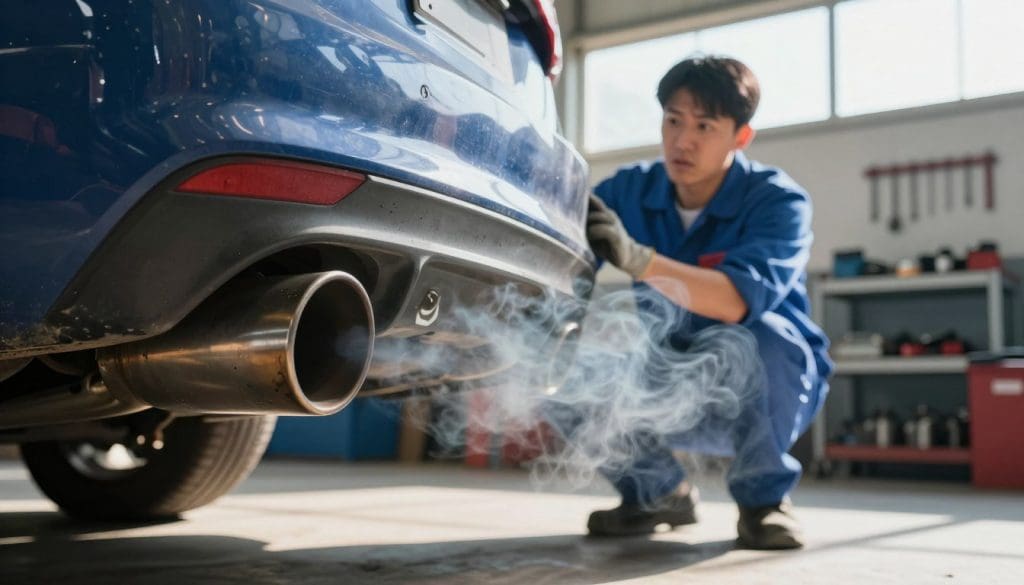
Seeing strange colors in your exhaust or smelling burning smells means it’s time to check your car. Smoke from your tailpipe or bonnet is a big warning sign. It often means there’s a serious problem that needs a pro to fix.
What Different Exhaust Colors Indicate
The color of the smoke from your car can tell you a lot about its health. Blue smoke usually means your engine is burning oil. This could be because of worn-out valve seals or piston rings.
Thick white smoke often means there’s a coolant leak. This can cause your engine to overheat fast.
Black smoke is a sign of too much fuel in your engine. This could be due to bad fuel injectors or a clogged air filter. Spotting these colors early can help you avoid big repair costs.
Detecting Burning Smells Inside the Cabin
Unusual smells while driving mean something’s wrong with your car. A sharp burning smell like oil means there’s a leak. Fluid is dripping onto hot parts.
A smell like burning rubber might mean a drive belt is slipping or a hose is touching something hot. Sweet, syrupy odors are a sign of a coolant leak. If you smell burning plastic or electrical insulation, stop the car and turn off the engine. These smells are critical warnings that your car is not safe and needs a check-up.
The Risks of Ignoring Routine Maintenance
Delaying your car’s service is like playing a risky game with its health. It might seem easy to put off a visit to the shop, but overdue maintenance can lead to many problems. Small issues can turn into big, expensive problems that harm your car’s life.
Long-term Engine Damage
Ignoring simple tasks like oil changes or filter replacements makes your engine work too hard. This causes catastrophic internal damage that’s much pricier than regular maintenance. You might end up with a costly engine rebuild or replacement because you missed a check-up.
The cost of overdue maintenance is huge compared to regular care. Spending on your car now saves you from expensive repairs later. Keeping your engine clean and well-lubricated helps it run well for years.
Safety Hazards on the Road
Skipping service intervals also puts your safety and that of your passengers at risk. A neglected car can fail suddenly, like losing brakes or steering, at high speeds. Reliability is not just about convenience; it is a critical safety requirement.
Regular checks help find worn parts before they’re a danger. Fixing overdue maintenance quickly keeps your car reliable and safe. Don’t wait for a breakdown to get your car checked.
| Maintenance Type | Preventative Cost | Repair Cost (If Ignored) | Risk Level |
|---|---|---|---|
| Oil Change | Low | High (Engine Failure) | Critical |
| Brake Pad Service | Moderate | High (Rotor Damage) | High |
| Coolant Flush | Low | Moderate (Overheating) | Medium |
| Tire Rotation | Minimal | Moderate (Uneven Wear) | Low |
How Modern Vehicle Technology Tracks Service Needs
Knowing when your car needs service is key to being a good car owner. Today’s cars have advanced sensors that watch how they’re doing all the time. These sensors help you know when to service your car before problems start.
Utilizing Onboard Diagnostic Systems
Most cars today use an Onboard Diagnostic (OBD) system. It keeps track of how far you’ve driven and how long it’s been. This system checks your engine, transmission, and emissions for any issues.
If something’s not right, it logs a code for your mechanic to look at. This way, you can fix small problems before they get big and costly. Proactive monitoring keeps your car running well and safely. Always check your owner’s manual to see how your car’s system works.
The Reliability of Maintenance Reminder Lights
Maintenance reminder lights are very helpful, but they’re not the only sign of your car’s health. They’re great for reminding you when to change oil and rotate tires. But, they don’t check every part of your car.
You should also do visual inspections to make sure your car is in good shape. Relying only on lights might mean you miss other problems. A good mix of dashboard alerts and regular car checks is best. This way, you’ll know exactly when to service your car, keeping it running longer and better.
Seasonal Maintenance Considerations for San Antonio Drivers
When you think about when to service car, the South Texas climate is key. The hot weather in San Antonio stresses your car’s parts, speeding up wear. Keeping up with maintenance helps your car stay reliable all year.
Preparing for Texas Heat
The heat can harm your car’s battery, making fluids evaporate quickly. Regular battery tests are essential for the summer months. Also, check your tire pressure often, as temperature changes affect it.
Keeping your car clean is important in the heat. Waxing protects the paint from UV damage. These steps help prevent unexpected problems on the road.
Cooling System Integrity
The cooling system is vital in hot weather. It keeps your engine from overheating, preventing serious damage. Make sure coolant levels are right and the mix is for high heat.
Look for cracks in radiator hoses and belts from the heat. A leaking hose or a failing water pump can leave you stranded. Regular checks keep your cooling system strong and your engine running well.
Why Professional Inspection Matters
You might wonder when to service car systems to avoid unexpected breakdowns. Basic maintenance is good, but professional inspections are better. They catch issues that regular checks miss.
The Value of Certified Technician Expertise
Certified pros know how modern cars work. They use state-of-the-art diagnostic equipment to find hidden problems. This ensures your car meets the maker’s standards.
Going to a pro means you get years of experience. They spot problems before they become big issues. Knowing exactly when to service car parts is key to good care.
Preventative Diagnostics vs. Reactive Repairs
Preventative diagnostics save money. Finding problems early means avoiding expensive fixes. It keeps your car running well and its value high.
Reactive repairs can be costly and inconvenient. Scheduled inspections help you budget for car care. Here’s how these approaches differ:
| Feature | DIY Inspection | Professional Inspection |
|---|---|---|
| Diagnostic Tools | Basic visual checks | Advanced computer scanners |
| Issue Detection | Surface-level problems | Hidden mechanical failures |
| Long-term Cost | High risk of major repairs | Lower due to prevention |
| Safety Assurance | Limited | Comprehensive |
Expert Maintenance Services at Heaven Automotive
At Heaven Automotive, your safety and car’s life are our top priorities. We know when to service car systems can be tricky. That’s why our experts are here to help you every step of the way.
Our Commitment to Quality Repairs
Our facility offers top-tier maintenance and repairs for all car types. Our certified technicians know exactly what your car needs in San Antonio.
We aim for quality workmanship to keep your car running well. Whether it’s a simple check or a big repair, we treat every car with care and precision.
Contacting Our San Antonio Team
Not sure when to service car parts or see any issues? Our friendly staff is here to help. We’re ready to answer your questions and set up an appointment that works for you.
Visit Us at 6645 Poss Rd. San Antonio, TX 78238
Feel free to visit our shop to talk to our team. Our location makes it easy for us to serve the local community with professional diagnostic tools and expert advice.
Call Us Today at (210) 682-3898
Or call us to talk about your car’s needs. Our team is ready to provide reliable service solutions to keep your car running smoothly for years.
Conclusion
Your car is a key part of your daily life. Keeping an eye on its health is the best way to stay safe and reliable on the road. Now, you know how to catch problems early before they cost a lot.
Knowing when to service your car can stop small issues from becoming big problems. Regular checks help your engine last longer and make driving better. Fixing these small issues early gives you peace of mind.
By taking care of your car ahead of time, it will run better. You should have a car that gets you where you need to go without worry. Knowing when to service your car helps you save money and avoid breakdowns.
Our team at Heaven Automotive is here to help with all your car needs. We offer expert checks and top-notch repairs to keep your car running well for years. Choose Heaven Automotive to fix your car today and see the difference of expert care.