

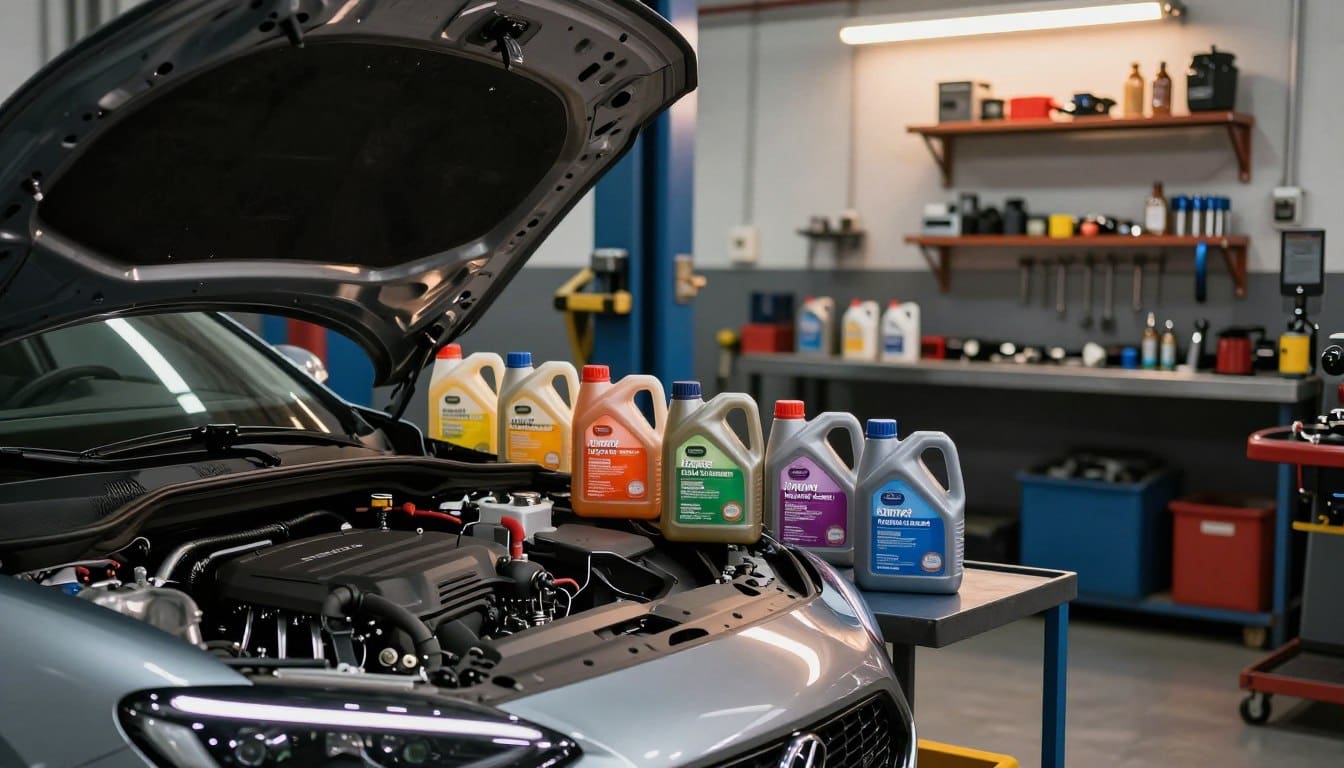
Your car needs more than just gasoline to run well. Under the hood, a network of special liquids works hard. They keep all parts running smoothly.
Ignoring these important liquids can lead to expensive mechanical failures. Regular fluid services car checks help avoid these problems. They keep your car reliable for all your trips.
Knowing what your car needs helps you fix small issues before they get big. Being proactive is the smartest way to keep your engine in top shape for years.
Key Takeaways
- Automotive liquids are vital for vehicle safety and performance.
- Routine maintenance prevents costly long-term engine damage.
- Monitoring levels helps identify possible leaks early.
- Proper lubrication reduces friction and heat in moving parts.
- Consistent checks extend the overall lifespan of your vehicle.
The Vital Role of Automotive Fluids in Modern Vehicles
When you start your car, a complex system of fluids kicks in. These liquids are key to your car’s smooth operation. They are engineered solutions for extreme conditions under the hood.
These fluids do a lot to keep your car safe. They lubricate moving parts to prevent wear and tear. They also handle heat and hydraulic pressure in mechanical systems.
Fluids also protect your car from damage. They shield parts from corrosion and oxidation. This keeps your car running well for years. Knowing this helps you see why regular vehicle maintenance is key.
The table below shows how these fluids help your car:
| Fluid Type | Primary Function | Benefit to Vehicle |
|---|---|---|
| Engine Oil | Lubrication | Reduces friction and wear |
| Coolant | Heat Management | Prevents engine overheating |
| Brake Fluid | Hydraulic Pressure | Ensures safe stopping power |
| Transmission Fluid | Component Protection | Allows for smooth gear shifts |
Ignoring these fluids can cause big problems. Knowing their importance helps you take care of your car. Regular checks keep your car running well for a long time.
Understanding the Importance of Fluid Services Car Maintenance
When you focus on fluid services car maintenance, you’re making your engine last longer. Many people think these tasks are just upselling. But they’re really important proactive measures to stop early wear on your car.
Every drive puts your car through heat cycles that harm lubricants and coolants. These fluids pick up tiny debris and contaminants over time. This can turn a smooth engine into a costly headache. Regular maintenance keeps your car safe from these dangers.
Staying ahead of your car’s needs has many benefits. It keeps you calm and saves you money. Here are the main perks of keeping your fluids in check:
- Extended Component Life: Right lubrication cuts down on friction and stops metal parts from rubbing together.
- Enhanced Safety: New fluids make sure your brakes and steering work right when you need them.
- Maintained Resale Value: A good service history shows you took care of your car, which helps when selling it.
- Improved Efficiency: Clean fluids let your engine and transmission work better, saving you gas money.
Regular care for your car’s health is the best way to avoid sudden breakdowns. Spending on quality fluid services car care now saves you from expensive repairs later.
Engine Oil: The Lifeblood of Your Vehicle
Think of engine oil as the vital lifeblood that keeps your vehicle running reliably. It lubricates moving parts, reducing friction that could destroy your engine. It also helps control internal temperatures and removes harmful contaminants.
Without clean lubricant, your engine would overheat and wear down quickly. Consistent oil changes are key to keeping your vehicle healthy. They help your car stay efficient and powerful for years.
Synthetic Versus Conventional Oil Performance
Choosing the right oil depends on your driving habits and vehicle needs. Conventional oil comes from crude oil, while synthetic oil is made for better performance. Synthetic options work better in extreme temperatures and last longer than traditional oils.
| Feature | Conventional Oil | Synthetic Oil |
|---|---|---|
| Temperature Resistance | Moderate | Excellent |
| Service Interval | Short | Extended |
| Engine Protection | Standard | Superior |
| Cost Efficiency | Lower Upfront | Higher Value |
Signs Your Engine Oil Needs Immediate Attention
Your vehicle often signals when it’s struggling with old oil. Look for thick, dark sludge on the dipstick. A burnt smell inside means your oil might be overheating or leaking.
Watch your dashboard lights for warnings about low pressure or circulation. Unusual engine noises like tapping or knocking mean parts aren’t well-lubricated. If you see these signs, get help fast to avoid engine damage.
Coolant Flush: Preventing Overheating and Corrosion
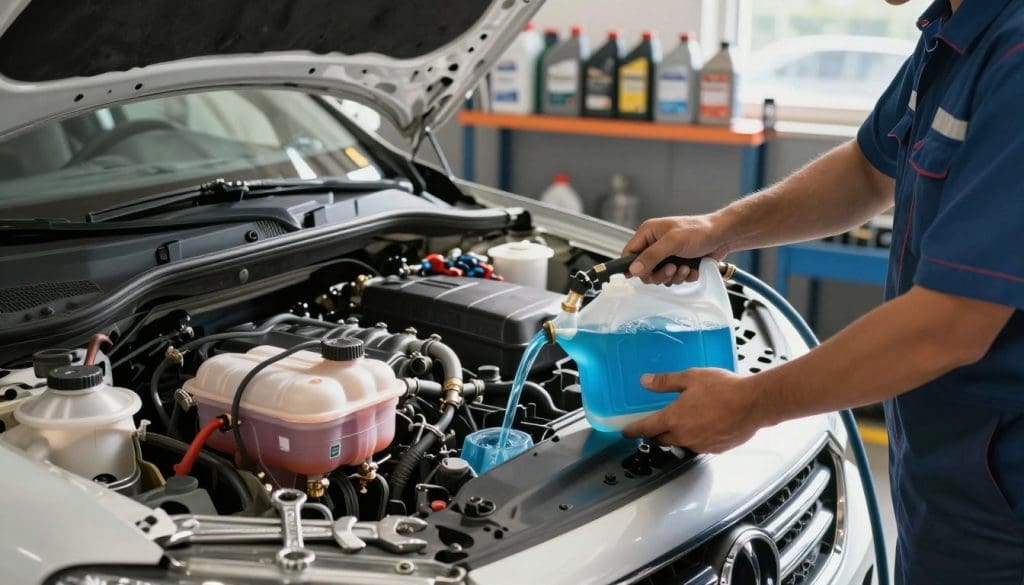
Heat is a big enemy for your car’s parts. Your car uses a special fluid to keep the engine cool. This fluid is key to keeping your engine safe, no matter the weather.
A regular coolant flush is the best way to keep this system working well.
How Coolant Protects Your Engine Block
Coolant does more than just stop your engine from overheating. It moves through the engine to take away heat. This stops metal parts from getting damaged by too much heat.
This fluid also has additives that protect your car. These additives do several important things:
- Prevents internal corrosion by coating metal surfaces.
- Inhibits the formation of sludge and mineral deposits.
- Lubricates the water pump to ensure smooth operation.
- Prevents freezing during cold winter months.
The Risks of Ignoring a Coolant Flush
When you ignore your cooling system, the fluid gets weak. It can’t protect your engine anymore. Not doing a coolant flush on time can cause big problems that cost a lot to fix.
| Risk Factor | Potential Consequence | Severity |
|---|---|---|
| Acidic Fluid | Corrosion of radiator fins | High |
| Sludge Buildup | Blocked coolant passages | Critical |
| Boiling Point Drop | Catastrophic overheating | Severe |
Not listening to these signs can lead to head gasket failure or engine breakdown. By doing a regular coolant flush, you keep your car safe and reliable for a long time.
Transmission Fluid: Ensuring Smooth Gear Shifts
Your vehicle’s transmission fluid is a key player in smooth gear shifts. It lubricates gears and bearings, reducing friction. This keeps your drivetrain safe. In automatics, it helps control gear changes.
Manual Versus Automatic Transmission Fluid Requirements
Manual and automatic transmissions need different lubricants. Manual transmissions use gear oil for heavy-duty parts. Automatics need a thinner, more complex transmission fluid for heat and pressure.
Even if your car says it’s “sealed for life,” check it regularly. Heat and stress can damage the fluid over time. Regular checks keep your car running well.
Identifying Transmission Fluid Degradation
Spotting fluid failure early can prevent costly repairs. Fresh fluid is bright red and clear. It darkens and gets dirty as it ages. If your car has trouble shifting, it’s time for a check.
Watch for these signs that your transmission fluid needs attention:
- A burnt or sweet smell from the engine.
- Dark brown or black on the dipstick.
- Grinding or whining noises when accelerating.
- Slow shifting from park to drive.
Regular maintenance of your transmission fluid keeps your car reliable. Addressing these signs early saves your investment and keeps driving smooth.
Brake Fluid Service: Your Primary Safety Mechanism
Your car’s ability to stop safely relies on its hydraulic brake system. Many drivers overlook the importance of regular brake fluid service. This fluid is key, transferring the force from your foot to the brake calipers.
Why Brake Fluid Absorbs Moisture Over Time
Brake fluid is hygroscopic, meaning it absorbs moisture from the air. Even sealed systems can let in tiny amounts of water vapor. This moisture can harm the fluid over time.
When you get a brake fluid service, you remove this moisture. You replace it with fresh fluid. This keeps your brakes working well, no matter where you drive.
The Dangers of Boiling Brake Fluid
Heavy braking, like driving down steep hills, can heat up your brakes. If the fluid is too moist, it can boil. This turns into gas bubbles that make your brake pedal feel spongy.
Keeping your fluid clean is key to avoiding brake fade. A professional brake fluid service keeps you and your passengers safe. Here’s how fresh and contaminated fluid differ.
| Feature | Fresh Brake Fluid | Contaminated Fluid |
|---|---|---|
| Boiling Point | High and Stable | Low and Unpredictable |
| Moisture Content | Minimal | High (Hygroscopic) |
| Pedal Feel | Firm and Responsive | Spongy or Soft |
| Corrosion Risk | Low | High (Internal Damage) |
Power Steering Fluid: Maintaining Steering Precision
Your car’s smooth turns depend on the power steering fluid. This liquid keeps the steering system’s parts well-lubricated. It also gives the hydraulic pressure needed for easy wheel turns. Without it, parts would rub against each other, causing wear and failure.
When the fluid is clean and at the right level, driving is easy. But, over time, it can break down or get dirty. This makes your car less responsive, affecting your daily drives.
Symptoms of Low or Contaminated Power Steering Fluid
Spotting early signs of a failing system can prevent costly repairs. If you see any of these issues, get your power steering fluid checked:
- Groaning or whining noises when turning the steering wheel.
- A heaviness or stiffness in the steering wheel at low speeds.
- Reddish or brownish puddles under the car’s front.
- Steering that feels jerky or not consistent.
Ignoring these signs can lead to pump failure or steering rack damage. Keeping your power steering fluid fresh ensures your steering is precise and safe.
Differential and Transfer Case Fluids
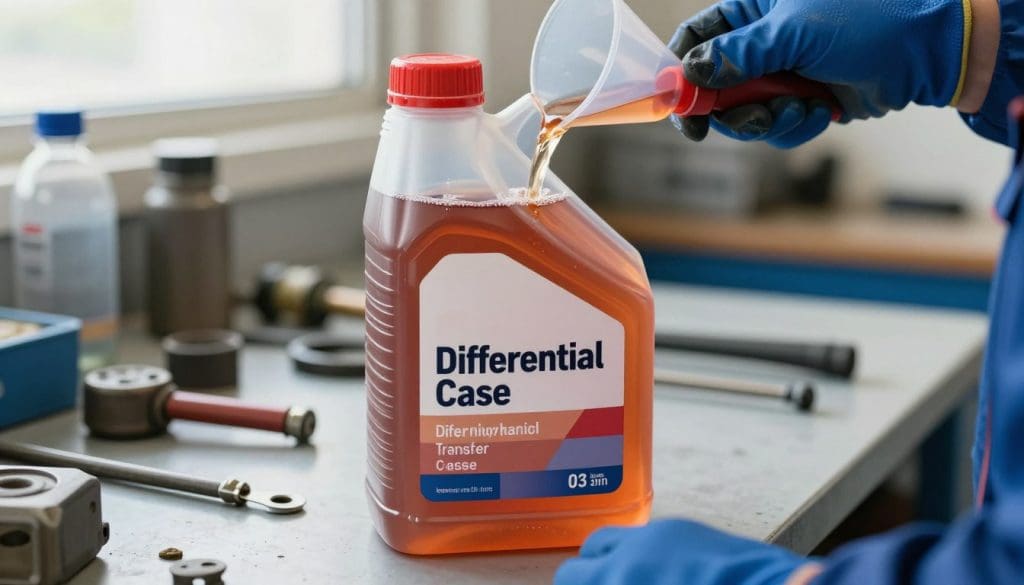
Deep in your car’s undercarriage, special fluids work hard to handle big mechanical stress. Many drivers only think about engine care, but the differential and transfer case are key too. They need special attention to keep your car running well.
These parts use heavy-duty gear oil to work right under high pressure. Without it, the metal gears would rub against each other. This would cause them to wear down fast and fail.
The Role of Gear Oil in Drivetrain Longevity
Gear oil is made to handle the high stress of your drivetrain. This is very important for 4×4 vehicles or cars used for towing heavy loads. These activities put a lot of strain on the gears.
Checking and replacing your differential fluid and transfer case fluid regularly is key. When these fluids break down, they can’t protect against friction and heat anymore.
Keeping your gear oil in good shape helps your car avoid early drivetrain problems. Proactive maintenance means your car will shift smoothly and work well, no matter where you go or what you’re hauling.
Windshield Washer Fluid and Visibility Safety
A clean windshield is key to seeing the road while driving. Many drivers focus on engine performance, but windshield washer fluid is vital for automotive safety. It breaks down dirt, road residue, and insects that can block your view.
Without enough cleaning fluid, your wipers might smear debris. This makes it hard to see, which is dangerous, like when driving into the sun’s glare. Keeping your reservoir full is a simple way to stay safe on the road.
Choosing the Right Fluid for San Antonio Weather
Choosing the right fluid is key in South Texas’s climate. In San Antonio weather, the heat and dust storms need a special cleaner. Just water isn’t enough because it can’t dissolve bug splatter and road dust.
Look for high-quality, pre-mixed solutions with bug-removal properties and water-repellent additives. These formulas keep your glass clear in summer rain and dry spells. The right product keeps your spray jets clear and your wipers smooth.
| Fluid Type | Best Use Case | Key Benefit |
|---|---|---|
| All-Season Formula | General Daily Driving | Prevents streaks and grime |
| Bug & Tar Remover | Summer Road Trips | Dissolves organic debris |
| Water-Repellent | Heavy Rain Conditions | Improves water shedding |
| Concentrated Additive | Budget Maintenance | Customizable cleaning power |
The Impact of Climate on Fluid Degradation in San Antonio
The Texas sun heats up your car more than just the interior. It also degrades your vehicle’s vital fluids. Driving in South Texas puts your engine and transmission under constant stress. Getting a professional fluid service San Antonio is key to fight these harsh conditions.
Heat Stress and Fluid Breakdown
High temperatures make your car work harder, causing heat cycles that damage oils and coolants. This damage lets contaminants and moisture build up in your systems. These impurities can harm your car’s protection before you see any signs or problems.
Regular maintenance keeps you ahead of these threats. Choosing a trusted fluid service San Antonio keeps your vehicle safe from our local climate’s demands. Neglecting these needs can cause early failures and expensive fixes.
| Fluid Type | Standard Lifespan | San Antonio Climate Impact |
|---|---|---|
| Engine Oil | 7,500 Miles | Reduced by 20-30% |
| Transmission Fluid | 60,000 Miles | Accelerated Oxidation |
| Brake Fluid | 2 Years | Increased Moisture Absorption |
| Coolant | 5 Years | Higher Corrosion Risk |
Proactive care is the best way to keep your vehicle running long. Regular fluid service San Antonio gives you the confidence to drive through every season. Don’t wait for a breakdown to check your car’s vital systems.
Recognizing Common Fluid Leaks Under Your Car
Your driveway tells a story about your car’s health through the fluids that drip onto the pavement. Some condensation from your air conditioning system is normal. But other liquids often mean a mechanical issue that needs your attention. Learning to identify these puddles can save you from unexpected breakdowns and costly repairs.
Color-Coded Identification of Automotive Fluids
Visual inspection is your first line of defense when diagnosing a leak. By observing the color, texture, and location of the fluid, you can often narrow down the source of the problem. Always use caution when touching or smelling unknown substances, as some automotive fluids are toxic.
| Fluid Type | Typical Color | Consistency | Common Location |
|---|---|---|---|
| Engine Oil | Amber to Black | Slippery/Oily | Front-center of engine |
| Coolant | Green, Pink, or Orange | Sweet-smelling/Thin | Front or under radiator |
| Transmission Fluid | Red or Brown | Oily/Viscous | Middle of the vehicle |
| Brake Fluid | Clear to Yellow | Oily/Slick | Near wheels or master cylinder |
When to Seek Professional Help for Leaks
While a small drip might seem manageable, certain signs indicate that your vehicle needs immediate professional inspection. If you check your dipstick or fluid reservoirs and notice that the liquid appears dark, thick, or cloudy, this is a clear indicator of internal contamination. Such changes often suggest that debris or moisture has compromised the fluid’s protective properties.
You should also seek help if you notice a persistent puddle that grows larger over time. Ignoring these warning signs can lead to severe component failure, such as engine overheating or transmission damage. When in doubt, bring your vehicle to a trusted technician to ensure your safety on the road.
The Consequences of Neglecting Routine Fluid Maintenance
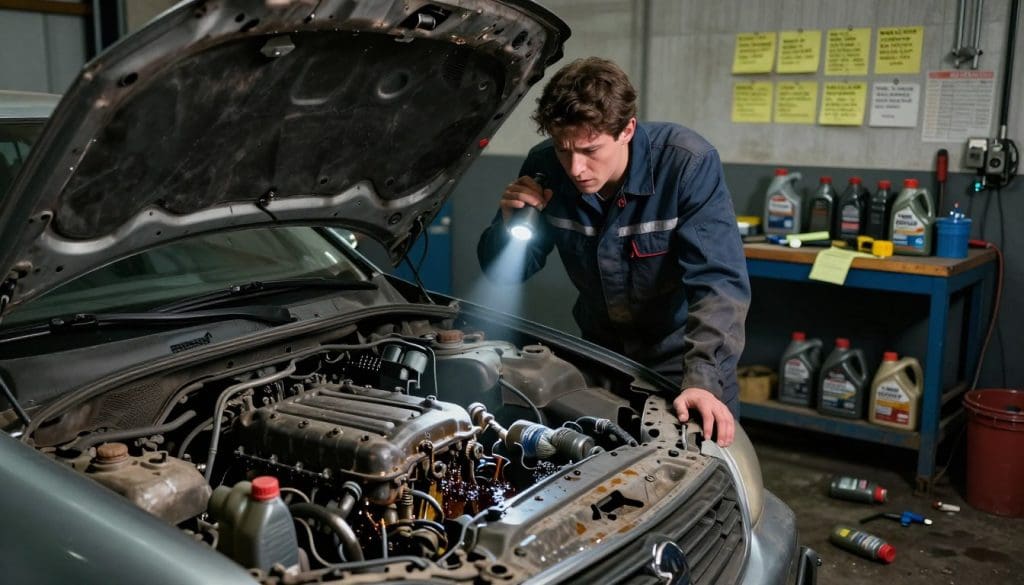
Ignoring your vehicle’s fluid levels is risky. It might seem easy to skip a service, but it puts your car under a lot of stress. Preventative maintenance is key to avoiding early mechanical failure.
Long-Term Engine and Component Damage
When fluids break down, they can’t lubricate, cool, or clean parts well. This causes internal corrosion and sludge buildup. Without fresh fluid, metal parts rub against each other, damaging your engine and transmission.
These problems might not show up right away. But, over time, parts like bearings and gears can fail. This leads to a complete breakdown. Keeping your fluids clean protects these parts from damage.
Financial Implications of Deferred Maintenance
Many think delaying service saves money, but it doesn’t. A small fluid change is cheaper than fixing a blown engine or a failed transmission. Delaying maintenance means spending more on repairs later.
The table below shows the cost of neglecting maintenance:
| Service Type | Estimated Cost | Risk Level | Long-term Value |
|---|---|---|---|
| Routine Fluid Change | Low | Minimal | High |
| Component Repair | High | Severe | Low |
| Full System Replacement | Very High | Critical | None |
Investing in your car now saves money later. Regular care keeps your car running longer and its value higher. Don’t let a small mistake turn into a big expense.
Advanced Diagnostic Techniques for Fluid Health
Knowing the chemical state of your car’s fluids is key to avoiding big mechanical problems. While looking at your car is helpful, it doesn’t show everything. Advanced diagnostic techniques let you see inside your engine and transmission without taking it apart.
Oil Analysis and Fluid Testing
Professional oil analysis and fluid testing are like a blood test for your car. They check tiny particles and chemicals in the fluid. This way, technicians can spot wear and tear that you can’t see.
These tests find early signs of wear, coolant problems, or overheating. Using these services means you can plan your car’s maintenance better. This way, you avoid expensive repairs by fixing small issues early.
By using these advanced diagnostic techniques regularly, your car will stay reliable for a long time. Monitoring your fluids closely is a wise choice for your car’s long-term health and performance.
Professional Fluid Service San Antonio Standards
It might seem easy to change fluids yourself, but professionals offer better protection for your car. A certified fluid service San Antonio shop knows exactly what your car needs. They make sure your car runs smoothly and efficiently.
Why Expert Inspection Outperforms DIY Methods
Professional technicians have the knowledge to pick the right fluids for your car. Using the wrong fluid can cause serious damage over time. They check every fluid against the car’s technical specs.
Experts also use advanced tools that most people can’t access. These tools help them find problems early, saving you from costly repairs. Choosing a top fluid service San Antonio means your car gets the best care.
Working with automotive fluids is not just about the car. It’s also about being safe and protecting the environment. Professionals handle waste properly, following local laws. This keeps your car safe and avoids the dangers of wrong fluid handling. Regular visits to a professional can make your engine and transmission last longer.
Choosing Heaven Automotive for Your Vehicle Needs
Finding a reliable partner for your vehicle’s fluid maintenance is key for long-term performance. At Heaven Automotive, we focus on your vehicle’s longevity with precise and professional care. We see your car as a big investment, so we give every service the attention it needs.
Our Commitment to Quality Service at 6645 Poss Rd. San Antonio, TX 78238
Our facility is at 6645 Poss Rd. San Antonio, TX 78238, where we offer a clean and professional setting for all your car needs. We believe quality service begins with clear communication and expert diagnostics. Our techs use the latest tools to make sure your car’s fluids work at their best.
We’re proud to serve our local community with specialized maintenance for our area’s climate challenges. Whether it’s a routine check or a complex flush, our team aims for excellence. You can count on us to keep your car’s engine, transmission, and brakes running well for years.
| Service Feature | Standard Shop | Heaven Automotive |
|---|---|---|
| Diagnostic Precision | Basic Scan | Advanced Analysis |
| Fluid Quality | Generic Options | Premium Standards |
| Customer Focus | Transactional | Relationship-Based |
Contacting Our Team at (210) 682-3898 for Expert Assistance
Ready to keep your vehicle in top shape? Our friendly staff is ready to answer your questions and set up an appointment. Call our team at (210) 682-3898 to talk about your maintenance needs.
We make it simple to get the professional help you need without the hassle of long waits. Your peace of mind is our main goal. We’re excited to be your go-to for all automotive fluid services in San Antonio.
Conclusion
Your car is a complex machine that needs a balance of internal liquids to work right. Keeping an eye on these systems helps your car last longer and run better.
Going to your service appointments on time saves you money and keeps you safe. It also gives you peace of mind knowing your car’s engine, transmission, and brakes are in good shape.
Ignoring these important parts can cause your car to break down early. Regular maintenance is the best way to take care of your car for years to come.
At Heaven Automotive, we’re here to help your car stay in top shape. We encourage you to choose Heaven Automotive for all your car’s needs. Call our team today to book your next fluid service.