

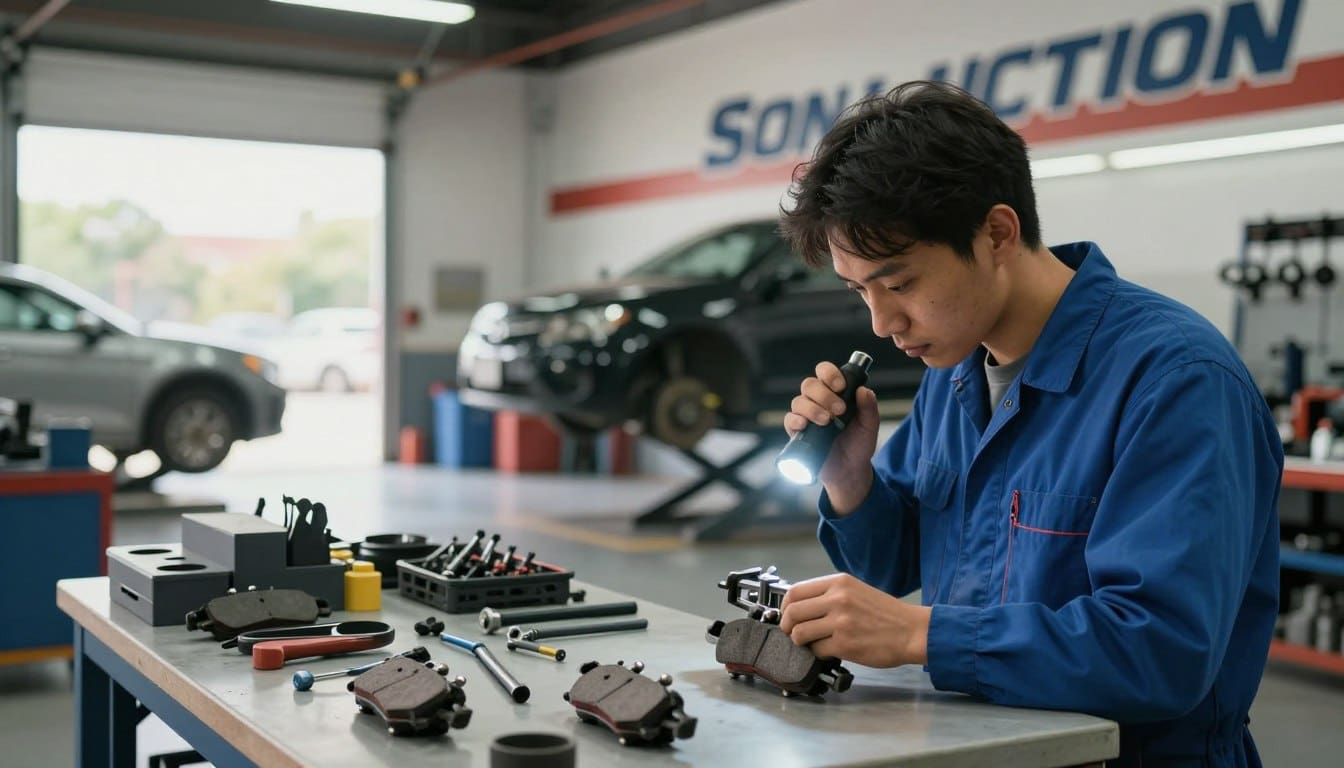
Your vehicle is a complex machine that keeps you safe on the road. The stopping system is key for preventing accidents. If you hear unusual sounds or feel a soft pedal, your car needs brake repair San Antonio right away.
Ignoring these signs can cause more damage to your rotors and pads. Fixing these issues early saves your investment and keeps your commute reliable. Staying proactive helps keep your vehicle safe and running well.
Key Takeaways
- Recognizing early warning signs prevents costly mechanical damage.
- Unusual noises during stops often indicate worn-out components.
- A soft or spongy pedal suggests air in the lines or fluid leaks.
- Timely maintenance is essential for your overall road safety.
- Professional inspections provide peace of mind for every driver.
Understanding the Importance of Brake System Maintenance
Every time you drive, your safety depends on your car’s brakes. When you press the pedal, many parts work together to stop your car. Regular brake service makes sure these parts work right when you need them.
Why Your Brakes Are the Most Critical Safety Feature
Your brakes protect you from road dangers and accidents. Unlike other parts, your brakes are essential for safety. Brake pads wear out fast because they handle a lot of friction and heat.
They are key to stopping your car safely. Keeping them in good shape means you can drive without worry. A well-maintained brake system gives you confidence every time you drive.
The Consequences of Neglecting Routine Brake Service
Ignoring brake problems can be very dangerous. If you don’t maintain your brakes, your car might not stop quickly. This can lead to accidents and damage to other parts, like the rotors.
Regular maintenance is cheaper than fixing big problems. By keeping up with your car’s schedule, you save money and avoid big repairs. Here’s how different parts affect your car’s health.
| Component | Typical Lifespan | Risk of Neglect |
|---|---|---|
| Brake Pads | 30k – 70k miles | Reduced stopping power |
| Brake Rotors | 60k – 100k miles | Vibration and grinding |
| Brake Fluid | 2 years / 30k miles | System failure or leaks |
| Brake Service | Every 6 months | Expensive total repairs |
The Mechanics of Modern Vehicle Braking Systems
When you press the brake pedal, a series of quick events happen. This process slows your car down by turning its energy into heat. Most cars use a mix of hydraulic pressure and friction to stop safely.
How Disc Brakes Function in Daily Driving
In most cars, the front wheels have disc brakes. These brakes use metallic discs called rotors. When you press the brake pedal, fluid goes to the wheels.
This fluid pressure makes the brake pads press against the discs. This friction slows the wheels down. As you keep pressing, your car slows down until it stops completely. This system works well for everyday driving but needs regular care to stay good.
The Role of Calipers and Rotors in Stopping Power
The calipers hold the brake pads, squeezing the rotors. This creates a lot of heat. So, the parts must handle very high temperatures.
If you don’t take care of these parts, they can wear out or fail. Keeping your brakes in good shape means your car will stop when you need it to.
| Component | Primary Function | Maintenance Need |
|---|---|---|
| Brake Pads | Create friction against rotors | Replace when thin |
| Rotors | Provide surface for pads | Resurface or replace |
| Calipers | Apply clamping force | Inspect for leaks |
| Brake Fluid | Transmits hydraulic pressure | Flush periodically |
High-Pitched Squealing Sounds as an Early Warning
When you hear a high-pitched squeal when you press the brake pedal, your car is trying to tell you something. This sound is a warning that your brake parts are getting old. It’s important to listen to these signs early to know when to replace brakes before it’s too late.
Identifying the Wear Indicator Tab
Most brake pads have a small metal shim called a wear indicator. It’s placed at the top of the pad to alert you when it’s time to replace the pads. When the pad wears down, this tab scrapes against the rotor, making a loud squealing sound.
This squeal is a clear sign that you need to get your brakes checked. It means it’s time to talk to a professional about when to replace brakes to prevent more damage.
When Squealing Indicates Moisture Versus Actual Wear
But sometimes, a squeal doesn’t mean your pads are worn out. Rain, humidity, or morning dew can cause rust on the rotors. This rust usually goes away after you brake a few times.
But if the squealing doesn’t stop, even after driving for a while, it’s a sign of wear. It’s important to tell the difference between environmental causes and real wear to know when to replace brakes. Here’s a guide to help you figure out what’s causing the noise.
| Noise Type | Likely Cause | Action Required |
|---|---|---|
| Brief morning squeal | Surface moisture or rust | Monitor for persistence |
| Constant high-pitched screech | Worn brake pad indicator | Schedule inspection immediately |
| Deep grinding sound | Metal-on-metal contact | Stop driving and seek repair |
Grinding Noises and Metal-on-Metal Contact
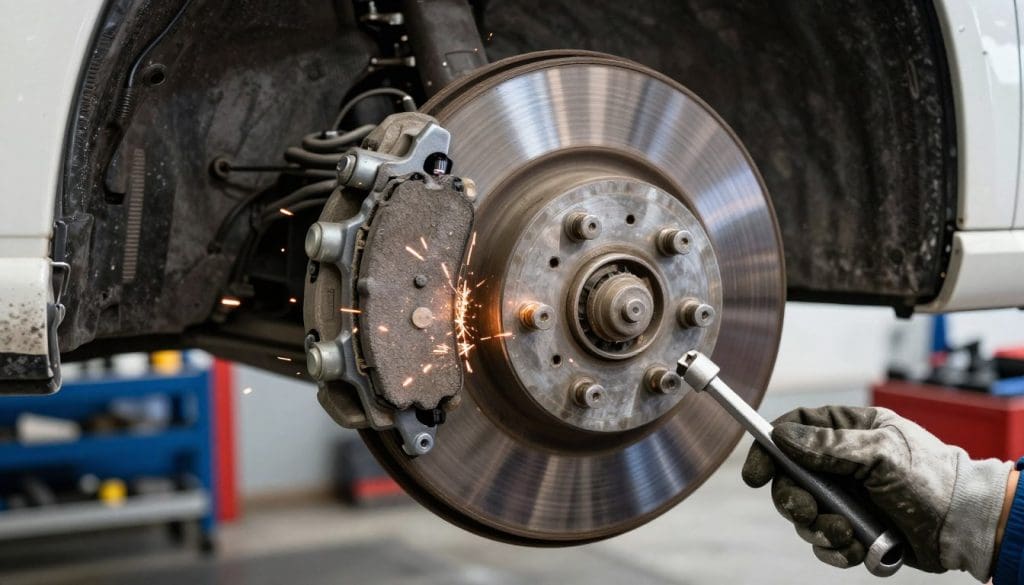
When you hear a harsh grinding noise when pressing the brake pedal, it’s a clear sign of trouble. This sound means your brake pads have worn down completely. There’s no protective material left between the components. Knowing when to replace brakes is key to keeping control on the road.
The Dangers of Ignoring Grinding Sounds
When the brake noise changes from a high-pitched squeal to a deep, harsh grind, it’s urgent. At this point, the metal backing plate of the brake pad is scraping against the rotor. This reduces your stopping power and makes it harder to stop your car.
Ignoring these warning signs is risky. You and other drivers could be in danger. Never delay service when you hear this metallic friction. Quick action is the only way to keep your vehicle safe for daily driving.
Assessing Damage to Your Brake Rotors
The friction from metal-on-metal contact causes deep grooves and permanent damage to the rotor surface. These imperfections stop the pads from making full contact. This further reduces your braking efficiency. Waiting too long to address this can lead to a more expensive repair bill than just replacing the pads.
A professional inspection is needed to see how much wear there is. A technician can check if the rotors can be resurfaced or if they need to be replaced. Knowing when to replace brakes and their parts can save you time and money.
Vibrations in the Brake Pedal During Deceleration
When your car shudders during a stop, it’s a warning sign. This shaking under your foot means your brakes aren’t working right. Spotting these signs early helps you know when to replace brakes before it’s too late.
Understanding Warped Rotors and Their Causes
A warped brake rotor is often the cause of a shaky pedal. Rotors are the metal discs that your brake pads press against to slow your wheels. Heavy or frequent braking can make these discs warp.
When rotors warp, brake pads can’t make even contact. This leads to a vibration that you feel through the brake pedal. Factors that can speed up warping include:
- Driving through deep puddles while rotors are hot, causing rapid cooling and warping.
- Consistent “riding” of the brakes during long downhill descents.
- Using low-quality brake pads that generate excessive friction heat.
Why Pedal Pulsation Requires Immediate Attention
Ignoring a vibrating pedal is risky for everyone in your car. This pulsation means your brakes are having trouble gripping evenly. This increases your stopping distance. If you notice this, it’s time to check when to replace brakes to keep your car safe.
Not fixing warped rotors can also damage other parts. The vibration stresses your suspension and wheel bearings. Here’s a table to help you check your brakes:
| Condition | Symptom | Recommended Action |
|---|---|---|
| Healthy Rotor | Smooth, quiet stops | Routine inspection |
| Minor Warping | Light pedal vibration | Professional measurement |
| Severe Damage | Heavy shaking/noise | Immediate replacement |
Your safety depends on your braking system. Don’t wait for the problem to get worse. A quick check by a pro can tell if you need to resurface or replace your rotors.
Increased Stopping Distance and Brake Fade
A small change in how your car brakes can be a big warning. If you press the brake pedal harder or wait longer for it to slow down, your brakes are losing their peak effectiveness. This decline can sneak up on you, until it’s too late.
Brake fade is a serious issue where your brakes can’t stop the wheels anymore. It happens when you brake for a long time without stopping, causing them to overheat. Once they get too hot, they can’t grip as well as they should.
Recognizing When Your Car Takes Longer to Stop
Pay attention to how your car acts during your daily drive. If you’re always adjusting your driving because of a slow response, it’s time for a check-up. Ignoring these signs can put you in dangerous situations on the road.
- The brake pedal feels “spongy” or soft under your foot.
- You notice a significant increase in the distance required to reach a full stop.
- You must apply more pressure than usual to achieve the same deceleration.
- Your vehicle pulls to one side when you engage the brakes.
The Impact of Heat on Braking Efficiency
Heat is the main enemy of a good braking system. Heavy use, like driving down steep hills or in stop-and-go traffic, creates intense thermal energy. If this heat can’t cool down fast enough, the materials start to break down.
When the system overheats, the brake fluid can boil, creating air bubbles in the lines. This stops the hydraulic pressure from reaching the calipers, leading to a frightening loss of control. Remember, your safety depends on your brakes handling heat and keeping stopping power consistent.
The Warning Light Indicators on Your Dashboard
When a warning light comes on, it’s a urgent message from your car. Modern cars have sensors that watch your braking. They alert you if something’s not right.
Don’t ignore these lights. They show up when a problem is already there. Fixing issues early can stop big, costly problems.
Interpreting the Anti-lock Braking System Light
The Anti-lock Braking System (ABS) keeps your wheels from locking up. An amber ABS light means the system is off. You’ll lose the extra control and stability it gives during stops.
Seeing an ABS light means your car isn’t as safe. A pro should check your car’s computer to find the problem. Fixing this system is key for safety on slippery roads.
What the Brake System Warning Light Means for You
A red brake light is a serious warning. It often shows up when brake fluid is low or brake pads wear out. It can also mean a leak in the brake lines.
This light is about your car’s ability to stop. If it’s on while driving, stop safely and check the fluids. Always get a pro to check your car to keep everyone safe.
Professional Brake Repair San Antonio Services
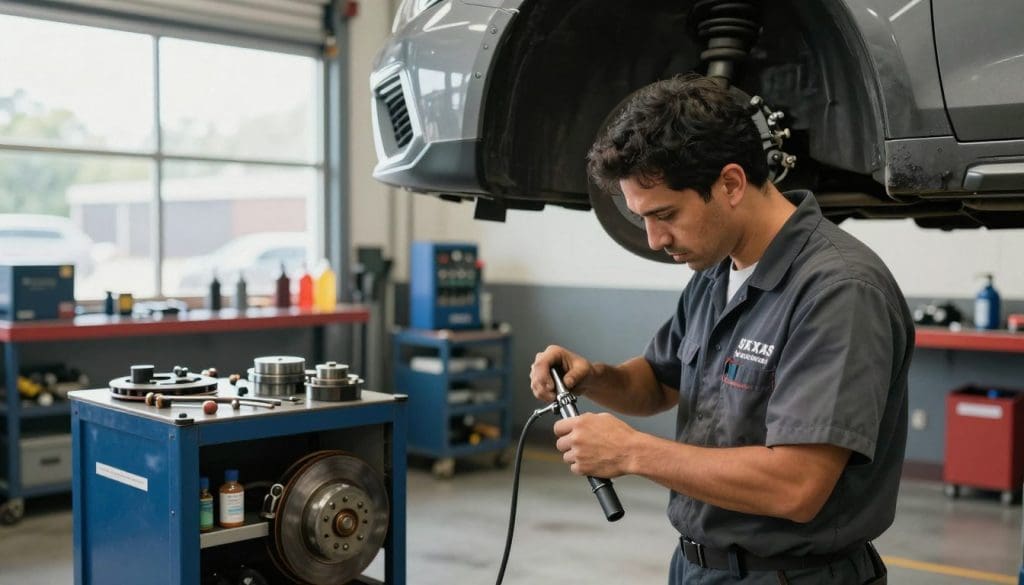
Need reliable brake repair San Antonio? Choose a local expert for your vehicle’s best care. Local techs know the city’s driving conditions well. They spot issues others might miss.
Why Local Expertise Matters for Your Vehicle
Local pros know all car types, fixing brake issues fast. They fix sensor faults and pad wear with precision. Your car gets back to top shape with local brake service.
Good service centers use top-quality parts. They do accurate checks to avoid big repairs. You’ll feel safe with your car’s brakes in expert hands.
Finding Reliable Technicians in the San Antonio Area
Find a trustworthy shop with honest, skilled techs. A good brake service tells you what repairs are needed. Look for shops with a solid community reputation.
| Service Aspect | Professional Shop | DIY Maintenance |
|---|---|---|
| Diagnostic Accuracy | High (Advanced Tools) | Low (Visual Only) |
| Part Quality | OEM Certified | Variable |
| Safety Guarantee | Professional Warranty | None |
| Time Efficiency | Fast Turnaround | Slow/Trial & Error |
Investing in brake repair San Antonio is smart. It keeps your car safe and running well. Regular checks by pros prevent sudden breakdowns. Trusting local experts is wise for any driver.
Common Causes of Premature Brake Pad Wear
Knowing why your car needs brake pad replacement often starts with your driving style. Many factors can make your parts wear out faster. By understanding these, you can keep your car safe and extend its life.
Driving Habits That Shorten Brake Lifespan
Your daily drive affects your brakes. Driving down hills often means using your brakes a lot. This makes them wear out faster because of the heat.
Driving aggressively, like sudden stops, also wears them down. It’s better to slow down smoothly. Getting your brakes replaced on time is key to safety.
The Effect of Heavy Loads on Braking Systems
Driving with heavy loads or towing puts a lot of stress on your brakes. This makes them work harder and wear out faster. It’s important to watch how your car handles heavy loads.
Regularly carrying heavy items means your brakes will wear out quicker. Keeping up with maintenance helps avoid safety issues. Make sure to replace your brakes before it’s too late.
The Dangers of Ignoring Brake System Issues
Ignoring your car’s brakes is risky. It’s like playing a game with your safety every time you drive. Procrastination can lead to poor performance when you need it most.
Risk Factors for Collisions and Accidents
Driving with bad brakes means you’ll stop later. This could lead to a big crash. Always watch how your car brakes.
Here are some risks of ignoring brake problems:
- Increased stopping distance on both dry and wet pavement.
- Reduced control during emergency braking maneuvers.
- Potential for total brake system failure in high-traffic situations.
- Increased likelihood of rear-end accidents due to delayed reaction times.
How Minor Issues Escalate into Expensive Repairs
A squeal from your brakes is a warning. If ignored, it can damage your rotors. This can turn a simple fix into a costly overhaul.
This table shows how small fixes can save big money:
| Condition | Potential Damage | Repair Complexity |
|---|---|---|
| Early Squeal | None | Low (Pad Replacement) |
| Grinding Noise | Rotor Scoring | Medium (Pads + Rotors) |
| Total Failure | Caliper/System Damage | High (Full System Overhaul) |
Fixing problems early saves you money and hassle. Replacing pads is easy, but rotors and calipers are more work. Prioritizing your vehicle’s health keeps your wallet and mind at ease.
How Weather Conditions Impact Braking Performance
Your car’s ability to stop safely depends on the weather. Extreme temperatures and wet conditions are big challenges for your brakes. Understanding these environmental factors is key to keeping your brakes working well all year.
Adapting Your Driving for Wet and Slippery Roads
When roads get slick from rain, your tires lose grip. This makes your brakes work harder. You need to increase your following distance to help your brakes stop safely.
Avoid sudden stops on wet roads to prevent wheels from locking up. If your car has anti-lock brakes, you might feel a pulsing during stops. Stay calm and maintain steady pressure on the pedal to help the system work right.
Preparing Your Brakes for Extreme Texas Heat
The intense heat in Texas is tough on your brakes. High temperatures can cause brake pads to overheat and become glazed. This makes your brakes less effective and your stopping power weaker.
Regular checks are important to make sure your pads are not too hard from the heat. If your brakes feel “spongy” or less responsive in the heat, get them checked. Keeping your brakes in good shape helps avoid brake fade caused by heat.
| Weather Condition | Primary Risk | Recommended Action |
|---|---|---|
| Heavy Rain | Hydroplaning/Reduced Traction | Increase following distance |
| Extreme Heat | Brake Pad Glazing | Schedule professional inspection |
| High Humidity | Brake Fluid Contamination | Check fluid levels regularly |
| Rapid Temperature Swings | Component Stress | Monitor for unusual noises |
Choosing Quality Components for Brake Pad Replacement
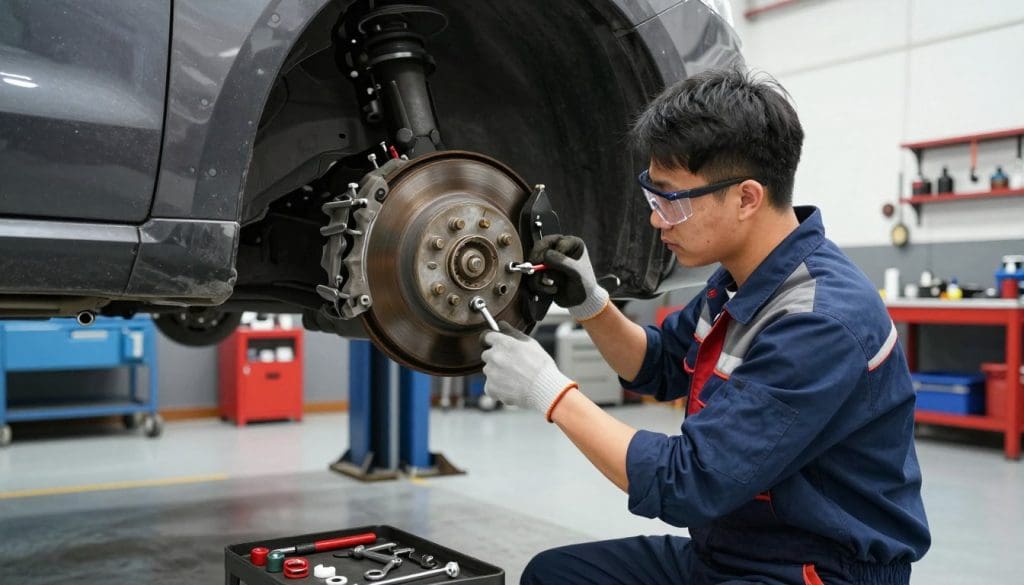
When you need a brake pad replacement, the quality of parts matters a lot. It’s not just about picking a brand. A good service also includes technical steps like cleaning the hub face and setting lug torque.
Using top-notch materials helps avoid wear and keeps your brakes working well for a long time. When parts are installed right, you get a smooth and quiet braking experience every time.
Ceramic Versus Metallic Brake Pads
Choosing between ceramic and metallic pads depends on your driving style and vehicle type. Each material has its own benefits for different driving needs.
| Feature | Ceramic Pads | Metallic Pads |
|---|---|---|
| Stopping Power | Consistent | High Performance |
| Noise Level | Very Quiet | Can be Noisy |
| Dust Production | Low | High |
| Best For | Daily Commuting | Heavy Towing |
Ceramic pads are great for a quiet ride and clean wheels. But if you haul heavy loads or drive in tough conditions, metallic pads are better.
Ensuring Compatibility with Your Vehicle Make and Model
It’s key to pick parts that fit your vehicle perfectly. Using the wrong parts can cause uneven wear and safety issues.
To get the best results, consider these tips:
- Check your vehicle’s braking system specs.
- Choose parts that match the original equipment (OE) standards for your car.
- Ask a pro to confirm the hardware fits your specific rotor size.
By focusing on compatibility during your brake pad replacement, you protect your investment and keep your vehicle safe. Always choose high-quality hardware for a reliable braking system.
The Role of Brake Fluid in System Longevity
Brake fluid is the lifeblood of your car. It keeps your stopping power steady and reliable. This fluid carries the force from your foot on the pedal to the brake calipers.
Without clean, high-quality fluid, your car can’t stop safely.
Why Brake Fluid Needs Periodic Flushing
Brake fluid absorbs moisture from the air over time. This is bad because water lowers the fluid’s boiling point. When brakes get hot, this moisture turns to gas.
Regular flushing removes this moisture. It stops corrosion in parts like ABS valves. Replacing old fluid keeps the pressure firm and responsive. This simple step is a cost-effective way to keep your brakes working well.
Signs of Contaminated or Low Brake Fluid
Watch how your brake pedal feels while driving. If it feels spongy or sinks, your fluid might be bad. This means air or moisture has gotten into the system.
Ignoring these signs can make stopping dangerous. If your pedal feels different, get a pro to check your fluid. Fresh fluid means your car stops when you need it to.
| Fluid Condition | Pedal Feel | Boiling Point | System Risk |
|---|---|---|---|
| Fresh Fluid | Firm and responsive | High | Minimal |
| Moisture Contaminated | Spongy or soft | Low | Corrosion |
| Low Fluid Level | Sinking to floor | Variable | Total failure |
| Old/Dark Fluid | Delayed response | Reduced | Component damage |
Routine Inspections to Prevent Costly Repairs
Spending a few minutes on a professional check-up today can save you from big repair costs later. Regular brake service keeps your car safe and reliable. It’s the best way to avoid sudden mechanical failures.
What a Professional Brake Inspection Includes
A detailed check is more than just looking at your wheels. Technicians measure rotor runout to make sure your discs are flat. They also check pad thickness to see if a brake pad replacement is needed.
Experts also look at your hardware and lubricate slides to prevent sticking. This ensures your system works well together. Catching minor issues early stops them from becoming big problems.
Establishing a Maintenance Schedule for Your Car
Make your car’s health a priority by setting a regular brake service schedule. Most makers suggest a check at every oil change. This simple habit keeps your car running smoothly.
Regular checks often mean only a minor brake pad replacement is needed. This saves you from expensive repairs. Protect your investment by being proactive with car care.
Why Heaven Automotive is Your Trusted Local Expert
Your car needs the best care from experts who care about your safety. When looking for brake repair San Antonio services, you want someone who is both skilled and honest. We aim to be that partner for everyone in our community.
Commitment to Quality and Customer Safety
At Heaven Automotive, we focus on top service and keeping drivers safe. Our skilled team uses the latest diagnostic tools to keep your car running well. We’re all about quality, honesty, and making sure you’re happy with our work.
Visit Us at 6645 Poss Rd. San Antonio, TX 78238
We believe in making things easy for you. Our shop is at 6645 Poss Rd. San Antonio, TX 78238. Come see how we take care of your car with precision and care.
Contact Our Team at (210) 682-3898 to Schedule Your Service
Don’t let small problems turn into big safety risks. Call our team at (210) 682-3898 to book your service today. Feel the difference of expert care for your car and enjoy the peace of mind with our brake repair San Antonio services.
| Service Feature | Standard Shop | Heaven Automotive |
|---|---|---|
| Diagnostic Technology | Basic | Advanced |
| Customer Transparency | Limited | Full |
| Safety Focus | Moderate | High |
| Expertise Level | General | Specialized |
Conclusion
Your car’s braking system is key to your safety on the road. Keeping an eye on your pads, rotors, and fluid is essential. This ensures your car works well when you need it most.
By taking care of small problems early, you avoid big safety risks. This approach gives you peace of mind. It stops minor issues from becoming expensive or dangerous.
Good brakes are vital for safe driving. Regular checks help you stay in control and feel confident while driving.
Get your car fixed by Heaven Automotive today. Our skilled team will make sure your brakes work smoothly and quietly. This way, you’ll be ready for any journey ahead.