

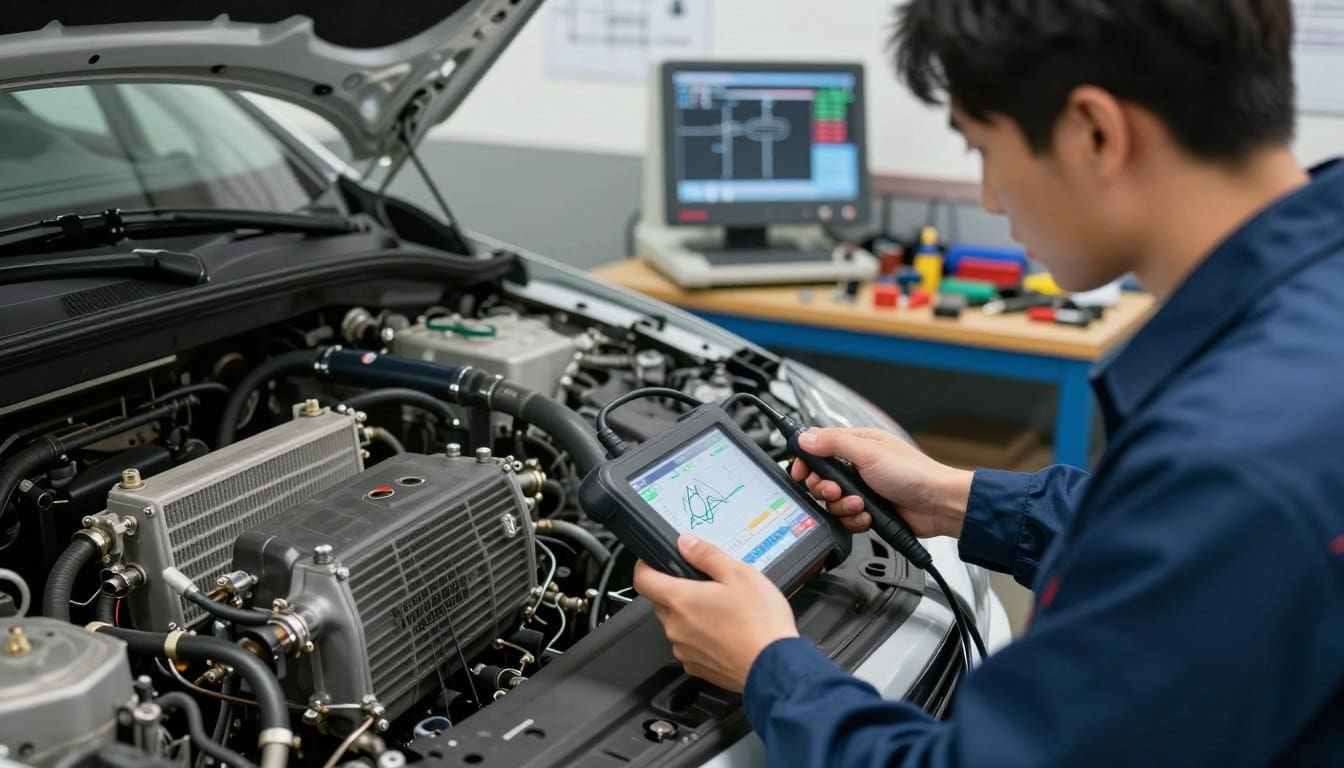
Stepping into your car on a hot day and finding warm air is frustrating. This usually means there’s a bigger problem with your car’s heating and cooling. It’s not just about being uncomfortable.
Today’s cars have complex systems to keep you cool. They use many sensors and valves. Professional climate control diagnostics are needed to find the problem. Trying to fix it yourself can make things worse.
At Heaven Automotive, we fix your car’s comfort issues. Our team is ready to help at 6645 Poss Rd. San Antonio, TX 78238. Call us at (210) 682-3898 to book your service. Get back to driving in comfort today.
Key Takeaways
- Inconsistent cabin temperatures often indicate a failure in the HVAC system.
- Modern vehicle systems require specialized tools for accurate troubleshooting.
- Professional inspections prevent minor issues from becoming expensive repairs.
- Heaven Automotive provides expert service in San Antonio, Texas.
- Scheduling a timely appointment ensures your comfort during extreme weather.
The Rising Complexity of Modern Climate Systems
Simple mechanical levers are a thing of the past. Today, your car uses advanced sensors and computers to keep you comfortable. This change has made repairs more complex and your dashboard more interactive.
Transition from Mechanical to Digital Controls
In older cars, you might have used a lever or knob to control airflow. Now, electronic actuators take over, responding to digital signals. This shift brings better temperature control but also new challenges for repairs.
Digital controls make setting temperatures easy and precise. You just pick a number, and the computer does the rest. This ensures consistent comfort, but it also means more complex problems to solve.
The Integration of Cabin Comfort with Engine Management
Your climate control system now works closely with your car’s engine. It adjusts engine settings to keep you cool without stalling. This integration keeps your comfort and engine health in balance.
The system monitors data in real-time to manage AC compressor and engine power. Ignoring these digital connections can cause problems or affect fuel efficiency.
| Feature | Mechanical Systems | Digital Systems |
|---|---|---|
| Control Method | Physical Cables | Electronic Modules |
| Temperature Accuracy | Variable/Manual | High Precision |
| System Feedback | None | Diagnostic Codes |
| Engine Interaction | Minimal | Fully Integrated |
Understanding Climate Control Diagnostics
When your air conditioning stops working, climate control diagnostics can help. Today’s cars don’t use simple levers to control temperature. They have complex electronic systems that need special tools to check.
The Role of OBD-II Scanning in HVAC Systems
The OBD-II scanning tool is key in car repairs. It connects to your car’s diagnostic port to talk to the onboard computer. This lets technicians listen to what your HVAC system is saying.
Scanners help avoid the guesswork that can cost time and money. They get data from sensors all over the car. This systematic approach helps find the problem fast.
Interpreting Error Codes for Climate Modules
After connecting, the scanner shows specific error codes for your climate modules. These codes guide our technicians. They show where the problem is, like faulty parts or digital issues.
Accurate interpretation of these codes is key. We use them to make a clear plan for fixing your car. This ensures your car gets the precise repair it needs to keep you comfortable.
The Role of the Blend Door Actuator
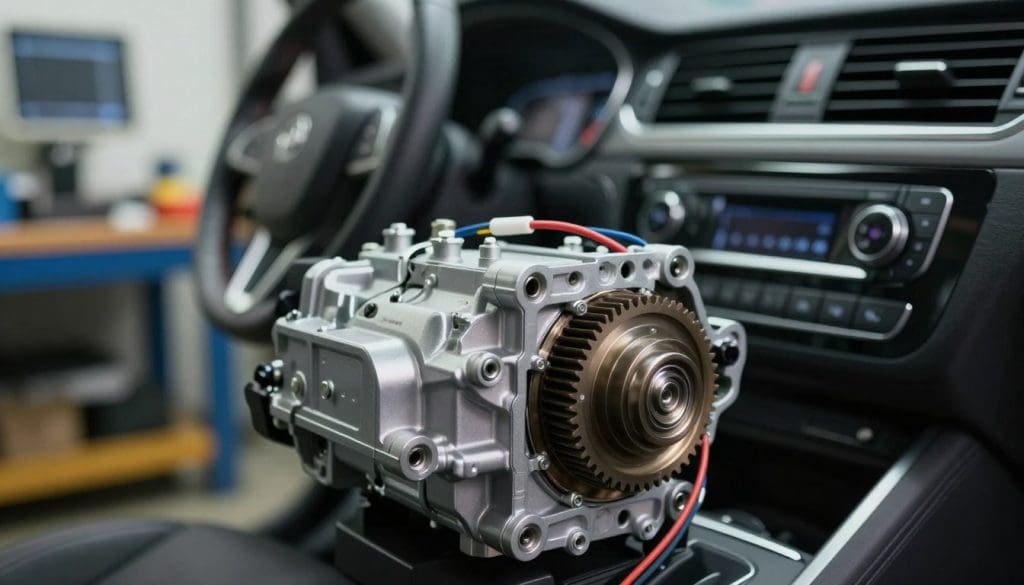
The blend door actuator is key to your car’s comfort. It’s a small electric motor that moves doors to mix air. When you change the temperature, it adjusts to keep you cozy.
How Actuators Regulate Air Temperature
Inside your car, the blend door actuator works magic. It turns a shaft that opens or closes flaps. These flaps control how much air goes through the heater or AC.
Modern cars have special actuators for each zone. This precision engineering keeps everyone comfortable. If it breaks, your temperature won’t change.
Common Failure Points in Plastic Gear Assemblies
The gears inside these units are usually plastic. They can wear out from constant use and heat. When they fail, the motor might keep spinning but not move the air door.
You might hear strange noises when changing the temperature. This could mean the gears are breaking down. Fixing them can be hard because they’re hidden deep in the car.
| Failure Type | Primary Symptom | Component Impact |
|---|---|---|
| Stripped Plastic Gears | Clicking/Tapping Noise | Loss of temperature control |
| Motor Burnout | No movement at all | Stuck on one temperature |
| Electrical Short | Erratic door behavior | Inconsistent air mixing |
Common Symptoms of AC Heater Mix Failures
If your car blows different temperatures from different vents, it’s a sign of trouble. This usually means your AC heater mix system is failing. It’s responsible for mixing air to the right temperature. If you ignore these signs, you might face bigger problems later.
Identifying Temperature Fluctuations While Driving
While driving, you might notice the air temperature changing suddenly. This happens when the system can’t keep the air hot and cold evenly. Consistency is key for a comfy cabin, and any change means the system is off track.
Watch out for these signs that your climate system needs a check-up:
- Sudden blasts of warm air when the system is set to cool.
- Inconsistent airflow intensity between the driver and passenger sides.
- Delayed response times when you adjust the temperature dial.
- Audible clicking or tapping sounds coming from behind the dashboard.
Why Air Blows Hot on One Side and Cold on the Other
The most obvious sign of a AC heater mix failure is when the driver and passenger get different air temperatures. This happens when the airflow doors get stuck or misaligned. Modern cars often have dual-zone climate control, so one side might work while the other doesn’t.
When these parts fail, the computer can’t control the AC heater mix anymore. This makes your cabin feel unbalanced and uncomfortable on long drives. If you notice this, it’s highly recommended to get a pro to check the actuators and blend doors to avoid more damage to your car’s climate control module.
Why San Antonio Heat Strains Your System
The Texas sun does more than just warm your car. It actually damages important climate parts. When you use your auto climate in San Antonio, your car faces extreme heat. This makes your cooling system work too hard, leading to early wear.
The Environmental Toll on Cooling Components
Triple-digit heat speeds up damage to rubber hoses, plastic seals, and electronic sensors. Over time, these parts become brittle and can’t seal properly. This degradation often causes slow refrigerant leaks that you might not notice until the air stops blowing cold.
Electronic control modules also face big risks in the summer. Too much heat can mess up their internal circuits, causing your climate control to act strangely. Keeping your auto climate in San Antonio working right means watching out for these hidden problems.
Managing Thermal Stress in Texas Summers
Regular maintenance is your best defense against Texas’s harsh climate. Checking your cooling system before the heat gets worse can catch problems early. This keeps your vehicle reliable during the toughest summer months.
The table below shows how different parts react to long-term heat in our area:
| Component | Heat Impact | Maintenance Action |
|---|---|---|
| Rubber Hoses | Cracking and brittleness | Visual inspection |
| Refrigerant Seals | Loss of pressure | Leak detection test |
| Control Modules | Electronic drift | Software calibration |
| Cabin Filters | Clogging from dust | Regular replacement |
Managing heat stress is key for drivers who want comfort and safety. By staying on top of these issues, you protect your investment and keep your auto climate in San Antonio working well. Consistent care helps you beat the summer heat without losing your cool.
The Impact of Software Glitches on Climate Control
Did you know your car’s air conditioning is like a computer? Gone are the days of simple mechanical parts. Now, your comfort relies on complex software algorithms that adjust the air in real-time.
But when these digital systems fail, it’s not fun. You might find your air settings changing on their own or not working right. These problems usually come from old code or damaged data in the car’s control modules.
Firmware Updates and HVAC Calibration
Your car’s climate control module needs updates, just like your phone or computer. Firmware patches fix bugs that mess with temperature data. These updates can solve problems that seem like mechanical issues.
But it’s not just about updates. The system also needs precise recalibration. This teaches the computer where the air doors and sensors are. Without this, the system might not cool or heat right, leading to uneven air or wrong heat spots.
When Electronic Modules Lose Communication
At times, the computers in your car stop talking. When the HVAC module can’t talk to the engine or body control module, the climate system might fail. This is a big problem that needs special tools to solve.
Fixing these issues isn’t easy with basic tools. Experts use advanced scanners to find where the problem is. They fix the digital connection, making your climate control work again without needing to replace expensive parts.
Sensor Failures and Their Consequences
If your cabin feels like a sauna or an icebox, a faulty sensor might be the hidden culprit. Your vehicle has a network of electronic parts to monitor the outside and inside air. When these parts fail, the climate system can’t keep your desired temperature.
The Function of Ambient Temperature Sensors
The ambient temperature sensor is usually found behind the front grille or near the radiator. It measures the outside air temperature and sends this info to the engine control unit. This helps the vehicle know how hard to work the air conditioning to beat the heat.
If this sensor gives wrong data, the computer might think it’s cooler or hotter outside than it is. This miscalculation makes the HVAC system blow the wrong air. You might find your AC not working on a hot day because the car thinks it’s already cool.
How Faulty Cabin Sensors Mislead the Computer
Inside your car, small cabin sensors check the air to match your chosen temperature. These sensors are hidden behind vents on the dashboard or near the steering column. They are the eyes and ears of your climate control, giving real-time feedback to the computer.
If a cabin sensor gets clogged with dust or fails electrically, it sends erroneous signals to the computer. The system then makes wrong adjustments, like blowing hot air when you want cold or vice versa. The computer keeps making these mistakes until the bad part is fixed.
Refrigerant Leaks and Pressure Issues
Refrigerant is the lifeblood of your air conditioning system. Even a small leak can cause big pressure problems. These issues can ruin your comfort. It’s key to keep the right amount of refrigerant for cool air in hot months.
Detecting Slow Leaks in the Evaporator Core
The evaporator core is hidden deep in your dashboard. This makes it hard to check. Detecting slow leaks needs special tools like electronic sniffers or ultraviolet dye. You can’t see these tiny leaks with your eyes.
If you smell a faint, sweet smell inside, it might mean a leak. Experts use pressure tests to find these hidden problems. Early detection helps avoid big repairs later.
The Dangers of Low Refrigerant Levels
Ignoring low refrigerant levels is risky for your car’s health. When levels drop, the compressor works too hard. This can cause catastrophic compressor failure.
Fixing a compressor is much pricier than fixing a leak. Any drop in cooling should be a warning. Keeping your system properly charged saves money and keeps your AC working well for years.
The Importance of Professional Climate Control Repair
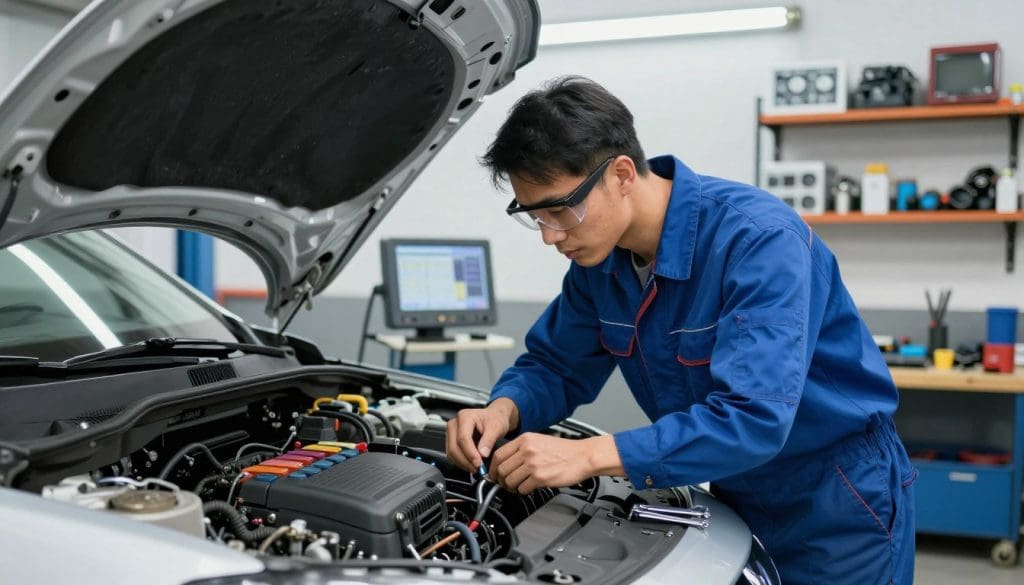
Precision is key in climate control repair for today’s cars. Modern cars use complex digital systems, not just simple parts. Trying to fix these without the right skills can cause more problems.
Why Precision Tools Matter for HVAC Systems
Today’s climate systems use electronic signals to control air and temperature. You can’t fix these with basic tools. Professional technicians use special scanners to talk to your car’s system.
These tools help find problems quickly. They show how sensors react in real time. This means repairs are done right the first time, saving you from extra visits.
Avoiding Costly Mistakes with Improper Repairs
Modern car parts are very sensitive. A small mistake can break something important. Professional service makes sure everything is done carefully.
Getting a pro for climate control repair saves money in the long run. It stops small problems from getting bigger. You’ll know your car will stay comfortable, no matter the weather.
DIY Limitations in Modern Vehicles
Modern cars have complex climate control systems that are hard to fix at home. Even simple tasks can be tricky because of digital sensors and modules. Trying to fix it yourself can cause more harm than good.
The Risks of Over-the-Counter Refrigerant Kits
Some people buy refrigerant kits from stores when their AC stops working. But these kits are often misleadingly simple. Without the right tools, you can damage the compressor.
These kits also don’t have the right refrigerant for today’s cars. Using the wrong refrigerant can lead to several problems:
- System contamination from moisture or air trapped in the lines.
- Damage to sensitive expansion valves.
- Incorrect pressure readings that hide deeper issues.
- Voiding your vehicle’s warranty due to improper maintenance.
When to Stop and Call a Professional
Knowing your limits is key to taking care of your car. If you’re unsure about a temperature issue, it’s time to seek help. Precision is non-negotiable when dealing with electronic climate modules.
Call a professional if you see any of these signs:
- The system keeps blowing warm air even with full refrigerant.
- You hear grinding or clicking noises from the dashboard.
- Diagnostic tools show error codes that don’t go away after a reset.
- You suspect a leak but can’t find it with basic checks.
Trying to fix it yourself can lead to costly secondary damage. Getting an expert ensures your car gets the right care. This will make your cabin comfortable and reliable again.
Preventive Maintenance for Your HVAC System
Keeping your cabin comfy all year round is easy with proactive maintenance. A little time spent on your vehicle can avoid unexpected breakdowns. This ensures your climate control works well when you need it.
Cabin Air Filter Replacement Schedules
Your cabin air filter keeps dust, pollen, and debris out. But, it gets clogged over time. This significantly restricts airflow and makes your blower motor work too hard.
Most makers say to change this filter every 12,000 to 15,000 miles. But, if you drive in dusty places or heavy traffic, check it more often. This keeps the air in your car optimal.
Inspecting Hoses and Seals Before the Season Changes
Before summer or winter hits, check your HVAC system’s parts. Look at the rubber hoses and seals for cracks, brittleness, or moisture.
Small signs can mean a big leak is coming. Fixing these small issues early saves money. It also keeps your vehicle safe from harsh weather.
How Heaven Automotive Approaches Complex Repairs
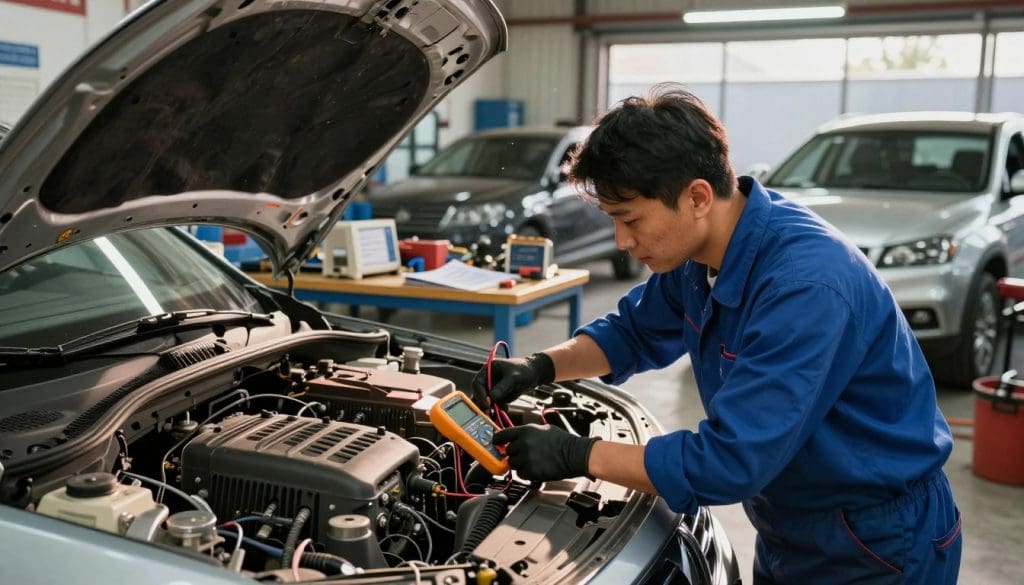
When your car’s climate system breaks down, you need a team that gets modern car engineering. At Heaven Automotive, we tackle every climate control repair with a detailed plan to get you back to comfort. We treat your car like our own, checking every detail during service.
Our Diagnostic Process at 6645 Poss Rd
Our place at 6645 Poss Rd. San Antonio, TX 78238 is where we do our advanced diagnostics. We use top-notch scanning tools to find the exact problem with your HVAC. This systematic approach saves you time and money by avoiding wrong guesses.
We focus on the main issue to fix your climate control repair right the first time. Our techs are trained to read complex data from your car’s computer. This skill makes us stand out in San Antonio.
Commitment to Quality Parts and Expert Labor
We know your car needs top-notch parts to work well. That’s why we only use premium parts that meet or beat the original standards. Our expert labor and these parts ensure your climate system works great for a long time.
Our team is proud of the quality of our work. We aim to give you professionalism and care at every visit. You can count on us to keep your car cozy, no matter the Texas weather.
| Service Feature | Standard Shop | Heaven Automotive |
|---|---|---|
| Diagnostic Tools | Basic Scanners | Advanced OEM-Level |
| Part Quality | Aftermarket Generic | Premium/OEM Grade |
| Technician Skill | General Repair | HVAC Specialized |
| Repair Accuracy | Trial and Error | Data-Driven Precision |
The Future of Auto Climate Technology
The world of car climate control is changing. Cars are getting smarter and more efficient. You’ll soon enjoy smarter tech that knows what you need before you even get in.
Electric Vehicle HVAC Innovations
Electric cars face a special challenge. They don’t have the waste heat that gas cars do. To keep you comfy, they use advanced heat pump technology.
This tech moves heat instead of making it. It cuts down on battery use. So, your car stays cozy in cold or hot weather. This is key for keeping the battery strong on long drives.
Predictive Climate Control Systems
The future brings systems that learn your likes. Predictive climate control uses AI to adjust the temperature based on your habits and the weather. It knows your favorite temperature and starts cooling or heating before you get in.
These systems also watch the weather outside. They adjust for humidity, sunlight, and air quality. This way, your car creates a perfectly balanced environment for you. You won’t need to keep adjusting it while driving.
| Feature | Traditional Systems | Predictive EV Systems |
|---|---|---|
| Energy Source | Engine Waste Heat | High-Efficiency Heat Pumps |
| Control Method | Manual/Basic Automatic | AI-Driven Predictive Logic |
| Efficiency | Moderate | Very High |
| User Interaction | Constant Adjustments | Set-and-Forget Automation |
Choosing the Right Service Center in San Antonio
Finding the right service center in San Antonio is key for your car’s health. You need someone who gets the complex cooling and heating systems. A shop that values precision and transparency will save you money and time.
What to Look for in an Automotive Technician
Look for technicians with industry-standard certifications, like ASE. They know how to fix complex problems. They should explain your car’s issues in a way you can understand.
Make sure they have experience with your car’s make and model. Modern cars need special tools and software. A team that keeps up with ongoing training will give your car the best care.
Why Local Expertise Matters for Your Vehicle
Local knowledge is a big plus for auto climate San Antonio needs. A local shop knows how to handle Texas’s hot summers. They pick parts that last in our climate.
Choosing a local expert means you get personalized support. They’re proud of their work and care about the community. Your car will stay cool and efficient, even when it’s hot outside.
Conclusion
Reliable climate control makes your daily drive better, no matter the weather. You should have a cabin that’s always comfortable and meets your needs.
Looking after your car prevents small problems from becoming big, costly issues. Regular checks keep your cooling system working well all year.
Heaven Automotive has the skills to handle your car’s complex systems. Our team uses the latest tools to find and fix problems quickly.
Our technicians are skilled in fixing tough repairs with care and honesty. We use top-quality parts and labor to keep your car running smoothly.
Call us today at (210) 682-3898 to book your professional check-up. Let Heaven Automotive make your cabin comfortable again and get you driving confidently.