


If your vehicle stutters or shows a lag when you press the gas, it can be alarming. You expect an instant response, yet a clear hesitation can point to an underlying cause that affects engine power and overall performance.
On Plymouth roads and beyond, many drivers report similar issues. A weak spark or faults in the ignition system often cause hesitation. These problems can reduce pedal feel and make acceleration feel uneven.
Understanding the likely causes is the first step to restoring smooth power delivery. Identifying whether the issue is a spark fault, an ignition system failure, or another engine problem helps you act fast and prevent further damage.
Key Takeaways
- Hesitation can signal an underlying issue with the engine or ignition.
- A weak spark often leads to rough acceleration and loss of power.
- Diagnosing the problem early protects long-term engine health.
- Simple checks of spark and ignition components can reveal common causes.
- Prompt service prevents minor issues from becoming costly repairs.
Understanding Why Your Car Hesitates When Accelerating
A faulty throttle signal is a common trigger for delayed response as you push the pedal. The throttle position sensor tells your vehicle’s main computer how much pressure you apply. That input helps the engine balance air and fuel for smooth power delivery.
When the throttle system malfunctions, it can send wrong data and cause poor performance or engine hesitation. Drivers on Maple Grove roads report that this sensor is often the underlying cause of their vehicle stalling or lagging.
If you press gas and notice a delay, the engine may not be receiving the correct signal to increase power. Quick checks of the throttle linkages and sensor output can reveal issues fast.
- Throttle sensor errors disrupt air/fuel balance.
- Faulty signals can mimic fuel delivery or ignition problems.
- Regular maintenance of spark and ignition parts reduces repeat issues over time.
For a deeper look at related stall and hesitation causes, read more about causes engine hesitation.
Fuel Delivery System Problems
A compromised fuel flow can create noticeable dips in performance under load. Your vehicle needs steady fuel delivery to maintain smooth power. Low pressure, blockages, or worn parts will produce engine hesitation and reduced acceleration.

Clogged Filters and Restricted Flow
The fuel filter traps dirt and debris before they reach the pump and injectors. A clogged fuel filter prevents enough fuel from reaching the engine and is a common fuel delivery problem.
Replacing a worn fuel filter restores proper flow and often fixes hesitation during demand for power.
Worn or Dirty Injectors
Fuel injectors that are dirty or worn fail to spray fuel evenly into the combustion chamber. That poor spray pattern causes misfires and noticeable engine hesitation.
- Check the fuel pump — it must deliver the correct pressure for consistent combustion.
- Clean or replace injectors if spray is weak or uneven.
- Routine fuel system maintenance helps prevent most causes of engine hesitation.
Sensor Malfunctions Affecting Performance
Faulty air-measuring sensors often trigger sudden dips in engine output under load. These sensors feed vital data to the engine control unit so the system can balance fuel and air.
Mass Airflow Sensor Issues
The mass air flow sensor detects how much air enters the intake and sends that number to the main computer.
If the mass airflow device wears out, the engine may run too lean or too rich. That mismatch causes poor combustion and leads to engine hesitation.
- Critical role: The mass air flow sensor lets the computer meter fuel injectors for correct fuel delivery.
- Symptoms: Faulty readings upset air flow, reduce performance, and create drivability issues.
- Check and clean: Inspect the sensor and intake for dirt. Cleaning or replacement often fixes the problem.
Tip: If your vehicle shows lag during acceleration, include the mass air flow sensor in your diagnostics to rule out a common cause of engine hesitation.
Transmission and Mechanical Complications
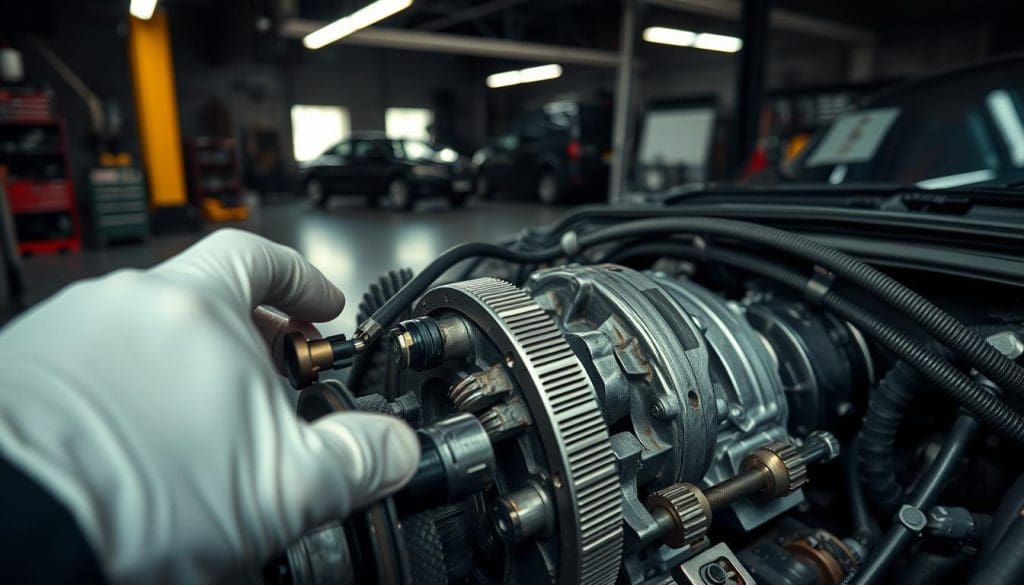
Problems inside the gearbox can sap acceleration and mimic engine faults. Transmission clutch slippage is a common cause of engine hesitation and often ties back to low or old transmission fluid.
Old fluid loses hydraulic strength and fails to engage clutches cleanly. That wear shows up as poor response under load and uneven power delivery.
Other mechanical issues include a worn transmission oil pump or damaged clutch plates. A failed clutch solenoid can also interrupt shift timing and cause sudden hesitation.
- Low or degraded fluid increases clutch slippage and reduces fuel efficiency.
- Old pumps and damaged clutches cut torque to the wheels and hurt vehicle performance.
- A faulty clutch solenoid disrupts gear changes and creates drivability problems.
- Regular transmission service with fresh fluid helps prevent many causes of engine hesitation.
If your ignition and spark systems check out but the issue persists, have a transmission inspection next. A targeted mechanical diagnosis often isolates the real problem quickly and saves time and expense.
Professional Diagnostic Services
Advanced diagnostics find the small faults that cause big drivability issues. Technicians use scanner tools and live tests to check fuel pressure, ignition, and air sensors. That process spots odd signals that lead to engine hesitation or rough throttle response.
Expert Collision Repair
If your vehicle sustained collision repair damage, choose skilled technicians to restore safety and performance. Miracle Body and Paint Collision Center blends cosmetic repair with full diagnostics so fuel and engine systems return to spec. Trust their team to handle structural and mechanical problems that affect drivability.
Visit Our San Antonio Locations
- Two convenient shops: North West San Antonio – Leon Valley at 6217 Grissom Rd., San Antonio, TX 78238.
- Call Leon Valley: (210) 680-1987 to schedule a professional diagnostic or repair for your vehicle.
- North East San Antonio: 4650 Walzem Rd, San Antonio, TX 78218 — phone (210) 858-3630.
- Why choose us: Fast, thorough service saves you time and gets your car back on the road safely.
Conclusion
Catching issues early keeps power delivery steady and reduces repair bills.
Identifying the cause of hesitation is vital for your safety and for better performance. Whether the issue traces to a clogged fuel filter, a faulty sensor, or mechanical wear, a professional diagnosis prevents guesswork.
Keep your air and fuel systems inspected regularly to avoid recurring drivability faults. Routine checks and timely repairs help stop small problems from growing into expensive fixes.
If collision repair damage is part of the problem, hire Miracle Body and Paint Collision Center to restore safety and performance. Our two San Antonio shops are ready to assist and get your vehicle back to proper working order.