

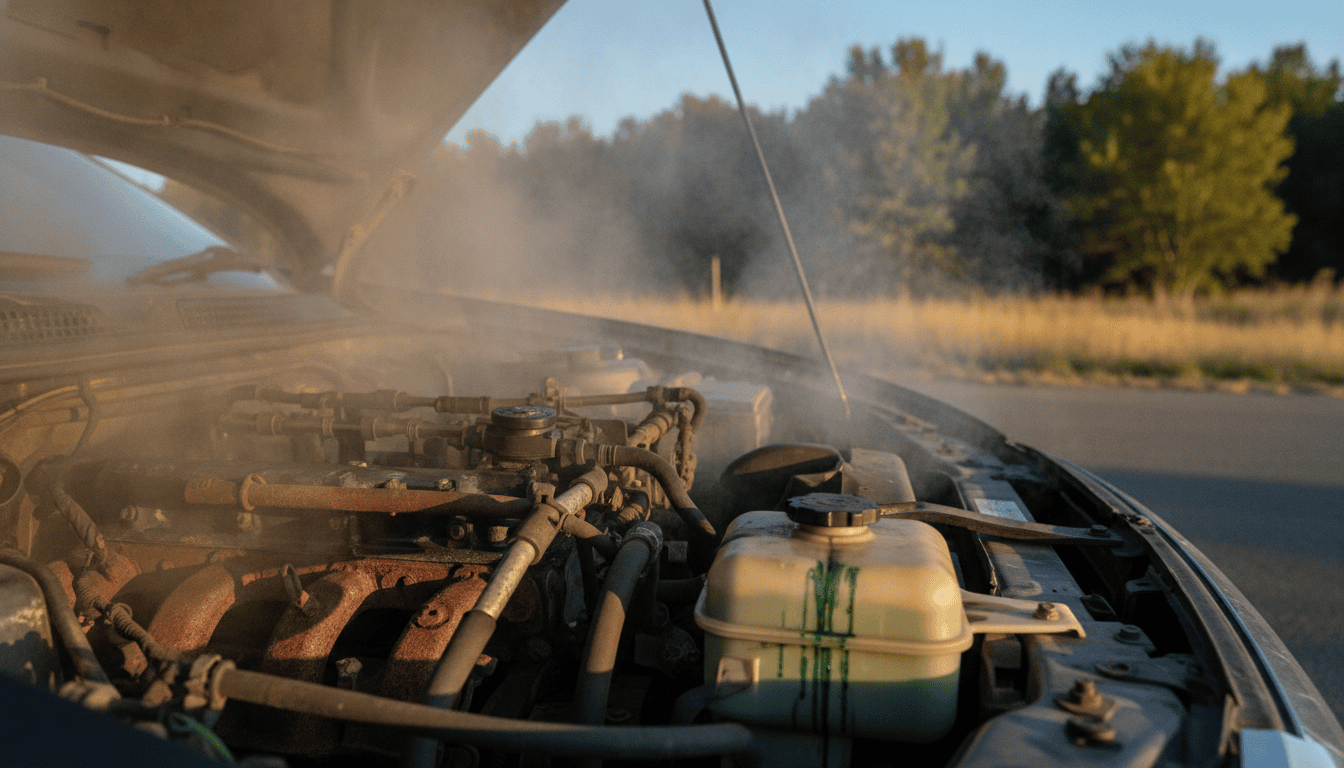
Seeing your temperature gauge in red while driving can cause instant panic. Yet, the first 60 seconds matter. They can help prevent lasting engine damage.
Stay calm and make smart choices. Turn off the air conditioning and find a safe place to pull over. Do not touch hot parts under the hood; steam and high pressure can cause serious injuries.
Unusual odors or warning lights mean it is time for professional help. For residents in San Antonio, Heaven Automotive can provide expert diagnostics and repairs.
Our shop is at 6645 Poss Rd. San Antonio, TX 78238. You can reach us at (210) 682-3898. Quick, informed action is the best way to manage car overheating safely.
Key Takeaways
- Prioritize safety by pulling over immediately when the engine temperature spikes.
- Turn off your air conditioning to reduce the load on the cooling system.
- Never open the radiator cap while the engine is hot to avoid severe burns.
- Watch for warning lights, steam, or strange smells as early indicators of trouble.
- Contact local experts like Heaven Automotive for professional inspection and reliable repairs.
Understanding Car Overheating Conditions
Your car makes a lot of heat during normal driving. Your engine runs hot by design, but its cooling system must keep temperatures safe. If heat rises too far, serious internal damage may follow.
Contact the experts at Heaven Automotive if your vehicle struggles. They are at 6645 Poss Rd. San Antonio, TX 78238, and ready to help. Call (210) 682-3898 for professional guidance.
Common Causes of Overheating
A coolant leak is the most common cause of rising engine temperatures. When fluid escapes, less coolant can carry heat away from the engine block. Without proper flow, temperatures rise quickly.
Leaks are common, but other mechanical problems can also cause overheating:
- Radiator failure: A clogged or damaged radiator cannot dissipate heat effectively.
- Thermostat problems: A stuck thermostat prevents coolant from flowing to the engine.
- Water pump faults: If the pump fails, the coolant remains stagnant.
- Damaged belts: A loose or broken serpentine belt often stops the water pump from spinning.
- Low oil levels: Oil helps lubricate and cool internal parts; low levels increase friction and heat.
Signs Your Engine is Overheating
Your vehicle may warn you before a complete breakdown. Notice these signs to help prevent a catastrophic radiator failure or blown head gasket.
Watch for these warning signs while driving:
- Temperature gauge movement: The needle climbs into the red zone or stays consistently high.
- Steam or smoke: Visible vapor rising from under the hood is a clear sign of a coolant leak or boiling fluid.
- Sweet odors: A distinct, syrupy smell often indicates that coolant is burning off a hot engine surface.
- Loss of power: The engine may feel sluggish as the computer tries to protect itself from extreme heat.
- Warning lights: A dashboard light shaped like a thermometer or a “Check Engine” warning should never be ignored.
If you notice these symptoms, act quickly. Ignoring them may cause permanent engine damage. Such damage costs far more to repair than a simple cooling system service.
Immediate Steps to Take When Your Car Overheats
Your vehicle overheating calls for calm, quick action to prevent lasting mechanical damage. The first sixty seconds are crucial for your engine’s survival. Follow these steps to protect your vehicle and stay safe on the road.
Safely Pull Over
When the temperature gauge rises, turn off your air conditioning at once. The AC system strains the engine and adds heat. In heavy traffic, turn the heater to its highest setting to draw heat from the engine block.
Guide your vehicle carefully onto the shoulder or into a nearby parking lot. Do not panic or change lanes suddenly. At a secure spot, shift into park and set the emergency brake.
Turn Off the Engine
At a safe location, turn off the ignition at once. Driving farther, even briefly, can cause serious internal damage. This matters when you notice water pump symptoms, like whining or coolant leaks; they may show system damage.
If your vehicle needs care, contact Heaven Automotive at 6645 Poss Rd. San Antonio, TX 78238 or call (210) 682-3898. They offer expert guidance when you are unsure how serious the problem is. Ignoring persistent water pump symptoms can cause complete engine breakdown.
Open the Hood for Airflow
After shutting off the engine, wait for it to cool before touching anything. Do not open the hood right away; trapped steam can cause severe burns. Wait at least fifteen to twenty minutes for the temperature to drop greatly.
When hissing stops and the hood feels cool, open it carefully to release heat. This helps engine parts return to a safe temperature faster. Use the table below to track your emergency response.
| Action Step | Priority Level | Reasoning |
|---|---|---|
| Disable AC | High | Reduces engine load |
| Turn on Heater | Medium | Dissipates excess heat |
| Stop Engine | Critical | Prevents total failure |
| Open Hood | Low | Promotes air circulation |
Checking the Temperature Gauge
Watching your vehicle’s temperature gauge helps you spot overheating early. This small tool can help prevent serious engine damage. If you see the temperature gauge in red or near the “H” mark, act at once.
What the Gauge Indicates
The gauge gives a real-time reading of your engine’s coolant temperature. When the needle stays in the middle, the cooling system works correctly. If it rises fast, the engine makes more heat than the system can remove.
Do not touch the engine just because the needle drops after you stop. Metal parts stay very hot for a long time. Contact the experts at Heaven Automotive if you are unsure about your vehicle. They are at 6645 Poss Rd. San Antonio, TX 78238. Call (210) 682-3898 for professional guidance.
Importance of Monitoring Temperature
Relying only on the gauge can be risky if its sensor fails. Stay alert for other signs that your engine is struggling. Even if the temperature gauge in red does not warn you, these symptoms need attention:
- Visible steam or vapor rising from under the hood.
- Unusual sweet or burning odors inside the cabin.
- Sudden loss of engine power or sluggish acceleration.
- Dashboard warning lights illuminating unexpectedly.
Regular checks let you pull over safely before lasting damage occurs. Prevention is always cheaper than a full engine replacement. Stay alert and watch the dashboard on every trip.
Cooling System Components Explained
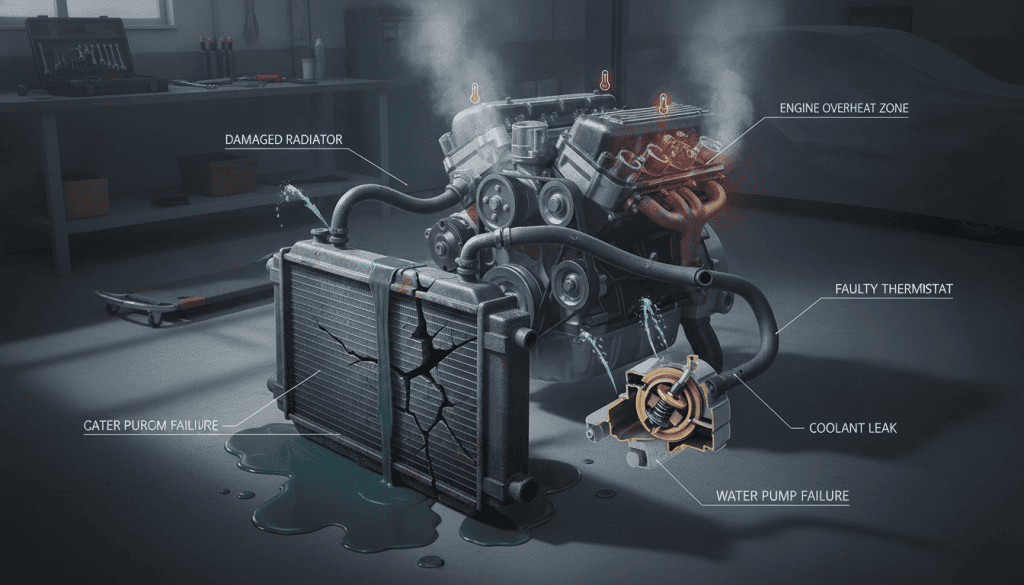
Engine health relies on three main parts: the radiator, thermostat, and water pump. Together, they move coolant and carry heat away from the engine block. Understanding how these parts function helps prevent major mechanical damage.
Radiator Functions
The radiator is your vehicle’s main heat exchanger. It takes hot coolant from the engine through thin metal fins, where outside air cools it. Radiator failure can follow blocked passages or damaged fins, limiting heat transfer.
Thermostat Role
The thermostat acts as a gatekeeper, controlling coolant flow based on engine temperature. When the engine is cold, it stays shut for a quick warm-up. However, a thermostat stuck closed blocks coolant from reaching the radiator, so the engine overheats quickly despite a healthy system.
Water Pump Importance
The water pump is the cooling system’s heart because it pushes coolant through the engine and radiator. If it fails, coolant stays still and cannot absorb heat well. Common water pump symptoms include a whining noise from the engine’s front or coolant leaks near the pump housing.
| Component | Primary Function | Common Failure Sign |
|---|---|---|
| Radiator | Dissipates heat | Visible leaks or blocked fins |
| Thermostat | Regulates flow | Engine overheats quickly |
| Water Pump | Circulates coolant | Whining noise or coolant puddle |
If you notice these issues, do not wait for a total breakdown. You can visit Heaven Automotive at 6645 Poss Rd. San Antonio, TX 78238, or call them at (210) 682-3898. Their experienced technicians can find whether these cooling issues come from these parts or other hidden faults.
Signs of a Serious Problem
When your vehicle temperature spikes, red flags may mean you must stop driving at once. Some overheating problems are minor, but others show catastrophic internal damage. Driving on can cause a blown head gasket, which needs a costly, complex repair.
Steam Coming from Under the Hood
If thick white steam pours from the hood, pull over when it is safe. This often means a major coolant leak or a pressurized system failure. Never attempt to open the radiator cap while steam rises; escaping pressure can cause severe burns.
Strange Noises from the Engine
Listen for strange sounds during an overheating event. They may warn of a total breakdown:
- Knocking or pinging: This often points to internal engine stress.
- Grinding or hissing: These sounds suggest mechanical failure or high-pressure leaks.
- Ticking: This may indicate a lack of proper lubrication due to extreme heat.
Warning Lights on the Dashboard
Modern vehicles use sensors to protect your engine from permanent harm. If the temperature light comes on or the gauge reaches red, treat it as an urgent signal. Ignoring these warnings can quickly cause a blown head gasket or a seized engine.
If these symptoms appear, do not restart your car and risk more damage. Contact the experts at Heaven Automotive, at 6645 Poss Rd. San Antonio, TX 78238. Call our team at (210) 682-3898 for professional guidance and careful vehicle care.
Temporary Solutions Before Calling for Help
While you wait for help, take simple steps to protect your engine. These steps can limit further damage while you arrange professional transport or repairs. They are temporary and do not replace a full mechanical inspection.
Adding Coolant
If you suspect a coolant leak, you may want to fill the reservoir. Wait until the engine cools fully before opening the hood or touching the radiator cap. A hot, pressurized system can release steam and cause severe burns.
After the engine feels cool, check the reservoir; a small amount may help you reach a service center if low. For a persistent coolant leak, contact Heaven Automotive at 6645 Poss Rd. San Antonio, TX 78238. Or call (210) 682-3898 for expert guidance.
Insulating Hot Areas
Stay safe by avoiding hot engine parts. Do not touch or wrap the radiator cap, engine block, or hood while they radiate intense heat. Always maintain a safe distance to prevent accidental injury.
- Keep your hands away from the radiator cap until the system is cold.
- Avoid leaning over the engine bay where steam might be trapped.
- Use a thick cloth or glove only if you are certain the surface is no longer hot.
Using a Fan to Cool Down
You may turn the ignition to accessory mode to run the interior fan or heater. This may offer a small benefit by pulling heat from the engine block into the cabin. However, it cannot fix a failed water pump, broken radiator, or major coolant leak.
Mechanical failures need professional tools and skill. If the temperature gauge stays high after a few minutes, turn the engine off completely. Long-term temporary fixes can cause permanent engine damage and higher repair costs.
When to Call for Professional Help
Sometimes, the safest choice is turning off the ignition and calling for help. Minor issues may wait, but serious signs need expert care to prevent catastrophic failure.
Recognizing the Right Time
Call a professional at once if steam keeps rising from under the hood. Call also if the temperature gauge returns to red after a short rest. It is vital to stay alert when warning lights stay on or the engine runs poorly.
These signs may point to a thermostat stuck closed, which stops coolant from moving correctly. If coolant levels drop quickly without a visible leak, do not drive farther. A thermostat stuck closed may cause pressure spikes and damage the whole cooling system.
Why You Shouldn’t Delay
Delaying service can turn a small cooling-system problem into a costly repair. Driving an overheating engine may badly damage the cylinder head or engine block. The most common costly result is a blown head gasket.
A blown head gasket needs extensive labor, but timely repairs may prevent it; contact the experts at Heaven Automotive. They are at 6645 Poss Rd. San Antonio, TX 78238, or call (210) 682-3898. Their team can find the root cause and return you safely to the road.
Preventing Overheating Before It Happens
Taking charge of your vehicle’s health today prevents stressful breakdowns tomorrow. By focusing on overheating prevention, you can keep your car reliable during long trips or extreme summer heat. Regular care is the best way to protect your engine from needless wear.
Regular Maintenance Tips
Routine inspections help keep your vehicle in top shape. Have a professional check your hoses, belts, and radiator for cracking or fatigue. Worn components can fail without warning and cause sudden engine trouble.
Do not overlook routine oil changes, because low engine oil increases friction and creates extra heat. Your cooling system must work harder to manage this heat. If you are in the San Antonio area, visit Heaven Automotive at 6645 Poss Rd. for inspection by experienced technicians.
Importance of Fluid Levels
Proper fluid levels support effective cooling system maintenance. Check your coolant reservoir often to ensure the mixture reaches the recommended level. If fluid drops, it may signal a leak that needs immediate attention.
Finding these issues early saves time and money. If you need help checking your system or want a professional assessment, call Heaven Automotive at (210) 682-3898. Our team can identify potential problems before they become emergencies, keeping your engine running smoothly for years.
Why Choose Heaven Automotive for Repairs
Your vehicle needs expert care when cooling system problems begin. Reliable engine overheating repair helps keep your car safe and moving.
Experienced Technicians
The Heaven Automotive team brings years of hands-on experience to every diagnostic check. These experts understand modern cooling systems and quickly find hidden leaks or pump failures.
Quality of Service
You receive clear updates about your vehicle at every step. This San Antonio auto repair shop values precise work and lasting reliability for every customer. Your engine gets the focused care it needs to help prevent future damage.
Customer Reviews and Testimonials
Local drivers trust this facility for honest assessments and effective solutions. Positive reviews show this location’s strong commitment to excellent service. Share recent warning signs or symptoms with the staff to begin a careful inspection.
Visit Heaven Automotive at 6645 Poss Rd. San Antonio, TX 78238 to address your concerns today. You may reach the office by calling (210) 682-3898 to schedule your appointment.