

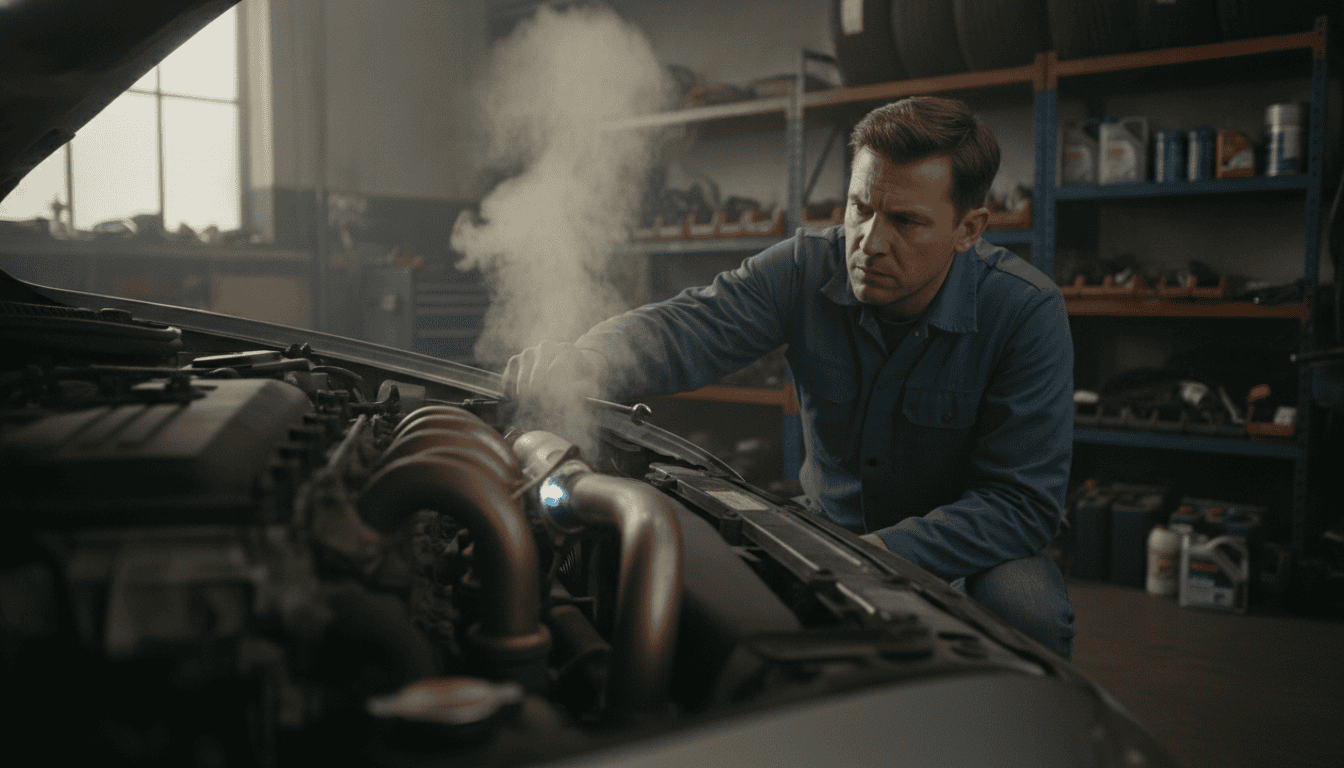
Does your vehicle suddenly sound like a high-performance race car when you press the gas pedal? That deep rumble may seem exciting, but it often signals trouble, not more power. You likely have an exhaust leak that needs immediate attention.
These problems can start anywhere in the system, from the manifold to the tailpipe. Ignoring strange exhaust noise may let harmful fumes enter the cabin and create serious safety hazards. A leak can also reduce fuel efficiency and hurt overall engine performance.
Inspecting your vehicle now can help you avoid costly repairs later. Early detection is the best way to keep your car safe and quiet on the road.
Key Takeaways
- A sudden change in engine volume is usually a warning sign of mechanical failure.
- Damaged components can allow dangerous gases to enter the passenger cabin.
- Performance issues and poor fuel economy often stem from system breaches.
- Regular inspections help identify cracks near the manifold or muffler early.
- Addressing these problems promptly prevents costly long-term damage to your vehicle.
Understanding Exhaust Leaks: What You Need to Know
A noisy exhaust leak can signal trouble with your car. When your vehicle runs, combustion gases travel through a sealed system to the tailpipe. An opening anywhere along this path lets those gases escape too soon.
Definition of an Exhaust Leak
This issue starts when damage breaks the exhaust system’s seal. Fumes then escape through holes, cracks, or loose connections instead of reaching your car’s rear. This can cause significant performance issues if ignored.
Common Causes of Exhaust Leaks
Several problems weaken exhaust parts over time. Road salt, moisture, and extreme temperature changes can weaken metal. You may need muffler repair or other work because of these common problems:
- A rusted exhaust pipe that has developed holes from long-term corrosion.
- Damaged gaskets, which often lead to a persistent exhaust manifold leak.
- Loose or broken hangers that cause excessive vibration and stress on joints.
- Physical damage from road debris or impacts with speed bumps.
- Thermal fatigue caused by repeated heating and cooling cycles.
Signs You May Have an Exhaust Leak
Your car often gives clear warnings when the exhaust system fails. Watching for these signs can help you avoid costly repairs. Look for these common warnings:
- A sudden increase in engine noise, often described as a loud roar or rumble.
- A rhythmic ticking or hissing sound that becomes more noticeable during acceleration.
- Rattling noises coming from underneath the vehicle, suggesting loose components.
- The smell of raw exhaust fumes inside the cabin or around the car.
- Visible signs of heavy rust or soot deposits on the exhaust pipes.
The Effects of Exhaust Leaks on Your Vehicle
When your car has an exhaust leak, it can cause more than a noisy ride. Your vehicle needs balanced pressure and airflow to work well. A damaged system can make the engine lose power and performance.
Impact on Engine Performance
An exhaust leak can upset the backpressure your engine needs to run smoothly. This may cause sluggish acceleration and less power when you press the gas pedal. If the leak is near the catalytic converter, the check engine light may turn on.
It shows the vehicle computer may struggle with engine timing and fuel delivery.
Increased Emissions and Environmental Concerns
A rusted exhaust pipe or damaged gasket can release harmful gases before the catalytic converter treats them. This harms the environment and creates a serious carbon monoxide risk for you and your passengers. If toxic fumes enter the cabin, they can create danger requiring immediate attention.
- Increased levels of harmful pollutants released into the air.
- Failure to pass mandatory state emission inspections.
- Potential for dangerous fumes to accumulate inside the vehicle interior.
How Exhaust Leaks Affect Fuel Efficiency
Your vehicle’s oxygen sensors help calculate the correct air-to-fuel ratio. When an exhaust leak adds air, the sensors may read the data incorrectly. The engine control unit may then add too much fuel, reducing fuel economy.
Ignoring these symptoms can raise your gas costs over time. A sealed exhaust system protects your wallet and helps engine parts last longer.
Identifying the Sounds of an Exhaust Leak
A sudden change in your vehicle’s volume may signal an exhaust leak. Cars often show trouble through sounds as parts wear. Learning these sounds helps you keep your ride quiet and efficient.
Unusual Noises While Accelerating
When you press the gas pedal, listen for sharp, rhythmic sounds. An exhaust manifold leak often makes a ticking or tapping noise that speeds up as engine revs rise. Pressurized gases escape through a small gap before reaching the rest of the system.
Sometimes, you may hear a steady hiss instead of a tick. This often means the leak sits closer to the engine block. Listening carefully during acceleration helps show if the issue is minor or needs prompt professional attention.
The Role of Engine Noise in Detection
The noise’s timing can reveal its source. An exhaust noise is often clearest during a cold startup, before metal parts expand and seal gaps. As the engine warms, metal expands, which may make the sound fade or disappear.
If the noise stays constant at every engine temperature, the damage may be more serious. Watch your vehicle during the first few minutes of driving. The system is most likely to show a failing gasket or cracked pipe then.
Differences Between Exhaust and Engine Sounds
You must separate a true exhaust manifold leak from other common vehicle rattles. Loose heat shields or damaged muffler hangers often make metallic clanks or rattles that continue at idle. These sounds usually come from outside and do not follow the engine’s combustion rhythm.
Internal engine problems, such as valve train noise or rod knock, sound deeper and more mechanical. Heavy thumping or grinding deep inside the engine likely does not involve the exhaust system. Proper diagnosis means deciding whether the sound is a sharp, high-pitched leak or dull, internal mechanical failure.
The Risks of Ignoring an Exhaust Leak
You might think loud exhaust noise is minor, but it can hide serious dangers. Delaying repairs can turn a simple fix into major mechanical failure. Early repairs save money and protect your vehicle’s long life.
Potential Engine Damage
An exhaust leak upsets your engine’s careful backpressure balance. When pressure drops, the engine may lose power and accelerate slowly. Over time, escaping heat can damage nearby plastic wiring and sensitive sensors.
If ignored, the engine control unit may get wrong data from oxygen sensors. The system then may send too much fuel into the cylinders. This inefficiency wastes fuel and may cause lasting damage to your catalytic converter.
Safety Hazards from Toxic Fumes
The greatest concern with an exhaust leak is the carbon monoxide risk. Exhaust gases contain deadly, odorless fumes that should flow away from the vehicle. A leak near the engine bay or under the chassis can send them into the passenger cabin.
These fumes can cause dizziness, headaches, or loss of consciousness while driving. To stay safe, remember these points:
- Never ignore a strong smell of fumes inside your car.
- Keep your windows cracked if you suspect a leak until you reach a mechanic.
- Avoid idling in enclosed spaces like a garage.
Legal Consequences of Emission Failures
Beyond mechanical and safety issues, ignoring your vehicle’s condition can create serious legal problems. Most states require regular emissions testing to check environmental standards. Persistent exhaust noise or a visible leak will almost certainly make your vehicle fail these required inspections.
Driving a non-compliant vehicle can bring fines and block registration renewal. Also, the carbon monoxide risk from leaks creates major liability. Repairing your exhaust early helps you follow local laws and keep your vehicle road-legal.
Common Places Where Exhaust Leaks Occur
From the engine block to the tailpipe, heat and pressure can damage your exhaust system. These parts direct gases away from the cabin, but harsh road conditions can damage them. Knowing where problems begin helps you manage the unpleasant exhaust noise that often warns of trouble.
Exhaust Manifold and Gasket Issues
The exhaust manifold first receives hot gases from the engine. It faces extreme temperature changes, so an exhaust manifold leak can occur often. This leak often starts when the gasket between the manifold and engine block wears out or cracks.
You may hear a clear ticking sound that grows louder when you accelerate. If ignored, the leak may let toxic fumes enter the cabin and create a serious safety hazard. Prompt attention protects engine performance and your personal well-being.
Muffler and Pipe Connections
Farther back under the vehicle, the system faces more damage from the environment. A rusted exhaust pipe often forms near joints and hangers where moisture collects. Road salt and debris make these connections likely to fail first.
Corroded pipes may produce a deep, rumbling sound. This usually means it is time for professional muffler repair before damage spreads through the assembly. Replacing worn hangers and sealing pipe joints can restore quiet, factory-standard operation.
Catalytic Converter Leaks
The catalytic converter cuts harmful emissions before gases leave the tailpipe. Impact damage or severe corrosion can cause leaks around its flanges or body. A leak can increase noise and trigger a check engine light.
Because this part costs much to replace, early leak detection is highly recommended. Ignored cracks can cause total system failure and may lead to a failed state emissions test. Always have a technician inspect the converter if you suspect a mid-section exhaust leak.
| Component | Primary Symptom | Repair Urgency |
|---|---|---|
| Exhaust Manifold | Ticking noise | High |
| Pipe Connections | Rumbling sound | Medium |
| Catalytic Converter | Check engine light | High |
DIY Inspection for Exhaust Leaks
A quick DIY inspection can save time and money by helping you find a troublesome exhaust leak early. Park on a flat surface first, and let the engine cool fully to prevent burns. Proactive care helps maintain your car’s performance and safety on the road.
Visual Checks for Damage
Look under the vehicle for obvious wear, especially a rusted exhaust pipe. Corrosion often causes holes and cracks. Check for black soot near joints, which can show escaping gases.
Inspect the rubber hangers that support the system. Missing or broken hangers can make the pipe sag and pull apart at connections. Carefully examine the full system for gaps or damage that could weaken the vehicle.
Listening Techniques to Detect Leaks
During a cold start, listen beneath the car for hissing, ticking, or rattling sounds. These noises may grow clearer during gentle acceleration as pressure builds in the system.
Never put your hands near hot parts while the engine runs. A rhythmic tick that speeds up with engine RPM may signal a manifold leak. Always stay away from moving parts and hot metal surfaces.
Using Soapy Water for Leak Testing
If you find a likely leak area, soap and water can confirm the problem. With the engine off and pipes cool, spray the solution on suspected connections. Start the engine briefly and watch for bubbles, which signal an escaping exhaust leak.
Though this works well for accessible pipes, remember the carbon monoxide risk during repairs. If you suspect a manifold leak or smell fumes inside the cabin, do not try a DIY fix. A rusted exhaust pipe near the cabin can create a serious carbon monoxide risk. These issues need professional attention to protect your safety.
When to Seek Professional Help

Knowing when to stop DIY work and call a professional protects your safety. Minor maintenance is manageable at home, but some signs show your vehicle needs expert help. Quick action can prevent more damage.
Signs You Can’t Ignore
Never ignore signs of a serious exhaust leak. Raw exhaust fumes inside the cabin create a serious carbon monoxide risk and need immediate attention. If the check engine light comes on or power drops, stop driving and seek help.
These symptoms may signal deeper mechanical failures. Ignoring them can cause costly engine repairs or unsafe driving conditions. Professional diagnostic tools help protect your safety when these warnings appear.
Benefits of Professional Diagnoses
A professional mechanic has the special equipment needed to find a problem’s exact source. For instance, finding an exhaust manifold leak may require a pressure test or smoke machine. Experts can quickly separate a simple pipe crack from complex problems, such as a failing catalytic converter.
Choosing a professional avoids guesswork that wastes time and money. A complete assessment checks that all connected parts work correctly. This precision helps protect your vehicle’s long-term performance.
Why Experience Matters at Heaven Automotive
When you need reliable exhaust repair San Antonio drivers trust, Heaven Automotive is your local solution. Our team handles complex exhaust systems with care and skill. We protect your safety and make sure every repair meets high standards.
If you are unsure about your exhaust system, please reach out. Call us at (210) 682-3898 to schedule an inspection. Trusting our experts helps you return to the road with confidence and peace of mind.
| Feature | DIY Inspection | Professional Service |
|---|---|---|
| Diagnostic Tools | Basic Visual/Audio | Advanced Scanners/Smoke Tests |
| Safety Assessment | Limited | Comprehensive CO Testing |
| Repair Accuracy | Trial and Error | Precision Engineering |
| Warranty | None | Guaranteed Workmanship |
Different Types of Exhaust Repair Solutions
Exhaust repairs differ, so the right choice supports lasting performance. For an exhaust leak, inspect component condition, corrosion, and damage location.
Temporary Fixes vs. Permanent Solutions
You may try exhaust tape or chemical sealants to quiet an irritating exhaust noise. These products can seal small pinholes briefly, but engine heat and pressure soon defeat them.
Permanent repairs fix the failure instead of hiding it. Replacing a rusted pipe section or installing a new gasket keeps your vehicle safe and quiet for thousands of miles.
Welding and Replacement Options
For structural damage, professional welding can restore your exhaust system reliably. A skilled technician can bridge metal gaps or reinforce weak joints, unlike store-bought patches.
Severe corrosion may require full component replacement. A simple muffler repair or new catalytic converter needs high-quality parts. Proper replacement prevents loud rattling, which often signals system failure.
Importance of Proper Installation
Even the best parts can fail early without precise installation. Correct alignment keeps your exhaust system from vibrating against the car’s underbody.
Secure installation reduces stress on hangers and joints, helping prevent future leaks. Torquing every bolt correctly and seating each gasket protects against premature component failure and supports a smooth, quiet ride.
| Repair Method | Best For | Longevity |
|---|---|---|
| Exhaust Tape/Putty | Emergency pinhole leaks | Very Low |
| Professional Welding | Structural cracks/joints | High |
| Component Replacement | Heavy corrosion/damage | Very High |
| Gasket Replacement | Manifold/flange leaks | High |
Cost Factors for Exhaust Leak Repair
When searching for exhaust repair San Antonio, you may wonder why exhaust repair san antonio shops quote varied prices. Several factors shape your bill, including the damage and parts your vehicle needs. A loud noise under your car may signal a needed repair.
Average Costs of Repair Services
An exhaust leak may need a low-cost gasket replacement or a full system overhaul. A loose clamp or small hanger usually costs less to fix. A muffler repair or damaged catalytic converter costs more because parts and labor take longer.
Factors Influencing Repair Prices
Several technical factors shape your mechanic’s final estimate. The location of the leak and corrosion affect the price. A leak near the engine manifold needs more labor than one near the tailpipe.
Severe corrosion can make removal harder because rusted bolts and pipes may stick. Your vehicle model can affect the price because some cars need costly, specialized parts. Finally, Labor time affects the price.
Value of Professional vs. DIY Repairs
You may want a quick home fix, but professional service can offer better long-term value. Experts provide Diagnostic accuracy by finding the noise source instead of guessing. They also provide warranty coverage, which helps ensure the repair lasts.
A professional shop uses high-quality parts, which can reduce repeat visits. Expert care protects vehicle performance and helps your exhaust system run safely for years.
Preventive Maintenance for Your Exhaust System
You can extend your car’s exhaust life with regular, proactive maintenance. Caring for the undercarriage helps prevent small issues from becoming costly mechanical failures.
Regular Inspections and Maintenance Tips
Routine checks can catch a potential exhaust leak before it becomes a major problem. Inspect your vehicle’s underside at least twice a year, especially in harsh weather.
Look for these warning signs during your inspection:
- Visible signs of a rusted exhaust pipe or deep corrosion on the muffler.
- Loose or missing rubber hangers that cause excessive movement.
- Black soot marks around joints, which indicate failing gaskets.
- Dents or punctures caused by road debris or speed bumps.
How Driving Habits Can Affect Your Exhaust System
Your daily driving habits affect how quickly your exhaust system wears out. Short trips can harm it because the system cannot get hot enough to evaporate moisture inside the pipes.
Water left in your exhaust speeds up a rusted exhaust pipe from the inside out. Rough roads and deep puddles of road salt can also cause early structural damage. Excessive vibration from worn engine mounts can loosen connections, causing a lasting exhaust leak.
Importance of Quality Parts and Repairs
When service is needed, choose high-quality parts for lasting reliability. Cheap, aftermarket parts often fail early, making you pay for the same muffler repair twice.
Proper installation matters as much as part quality. A professional technician aligns all hangers and seals gaskets correctly to prevent future vibration. Investing in quality repairs today saves stress and money from recurring issues tomorrow.
Frequently Asked Questions About Exhaust Leaks
If you suspect an issue, you may need clear answers before choosing your next step. Car care can feel hard, but basic knowledge helps keep you safe.
How can I tell if my exhaust is leaking?
The clearest sign is unusual exhaust noise that sounds louder than usual. You may hear a distinct ticking or hissing sound when starting the engine or accelerating.
A strong gasoline or exhaust smell inside the cabin is a serious warning. You may also notice less engine power or lower fuel efficiency. Visible rust or holes in the pipes mean a professional should inspect them.
What should I do if I suspect an exhaust leak?
If you suspect an exhaust leak, schedule a professional inspection right away. Do not ignore it; the problem may worsen and cause costly repairs.
An exhaust manifold leak is especially serious because it forms near the engine block. This location lets hot gases escape into the engine bay. Keep your windows cracked if you must drive to a repair shop for ventilation.
Can I drive my car with an exhaust leak?
You may want to keep driving, but it is not recommended to ignore these signs. The main danger is the carbon monoxide risk, because toxic gases can enter the passenger cabin.
A severe leak can expose you and your passengers to harmful fumes. If dizziness or headaches start while driving, pull over safely and seek help. Protect your health by having a qualified technician check the vehicle.
| Symptom | Severity Level | Recommended Action |
|---|---|---|
| Loud ticking noise | Moderate | Schedule inspection soon |
| Strong exhaust smell | High | Stop driving immediately |
| Visible rust/holes | Moderate | Repair or replace parts |
| Reduced power | Low to Moderate | Check engine diagnostics |
Customer Experiences with Heaven Automotive
When you face an unexpected exhaust leak, other drivers’ stories can bring peace of mind. At Heaven Automotive, we believe our record of success earns your confidence. We give every driver clear communication and an honest assessment.
Testimonials of Satisfied Customers
Many local drivers have sought our help after alarming vehicle noises. Sarah M. said her car sounded like a tractor. She brought it in for a professional exhaust repair san antonio service. She liked how quickly our team found the issue and gave her a clear quote.
Another client, David R., valued the detailed explanation about his vehicle’s condition. He felt informed throughout the process, rather than simply receiving a bill. These stories show our commitment to putting customers first in every situation.
Case Studies of Successful Repairs
We recently helped a client whose sedan made a steady ticking sound during acceleration. Our tests found a cracked manifold gasket, a common source of an exhaust leak. By replacing the gasket and securing the manifold, we restored the vehicle’s quiet performance.
In another case, a truck owner came in with a loud, rattling noise under the chassis. We found a rusted pipe connection that needed precision welding for a proper seal. The repair removed the noise and improved the truck’s overall fuel efficiency.
Why You Can Trust Heaven Automotive
Trust grows through steady quality and honest work. When you choose us for your exhaust repair san antonio needs, we give your vehicle a careful inspection. We use high-quality parts to help keep your vehicle safe and reliable on the road.
Our team knows your time matters, so we focus on efficient, lasting solutions. We invite you to see how professional care can support your vehicle’s health.
| Vehicle Issue | Diagnosis | Repair Method | Outcome |
|---|---|---|---|
| Ticking Noise | Manifold Gasket | Gasket Replacement | Quiet Engine |
| Rattling Sound | Rusted Pipe | Precision Welding | System Sealed |
| Loud Roar | Muffler Damage | Component Swap | Optimal Flow |
Contact Heaven Automotive for Your Exhaust Leak Issues
When your car makes odd sounds, Heaven Automotive can help. Ignoring a possible exhaust leak can cause bigger engine and money problems. We find and fix these issues quickly.
How to Get in Touch
Getting your vehicle back in shape starts with a simple call. Reach our friendly team at (210) 682-3898 to share symptoms or schedule an inspection. Our staff can answer questions and offer advice for your vehicle.
Our Location and Hours of Operation
Our convenient shop serves the local community with quality exhaust repair san antonio services. You can find us at the address below:
- Address: 6645 Poss Rd. San Antonio, TX 78238
- Hours: Please call us to confirm our current operating hours before visiting.
Why Choose Us for Your Vehicle Repair Needs
A trusted shop matters when you need reliable muffler repair. At Heaven Automotive, we value clear service, quality parts, and expert work. We handle each repair carefully, so your car runs safely and well.
Here is what our commitment to quality includes:
- Comprehensive diagnostic testing for every exhaust leak.
- Expert technicians skilled in modern muffler repair techniques.
- Dedicated customer service focused on your long-term satisfaction.
- Competitive pricing for professional exhaust repair san antonio services.
Conclusion: Don’t Let Exhaust Leaks Slow You Down
Your vehicle needs a healthy exhaust system for strong performance and safe travel. Ignoring strange noises or fumes can cause costly damage that early care could prevent.
The Value of Proactive Maintenance
Early exhaust leak repairs help protect your engine from lasting wear. You can enjoy an efficient car while keeping harmful gases outside the cabin. Reducing carbon monoxide risk helps protect every passenger in your vehicle.
Reliable Solutions for Your Vehicle
Expert care keeps your car quiet, fuel-efficient, and within environmental standards. If you notice lower performance or visible corrosion, seek help at once. Fast action can stop small problems from becoming major repairs.
For expert exhaust repair san antonio services, contact Heaven Automotive. Call us at (210) 682-3898 to schedule your inspection.
Visit our shop at 6645 Poss Rd. San Antonio, TX 78238 to get your car back in top shape. Hire Heaven Automotive to fix your vehicle today.