

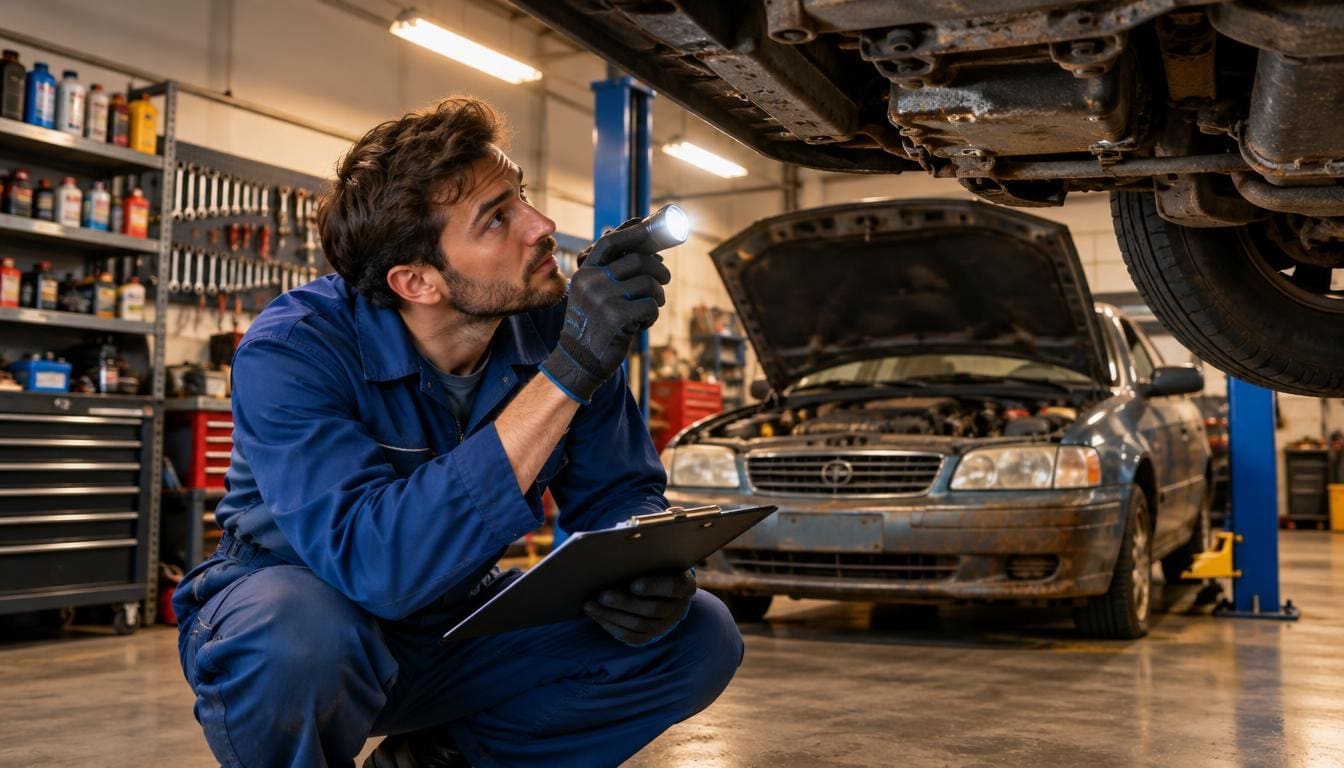
A used car can look sound and still have hidden problems that affect safety or lead to expensive repairs. A pre-purchase car inspection gives you a clearer view before you commit. An independent mechanic can spot current faults and signs of problems that may grow later.
That information can help you decide whether to keep considering the car, ask the seller questions, discuss the price, or choose another option. It can also help you plan for repairs that may affect your budget. A dealership inspection may not offer the same independence as one you arrange yourself.
No inspection can predict every future repair or catch every hidden fault. Treat the inspection as decision support, not a guarantee that the car will never need repairs.
Key Takeaways
- A mechanic can find existing faults and potential risks.
- Agree on what the inspection will cover.
- Choose an inspector who works for you.
- Use the report to decide, negotiate, or walk away.
- An inspection does not promise a trouble-free car.
What Does a Pre-Purchase Car Inspection Cover?
A PPI usually combines a mechanical review, a visual check and diagnostic testing, but no universal checklist applies to every mechanic. The independent pre-purchase evaluation, or PPI, aims to find existing problems and possible future issues. It is an independent assessment, not a universal government checklist or a substitute for any state inspection required by law.
An OBD diagnostic scan is a scan of the vehicle’s onboard computer for stored fault codes. Agree on the scope because one mechanic’s inspection may not include every system or test.
Mechanical Systems and Diagnostic Checks
A mechanic may review the engine, transmission, brakes, steering, suspension, and exhaust. The mechanic can look for leaks and signs of wear, then note conditions that could lead to repairs. A test drive may reveal sounds or handling problems that do not show while the car sits still.
Diagnostic testing can add details that a visual check cannot provide. The OBD scan may show stored fault codes, but a code alone does not prove what caused the fault. Ask how the mechanic will report any codes and explain their likely meaning.
Body, Interior, and Vehicle-Specific Checks
The inspection may look for signs of an accident or flood, rust, and paint that does not match across panels. Inside, the mechanic may check seat belts, lights, heating and air conditioning, or HVAC, and electronic features. These checks can reveal damage or functions that need attention.
Vehicle type can change the scope. For an electric vehicle, or EV, the inspection may include battery health and whether battery degradation seems normal for the vehicle’s age. Some models also need checks tied to their design or equipment.
There is no single set of pre-purchase inspection requirements that every shop must follow. Scope matters, so ask the mechanic to list the systems and tests included. Ask the mechanic to state in writing which systems the inspection will cover before it begins.
How Do You Choose an Independent Inspector?
Choose and hire the inspector yourself so the evaluation is focused on your interests as the buyer. Ask about experience with the specific vehicle, not just general car work. The right fit depends on the car’s make, the sale location, and the inspection services offered.
A pre-purchase inspection should come from someone who is not relying on the seller for the job. Do not treat an inspection report supplied by the seller as a replacement for an evaluation you arrange.
Local Mechanics and Make Specialists
A trusted mechanic who knows your area can be a practical choice when the shop can inspect the car’s make and model. A make specialist may be a better option for a vehicle with brand-specific systems or repair needs. In either case, ask about recent work on similar vehicles.
Some inspectors have broad automotive experience, manufacturer training, or credentials from the ASE Master Technician program. These details can help you compare experience, but they do not tell you exactly what a given PPI includes. Ask how the mechanic handles findings that need a closer look.
Mobile Inspections and Dealership Options
A mobile inspector can go to the seller’s location, which can help when you cannot bring the car to a shop. A dealership service center can also be an option if that dealership is not selling the vehicle. For a pre-purchase car inspection near San Antonio, TX, check that the provider serves the seller’s location and can inspect that specific vehicle.
The same checks matter when you search for a pre-purchase car inspection near me. Confirm that the provider can reach the car and has experience with its type. Compare the services and the inspector’s independence, rather than choosing by distance alone.
| Provider | Useful when | Independence check |
|---|---|---|
| Local mechanic | You have a trusted shop nearby | Confirm the seller is not paying |
| Make specialist | The car has brand-specific systems | Choose a specialist outside the sale |
| Mobile inspector | The car cannot travel to a shop | Check who hired the inspector |
| Dealership service center not selling the car | You want brand-trained service | Confirm it has no role in the sale |
When comparing mobile pre-purchase car inspection services, check the service area and vehicle types before booking. Before booking, confirm the inspector’s experience with the vehicle type and request a written explanation of the inspection scope.
What Should You Check on a Used Car Yourself?

Start your own walk-around with the tires, since wear and sidewall damage can affect both safety and the cost of ownership. Look for at least 4/32 inch of tread, then check each tire for age, wear, and damage. Your own review supports, but does not replace, a mechanic’s inspection.
Check the tires and cabin before the drive. A car can look tidy while its tires show uneven wear, or its warning lights point to a problem. Take these five checks with you:
Tires, Body, and Cabin
- Measure tread depth on each tire and look for at least 4/32 inch.
- Check tire age and wear; tires should be under five years old and wear evenly.
- Look for cracks, bulges, or other damage on each sidewall.
- Check the body, paint, and visible areas for damage or mismatched panels.
- Test seat belts and look for warning lights on the dashboard.
Tire age can be checked on the tire’s sidewall date code. A tire with uneven wear may point to alignment or suspension concerns, though a mechanic must assess the cause. Do not judge a tire by tread alone if its sidewall has damage.
Test Drive and Safety Checks
Drive at varied speeds and on different road surfaces when the seller permits. A brief loop at low speed may miss noises, vibration, or steering changes that appear at highway speed. Include speeds of 60 mph or more when road and traffic conditions allow.
Pay attention to how the car starts, brakes, turns, and responds as speed changes. Note any vibration or sound, then share it with the mechanic. A test drive helps, but it cannot show every problem inside a vehicle.
Check for stored recalls and confirm that recall repairs have been completed before buying. Recall status is a safety issue, not just a maintenance detail. If a warning light or unusual handling appears during your checks, have the mechanic investigate it before you agree to buy.
When Should You Schedule the Inspection?
Arrange the inspection once you have narrowed your choices, but before you finalize the purchase. Schedule it as close to delivery as possible, preferably the same day or within a few days. That timing can help keep the car’s condition current when you take it home.
Seller permission is needed for access to the vehicle. A seller who refuses an inspection may be a red flag, though you still need to decide whether to continue. A seller may request a refundable deposit, or a dealership may ask you to sign a nonbinding purchase agreement.
| Situation | Timing | Action |
|---|---|---|
| Shortlisted car | After narrowing choices, before purchase | Get permission and book the PPI |
| After inspection and before taking delivery | Same day or within a few days | Keep the inspection close to delivery |
| Online purchase | Before the return window expires | Complete the PPI within that window |
Allow time for the seller, inspector, and dealership to coordinate access. For an online purchase, do not let the return window expire before the inspection is complete.
How Much Does a Pre-Purchase Inspection Cost?
A typical PPI costs about $100-$300, with the final fee shaped by inspection depth, location, and venue. This is a general estimate, not a price from Heaven Automotive. Compare the work included, not only the number on the quote.
A basic review and a more involved vehicle-specific evaluation may not have the same fee. Ask what the mechanic will check and what the written results will cover. A lower quote may include fewer tests, so compare the scope before you choose.
Typical Price Range
The usual range for a pre-purchase inspection is about $100-$300. Your location, the inspection’s depth, and where the mechanic performs the work affect the price. A shop visit and a mobile inspection may have different costs.
For example, a more involved review of a vehicle’s make-specific systems can affect the quote. Some checks take more time or call for knowledge of a particular model. Ask whether the price includes an OBD diagnostic scan and a road test.
What Can Change the Fee?
Location can affect the fee because providers work in different areas and settings. Inspection depth matters too: more testing can mean more work. The venue also changes what the mechanic can access, especially when the car stays at the seller’s location.
Before you book, compare what each mechanic includes in the inspection. One quote may cover a road test and diagnostic scan, while another may not. Ask whether the report explains urgent findings and notes systems the mechanic could not assess.
The car itself can shape the work and quote. An electric vehicle or a model with brand-specific systems may call for a more involved evaluation. Get the inspection scope and total fee in writing before authorizing the work.
How Should You Use the Inspection Report?
Treat the report as a list of findings to evaluate, not as a simple pass-or-fail verdict. Separate safety risks and major mechanical concerns from lower-priority wear, then decide whether the car still fits your needs and budget.
A vehicle-history report, such as a Carfax history report, records past events but does not establish the car’s current mechanical condition. A CPO vehicle has already had a factory inspection and comes with a warranty. A third-party PPI remains an option if you want more information.
Use these steps to turn the findings into a decision:
- Sort safety-critical and major mechanical concerns from routine wear.
- Ask the mechanic to explain any finding you do not understand.
- Use repair needs to negotiate, request repairs before buying, or walk away.
Consider whether a repair fits your budget and whether you can confirm its cost before agreeing. If you cannot get clear answers about a serious finding, pause the purchase rather than assuming the problem is minor.
Conclusion
A careful inspection helps you decide whether to proceed, negotiate, or leave the car behind. It gives you independent information about the vehicle’s condition before you take on its repair costs.
Use the findings to make a choice that fits your safety needs and budget. If the car you buy later needs work, you can get help from a local repair shop.
If your vehicle needs repairs, hire Heaven Automotive to fix it at 6645 Poss Rd. San Antonio, TX 78238, or call (210) 682-3898.