

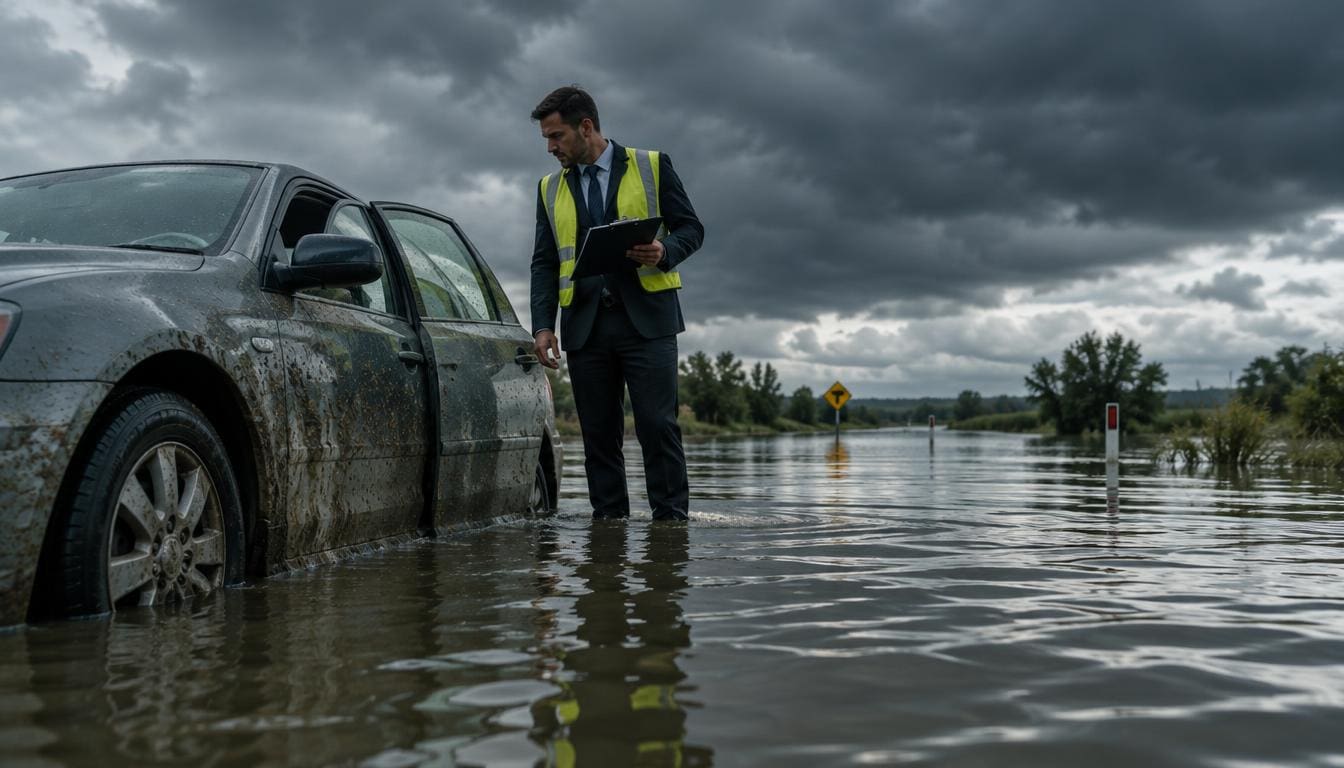
A vehicle exposed to high water should not be started until a qualified technician has assessed it. Water can reach hidden parts even when the outside looks clean. A dashboard that lights up or a cabin that feels dry does not prove the vehicle is safe.
Flooding can affect the engine, brakes, wiring, and safety features in ways that are hard to spot at home. Starting the engine or driving before an assessment may add damage. You need a clear way to protect yourself, limit further harm, and choose a sound next step.
Key Takeaways
- Keep a flood-exposed vehicle off the road until it is assessed.
- Do not start the engine to test whether it works.
- Ask for a flood-specific inspection, not only a routine safety check.
- Compare repair plans with the vehicle’s value and insurance decision.
- Treat any water that reached the vehicle as a reason to pause and arrange an assessment.
What Should You Do Immediately After Driving Through High Water?
If water reached the vehicle, leave the engine off even if the dashboard lights still work. Keep yourself away from unsafe floodwater, and avoid testing the car. Do not restart or drive it after substantial flooding until it has been assessed.
Water depth gives a rough sense of risk, but the waterline alone cannot show what entered the vehicle. Six inches can reach the bottom of many passenger cars. Twelve inches can carry away many vehicles, while 18-24 inches can move larger SUVs and trucks.
Keep yourself and the vehicle safe
Use these steps to reduce risk while you arrange help. Do not walk or drive through moving water to reach the car. Floodwater can hide road damage, debris, and other hazards.
- Stay clear of floodwater until the area is safe.
- Do not start or drive the vehicle.
- Arrange towing instead of moving it under its own power.
- Note the waterline, how long the vehicle was exposed, and whether the engine was running.
- Remove standing cabin water only when it is safe to do so.
Why starting the engine can make damage worse
Water entering through the air intake can reach an engine cylinder. Hydrostatic lock is a condition in which water in an engine cylinder prevents the piston from compressing it, potentially causing severe internal engine damage.
When the engine is started, that trapped water can stop a piston from moving and cause serious damage. A flood inspection also needs to account for water depth, submersion time, and water type. The technician should know whether the vehicle is a hybrid, plug-in hybrid, or battery electric vehicle.
Remove standing interior water as soon as conditions allow, but drying does not prove the vehicle is safe to drive. A tow is safer than a short test drive when you do not know whether the engine, brakes, or electrical system was exposed.
What Does a Flood-Damage Inspection Need to Cover?
A proper flood inspection checks the systems water could reach, not just the parts that are visibly wet. Hidden damage can affect how the vehicle runs and protects you in a crash. A routine safety check alone is not a flood-specific inspection.
The technician should consider the waterline and exposure details, then check mechanical components, electrical systems, and cabin equipment. Floodwater may contaminate oil, transmission fluid, differential fluid, and other fluids. Those fluids need inspection before anyone starts the engine.
Mechanical components and contaminated fluids
Engine and transmission fluids help protect moving parts. Water contamination can reduce that protection and damage parts that rely on proper lubrication. A qualified mechanic should check affected fluids, then drain and flush contaminated systems as needed.
A thorough pre-start assessment also includes refilling systems with the proper fluids. The technician may need to inspect the air intake, drivetrain, brakes, wheel bearings, and suspension. The exact work depends on which areas the water reached.
| Inspection area | What to check | Why it matters |
|---|---|---|
| Engine, transmission, and drivetrain | Fluids and intake | Contamination can damage lubricated parts |
| Electrical and restraint systems | Connectors, modules, diagnostic codes, and airbag warnings | Faults may be intermittent |
| Cabin and accessories | Padding, seat tracks, HVAC, lights, and powered features | Hidden moisture can affect equipment |
Electrical systems, restraints, and cabin equipment
Water can affect wiring and connectors, control modules, and diagnostic systems. Technicians should inspect airbag and restraint warnings, powered accessories, exterior lights, and the HVAC system. Electrical parts may need careful cleaning and drying.
Cabin checks should include carpet padding, insulation, seat tracks, and areas beneath trim. Hybrids and electric vehicles need a professional high-voltage assessment. Their battery and related equipment require specific knowledge and safe handling.
Inspection details should include all five factors: water depth, time submerged, type of water, whether the engine was running, and powertrain type. Ask the technician to check contaminated fluids before any attempt to start the engine.
How Do Insurance and Repair Costs Affect Your Decision?
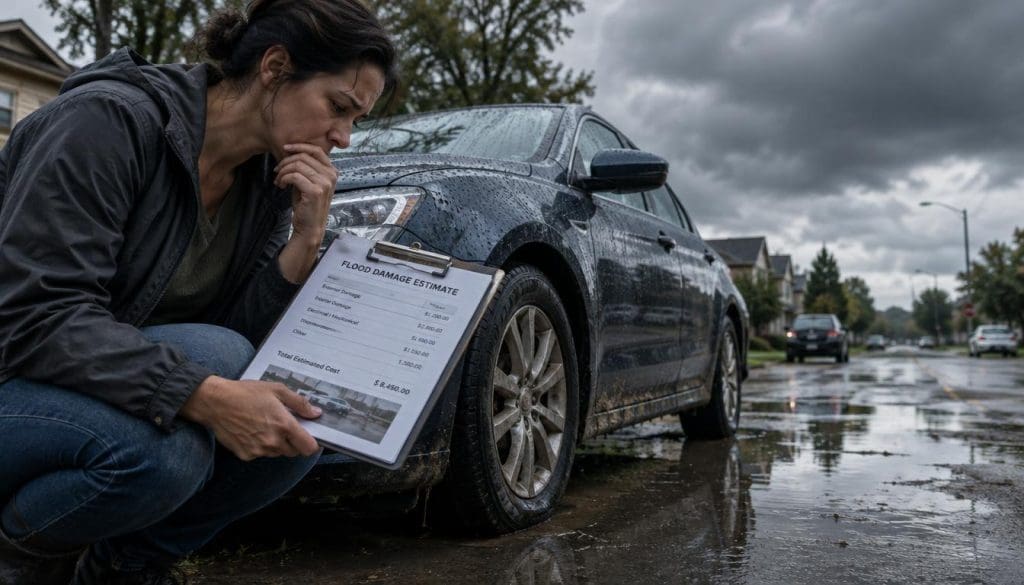
Whether a flood-damaged vehicle is repaired or declared a total loss depends on the estimate, its actual cash value, and the coverage that applies. Start with the policy, since auto insurance coverage differs by plan. Ask the insurer which parts of your loss the policy covers.
Comprehensive auto coverage can cover vehicle flood damage, subject to the policy’s terms. NFIP flood insurance does not cover cars or most other self-propelled vehicles, including their parts. Coverage for other property depends on the flood policy.
What coverage may apply
Contact your insurance company and describe where the water reached, what happened, and whether the vehicle was running. Keep your notes and any photos of the waterline. Ask what documentation the insurer needs before repairs begin.
Flood damaged car repair costs depend on the affected systems, parts, labor, water exposure, and the vehicle’s value. Request an itemized estimate so you can see the proposed work and cost for each part. Confirm coverage and the claim process with your insurer.
Compare the estimate with the vehicle’s value
Insurers compare a repair estimate with a vehicle’s actual cash value when considering a total loss. A total loss means the insurer has declared the vehicle beyond economical repair. The repair figure matters, but it is not the only part of the decision.
There is no universal $3,000 repair rule that decides whether you should fix a vehicle. Compare the estimate with its value, safety, and likely reliability. A $4,000 repair is not automatically too much; compare that amount with actual cash value and the repair scope.
Ask whether the plan addresses every affected system and whether later electrical or corrosion issues could change the outlook. A low estimate may not reflect the full work if hidden damage appears during repairs. Ask the insurer to explain the total-loss decision and settlement terms before authorizing major repairs.
How Can You Limit Interior Damage and Later Problems?
A cabin can feel dry at the surface while moisture remains trapped beneath carpet padding or behind trim. Hidden dampness can lead to mold, odors, corrosion, and electrical problems. A dry-feeling interior does not establish that the vehicle is roadworthy.
Floodwater may carry sewage, chemicals, and other contaminants, not just moisture. Saltwater or brackish water can speed corrosion in seams, connectors, underbody areas, and electrical components. Take care when handling wet materials or water left inside the vehicle.
Seats, padding, wiring, and electronic modules can hold water after nearby surfaces dry. Mold can begin growing on damp materials within 24-48 hours. Water above the door openings may require extensive disassembly to clean affected areas.
Towels and a wet/dry vacuum can remove standing water. Fans can improve airflow and help dry exposed surfaces, but they may not reach damp material under carpet or behind trim. A technician may need to remove carpet, seats, or trim to reach trapped water.
Do not assume that a working electrical system is free of water damage. Corrosion in wiring and connectors can cause failures weeks or months after flooding. A problem may appear only when a feature is used or under certain driving conditions.
Keep a record of the water level and the areas that became wet. That detail can help a technician find hidden moisture and assess the risk of later issues. Keep the vehicle out of service until a qualified assessment confirms it is safe to drive.
How Can You Spot Flood History in a Used Vehicle?
A clean title or history report cannot rule out prior flooding, so combine records with a close physical inspection. Check the details, not just the exterior. Have an independent mechanic look for water intrusion before you buy a suspicious vehicle.
Look for signs in areas that are hard to clean or replace. A seller may have fixed visible damage while moisture or corrosion remains elsewhere. Ask for a flood-specific inspection if you find signs that do not fit the vehicle’s age or condition.
Physical signs that deserve a closer look
Check for a musty odor and silt under the seats or in the spare-tire well. Look for carpet that does not match the rest of the interior or seems recently replaced. Unusual corrosion on seat hardware can also point to water exposure.
Inspect seat tracks, seat-mounting bolts, wiring harnesses, relays, and areas beneath the carpeting. Fogged lights may suggest moisture inside a housing. Test powered features and watch for inconsistent electrical behavior, such as a feature that works only sometimes.
A routine safety inspection may not look for concealed flood evidence. Ask the mechanic to inspect specifically for water intrusion, including the spare-tire well and areas behind trim. One suspicious sign does not prove flooding, but several deserve careful review.
What vehicle-history reports can and cannot show
An NMVTIS report can list title state, title-brand history, reported odometer readings, total-loss history, and salvage history. NICB VINCheck can identify certain stolen, salvaged, or total-loss vehicles. Its records cover only vehicles insured when the damage occurred.
| Check | What it can reveal | Important limitation |
|---|---|---|
| NMVTIS report | Title state, brands, history, odometer readings, total-loss and salvage history | A clean record cannot prove no flooding occurred |
| NICB VINCheck | Certain theft, salvage, or total-loss reports | Database covers only vehicles insured when damage occurred |
| Independent physical inspection | Concealed water indicators | History records alone cannot prove the vehicle was never flooded |
In Texas, a vehicle totaled from flood damage alone receives a salvage or nonrepairable title with a “FLOOD DAMAGE” remark carried forward on later titles. Texas also requires a notice while a vehicle with a branded title is for sale. These rules are specific to Texas, not nationwide.
A clean report cannot replace an inspection of the actual vehicle. Have an independent mechanic inspect for water intrusion before buying a vehicle with any suspicious signs.
What Does Flood Damaged Car Repair Involve?
A repair plan should identify the water-exposed systems, the work proposed, and the reasons behind each repair. A clear scope helps you weigh the plan against the vehicle’s value and the insurer’s decision. Flood damaged car repair near you should begin with an inspection, not a promise of a quick fix.
A shop should assess water intrusion specifically, rather than offering only a routine safety inspection. Ask what the technician found, which parts need cleaning or replacement, and what risks remain. The written plan should explain why each repair is needed.
From assessment to a repair decision
Review the technician’s findings before choosing repairs. Request an itemized repair plan that names the parts, labor, and work proposed. Ask which components can be cleaned and which need replacement.
Compare the repair plan with the insurer’s decision and the vehicle’s actual cash value. If the estimate changes during the work, ask the shop to explain the new findings and get approval before added repairs. Keep copies of the diagnosis and any updated estimate.
Flood damage can affect several systems at once, so a quick fix to one part may not resolve the full problem. A shop should explain what it can assess and where another specialist may be needed. This is especially important for high-voltage systems in hybrid and electric vehicles.
Finding flood-specific service near you
When you look for flood damaged car repair near you, ask whether the shop can inspect water intrusion and document its findings. Ask how it will set the repair scope before work starts. A clear answer is more useful than a promise about speed or outcome.
Heaven Automotive is at 6645 Poss Rd. San Antonio, TX 78238. You can call (210) 682-3898 to discuss your vehicle and the next step. Contact details do not replace a written diagnosis or repair estimate.
Before approving repairs, make sure you understand the proposed parts, work, and expected cost. Get the diagnosis and proposed work in writing before approving repairs.
Conclusion
Keep your vehicle off the road until its flood-related risks have been professionally assessed. Water may affect parts you cannot see, including components, electronics, and safety systems. Time spent getting a clear diagnosis can help you avoid added damage and make a better repair choice.
Heaven Automotive is located at 6645 Poss Rd. San Antonio, TX 78238. Call (210) 682-3898 to discuss your vehicle and arrange help. Hire Heaven Automotive to fix your vehicle at 6645 Poss Rd. San Antonio, TX 78238, or call (210) 682-3898.