

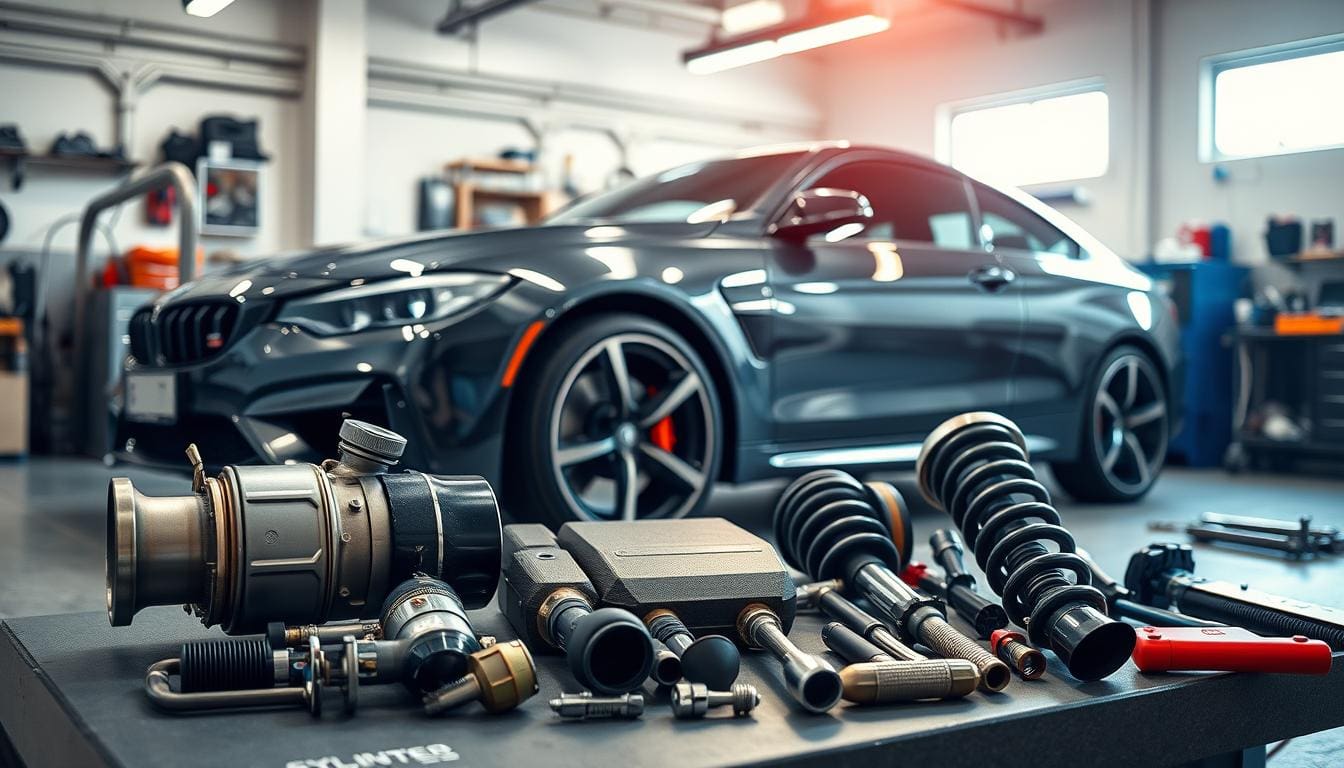
We run Heaven Automotive and we help drivers weigh real-world gains against daily needs. By “performance upgrades” we mean aftermarket parts that aim to boost acceleration, handling, or braking beyond factory specs.
Most factory settings favor broad reliability and comfort. The question for a daily car in the U.S. is not whether parts exist, but whether a given upgrade delivers usable gains without adding commute headaches.
Modest gains often feel larger when they sharpen throttle response or smooth torque. Poorly planned changes can cut comfort and raise repair risk.
In this buyer’s guide we preview engine airflow and ECU calibration, exhaust and cooling, fueling and ignition support, plus handling and braking. We explain how we assess a car’s baseline before recommending work so worn systems don’t get amplified.
Hire us if you want expert selection and professional installation that keeps cold starts, stop-and-go manners, and routine maintenance predictable.
Key Takeaways
- We define practical upgrades for daily-driven cars, not track builds.
- Factory tuning favors reliability—any change should respect that balance.
- Small, well-chosen parts can improve real-world drivability.
- We assess vehicle condition first to avoid compounding faults.
- Professional installation matters for safe, lasting results.
What We Mean by Daily-Driver Performance and What “Worth It” Looks Like
What matters most for a commuter car is usable, repeatable improvement during normal driving. We focus on changes you feel in town, on ramps, and in stop-and-go traffic.
Real-world gains vs. dyno numbers: horsepower, throttle response, and drivability
Horsepower on a sheet can mislead. A modest rise in midrange torque or sharper throttle mapping often feels bigger than peak numbers suggest.
We prioritize parts and tuning that boost drivability. That means smoother response at common speeds and predictable power delivery.
Reliability, comfort, and maintenance tradeoffs for a commuter car
Some engine changes increase heat or stress supporting systems. That can mean more frequent service or parts replacement.
We weigh noise, cabin drone, and ride quality against gains. Comfort matters on long commutes, so we avoid options that make daily use unpleasant.
Budgeting for parts, labor, and tuning—not just the upfront upgrade
Plan for professional labor, alignment, fluids, and a tune. One upgraded system can expose weak spots in cooling, fueling, or mounts.
“Balance is the key: measurable gains should not come at the cost of reliability or daily comfort.”
| Area | Typical Cost Range | Why It Matters |
|---|---|---|
| Air & intake parts | $200–$800 | Improves throttle feel and low-end power with minimal tradeoffs |
| Brake & stopping work | $300–$1,200 | Shorter stops and better safety; often high ROI for daily driving |
| Tuning & calibration | $300–$1,000 | Ensures gains match real-world driving and protects the engine |
| Supporting system upgrades | $150–$1,500 | Cooling, fueling, and mounts prevent failures after new parts are added |
Our checklist: define goals, check emissions and factory warranty, confirm car health, and budget for labor and tuning. If you want help, we inspect, plan, and do the work so gains last without surprising tradeoffs.
Performance upgrades that make sense for most daily drivers
Every suggested mod should make daily driving smoother, more confident, and no harder to live with. Below we outline practical paths that balance gains, cost, and reliability.
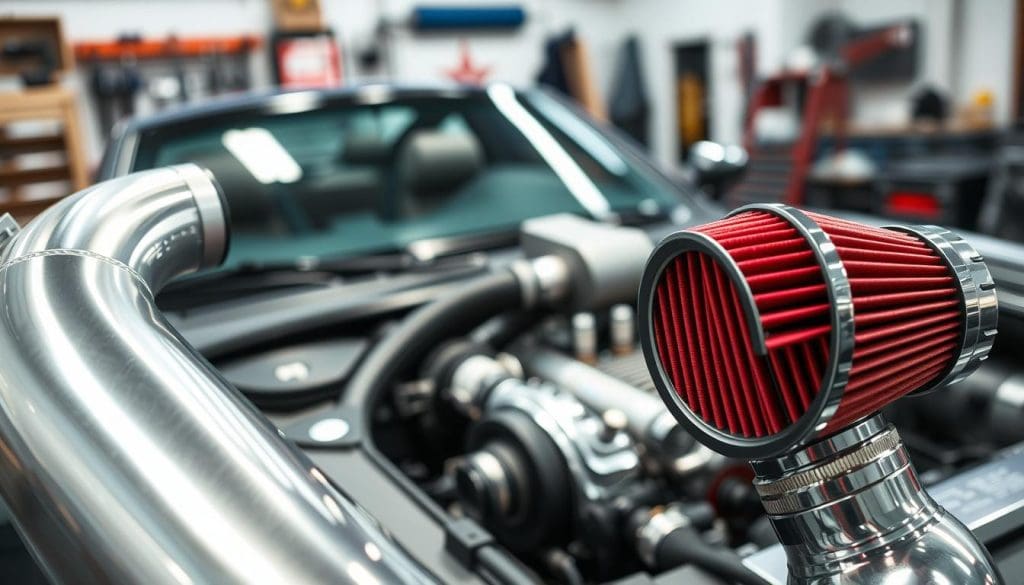
Air intake systems and cold air intakes
Better airflow reduces restriction and sharpens throttle feel. A true air intake routed away from engine heat helps midrange torque and drivability more than chasing peak horsepower.
Exhaust, mufflers, and headers
Axle-back mufflers can add sound with little fuss. Full exhaust system kits and headers lower backpressure and help the engine breathe when paired with correct calibration.
ECU tuning, cooling, and fuel support
Proper tuning ties intake and exhaust work together. Intercoolers and cooling parts keep charge temps down on turbo cars. Fuel pumps, lines, or injectors become necessary only when power goals rise.
Ignition and sequencing
New spark plugs and ignition components stabilize combustion after airflow changes. We recommend a staged approach: intake/exhaust first, then tuning, then cooling and fuel as needed.
| Upgrade | Primary Benefit | Typical Cost Range | When to Add |
|---|---|---|---|
| Air intake / cold air | Throttle response, drivability | $200–$700 | First stage for street use |
| Exhaust system / muffler | Flow, sound, slight power | $300–$1,200 | When you want better flow and tone |
| Headers & tuning | Evacuation, combined gains | $600–$2,000 | Pair with ECU calibration |
| Cooling / fuel support | Consistency, longevity | $150–$1,500 | Required for higher boost or power |
We source vehicle-specific parts, install them, and calibrate the car so gains are reliable for daily use.
Handling and braking upgrades that improve confidence every day
Better cornering and shorter stops make routine drives safer and more enjoyable.
Suspension coilovers for adjustable control without sacrificing street comfort
Coilovers let us set spring rates and damping to match daily use. Properly matched coilovers keep ride quality while tightening body control.
Lowering springs and sway bars to reduce body roll and sharpen cornering
Lowering springs and a stiffer sway bar reduce roll and improve turn-in. Alignment and ground clearance matter, so choose parts that fit your driving style.
Performance brakes, pads, and rotors to reduce fade and shorten stopping distances
Upgraded pads, rotors, braided lines, and fresh brake fluid give firmer, more consistent stops. These changes are high-value for heavier cars or added power.
When lift kits make sense for trucks and SUVs—and what they change on-road
Lift kits add clearance but raise the center of gravity. That affects steering, tire wear, and geometry. Conservative lifts (2–3 inches) balance capability with daily drivability.
- Why this matters: handling and brakes improve safety more than chasing engine numbers.
- Buyer tip: match products to real use, not looks.
- Our role: we install and align suspension and brake components to keep your car predictable and safe.
How to choose quality parts that fit your car, your state, and your goals
Choosing the right parts for your car starts with exact fitment. Match year, make, model, and engine so a component mounts cleanly and works with factory sensors.
Matching components to your vehicle platform and intended use
We verify platform-specific compatibility to avoid hacks or adapter work. That keeps installs clean and prevents airflow, fuel, or engine sensors from misreading changes.
Why brand reputation and materials matter
Quality products seal better, resist heat, and last longer. Trusted brands use materials that reduce corrosion and keep system performance steady for daily driving.
Emissions, legality, and warranty considerations
Check state rules before changing an exhaust system or engine tune—California and some other states have strict limits. Modifications may affect factory warranty claims.
“Buy parts that solve your real need, not the loud option that creates new problems.”
| Check | Why it matters | Action |
|---|---|---|
| Compatibility | Prevents fit and sensor issues | Filter by year/make/model/engine |
| Legal status | Avoids inspection failures | Confirm emissions compliance for your state |
| Support systems | Prevents overload of cooling/fuel | Evaluate cooling, fuel, and brakes before power changes |
We confirm fitment, compliance, and warranty impact, and install products to protect your investment so gains last without surprises.
Why professional installation and calibration matter more than the part itself
C
Even the best aftermarket parts need correct installation and calibration to deliver real gains. We see too many cars where minor fitment errors cause vacuum leaks, exhaust fumes, or sensor faults that erase any benefit from the new component.
Fitment, sealing, and leak prevention on intakes and exhaust systems
Good fitment on an intake means sealed connections, correct clamp tension, and sensor handling so the engine draws clean air without false readings.
Improper sealing on intakes can let debris or unmetered air damage the engine. Misaligned exhaust piping causes rattles, leaks, and premature gasket failure.
Safety-critical torque specs for suspension and brake work
Brake and suspension work is not cosmetic. Correct torque specs, fresh hardware where needed, and a post-install alignment protect stopping power and handling.
We always follow factory torque charts and use certified tools so bolts stay secure and predictable over time.
Getting the gains you paid for with correct tuning and system integration
Added air or changed flow paths often require tuning to match fuel delivery and sensor maps. Without this, power can fall short and drivability suffers.
We calibrate and road-test each system so maps, fuel trims, and warning lights are verified. That is how you get measurable, repeatable benefits from parts and systems.
“Installation quality can make or break results—small errors lead to big headaches.”
We have trained technicians, full shop equipment, and a verification process designed for daily drivers. Hiring professional installers reduces rework, keeps your car safe in traffic, and preserves the real gains you paid for.
Conclusion
Smart changes deliver real gains when they match everyday driving needs and vehicle health.
We find that modest airflow work, sensible exhaust choices, careful calibration, and handling or brake improvements give the best value for commuters.
Evaluate total cost of ownership before you start: maintenance, comfort, legality, and installation all matter. A staged approach protects the vehicle—verify baseline health and add supporting parts as needed.
We inspect, plan, and install to keep your ride reliable and enjoyable. Hire Heaven Automotive to assess your goals, recommend a practical plan, and professionally fit and calibrate every part.