

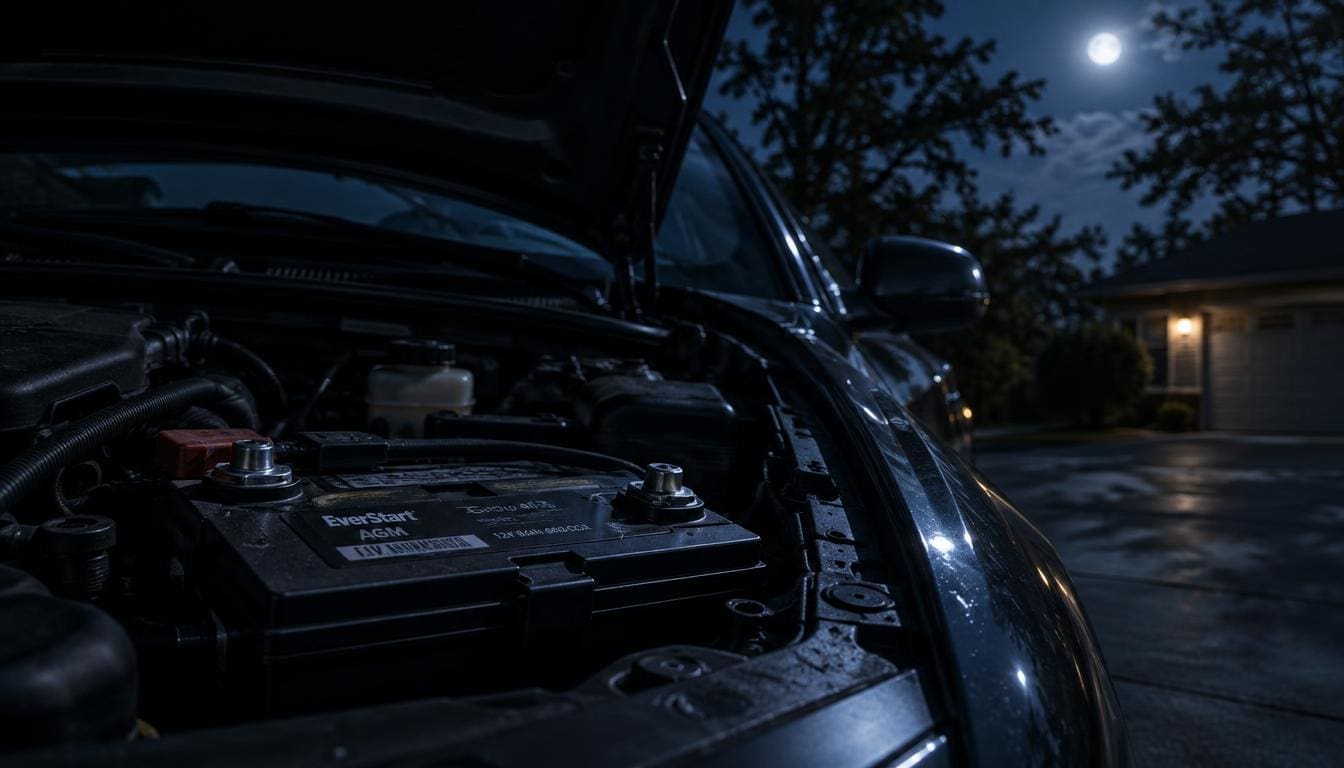
A vehicle with a car battery that starts one evening but will not crank the next morning is usually losing power while parked or failing to hold or regain its charge. One missed start can follow a light left on, but repeated failures point to an issue that needs attention.
The problem can leave you late, stranded, or unsure whether another jump-start will help. A few checks can help you narrow down the cause and choose a useful next step. A repeated overnight failure deserves a battery and electrical-system check rather than another jump-start alone.
Look for signs of a weak charge, then have the vehicle tested if the failure keeps happening. A clear diagnosis can help prevent another dead morning.
Key Takeaways
- Repeated failures need a cause, not just a jump.
- A battery can lose charge or fail to hold it.
- Charging trouble and parked electrical draw need separate checks.
- A good battery test does not rule out other faults.
- Match repairs to test results before replacing parts.
Why Does My Car Battery Keep Dying?
A battery that repeatedly goes flat cannot hold its charge, is not recharging, or powers something that should be off. Several faults can cause a car battery keeps dying while parked, even when the car seems fine during the day.
A new battery can still go flat when an old charging fault or electrical drain remains. The cause may be age, driving habits, weather, or a component that stays on after shutdown.
Battery age, short trips, and weather
Car batteries commonly last 3-5 years, though use, care, and weather affect their life. Under demanding conditions, an old battery may last only 2-3 years. Heat can speed wear, while cold weather makes it harder for a weak battery to start the engine.
Repeated short trips under 15 minutes may not give the alternator enough time to recharge the battery fully. If you drive mostly short distances, the battery may slowly lose charge between starts. A car battery keeps dying overnight when it cannot store enough power for the next start.
Charging problems and weak connections
The alternator recharges the battery while the engine runs and supplies power to the vehicle’s electrical system. A faulty alternator or worn belt can limit that charge. The battery may then lose power even if it is fairly new.
Loose or corroded battery terminals can also interrupt the flow of power. A new car battery keeps dying while parked if poor connections prevent charging or another fault continues using power. Replacing the battery alone will not fix either problem.
Electrical drain while parked
Parasitic draw means electrical power used by a vehicle component after the vehicle is turned off. Some vehicle electronics use a small amount of power as part of normal operation. A light left on, faulty relay, or accessory can draw more than expected.
Lights in the trunk or glove box may stay on after you close them. A relay can also keep a circuit active after shutdown. If the car battery keeps dying overnight, an ongoing draw may be present even when the cabin looks dark.
Do not assume a recently installed battery is defective just because it goes flat. If a new battery also goes flat, look for a charging or electrical fault before replacing it again.
What Clues Point to the Cause?
Slow cranking in the morning often means the engine is not getting enough starting power, but it does not identify the failed part by itself. Notice what happens before and during the start, then use that clue to guide a proper check.
A symptom can have more than one cause, so one clue cannot confirm a bad battery. These signs can point toward a weak battery, poor connections, starter power, or charging trouble.
| Symptom | Possible cause | First check |
|---|---|---|
| Slow cranking | Weak battery or poor connection | Battery charge and terminals |
| Clicking without cranking | Low starting power or connection fault | Battery and starter connections |
| Dim or flickering lights | Weak connections or charging trouble | Terminals and charging system |
| Battery warning light | Alternator or charging-system trouble | Charging system |
Clicking can happen when the starter lacks enough current, but a loose connection can create a similar sound. Dim lights may appear at startup or while driving. A battery warning light while the engine runs can point to a charging-system problem.
Lights that flicker or a warning light alone do not prove the battery is bad. The issue may be in a connection or another part of the electrical system. Treat a warning light or repeated clicking as a reason to test the electrical system, not as proof that the battery alone needs replacement.
How Can You Diagnose the Problem Safely?
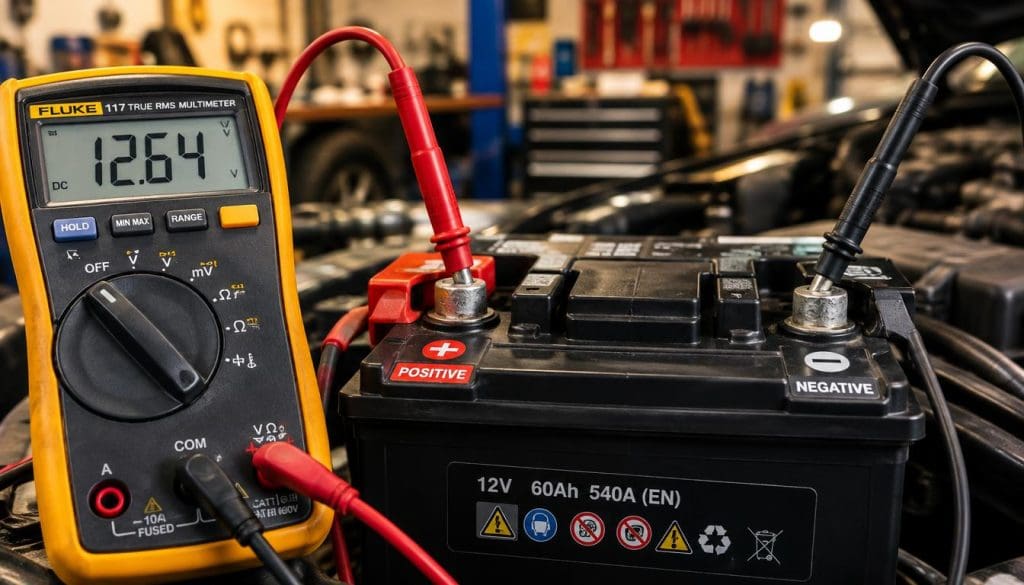
A multimeter can help separate a weak battery from a charging problem, but the readings need to be taken under the right conditions. Safe testing matters, since mistakes around a battery or live wiring can cause injury or damage.
A good battery test does not rule out a faulty alternator or excessive draw. Check the battery and charging system, then seek help if the vehicle still loses power while parked.
Start with a visual and voltage check
Use this four-step check only if you can do it safely. Do not touch damaged parts or test live circuits if you lack vehicle-specific instructions.
- Inspect the battery case and terminals without touching damaged parts.
- Check resting voltage with a multimeter if you know how to use one safely.
- Compare voltage with the engine running, only if you can take that reading safely.
- Have a professional test for parasitic draw if the battery tests good but still dies while parked.
A fully charged battery at rest reads around 12.6 volts. A reading below 12 volts usually means the battery is dead or severely discharged. With the engine running, charging voltage is typically around 13.5-14.5 volts.
Separate a charging fault from a parked draw
Running voltage helps show whether the alternator is charging the battery. A parked-draw test checks for power use after shutdown. Vehicle electronics may need time to shut down before that test gives a meaningful result.
| Check | Typical result | What it suggests |
|---|---|---|
| Resting battery voltage | About 12.6 volts | Fully charged battery |
| Running charging voltage | About 13.5-14.5 volts | Alternator charging range |
| Parked-draw test | Vehicle-specific reading after shutdown | Possible draw if power use stays high |
One reading does not confirm a diagnosis. The vehicle’s state, battery charge, and time since shutdown can affect the result. If you are unsure how to test a live electrical system, leave the measurement to a qualified technician.
What Fixes Stop the Repeat Discharge?
The right fix depends on whether the battery is depleted, worn out, poorly connected, or being drained by another part. Match the repair to the confirmed cause so you do not replace a working component.
A discharged battery may need recharging, while an old battery that cannot hold charge may need replacement. A shop can also clean or secure loose or corroded terminals as needed.
A faulty alternator or belt needs repair so the car battery can recharge while the engine runs. A parasitic draw requires finding the component or circuit that stays active, then correcting that fault. Replacing a battery will not stop power loss from a faulty relay or accessory.
In the United States, a new car battery typically costs $100-$250. Alternator repairs often cost $300-$600. Vehicle design, parts, and labor affect the final bill.
A common mistake is installing another battery before checking why the previous one discharged. That can leave the same fault in place and damage the replacement. Do not install a replacement battery until the charging system and any recurring draw have been considered.
How Do You Prevent Another Overnight Failure?
A few checks before leaving the vehicle can prevent a light or plugged-in accessory from using power overnight. Small habits help reduce avoidable battery drain after the underlying fault is fixed.
A drive of about 15 minutes at least once a week can help maintain charge when the alternator works correctly. That short drive does not guarantee a full recharge after a deep discharge.
Check the vehicle before leaving it parked
Make these four checks before you leave the car for the night:
- Turn off the headlights and interior lights.
- Latch the doors and trunk fully.
- Unplug accessories that may draw power while parked.
- Check that a glove-box or trunk light is not staying on.
A door or trunk that does not latch may leave a light on or keep another part awake. Some accessories keep using power after the engine stops. If a light seems to stay on, have the switch or latch checked.
Keep charge and connections in good condition
Regular terminal inspections can catch corrosion or a loose fit before it disrupts power. Ask for a battery test during routine service, especially as the battery ages. A weak battery may need attention before cold weather makes starting harder.
A battery maintainer can help during long storage when it suits the vehicle and battery. Follow the vehicle maker’s guidance for safe use, since some electrical systems need a specific setup. A weekly drive helps only when the alternator can charge the battery properly.
If the vehicle will sit for weeks, ask a technician whether a battery maintainer suits its battery and electrical system.
What If It Dies While Driving or After a Jump?
If electrical power drops while you are driving, focus first on getting the vehicle safely out of traffic. Do not keep driving if the engine stalls or critical systems are affected.
Loss of power while driving can point to alternator or charging-system failure. The alternator supplies power to the electrical system and recharges the battery while the engine runs.
If the vehicle loses power while driving
Signal and move to a safe place as soon as you can. If the vehicle stalls or steering, lights, or other critical systems stop working, do not try to continue the trip.
Arrange roadside assistance or a tow if the vehicle cannot be driven safely. A charging fault can leave the engine without steady electrical power, even if the car started earlier.
If it starts with a jump but fails again
A jump-start supplies enough temporary power to start the vehicle; it does not repair the cause. If the car starts with a jump but soon fails again, a charging-system fault, weak battery, or unresolved electrical draw may be responsible.
Repeated jumps can leave you stranded again and may not give the battery enough charge for another start. Arrange a battery and charging-system diagnosis instead of relying on another jump. Tell the technician how soon the failure returned and whether the engine kept running.
A vehicle that repeatedly fails after a jump needs the underlying fault diagnosed before you depend on it for another trip.
Conclusion
A recurring starting problem is less likely to return when the failed part or electrical draw is identified and corrected. The key is to find the cause, not keep replacing the car battery or relying on jump-starts.
If your vehicle keeps failing, arrange a proper electrical check and repair. Heaven Automotive is at 6645 Poss Rd. San Antonio, TX 78238. Hire Heaven Automotive to fix your vehicle at 6645 Poss Rd. San Antonio, TX 78238, or call (210) 682-3898.