

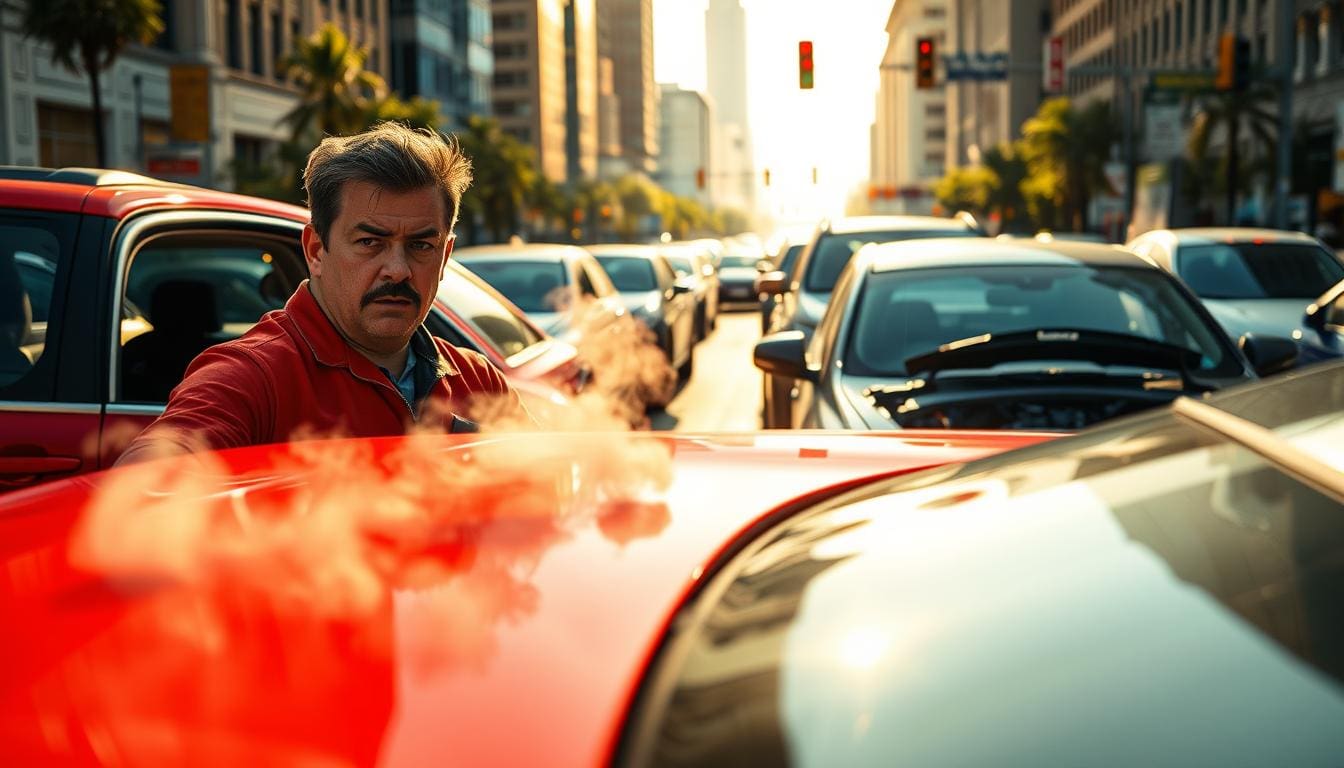
You notice the engine runs hot during slow stops but feels fine at highway speed. This common problem happens because airflow drops when you sit still and the cooling system must work harder at low rpm.
If the vehicle temperature spikes, act fast. Letting the engine run hot can cause serious damage and costly repairs. You should monitor gauges and stop safely if the needle climbs.
A trained technician can inspect hoses, the radiator, thermostat, and water pump to see if the cooling system fails during low airflow. For practical guidance on causes and fixes, review what causes a car to overheat and how to fix.
Prompt service and routine checks protect your investment and keep your vehicle reliable over time.
Key Takeaways
- Stop-and-go conditions reduce airflow and stress the engine cooling system.
- Watch your temperature gauge and stop if readings climb.
- Low coolant, a bad thermostat, or a weak water pump often cause failures.
- Regular service prevents small issues from becoming major damage.
- Seek professional inspection if you spot repeated temperature spikes.
Understanding Why Your Car Overheating in Traffic
When your engine spikes heat while stopped, the cause often relates to reduced airflow and restricted coolant flow. Summer days near 30°C make these reasons more likely to show up during slow driving.
Common causes to check:
- Faulty thermostat that blocks coolant circulation when the engine idles.
- Poor fan performance or low coolant levels that limit heat transfer.
- Low oil, which reduces lubrication and worsens internal heat buildup.
Accurate vehicle history and maintenance records give mechanics the best information to diagnose this issue. Read your owner’s manual for model-specific cooling content and follow recommended service intervals.
If the gauge stays high, have a professional inspect the whole cooling system to prevent lasting damage.
The Role of Airflow in Cooling Systems
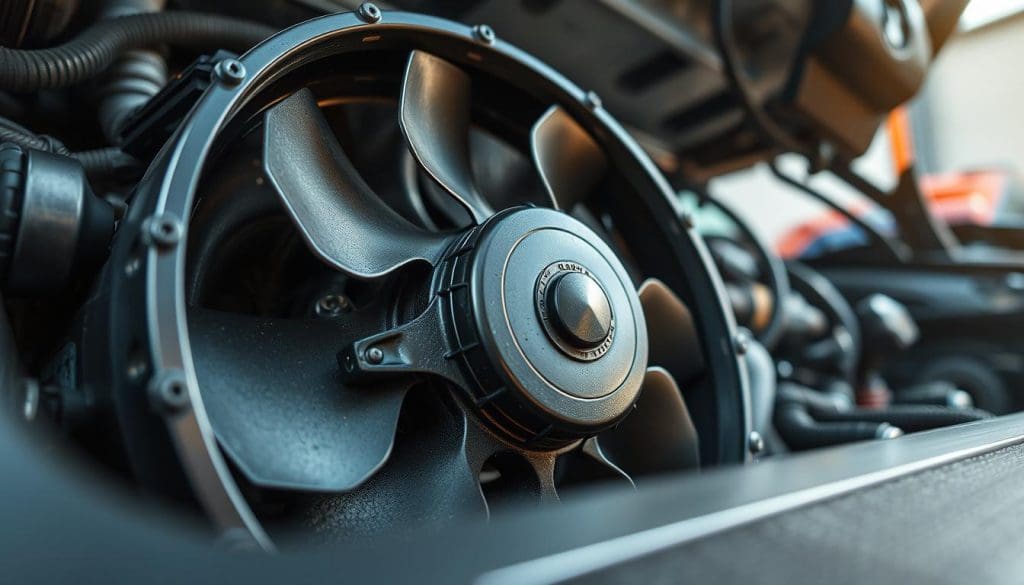
Effective air movement across the radiator keeps your engine temperature steady when speeds drop. Poor flow forces the cooling system to compensate and raises the chance of a serious issue.
The Radiator Fan Function
The fan pulls cool air through the radiator when your vehicle is idling or moving slowly. If the fan does not engage, temperature rises quickly and you will feel the heat sooner.
Have the fan motor tested during routine checks to confirm it delivers enough air for summer use.
Importance of Coolant Circulation
Proper coolant flow moves heat from the engine block to the radiator where it can dissipate. Low level or blocked passages reduce heat transfer and shorten component life.
- Check coolant level regularly and top as needed.
- Inspect the radiator for debris that blocks air and reduces cooling.
- Schedule a cooling system service every 40,000 miles to protect the thermostat and pump.
Common Mechanical Culprits Behind Overheating
Mechanical faults often show up as higher engine temps when you sit at a light or crawl along a slow route.
Failing water pump is a top reason. When the pump cannot keep proper coolant flow, the engine loses its ability to shed heat quickly.
A clogged radiator packed with road debris will limit the cooling system’s performance. A stuck thermostat also blocks circulation and is one of the most frequent issues you will see.
Worn parts, like hoses or fan motors, reduce durability and can worsen problems fast. Leaks that drain coolant often cause sudden spikes in temperature and call for immediate attention.
Low engine oil adds stress to moving parts and increases heat buildup, so have a mechanic check oil and seals if you notice poor performance.
- Address pump, fan, and hose failures early.
- Keep the radiator free of debris for best results.
- Early detection prevents full engine failure during your driving experience.
Immediate Safety Steps When Your Engine Temperature Spikes
A sudden rise on the temperature gauge calls for calm, immediate action to avoid major damage. Your priority is safety for everyone and preventing further engine harm.
Pulling Over Safely
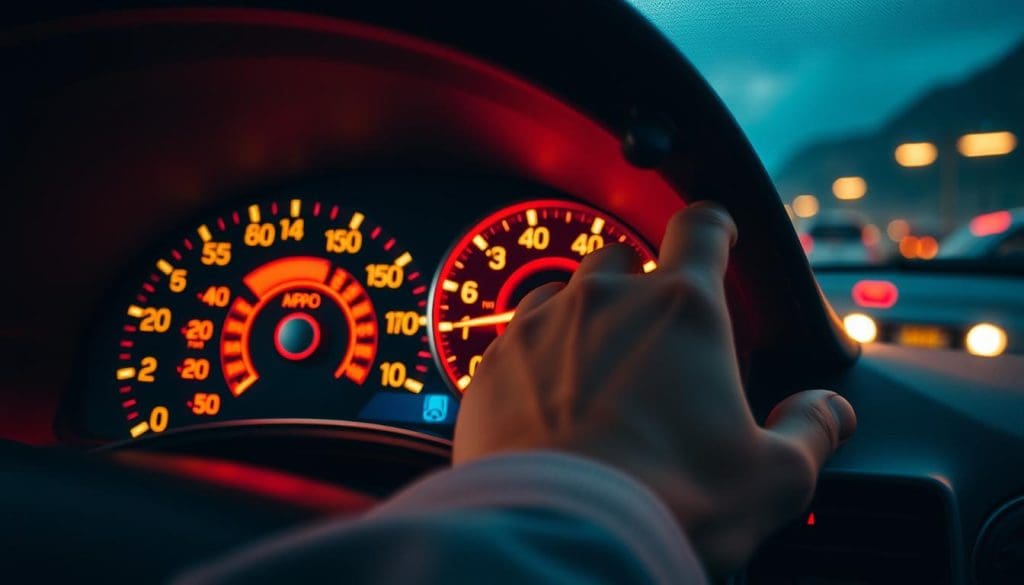
If the temperature gauge hits the red zone, pull over to a safe place on the road. Turn on your hazard lights so other drivers notice you are stopped.
Move passengers away from traffic while you assess the situation. If the warning light stays on, your options are limited and you should arrange professional service.
Managing Engine Cool Down
Let the engine sit and cool. You must wait at least 30 minutes before touching the radiator or cap. The pressurized coolant can cause severe steam damage.
Do not open the radiator cap while hot. Use this time to get help or call roadside service if needed.
Checking Fluid Levels
After the wait time, check the coolant level in the overflow tank first. Inspect oil and coolant to gather useful information for a mechanic.
- Confirm coolant level and look for leaks near the radiator.
- Check oil level to rule out low lubrication as an issue.
- Document the temperature gauge reading and any warning lights for service staff.
Why Highway Driving Differs from Stop and Go Traffic
Consistent highway speeds deliver a steady stream of air across the radiator, so the engine stays cooler for longer while you drive.
When you sit at lights or crawl on city roads, your vehicle relies mainly on the fan to move air. Fans can struggle to match natural airflow and that may lead to rapid temperature rise or engine overheating.
Common reasons this happens include blocked fins or road debris on the radiator and a fan that can’t keep up. Low coolant level also reduces the system’s ability to transfer heat and maintain steady performance.
- Highway: natural airflow helps cool the engine and keep engine temperature steady.
- City: the fan must compensate; blocked airflow or weak fan can cause a warning light.
- Check coolant level, clear debris, and test the fan to prevent repeated overheating issues.
If you see rising temperature or warning lights, pull over safely and address the issue to avoid long-term damage.
Preventing Long Term Damage to Your Vehicle
A steady maintenance routine is the simplest way to protect your vehicle over time. Regular checks reduce the chance of lasting engine damage and keep performance steady.
Routine Maintenance Schedules
Follow the manufacturer’s service intervals. A scheduled service should include a full inspection of the thermostat, fan function, and coolant level.
Check oil and coolant level frequently to maintain engine performance. Low fluids shorten part life and raise the risk of permanent damage.
- Keep the front of your car clear of debris to preserve airflow through the radiator.
- Replace worn parts—hoses, belts, and fans—before they fail and cause bigger repairs.
- Note any odd reading on the temperature gauge or a warning light and have the cooling system checked promptly.
Trust trained technicians to perform comprehensive service checks. Proactive maintenance saves time and money and keeps your vehicle reliable on the road.
When to Seek Professional Collision and Repair Services
Persistent engine issues or recurring warning lights mean you should seek expert help. If basic checks don’t resolve the problem, a qualified shop can prevent costly damage.
Miracle Body and Paint Collision Center offers professional repair service at two San Antonio locations to restore your vehicle after a collision or mechanical problem.
- If you experience ongoing engine problems, schedule a repair service to protect your vehicle and avoid further harm.
- Visit our North West San Antonio location at 6217 Grissom Rd., Leon Valley. Call (210) 680-1987 for appointments and options.
- We also serve North East San Antonio at 4650 Walzem Rd. Call (210) 858-3630 for professional service and information.
Why choose us? We use high-quality parts and follow manufacturer guidance to return your vehicle to its original performance level. Our experienced technicians explain each repair step so you understand the work and feel confident about the results.
When collision damage or persistent problems affect safety, contact Miracle Body and Paint to get skilled service and clear information about your repair options.
Conclusion
A hot engine at slow speeds often signals a stressed cooling system that needs attention. Monitor your temperature gauge and take the time to perform routine maintenance to protect long-term performance.
If you face repeated overheating or notice odd readings while stopped in traffic, professional help is the safest path. Prompt service limits damage and saves money over time.
We invite you to hire Miracle Body and Paint Collision Center to fix collision repair damage and restore reliability. We have 2 locations to serve you in San Antonio.
- North West — 6217 Grissom Rd., Leon Valley. Call (210) 680-1987.
- North East — 4650 Walzem Rd. Call (210) 858-3630.