

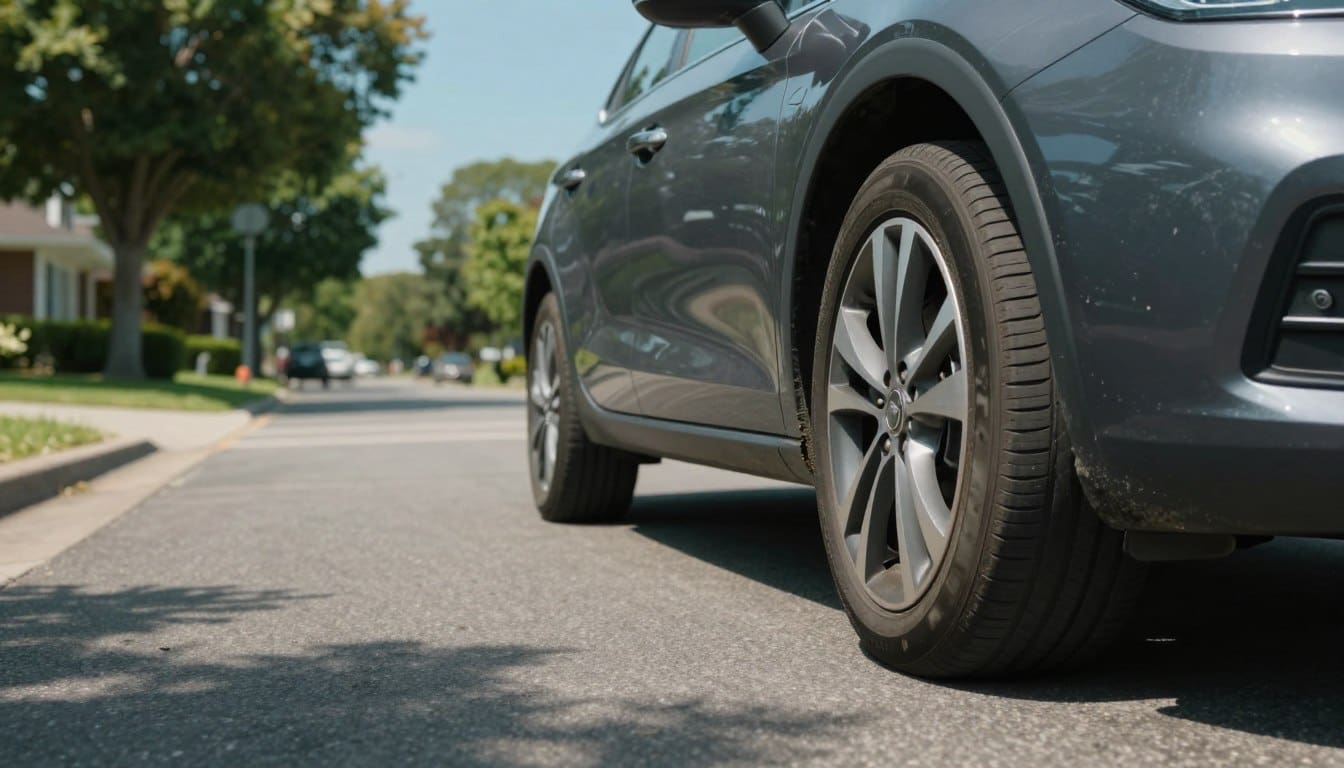
Steering drift can be very stressful for drivers. It makes driving around town a real challenge.
It usually means there’s a problem with the alignment or wheels. This makes every turn feel unpredictable and risky.
You might feel a constant tug on the wheel. Not checking tire pressure issues can lead to uneven tread wear and bad fuel economy.
Keeping a proper balance is key for safe driving. Heaven Automotive offers expert help for drivers facing these issues.
We do detailed diagnostics with great care. Our shop is at 6645 Poss Rd. San Antonio, TX 78238.
Call our team at (210) 682-3898. Choose Heaven Automotive to keep your car steady and reliable.
Key Takeaways
- Uneven inflation creates steering imbalance.
- Misalignment reduces driver control.
- Worn brakes cause drifting during stops.
- Suspension damage affects ride quality.
- Quick repairs prevent expensive failures.
- Professional diagnostics identify hidden risks.
Understanding the Mechanics of Car Pulling to One Side
If your car veers to the left or right while driving straight, there’s a mechanical reason. The main cause is often an off-wheel alignment. Wheel alignment ensures the wheels are straight and even.
When the alignment is correct, your car should drive straight. But, potholes, hitting curbs, or wear can mess with the alignment. This can lead to uneven tire wear and affect how your car handles.
The suspension system plays a big role in keeping your car on track. It helps absorb bumps and keeps the tires in contact with the road. Worn or misaligned suspension parts can cause wheel alignment problems.
Keeping the camber, toe, and caster in check is key. These terms refer to how the wheels sit and how they steer. Here’s a quick look at what they mean and how they affect your car:
| Alignment Factor | Description | Impact on Vehicle Handling |
|---|---|---|
| Camber | The angle of the wheels relative to the vertical plane | Affects tire wear and handling; negative camber can improve cornering but may cause uneven wear |
| Toe | The direction the wheels are pointing relative to the vehicle’s centerline | Toe misalignment can cause tires to wear unevenly and lead to pulling |
| Caster | The angle of the steering axis relative to the vertical plane | Influences steering stability and returnability; improper caster can cause pulling or wandering |
By grasping these mechanics and keeping your wheel alignment right, you can stop your car from pulling. This ensures a smoother, safer drive.
The Role of Tire Pressure in Vehicle Stability
Uneven tire pressure can make your car pull to one side. This happens because the side with less pressure leans and drifts. It affects how your car handles and can cause uneven wear, which is unsafe.
Keeping the right tire pressure is key. It ensures even wear, better fuel use, and keeps your car stable. If pressure is uneven, it messes with your car’s steering.
How Uneven Inflation Affects Steering Geometry
Steering geometry is about how the steering axis and wheel plane relate. Uneven tire pressure messes with this balance, making your car pull. For example, if the front left tire is low, your car might lean left.
Here’s how uneven inflation affects steering geometry:
| Condition | Effect on Steering Geometry | Result |
|---|---|---|
| Underinflated Tire | Increased contact patch, more friction | Vehicle pulls to the side of the underinflated tire |
| Overinflated Tire | Reduced contact patch, less friction | Vehicle may pull to the opposite side |
| Even Inflation | Balanced contact patch and friction | Stable steering and handling |
The Dangers of Driving on Underinflated Tires
Driving on underinflated tires is risky. It reduces traction, increases stopping distance, and raises the chance of tire failure. These tires also overheat easily, which can cause a blowout at high speeds.
Key dangers include:
- Increased risk of tire blowouts
- Poor handling and reduced stability
- Reduced fuel efficiency due to increased rolling resistance
- Uneven tire wear, leading to premature replacement
Checking your tire pressure regularly helps avoid these problems. It makes driving safer and smoother.
Wheel Alignment Problems and Their Impact on Handling
If your car pulls to one side, it might be more than a minor issue. It could be a sign of wheel alignment problems. Proper alignment is key for your car’s stability and even tire wear. Misaligned wheels can cause uneven wear and affect safety.
Wheel alignment is vital for your car’s handling. Misalignment leads to uneven tire wear, poor fuel efficiency, and handling issues. It can happen due to wear, accidents, or driving over potholes.
Defining Proper Wheel Alignment Specifications
Proper alignment means adjusting the wheels so they’re straight and parallel. This ensures your car drives straight and handles well. The exact alignment specs depend on your car’s make and model, so check your owner’s manual or talk to a mechanic.
There are three main parts of wheel alignment: camber, toe, and caster. Camber is the tilt of the wheels from the front. Toe is how the wheels point compared to the vehicle’s centerline. Caster is the steering axis angle from the side. Each affects your car’s handling and tire wear.
Signs Your Vehicle Needs a Professional Alignment
If your car pulls to one side, it might need an alignment. Look for uneven tire wear, a crooked steering wheel, or drifting when releasing the wheel. These signs mean your wheels are not aligned right.
Check your alignment regularly to avoid these problems. It’s best to do it every 6,000 to 8,000 miles or when you notice these signs. A mechanic can check and adjust your alignment for smooth and safe driving.
Suspension Damage and Steering Component Wear
When your car’s suspension system is damaged, it can make your vehicle pull to one side. This affects how well your car handles and can cause uneven tire wear. The suspension system is key for keeping your car stable and ensuring tires wear evenly.
Identifying Worn Control Arm Bushings
Worn control arm bushings can cause uneven tire wear and affect your car’s alignment. Look out for clunking noises, vibrations, and uneven tire wear patterns as signs of worn bushings.
To spot worn control arm bushings, check for cracks, tears, or excessive wear. You can also lift the vehicle and see if the control arms move too much.
The Effect of Damaged Struts and Shocks on Vehicle Drift
Damaged struts and shocks can make your vehicle drift or pull to one side. Struts and shocks are vital for the suspension system. They help absorb bumps and keep your vehicle stable.
A damaged strut or shock can cause uneven tire wear, less traction, and poor handling. Look for leaks or excessive bounce in your struts and shocks to spot wear.
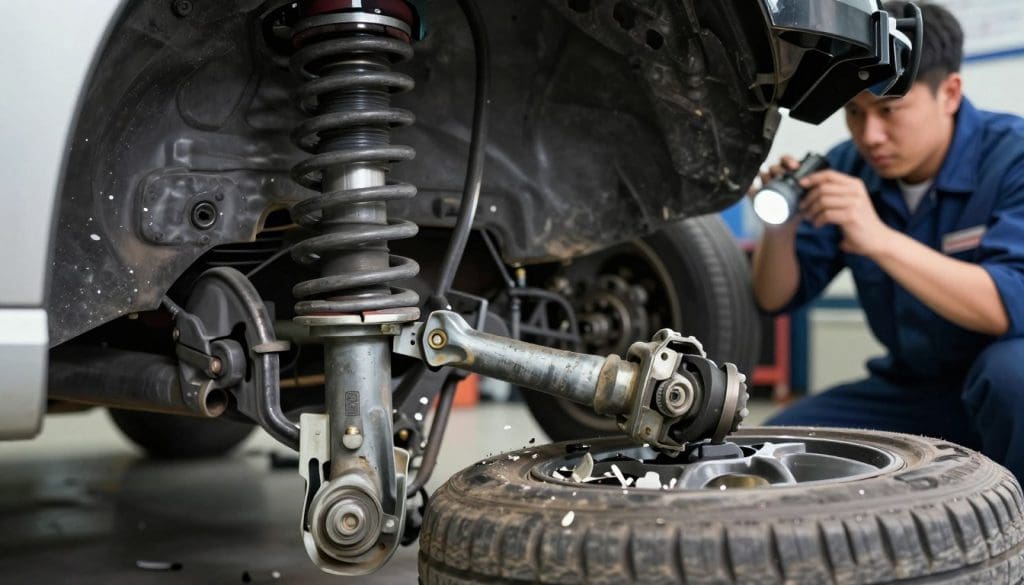
| Component | Signs of Wear | Effect on Vehicle |
|---|---|---|
| Control Arm Bushings | Clunking noises, vibrations, uneven tire wear | Uneven tire wear, alignment issues |
| Struts and Shocks | Leaks, excessive bounce, uneven tire wear | Reduced traction, compromised handling, vehicle drift |
Brake System Irregularities Causing Steering Pull
Brake system problems can make your car pull to one side. This is not just a handling issue. It also shows there might be something wrong with your brakes.
Brake calipers play a big role. If they stick, your car might pull to one side when you brake.
Stuck Brake Calipers and Uneven Braking Force
A stuck brake caliper doesn’t let the brake pad move off the rotor. This causes the pad to rub against the rotor, leading to uneven braking. Your car will pull towards the side with the stuck caliper.
Here’s a table showing what happens with stuck brake calipers:
| Symptoms | Consequences |
|---|---|
| Car pulls to one side when braking | Uneven brake wear, possible brake failure |
| Overheating brakes | Brake fade, less stopping power |
| Uneven braking force | Longer stopping distance, loss of control |
How a Dragging Brake Pad Affects Your Daily Commute
A dragging brake pad makes your car pull and uses more fuel. It also wears out your brakes faster. This means you’ll need to replace them more often.
Fixing brake problems quickly is key for safety and performance. Regular checks can spot issues like stuck calipers or dragging pads early on.
Road Conditions and Crowned Surfaces
The design of roads can affect how your car steers. Most roads have a slight slope to let water drain. This helps keep the road safe and in good shape.
Why Roads Are Designed with a Slight Slope
Roads are built with a crown to prevent water buildup. This slope is small but can affect your car’s steering. If your car has suspension damage or wheel alignment problems, it might pull to one side.
Knowing why your car pulls to one side is key. It’s not always a car problem. Sometimes, it’s the road’s design.
Distinguishing Between Road Crown and Mechanical Issues
To figure out why your car pulls, watch how it behaves on different roads. If it always pulls on various roads, it might be a car issue. But if it pulls more on steep roads, it’s likely the road’s design.
| Factor | Road Crown | Mechanical Issues |
|---|---|---|
| Consistency of Pulling | Varies with road design | Consistent across different roads |
| Possible Causes | Road slope for water drainage | Suspension damage, wheel alignment problems |
| Diagnostic Clue | Pulling more pronounced on roads with a steeper crown | Pulling consistent regardless of road crown |
Understanding road conditions helps you fix your car’s steering issues. Knowing the cause is the first step to solving the problem.
Tire Wear Patterns and Their Diagnostic Value
Your tires’ wear patterns can tell you a lot about why your car pulls to one side. Uneven wear might mean your wheels are not aligned right or your tire pressure is off.
Reading Uneven Tread Wear as a Symptom
Uneven tread wear shows up in different ways, each hinting at a different problem. For example, if one side of the tread is worn down more, it could be a wheel alignment issue. Checking your tire pressure regularly helps avoid uneven wear from wrong pressure.
There are several uneven tread wear types, including:
- Center wear, often due to overinflation
- Edge wear, typically caused by underinflation
- One-sided wear, which can indicate alignment issues
- Feathering or cupping, which might suggest issues with the suspension or tire balance
| Wear Pattern | Possible Cause | Recommended Action |
|---|---|---|
| Center Wear | Overinflation | Check and adjust tire pressure |
| Edge Wear | Underinflation | Check and adjust tire pressure |
| One-sided Wear | Alignment Issue | Get a professional wheel alignment |
When to Replace Tires to Restore Balanced Handling
Significant uneven wear means you need to fix the problem and might need new tires. Driving on worn tires can cause bad handling and increase the risk of a blowout. For more on why your car pulls to one side, check Heaven Automotive’s guide.
Regular tire rotation and timely replacement keep your car safe and handling well. Watch your tire condition closely and get a pro’s opinion if unsure about wear patterns.
The Impact of Wheel Bearing Failure on Steering
Wheel bearing failure is a serious issue that can affect your car’s steering and safety. It can make your car pull to one side and cause other problems.
A wheel bearing is key to your car’s suspension system. It lets the wheels spin smoothly. If it fails, you might notice some signs.
Recognizing Audible and Physical Signs of Bearing Wear
There are signs that show a wheel bearing is wearing out. These include odd noises, vibrations, and changes in how your car handles.
- Unusual noises, such as grinding or growling sounds, coming from the wheel area.
- Vibrations felt through the steering wheel or the vehicle’s floor.
- Looseness or play in the wheel when you shake it.
To understand wheel bearing failure signs better, let’s look at common symptoms:
| Symptom | Description | Indication |
|---|---|---|
| Grinding Noise | A loud grinding or growling noise coming from the wheel area. | Bearing wear or damage. |
| Vibration | Vibrations felt through the steering wheel or vehicle’s floor. | Imbalanced or worn-out bearing. |
| Wheel Play | Looseness or play in the wheel when shaken. | Worn-out or damaged bearing. |
If you see any of these signs, get your car checked by a mechanic. Ignoring wheel bearing failure can cause bigger problems. This includes suspension damage and wheel alignment problems.
Regular checks and maintenance can spot issues early. By being alert and fixing wheel bearing wear quickly, you keep your car’s steering safe and stable.
Steering Rack and Pinion System Complications
If your car pulls to one side, it might mean a problem with the steering rack and pinion system. This key part helps turn the steering wheel into motion for the wheels. Any trouble here can cause uneven steering and make the car drift.
The steering rack and pinion system needs precise hydraulic pressure for smooth steering. When it works right, steering is easy. But, problems can pop up and mess with its performance.
Hydraulic Leaks and Steering Assist Imbalance
Hydraulic leaks are a common problem with this system. These leaks can lower the hydraulic pressure needed for steering, making the car pull to one side. It’s important to find and fix hydraulic leaks quickly to keep steering balanced.
Another issue is steering assist imbalance. This happens when the system doesn’t help both sides equally, causing uneven steering.
The table below shows common symptoms and causes of steering rack and pinion system problems:
| Symptom | Cause | Effect |
|---|---|---|
| Car pulling to one side | Hydraulic leaks or steering assist imbalance | Uneven steering and possible loss of control |
| Uneven steering effort | Steering rack and pinion system wear or damage | Driver gets tired faster and accident risk goes up |
| Noise while steering | Low hydraulic fluid level or air in the system | Steering gets worse and system might fail |
It’s key to check and maintain the steering rack and pinion system often. Fixing problems fast keeps your car safe and easy to drive.
Safety Implications of Ignoring Steering Drift
Ignoring steering drift can lead to serious problems. A car that pulls to one side is not just annoying. It’s also very dangerous. Knowing the risks helps keep everyone safe on the road.
Increased Risk of Accidents on Highways
Highway driving requires constant attention and quick actions. A car that drifts can surprise you, even at high speeds. This can cause accidents and make driving more tiring.
Key Accident Risk Factors:
| Risk Factor | Description | Potential Outcome |
|---|---|---|
| Loss of Control | Vehicle drifts unexpectedly | Collision with other vehicles or roadside objects |
| Driver Fatigue | Constant need to correct steering | Reduced reaction time, increased likelihood of accidents |
| Unpredictable Vehicle Behavior | Drifting can be sudden and unexpected | Surprise reactions from other drivers, potentially leading to multi-vehicle accidents |
Long-term Damage to Drivetrain Components
Ignoring steering drift can harm your car’s parts over time. Wheel alignment problems and suspension damage often result from neglect. These issues can wear down tires, strain the suspension, and cost a lot to fix.
Regular checks and maintenance can avoid these problems. Keeping your car’s wheel alignment right and fixing suspension issues quickly can save your car’s health and avoid expensive repairs.
Professional Diagnostic Procedures at Heaven Automotive
At Heaven Automotive, we know that a car pulling to one side is serious. It’s a safety issue that needs quick action. When you bring your car to us, you get a detailed diagnosis to find the real problem.
Our top-notch facility has the latest tech for diagnosing and fixing car pulling to one side issues. We use advanced alignment tools and expert services to get your car running right.
Utilizing Advanced Alignment Technology
Our advanced alignment tech is a key tool for us. It lets us check and adjust your car’s alignment to the exact specs. This is key for even tire wear and stable steering.
With our tech, we can spot even small alignment issues. Then, we make the needed changes to keep you safe on the road.
The Importance of Expert Inspection in San Antonio
While tech is important, nothing beats the skill of a seasoned tech. Our team at Heaven Automotive has years of experience. We handle a wide range of problems, including tire pressure issues and steering drift.
By mixing tech with expert inspection, we give you a full diagnosis. We find the real cause of your car’s issues, not just the symptoms.
Preventative Maintenance Tips for Vehicle Longevity
Regular checks and maintenance can greatly reduce the risk of suspension damage and wheel alignment problems. This ensures your vehicle runs smoothly and safely.
By keeping up with maintenance, you can avoid issues that cause steering pull and other problems. This helps extend your vehicle’s life.
Establishing a Routine Inspection Schedule
Creating a routine inspection schedule is key to keeping your vehicle healthy. This schedule should include regular checks on tire pressure, wheel alignment, and suspension components.
- Check tire pressure monthly and before long trips.
- Have your wheel alignment checked every 6,000 to 8,000 miles.
- Inspect suspension components for signs of wear or damage.
| Maintenance Task | Frequency | Importance |
|---|---|---|
| Tire Pressure Check | Monthly | High |
| Wheel Alignment Check | Every 6,000 to 8,000 miles | High |
| Suspension Inspection | Every 12,000 to 15,000 miles | Medium |
Monitoring Your Vehicle Between Service Intervals
Between scheduled maintenance, it’s important to monitor your vehicle’s condition. Look out for any changes in steering, unusual noises, or vibrations.
Listen for unusual noises when driving, such as clunking or grinding sounds. These could mean your suspension components are worn or damaged.
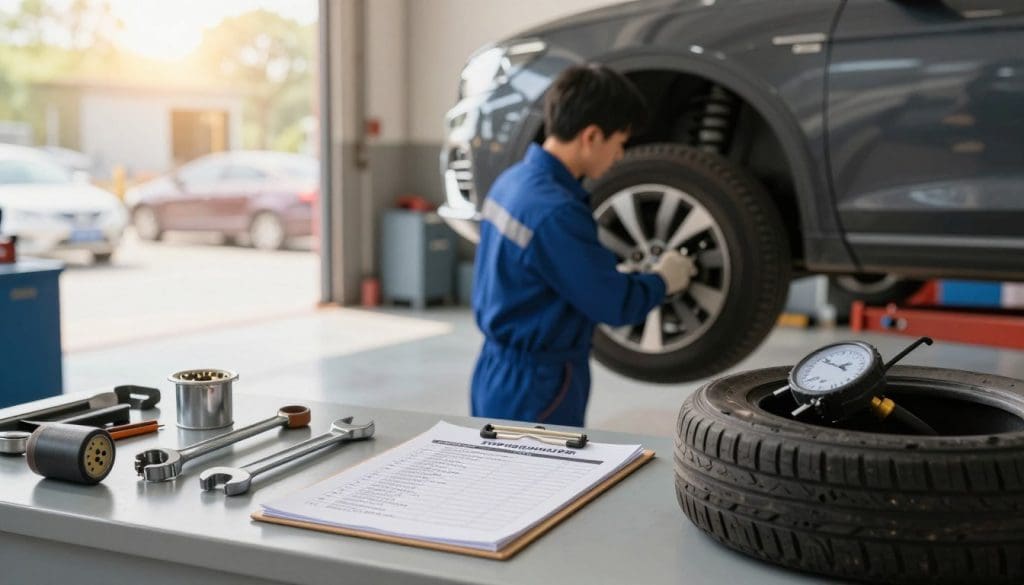
By following these preventative maintenance tips, you can prevent wheel alignment problems and suspension damage. This ensures your vehicle stays in good condition and operates safely.
Conclusion
Your car’s stability and handling are key for safe driving. Issues like car pulling to one side can stem from many causes. These include tire pressure problems, wheel alignment issues, and suspension damage.
Understanding these causes is vital for fixing the problem. If your car pulls to one side, it’s important to get it checked by a pro. At Heaven Automotive, experts can find and fix issues with tire pressure, wheel alignment, and suspension.
For a detailed check and repair, visit Heaven Automotive at 6645 Poss Rd, San Antonio, TX 78238. Or call (210) 682-3898. You can also learn more about common issues like why your car vibrates at certain speeds on our website.