

If you notice a sudden odor, act fast. A clear warning can signal overheating, leaking fluid, or rubbing parts that may lead to fire or costly engine damage.
Understanding the source helps you stay safe on the road. A burning smell can come from the engine bay, brakes, exhaust, or electrical wiring. Oil or coolant leaks, worn belts, or friction from a failing clutch often produce distinct odors.
Certified technicians at Firestone Complete Auto Care have decades of experience diagnosing these issues. Wisco Automotive in Burlington, WI stresses that early action saves time and money and prevents bigger repairs.
If a warning light or smoke appears, pull over and seek professional service. Miracle Body and Paint Collision Center can also restore your vehicle after damage, keeping your cabin and systems reliable.
Key Takeaways
- Act immediately when you detect a burning odor to reduce fire risk.
- Common causes include leaking fluids, worn belts, brakes, and wiring problems.
- Professional diagnosis by certified technicians finds the right repair fast.
- Early service saves money and prevents major engine or transmission damage.
- Warning lights or visible smoke require stopping and getting help right away.
- Local shops like Wisco Automotive can inspect and advise next steps.
Immediate Safety Steps When You Detect a Burning Odor
Stop safely and act quickly. If you notice a burning smell while driving, signal and move to a secure spot such as a shoulder or parking lot. Once stopped, set the parking brake and turn off the engine to cut power to hot components.
Pulling Over Safely
Keep calm and use your turn signal. Park away from traffic and turn off the air conditioning to limit cabin airflow.
If a dashboard warning light appears, do not continue down the road. Call for professional help instead. Wisco Automotive recommends stopping immediately when a critical light shows.
Assessing for Smoke
If you see thick smoke, sparks, or a strong electrical odor, evacuate the vehicle and call emergency services. Do not open the hood if visible smoke is present; hot gases or flames could flare up.
- Quickly scan around for fluid leaks or debris, but avoid touching hot parts.
- If the smell came from the brake system, have the brakes inspected before driving again.
- For complex damage, contact Miracle Body and Paint Collision Center or a certified shop.
When in doubt, get the vehicle checked. Prompt action lowers the risk and reduces repair costs.
Why Does My Car Smell Like Burning?
Modern vehicles bundle many hot-running systems, so an odor can appear when seals or hoses fail.
A burning smell often happens when engine oil, coolant, or transmission fluid leaks onto hot exhaust parts and vaporizes. That vapor travels into the air stream and may enter your cabin through the ventilation or heater system.
Electrical shorts and poor connections also create a distinct scent. Wisco Automotive performs electrical diagnosis daily with wiring diagrams and test tools to find shorts fast.
Identifying the scent helps you and a technician narrow down the cause quickly.
- Leaks on hot components make a chemical, sharp odor that points to fluid contact.
- Worn seals and gaskets cause slow leaks that get worse over time without regular service.
- Collision damage can affect cooling or exhaust paths and trigger new issues.
Act quickly: spotting the source early keeps a small problem from becoming a major repair.
Identifying the Scent of Burning Rubber
An acrid, rubber-first smell usually signals friction from belts, pulleys, or nearby debris. This scent often appears with a high-pitched squeal from the engine and can get worse over time if ignored.
Slipping Belts and Pulleys
If your car smells of burning rubber, a worn serpentine belt is a top suspect. That belt powers the alternator and air conditioning compressor, and slipping creates heat and a rubbery odor.
Manual-transmission drivers may notice a similar acrid scent when a clutch slips. Excessive friction can glaze the rubber and reduce power steering or cooling.
- Inspect belt tension and pulley alignment to reduce friction and premature failure.
- Check wheel wells and exhaust areas after hitting debris; melted plastic or a torn splash shield can produce a lasting smell.
- Preventive cleaning and routine checks, as advised by maintenance pros, stop many of these issues before they cost time and money.
If the scent persists or you hear continuous squealing, have a technician inspect belts and pulleys right away. For further guidance, see what that burning smell might mean.
Causes Behind a Burning Oil Smell
An oily odor from the engine bay usually means oil is reaching hot components. Valve cover gaskets, oil filter housing seals, or spilled oil after service are common culprits.
If oil drips onto the exhaust manifold it vaporizes and the vapor can enter your ventilation system. That creates a strong odor inside the cabin and may produce smoke from the tailpipe.
If you notice blue smoke from the exhaust, oil may be entering the combustion chamber due to worn piston rings or valve seals. Low oil level makes this worse and raises engine temperature.
- Check oil with the dipstick first; low fluid can lead to overheating and damage.
- Unfixed leaks cut lubrication and may cause costly engine failure, according to Firestone technicians.
- Collision shops like Miracle Body and Paint can spot damage to the oil pan after an accident.
Wisco Automotive can clean the engine area, find the leak source, and reseal parts to stop the odor and reduce risk.
The Dangers of an Electrical Burning Odor
A sharp, acrid electrical odor signals an urgent wiring or charging problem that needs a quick check. This scent often resembles singed plastic and can come from the dash, vents, or under the hood.
Do not ignore it. If the smell appears with flickering lights or weak battery performance, the alternator or charging system may be failing. A failing alternator can overheat and damage insulation.
- If the odor comes from the dash or vents, a short in the blower motor or resistor in the air conditioning/heater system may be the cause.
- Shorted wiring or an accessory drawing excess current can melt insulation and increase fire risk.
- Turn off the engine, avoid charging devices, and get professional service right away.
Wisco Automotive and Firestone advise prompt electrical diagnosis. Technicians use wiring diagrams and tests to find shorts before the issue causes smoke or a vehicle fire.
How Overheated Brakes Impact Your Vehicle
Long descents and stop-and-go traffic are common triggers for overheated brake components.
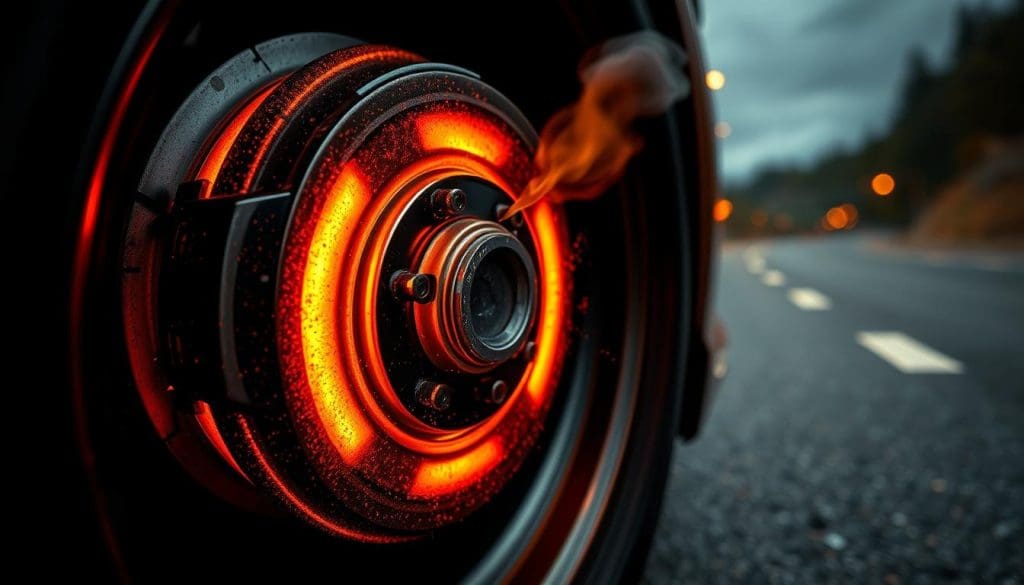
When pads or rotors get hot, they release a sharp, acrid chemical odor. This often happens after heavy braking or towing downhill for an extended time.
A sticking caliper keeps the pad against the rotor. That constant friction produces continuous heat, which shortens pad life and can warp rotors over time.
Riding the clutch in a manual transmission can produce a similar scent and accelerates clutch wear.
- If you notice a burning smell after heavy braking, monitor pad thickness and rotor surface for scoring or discoloration.
- Have a trusted shop like Firestone Complete Auto Care check caliper function and brake components to ensure safe stopping power.
- If the vehicle pulls to one side while braking, Miracle Body and Paint Collision Center advises inspecting for a dragging caliper and correcting it promptly.
Always let brakes cool after intense use and avoid setting the parking brake immediately after a long descent. Excessive heat can create a soft pedal and reduce performance over time.
Coolant Leaks and Sweet Smelling Exhaust
When your cabin fills with a faint sweet scent after driving, the cooling system is a likely culprit.
Coolant has a distinct syrupy aroma. If you notice it after using the heater, look for a small puddle under the vehicle, white crust near hose connections, or fogged windows when heat is on.
Catalytic Converter Issues
A failing catalytic converter can produce a rotten-egg scent. This often means raw fuel is reaching the exhaust because of a misfire or poor combustion.
Do not ignore these signs. If the engine temperature climbs or you smell something sweet combined with an abnormal exhaust odor, stop driving. Continued operation can damage the catalytic converter and nearby components.
- Heater core leak: misty windshield and a sticky film inside the glass point to an internal coolant leak.
- Firestone techs use pressure tests to find leaks in hoses, clamps, and radiators to protect the engine from overheating.
- Transmission fluid has a slightly sweet, sharp scent; if it lands on a hot exhaust, you may notice another distinct burning odor.
- Always use the coolant grade the manufacturer specifies to keep the system working at peak efficiency.
- Miracle Body and Paint can inspect exhaust leaks near the engine that may heat nearby parts and create unusual odors.
If you detect a sweet scent plus rising temperature, do not drive. Seek professional diagnosis to stop leaks, safeguard the catalytic converter, and prevent costly repairs.
Performing Basic Inspections at Home
A quick, methodical check at home can save you time and prevent a roadside emergency. Start after the vehicle cools and you have a safe place to work.
Carefully sniff near the front of your car with the engine off. Oil has a bitter scent, coolant is sweet, and electrical trouble often smells sharp or of plastic. This helps you narrow the source before a trip to the shop.
Wisco Automotive recommends checking fluid levels and looking for fresh drips under the vehicle. Inspect belts and pulleys for fraying, glazing, or loose tension that can cause a rubber odor or reduced accessory function.
- Look through wheel spokes to see pad wear, but avoid touching hot brakes after driving.
- Clear debris under the car; plastic bags or leaves can melt against the exhaust and cause persistent odors.
- Use a basic OBD-II reader to capture misfire, sensor, or catalyst codes and photograph them for your service appointment.
Regular cleaning and simple checks help you spot leaks, worn parts, and wiring issues earlier. When a warning light or smoke appears, stop driving and get professional service to reduce the risk of fire or major damage.
When to Seek Professional Collision and Mechanical Repair
Visible smoke, dashboard alerts, or sudden loss of power are clear signs you need a trained technician now. These symptoms often indicate hidden damage that a quick home check cannot find.
If your vehicle shows any of these signs after an impact or during normal driving, stop using it and arrange an inspection. Leaving electrical or structural damage unchecked can worsen problems and increase repair costs.
- Immediate attention: smoke, warning lights, or reduced performance require prompt professional response.
- Expert restoration: Miracle Body and Paint Collision Center restores collision damage to factory standards.
- Leon Valley: 6217 Grissom Rd., San Antonio, TX 78238 — call (210) 680-1987.
- North East San Antonio: 4650 Walzem Rd, San Antonio, TX 78218 — call (210) 858-3630.
- Advanced diagnostics: certified technicians use tools to find electrical and mechanical faults not visible in a home inspection.
Contact Miracle Body and Paint Collision Center for professional service and a thorough vehicle evaluation. Fast, expert repairs reduce risk and get you back on the road safely.
Conclusion
When an unusual, heated aroma appears, treat it as an urgent warning and stop safely.
Quick diagnosis prevents bigger failures. Leaking oil, a worn rubber belt, or an electrical fault can escalate fast. Address problems early to protect your engine and drivetrain.
For collision repair damage or a thorough inspection, hire Miracle Body and Paint Collision Center. They have two San Antonio locations to serve you.
Leon Valley: 6217 Grissom Rd., San Antonio, TX 78238 — (210) 680-1987. North East: 4650 Walzem Rd., San Antonio, TX 78218 — (210) 858-3630.
Protect your vehicle and your safety: get a professional check, repair leaks, and restore damaged systems so your car stays reliable and free from risky odors.