

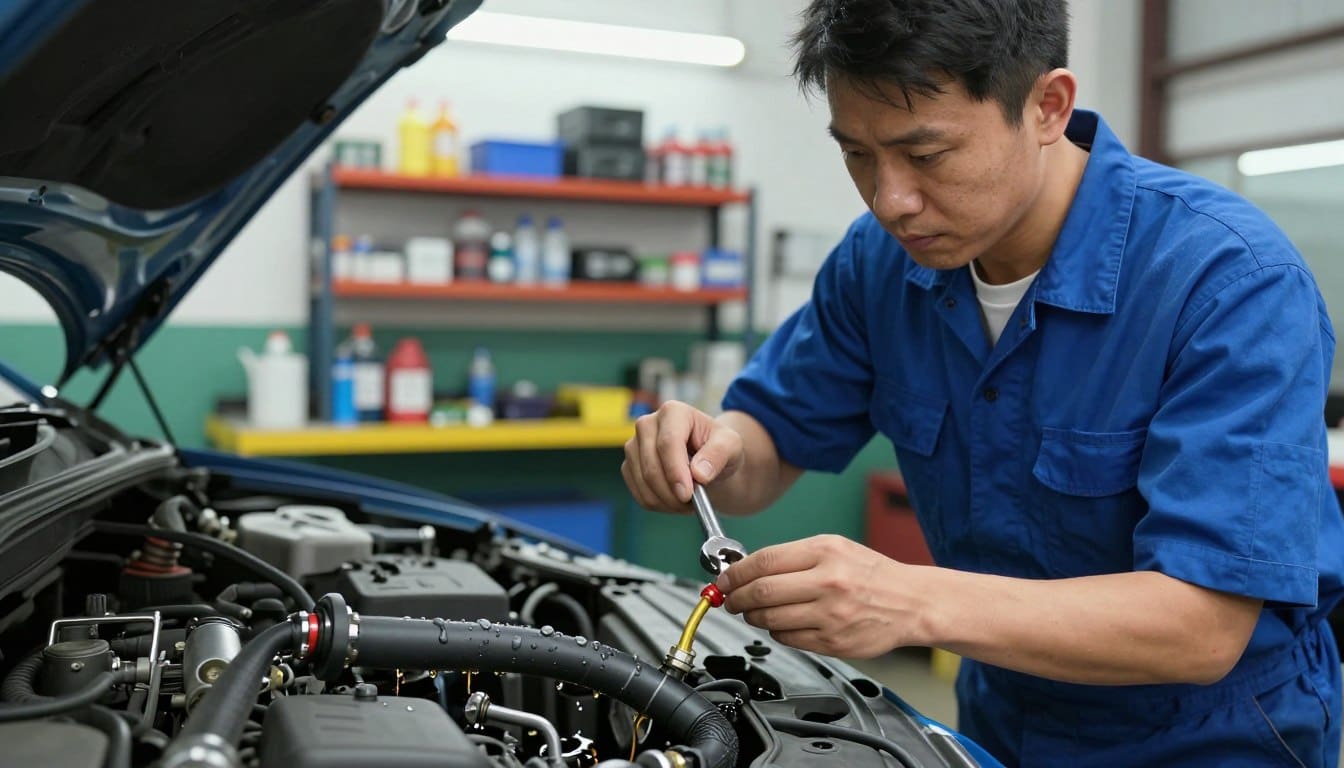
Have you noticed a sweet smell coming from your vents or hood? It might smell like pancake syrup. This smell usually means there’s a serious fluid leak. Neglecting this smell can lead to big mechanical problems.
This fluid is key for keeping your engine cool. If it leaks out, your engine might overheat. This can cause serious damage to the metal parts.
It’s important to act fast to avoid expensive repairs. You should get a professional to fix the coolant leak repair. This will keep your car running well.
At Heaven Automotive, we care about your car’s value. Call Heaven Automotive at 6645 Poss Rd. San Antonio, TX 78238, or dial (210) 682-3898 to get it fixed today.
Key Takeaways
- Sugary aromas often indicate a dangerous fluid leak.
- Antifreeze is essential for regulating motor temperature.
- Excessive heat can cause permanent engine damage.
- Early detection saves money on future repairs.
- Professional inspections ensure your system stays sealed.
- Proper coolant levels must remain consistent for safety.
The Science Behind the Sweet Scent
A sweet scent from your engine bay is not just a strange smell; it’s a signal that warrants investigation. At Heaven Automotive, understanding the root cause of such odors is key for your vehicle’s health. It helps prevent damage.
The sweet aroma comes from antifreeze, which has ethylene glycol. This substance smells sweet and is easy for humans to notice. If the cooling system leaks, ethylene glycol can escape, causing this smell.
Chemical Composition of Antifreeze
Antifreeze, or engine coolant, keeps engine temperature in check. Its main part, ethylene glycol, is what smells sweet. It’s mixed with water and additives to work better and protect the engine from corrosion.
Why Human Noses Detect Sweetness in Engine Bays
Our noses can pick up the sweetness of ethylene glycol because of its chemical makeup. When it leaks, it turns into vapor that our noses can smell. This smell can mean there’s a problem with the cooling system.
Knowing why your car smells sweet can help you spot cooling system issues early. If you smell this, check your car to avoid overheating and engine damage.
Why Your Car Smells Like Coolant
When your car smells like coolant, it’s a clear sign of trouble. The sweet, sugary odor usually means antifreeze is leaking from the cooling system. This smell is more noticeable when the engine is warm or when driving.
The Connection Between Sugary Odors and Engine Leaks
A sweet smell from your car’s engine often means there’s a coolant leak. Common sources of these leaks include the radiator, heater core, and worn or damaged hoses. Coolant, or antifreeze, keeps the engine and radiator at the right temperature. When it leaks, it smells sweet.
The radiator is key to the cooling system, and problems can cause leaks. Radiator problems can come from corrosion, damage, or worn seals. If you think there’s a coolant leak, check the radiator and nearby parts for damage or wear.
Differentiating Between Burning Oil and Coolant
It’s important to tell the difference between burning oil and coolant smells. Burning oil smells acrid and burnt, while coolant smells sweet and syrupy. If you’re not sure, a visual check can help find the problem.
| Symptom | Possible Cause | Recommended Action |
|---|---|---|
| Sweet, sugary smell | Coolant leak (radiator, heater core, hoses) | Inspect cooling system components for leaks or damage |
| Acrid, burnt smell | Burning oil (engine oil leak) | Check engine for oil leaks; inspect oil level and condition |
If you smell something sweet and think it’s a coolant leak, get a mechanic’s help. At Heaven Automotive, our skilled technicians can fix any cooling system problems. They’ll make sure your car runs well. Don’t wait to contact us to book a service today.
Identifying the Source of the Leak
To fix a coolant leak, you must find where it’s coming from. You can do this by looking closely or using UV dye. Coolant leaks can cause your car to overheat, which is a big warning sign. Look out for a high temperature gauge or steam coming from the hood.
At Heaven Automotive, located at 6645 Poss Rd. San Antonio, TX 78238, our skilled technicians use both visual checks and UV dye. They work fast to find and fix coolant leaks. Call us at (210) 682-3898 to book a time.
Visual Inspection Techniques for Engine Bays
First, you should look for coolant leaks in the engine bay. Look for coolant droplets or rust spots. Check these areas:
- Radiator hoses and connections
- Water pump and its seal
- Heater core and its connections
- Cylinder head and engine block for any signs of cracking
Using UV Dye to Locate Pinpoint Leaks
For pinpoint leaks, add UV dye to your coolant. Under UV light, the dye glows, showing where the leak is. This is great for finding leaks you can’t see.
| Method | Advantages | Disadvantages |
|---|---|---|
| Visual Inspection | Quick and cost-effective | May not detect small or hidden leaks |
| UV Dye Test | Accurate and detects hidden leaks | Requires specialized equipment and training |
Using both visual checks and UV dye helps find coolant leaks accurately. If your car overheats, get it checked by a mechanic right away.
The Role of Ethylene Glycol in Engine Cooling
The engine cooling system is vital for your vehicle. Ethylene glycol is a key part of antifreeze. It helps keep the engine temperature right and stops it from getting too hot.
At Heaven Automotive, we stress the need to know how ethylene glycol works. It helps with heat transfer and protects against corrosion.
Heat Transfer Properties
Ethylene glycol is great at transferring heat. It absorbs and spreads out heat from the engine. This keeps your engine at the right temperature, making your car run well.
Efficient heat transfer stops engine overheating. Overheating can cause expensive repairs. Ethylene glycol-based antifreeze keeps your engine safe from extreme temperatures.
Corrosion Inhibition and Engine Longevity
Ethylene glycol also stops corrosion in your cooling system. This protects the engine’s parts from rust and damage. It helps your engine last longer and avoids radiator problems.
By stopping corrosion, ethylene glycol keeps your cooling system working well. Regular coolant checks can spot problems early, saving you from big issues.
Common Components That Fail
A failing cooling system can show up in many ways. One common sign is a sweet smell from your engine. This smell often means there’s a coolant leak.
Knowing which parts might fail can help you catch problems early. Regular checks and upkeep are key to avoiding these issues.
Radiator Hose Degradation
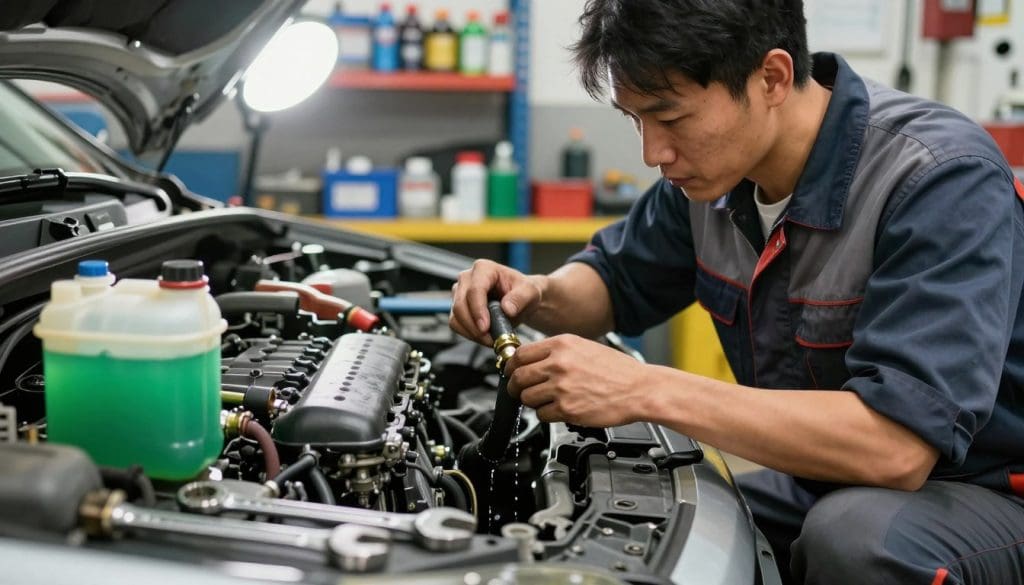
Radiator hoses often fail in cooling systems. They can wear out from heat, pressure, and the environment. As they get worse, they might crack or leak, causing coolant loss and that sweet smell.
Water Pump Seal Failures
The water pump is another critical part that can fail, usually because of seal problems. If the seal breaks, coolant leaks out. This can lead to a sweet smell and overheating warning signs if the leak is big.
Checking the water pump and its seal regularly can spot problems before they cause a failure.
Heater Core Issues Inside the Cabin
A leak in the heater core is another issue that can cause trouble. When it fails, coolant leaks into the cabin. This results in a sweet smell, more noticeable when the heater is on.
If you smell something sweet in your car, get it checked by a pro. They can find the leak and stop further damage.
If you’re facing these problems, act fast. At Heaven Automotive, our team can fix coolant leaks and other cooling system issues. Contact us for help with your coolant leak repair and to avoid overheating warning signs.
Overheating Warning Signs You Cannot Ignore
When your car’s engine overheats, it’s key to spot the warning signs early. Ignoring these signs can lead to expensive repairs or even a new engine. Knowing what to look for helps you act fast.
Interpreting Dashboard Temperature Gauges
The temperature gauge on your dashboard is a major indicator of overheating. A rising temperature gauge means your engine is getting too hot. If it hits the red zone or shows a warning, pull over and turn off the engine to avoid more damage.
Steam and Vapor from the Hood
Steam or vapor coming from under the hood is another warning sign. It often smells sweet or like coolant. Don’t open the hood until the engine cools down to avoid danger. After it’s safe, check the engine bay for leaks or damage.
If you see these signs, get your car checked by a pro. At Heaven Automotive, located at 6645 Poss Rd. San Antonio, TX 78238, or by calling (210) 682-3898, our team can fix the problem. They’ll get your car running safely again.
| Warning Sign | Description | Action |
|---|---|---|
| Rising Temperature Gauge | Dashboard gauge enters the red zone or shows a warning message | Pull over and turn off the engine |
| Steam or Vapor from the Hood | Visible steam or vapor, often with a sweet or coolant smell | Let the engine cool, then inspect for leaks or damage |
Risks of Driving with a Coolant Leak
Driving with a coolant leak can lead to engine failure. It’s important to fix it quickly to avoid serious problems. Coolant helps keep your engine at the right temperature. Without it, your engine can overheat.
Consequences of Ignoring Coolant Leaks
Ignoring a coolant leak can damage your vehicle’s engine. The cooling system keeps the engine at the right temperature. Without it, the engine can get too hot and damage important parts.
Catastrophic Engine Failure Scenarios
Driving with a coolant leak can cause your engine to fail badly. When it overheats, parts can warp or seize. This can lead to expensive repairs, like replacing the engine.
Some common scenarios include:
- Engine seizure due to overheating
- Piston failure
- Cylinder head damage
Warped Cylinder Heads and Blown Gaskets
Driving with a coolant leak can also cause warped cylinder heads and blown gaskets. When the engine overheats, the cylinder head can warp. This can make the gasket fail, leading to coolant leaks and engine problems.
Heaven Automotive offers expert coolant leak repair services. Their technicians can quickly find and fix coolant leaks. This ensures your vehicle is safe to drive.
Here is a summary of the risks and consequences of driving with a coolant leak:
| Risk | Consequence | Potential Repair |
|---|---|---|
| Engine Overheating | Catastrophic engine failure | Engine replacement |
| Warped Cylinder Heads | Coolant leakage, loss of compression | Cylinder head replacement |
| Blown Gaskets | Coolant leakage, engine performance issues | Gasket replacement |
To avoid expensive repairs, fix coolant leaks quickly. Heaven Automotive’s experts can diagnose and repair radiator problems and cooling system issues. This keeps your vehicle in top shape.
How Modern Cooling Systems Function
Modern car cooling systems work under pressure. They use a closed-loop setup to keep engine temperatures just right. This keeps your engine safe from overheating and damage.
These systems cool engines efficiently because they work under pressure. The closed-loop design keeps coolant moving through the engine and radiator. It doesn’t let coolant escape into the air.
Closed-Loop Pressurized Systems
In a closed-loop system, coolant stays sealed in the cooling circuit. This setup lets the system work at a higher pressure than air. So, the coolant can handle more heat without boiling, making cooling better.
Key benefits of closed-loop pressurized systems include:
- Increased cooling efficiency due to the higher boiling point of the coolant
- Reduced risk of coolant loss through evaporation or leakage
- Improved engine performance and longevity due to consistent temperature management
The Function of the Thermostat and Cooling Fan
The thermostat controls the engine’s temperature by managing coolant flow. When the engine is cold, the thermostat closes. This lets the engine warm up fast. When it reaches the right temperature, the thermostat opens, letting coolant cool the engine.
The cooling fan helps by pulling air through the radiator. This is key when the car is stopped or moving slowly. It keeps the engine from overheating.
The thermostat and cooling fan work together to keep the engine at the right temperature. If you see overheating warning signs or radiator problems, get your car checked by a pro.
If your car’s cooling system is acting up, contact Heaven Automotive. Our team can find and fix any issues. This keeps your engine running well and saves you from expensive repairs later.
Seasonal Impacts on Cooling System Integrity
The changing seasons put your vehicle’s cooling system to the test, more so in areas with extreme weather. As temperatures change, the materials in your cooling system expand and contract. This can cause leaks and other problems.
Thermal Expansion and Contraction Stresses
Thermal expansion and contraction happen naturally in your cooling system’s materials. When temperatures go up and down, metals and rubber parts get bigger and smaller. This stress can weaken the system, mainly at joints and seals.
The Effect of Extreme Texas Heat on Rubber Components
In Texas, the summer heat is intense, making rubber parts in the cooling system more prone to damage. The heat can make rubber brittle and crack, leading to leaks. Regular checks can spot these issues early on.
For those in San Antonio, TX, keeping up with maintenance is essential. Heaven Automotive, at 6645 Poss Rd. San Antonio, TX 78238, provides thorough cooling system inspections. Call them at (210) 682-3898 to make sure your vehicle is ready for the local climate.
| Maintenance Task | Frequency | Importance |
|---|---|---|
| Coolant Flush | Every 30,000 miles | High |
| Inspect Rubber Components | Every 15,000 miles | Medium |
| Pressure Test Cooling System | Every 12,000 miles | High |
Regular maintenance is vital to keep your cooling system in good shape. By doing tasks like coolant flushes and inspections, you can help your vehicle run smoothly all year round.
Diagnostic Procedures for Technicians
Technicians at Heaven Automotive use special procedures to find the cause of cooling system problems. These methods help spot radiator problems and overheating warning signs early. This prevents serious engine damage.
To solve cooling system issues, technicians need the latest tools and techniques. They mainly use pressure testing and combustion leak testing.
Pressure Testing the Cooling System
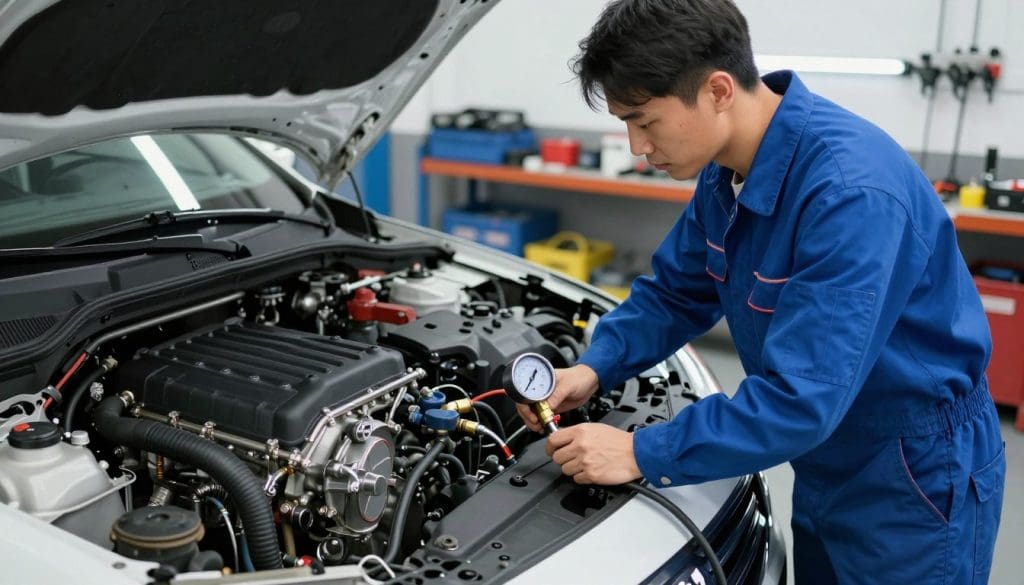
Pressure testing fills the cooling system with pressure to find leaks. It’s great for spotting issues that could cause coolant loss or overheating. Here’s how it works:
- They remove the radiator cap and attach a pressure tester.
- Then, they pressurize the system to the right pressure.
- They look for leaks or pressure drops in the system.
Combustion Leak Testing
Combustion leak testing finds combustion gases in the coolant. It’s key for spotting engine leaks, like a cracked cylinder head or blown head gasket. Here’s the process:
- They use a combustion leak test kit to find CO2 in the coolant.
- They read the test results to see if there’s a combustion leak.
- Then, they do more checks or fix the problem if needed.
By using these tests, Heaven Automotive’s technicians can find and fix cooling system issues. This keeps the engine safe from damage.
Preventive Maintenance Strategies
To keep your engine running smoothly, adopting a proactive maintenance approach is key. This way, you can spot and fix problems before they get big. It saves money and keeps your vehicle in top shape.
Recommended Coolant Flush Intervals
Following recommended coolant flush intervals is critical. Coolant can break down and lose its protective qualities over time. This can cause corrosion and harm the cooling system. Regular flushes replace old coolant with fresh, keeping the system working well.
The need for coolant flushes varies by vehicle and coolant type. Usually, it’s every 30,000 to 50,000 miles.
Inspecting Belts and Hoses Regularly
It’s also important to regularly inspect belts and hoses. These parts are key to the cooling system’s function. If they fail, it can lead to coolant leaks. Look for wear or damage on belts and hoses to catch issues early.
Replacing worn-out belts and hoses is easier and cheaper than fixing cooling system problems. This simple step can prevent big issues.
Following these maintenance tips can greatly reduce the chance of coolant leaks and cooling system problems. For top-notch maintenance, including coolant flushes and inspections, count on Heaven Automotive. They’ll keep your vehicle running smoothly and efficiently.
Environmental and Safety Hazards of Coolant
The sweet smell from your engine bay could mean a coolant leak. This is a serious issue for the environment and your safety. Coolant, mainly ethylene glycol, keeps your car cool. But, a leak can harm the environment, pets, and people.
Coolant spills can pollute soil and water. Ethylene glycol is toxic and dangerous to pets and wildlife if they eat it. So, it’s important to fix any radiator issues or overheating warning signs quickly to stop leaks.
Toxicity to Pets and Wildlife
Ethylene glycol, found in most coolants, tastes sweet but is very toxic to animals. Pets, like dogs, might find it appealing and accidentally eat it. If you think your pet has eaten coolant, get them to a vet right away.
Wildlife can also get hurt by coolant spills. Leaked coolant can poison water and harm animals that drink from it. So, it’s key to dispose of coolant properly to protect animals and the environment.
Proper Disposal and Recycling Protocols
To lessen the harm of coolant leaks, follow the right disposal and recycling steps. Take used coolant to a recycling center or a store that accepts it. Don’t pour it down the drain or throw it away.
At Heaven Automotive, at 6645 Poss Rd, San Antonio, TX 78238, we follow strict coolant handling and disposal rules. If you have radiator problems or need help with coolant disposal, call us at (210) 682-3898.
| Disposal Method | Environmental Impact | Recommended Practice |
|---|---|---|
| Drain or Trash | High risk of water and soil contamination | No |
| Recycling Center | Low environmental impact | Yes |
| Auto Parts Store Recycling | Low environmental impact | Yes |
When to Seek Professional Assistance
Knowing when to get help with coolant leak repair can save you money and time. DIY fixes are good for small problems. But, fixing a pressurized cooling system needs special skills and tools.
Trying to fix a pressurized cooling system yourself can be risky. Without the right training, you might damage your car’s engine or hurt yourself. The high pressure in these systems can cause serious burns or injuries if not handled right.
The Dangers of DIY Repairs on Pressurized Systems
Pressurized cooling systems work under high pressure, making them unsafe without the right tools and knowledge. Handling them wrong can lead to leaks that are expensive to fix and dangerous.
Why Specialized Equipment Matters
Heaven Automotive’s professional mechanics have the specialized equipment needed for complex coolant leaks. They can test the system’s pressure, find the leak, and fix it. This gets your vehicle running safely again.
For safe and effective coolant leak repair, it’s best to get help from professionals. They have the skills, experience, and tools to do the job right. This ensures your vehicle’s cooling system works well and safely.
Recent Trends in Automotive Cooling Technology
The world of cars is changing fast, and cooling systems are key to better performance and longer life. We need coolers that work better and are kinder to the planet. This has led to big steps forward in cooling tech.
Electric cars are becoming more popular, and with them, advanced electric vehicle thermal management systems have emerged. These systems keep the car at the right temperature. This helps the battery and other important parts last longer and work better.
New coolants for cars are also making waves. They protect against corrosion and last longer, which means you don’t have to change them as often. This makes your car more reliable and saves you money on repairs. For more on radiator problems and overheating warning signs, check out Heaven Automotive for expert advice and service.
Electric Vehicle Thermal Management Systems
Keeping EV batteries healthy is a big deal. The thermal management systems in electric cars use smart tech to control temperature. This keeps the battery working well and makes it last longer.
Advancements in Long-Life Coolant Formulations
Long-life coolants are a big deal in car tech. They work better and last longer, so you don’t have to change them as often. This helps prevent engine damage from corrosion.
Keeping up with the latest in cooling tech can help you take better care of your car. For the best advice and service, talk to experts who can guide you. They’ll help you keep your car running smoothly.
Worried about your car’s cooling system? Need help with maintenance or repairs? Heaven Automotive is here for you. Their team of experts is ready to help your car run like new.
Conclusion
A sweet smell from your engine might mean you have a coolant leak. This is something you should fix fast to avoid expensive repairs. Knowing why and how leaks happen is key to keeping your car in good shape.
If you smell something sweet coming from your engine, or if you have cooling system problems, get help right away. At Heaven Automotive, we’re here to help. We’re at 6645 Poss Rd. San Antonio, TX 78238. Call us at (210) 682-3898 for all your cooling system needs.
Fixing coolant leaks quickly and getting expert help when you need it will keep your engine running well. It also helps your engine last longer.