

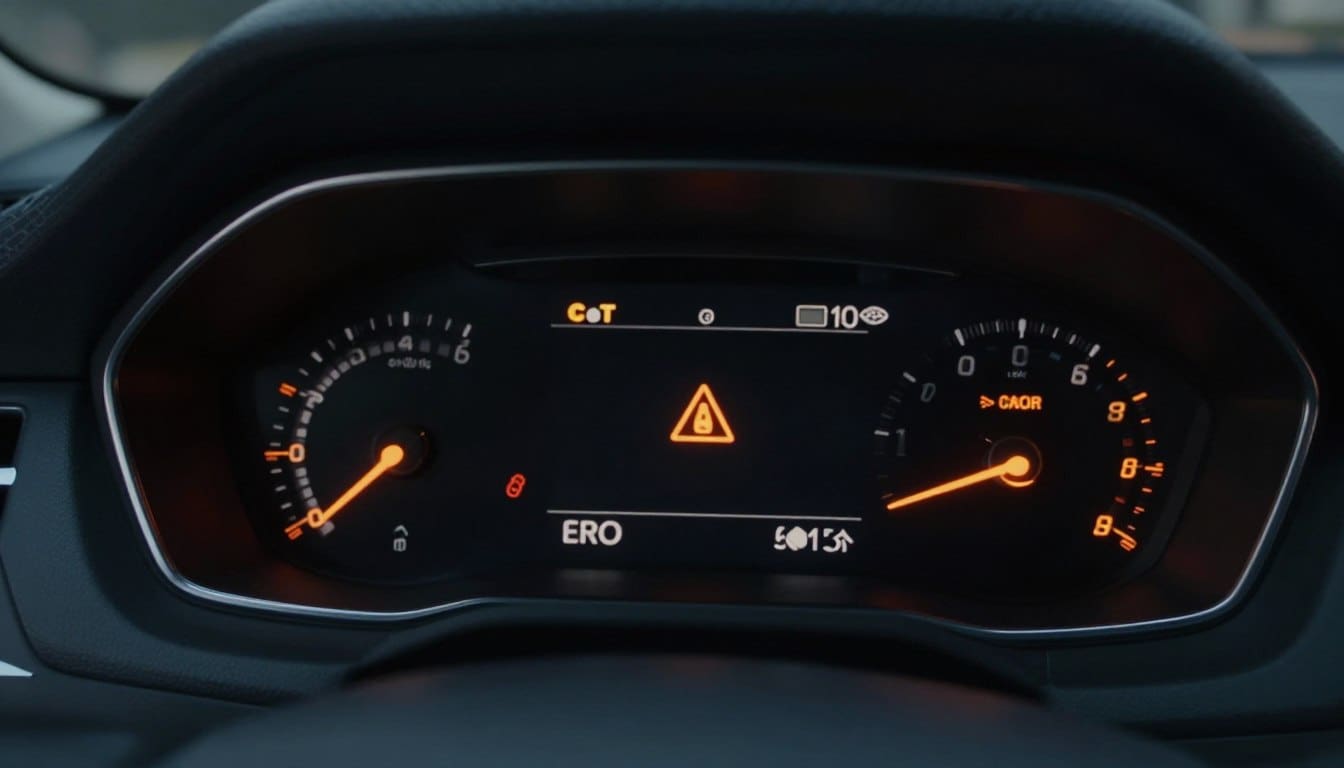
Ever noticed your car’s dashboard lights up when you start it? Those dashboard warning lights check if everything is working right. They’re like your car’s way of telling you if something’s off.
Not paying attention to these lights can lead to big problems and expensive fixes. If a light stays on, it means your car needs a pro to look at it. At Heaven Automotive in San Antonio, TX, we’re experts at figuring out what’s wrong.
Got questions about your car? Call us at (210) 682-3898. Our team is here to help you understand those dashboard warning lights and keep your car running smoothly.
Key Takeaways
- Indicators perform a self-check during startup to verify system integrity.
- Ignoring persistent signals can result in severe mechanical damage.
- Heaven Automotive offers professional diagnostic services in San Antonio.
- Prompt attention to alerts saves money on long-term repairs.
- Contact our experts at (210) 682-3898 for reliable vehicle support.
The Evolution of Dashboard Warning Lights
Dashboard warning lights have come a long way from the early days of cars. What started as simple mechanical signals has evolved into a complex digital system. This change keeps you updated on your car’s health in real-time.
From Mechanical Gauges to Digital Alerts
In the early 1900s, drivers had little info about their engine’s health. The 1933 Hudson Super Six changed this with its “red jewel” light for the generator. This was the start of modern dashboard warning lights.
Over time, cars moved from simple mechanical gauges to advanced electronic sensors. Now, your dashboard is like a control center. It gives you quick info to avoid big engine problems.
The Role of the On-Board Diagnostics System
The On-Board Diagnostics (OBD) system changed how we find engine issues. It makes finding problems easier and more accurate. This tech means your dashboard warning lights give you precise error codes.
When a light comes on, it’s because of a sensor reading in your car’s computer. This digital connection helps fix cars faster and cheaper. Here’s how we’ve changed in monitoring our vehicles.
| Feature | Early Mechanical Era | Modern Digital Era |
|---|---|---|
| Monitoring Method | Direct physical linkage | Electronic sensor arrays |
| Alert Type | Basic light or needle | Multi-color digital icons |
| Diagnostic Depth | Limited to simple status | Detailed error code logs |
| User Interaction | Manual observation | Automated system alerts |
Understanding the Color Coding System
Learning about dashboard light meanings is key for safe driving. Cars use warning light colors to show system status. Knowing these colors helps you spot minor issues or serious problems.
Green and Blue Indicators: Informational Status
Green or blue lights mean your car is just giving you updates. These colors show that a system is working right. For instance, your headlights or turn signals light up in these colors when they’re on.
Yellow and Amber Lights: Cautionary Warnings
Yellow or amber lights are cautionary warnings that need your attention. They don’t always mean you should stop right away. But, ignoring them can lead to bigger problems and more costly repairs.
- Check Engine Light: Often indicates an emissions or sensor issue.
- Low Tire Pressure: Suggests you should check your tire inflation levels.
- Service Required: Reminds you that a scheduled maintenance interval is approaching.
Red Warning Lights: Immediate Action Required
Red lights mean critical safety issues that need your immediate action. Seeing a red light often means there’s a serious problem. It’s important to know the difference between red vs yellow dash light to stay safe.
If a red light comes on, don’t ignore it. Always check your owner’s manual or call a professional. Knowing the red vs yellow dash light difference helps you handle every road situation right.
Engine Management and Performance Indicators
Your car has many sensors to check its health. Knowing what dashboard light meanings means is key for car care. These lights talk to your car’s computer.
The Check Engine Light Explained
The check engine light is very ambiguous. It can mean many things, from a loose gas cap to a big engine problem.
Don’t ignore this light if it comes on. Even if your car seems fine, ignoring it can harm your fuel economy and emissions. A professional scan can find out what’s wrong.
Oil Pressure and Lubrication Alerts
Your engine needs oil to run smoothly. If the oil pressure light goes on, it means your oil is low or the pump is failing. Act fast to avoid engine damage.
If you see this light, stop and turn off the engine. Driving with low oil can ruin your engine. Always check your oil levels to avoid this.
Engine Temperature and Cooling System Warnings
The cooling system keeps your engine cool. If the temperature gauge goes up or a light comes on, your engine is too hot. This could be from a leak, a broken thermostat, or a failing water pump.
Never open the radiator cap when it’s hot. Steam can burn you badly. Wait for the car to cool down before checking the coolant reservoir. Knowing these dashboard light meanings keeps your car safe and running well.
Braking System Safety Symbols
Your vehicle’s braking system is key to your safety every day. When car warning symbols light up on your dashboard, they’re trying to tell you something important. Ignoring these signs can make stopping harder and riskier.
Anti-lock Braking System (ABS) Malfunctions
The Anti-lock Braking System stops your wheels from locking up when you brake hard. If the ABS light comes on, it means there’s a problem. This could be a damaged wheel speed sensor or a wiring issue. Even though your brakes will work, you won’t get the help of anti-lock during emergencies.
Brake Pad Wear and Fluid Level Indicators
Your car has sensors to check your brakes. A light will turn on if your brake pads are too thin and need to be replaced. Also, if your brake fluid is low, it could mean a leak or wear. This light warns you to avoid losing all hydraulic pressure.
Electronic Parking Brake Alerts
Many cars now have an electronic parking brake instead of a manual lever. If a warning light comes on for this system, it might mean the parking brake isn’t working right. It could also mean there’s a malfunction in the actuator motor. Always check these car warning symbols quickly to keep your car safe when parked on hills.
Battery and Electrical Charging System
Seeing a battery icon on your dashboard can be scary. This alert is a key car warning symbol you might see. It means your car’s electrical charge is low, which could cause a total power loss.
Interpreting the Battery Charge Warning
Many think this light means the battery is dead. But it actually shows a problem with the charging system. If the light stays on after starting the engine, it means the system is using only the battery’s power.
This is a serious warning. If the battery runs out, your engine might stop, leaving you stranded. It’s important to watch these car warning symbols to avoid getting stuck on the side of the road.
Alternator Failures and Electrical Load Issues
The main reason for this warning is often a bad alternator. The alternator charges the battery and powers your car’s electronics. If it fails, the battery will drain fast.
Bad wiring or a loose serpentine belt can also cause this warning. To save power, turn off things like the air conditioning and infotainment screens.
By reducing electrical use, you might make it to a safe place or a repair shop. Remember, ignoring these car warning symbols can cause more damage to your car.
Tire Pressure Monitoring System (TPMS)
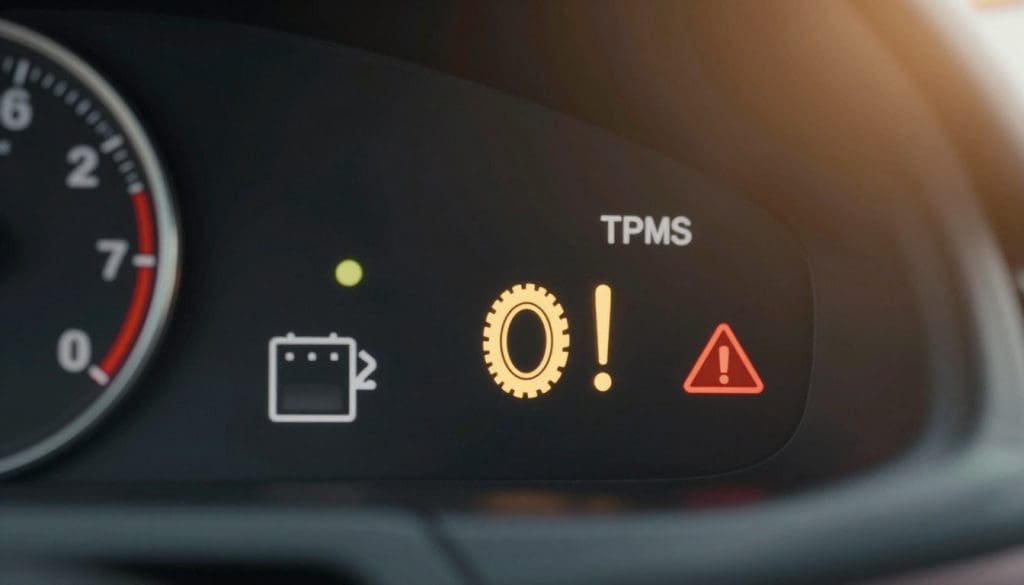
Seeing an exclamation point inside a horseshoe shape on your dashboard means your vehicle is warning you about tire pressure. This is one of the most common car warning symbols drivers see. It tells you that one or more tires might be under-inflated, and you need to check them right away.
Why Tire Pressure Matters for Safety
Keeping the right air pressure is essential for your car’s performance. Under-inflated tires can make your car harder to handle and take longer to stop. They also wear out unevenly and use more fuel.
If the TPMS light comes on, pull over and check your tire pressure with a gauge. Don’t just trust the sensor, as it might not always be right. Always check the recommended pressure, which is usually on a sticker inside the driver’s side door jamb.
| Tire Condition | Safety Impact | Fuel Efficiency |
|---|---|---|
| Under-inflated | Reduced handling | Decreased |
| Properly inflated | Optimal control | Maximum |
| Over-inflated | Harsh ride | Neutral |
Resetting the TPMS After Tire Maintenance
After you rotate your tires or replace one, you might need to reset the TPMS. Some cars do this automatically after a few miles of driving. But others need you to go through the menu or press a reset button.
Check your owner’s manual to see how to reset your car’s TPMS. If you ignore these car warning symbols after maintenance, you might get false alerts or miss a real leak. Keeping your system updated helps you stay safe while driving.
Airbag and Supplemental Restraint System (SRS)
The Supplemental Restraint System is a key safety feature. It helps protect you in unexpected crashes. When you start your car, an airbag light will briefly turn on. This normal behavior means the system is working with your car’s computer.
If the light stays on while driving, it means there’s a problem. You should not ignore this warning. It could mean your airbags won’t work right in an emergency. Your safety depends on these parts working well.
The Importance of SRS Diagnostics
When the airbag light stays on, you need professional help. The system is complex and needs special tools to check for errors. These tools help find out which part of the system is not working.
Ignoring these warnings can be very dangerous. Certified technicians can safely check important parts like impact sensors. Fixing these problems quickly keeps your car’s safety features working.
Common Causes for Airbag Light Activation
Many things can cause the airbag light to turn on. Sometimes, it’s a loose connection under the seats or a bad sensor. Moisture or dirt can also mess with the system’s electrical parts.
A damaged clock spring is another common problem. This is a ribbon cable that lets the steering wheel move while keeping an electrical connection. Getting a professional to check your car is the best way to feel safe again.
| Potential Issue | Common Symptom | Diagnostic Action |
|---|---|---|
| Faulty Seat Sensor | Light stays on constantly | Scan for fault codes |
| Damaged Clock Spring | Horn or cruise control fails | Inspect steering column |
| Loose Wiring Harness | Intermittent light flickering | Check under-seat connections |
| Impact Sensor Failure | System shutdown | Replace faulty sensor |
Transmission and Drivetrain Alerts
Transmission and drivetrain alerts are key messages from your car to you. They help move power from the engine to the wheels. This is crucial for your car’s performance. If you ignore these signs, serious damage could happen.
Transmission Temperature and Fluid Warnings
A light on for transmission temperature means the fluid is too hot. This can happen when you’re heavy towing, going up steep hills, or stuck in traffic in the heat. If this light comes on, pull over and let the transmission cool down.
Low fluid levels can also cause these warnings. Fluid keeps the transmission cool and lubricated. Regular checks can stop problems before they get worse. If the light stays on after cooling, get a professional to check it right away.
Traction Control and Stability Control Symbols
Your car has systems to keep you safe on slippery or bumpy roads. The traction control light flashes when it’s working, like on wet or loose surfaces. This means it’s stopping wheel spin.
If the light stays solid and doesn’t go off, it means there’s a problem. A solid light means the system is disabled or has a sensor issue. Drive carefully until the problem is fixed.
Steering and Suspension System Indicators
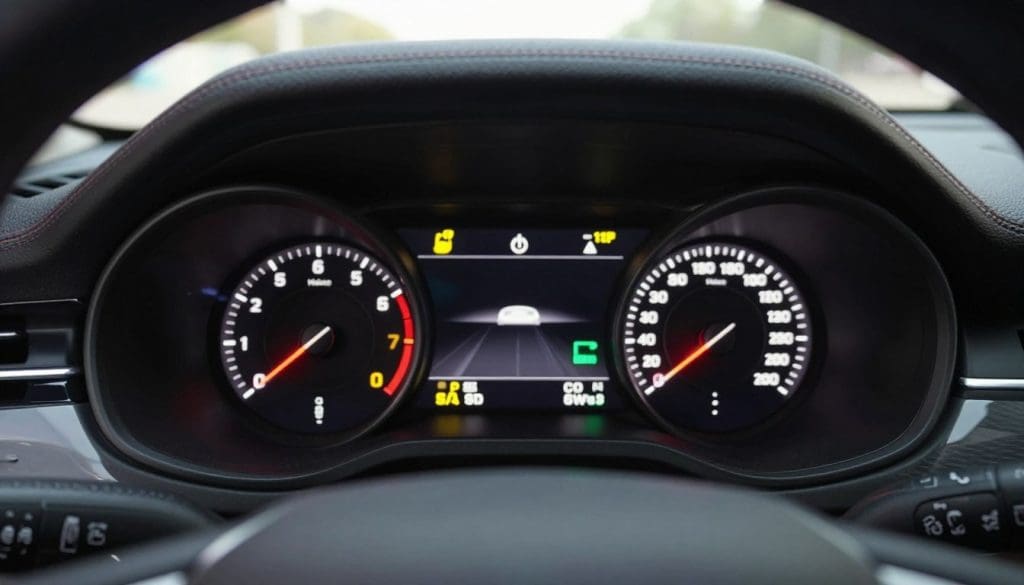
Seeing a warning light for steering or suspension means you should watch your car closely. These systems help you control the car, which is key for safety. If a light comes on, it means your car might not steer or handle bumps as well.
Electric Power Steering (EPS) Failures
Most cars now use Electric Power Steering (EPS) instead of old hydraulic systems. EPS uses electric motors, so you won’t see a reservoir to check if steering feels hard. If the light comes on, it means there’s a problem with the electric parts.
Driving without EPS can be hard because you have to turn the wheel by hand. This light is serious because it affects how well you can steer. Always get help if you notice the steering feels different or makes strange noises.
Suspension Height and Adaptive Damping Alerts
Cars with advanced suspension have sensors that check ride height and shock absorber work. These systems adjust how stiff your ride is to balance comfort and control. If an alert shows up, it means there’s a problem with the air suspension or damping valves.
Signs you might need to check your suspension include:
- The car sits lower than usual on one or more corners.
- The ride feels bumpy or harsh.
- Messages on your dashboard talk about “Air Suspension” or “Adaptive Damping.”
- The car doesn’t level itself after you load it up.
Ignoring these signs can damage other parts of your car, like tires and wheel bearings. Get it checked quickly to keep your car safe and running right.
Fuel System and Emissions Warnings
Your car’s fuel and emissions systems are key for good performance and keeping the environment clean. Modern cars have many sensors to check fuel use and exhaust output all the time. If your dashboard shows a warning, it’s a sign to do some basic upkeep before getting help from a pro.
Gas Cap Loose and Evaporative System Leaks
A loose or damaged gas cap is a common cause of emissions warnings. Your car’s evaporative emission control system (EVAP) catches fuel vapors to stop them from getting into the air. If the cap isn’t tight, the system sees a leak and lights up your dashboard.
Make sure your gas cap clicks into place after filling up. If the light stays on even after tightening, the cap might be worn or cracked. Replacing it is a cheap fix that can stop bigger problems in the EVAP system.
Diesel Particulate Filter (DPF) Regeneration
If you have a diesel car, you know about the Diesel Particulate Filter (DPF). It traps exhaust soot to cut down on emissions. Over time, it gets full and needs to be regenerated to burn off the soot.
When the DPF light comes on, it means the filter needs to be cleared. You can start this by driving fast for a long time. This lets the exhaust get hot enough. Not taking care of this warning can clog the filter, which might need a pro cleaning or a new one.
Advanced Driver Assistance Systems (ADAS)
Advanced Driver Assistance Systems (ADAS) are a big step up in car safety and comfort. They use cameras, radar, and sensors to watch your surroundings and help you avoid dangers. Knowing how to read their dashboard lights is crucial for every driver.
Lane Departure and Collision Warning Lights
Your car has systems to help you stay safe on the road. Lane-keep assist and collision warnings alert you if you’re drifting or getting too close to something. It’s key to pay attention to these signals, as they mean the system is working to protect you.
These features might not work in bad weather or when sensors are blocked. If your Automatic Emergency Braking (AEB) or lane-departure warnings are off, a light on your dashboard will tell you. It shows the system is not working right now.
Adaptive Cruise Control System Status
Adaptive Cruise Control (ACC) makes long drives easier by keeping a safe distance from the car in front. The system’s status is shown by special icons on your dashboard. A steady light means it’s ready to go, while a different color or icon shows it’s controlling your speed.
When it’s on, stay alert and ready to take over. If it spots something or has a problem, it will let you know. Always check your owner’s manual to know what the icons mean, as they can differ a lot.
The Dangers of Ignoring Dashboard Alerts
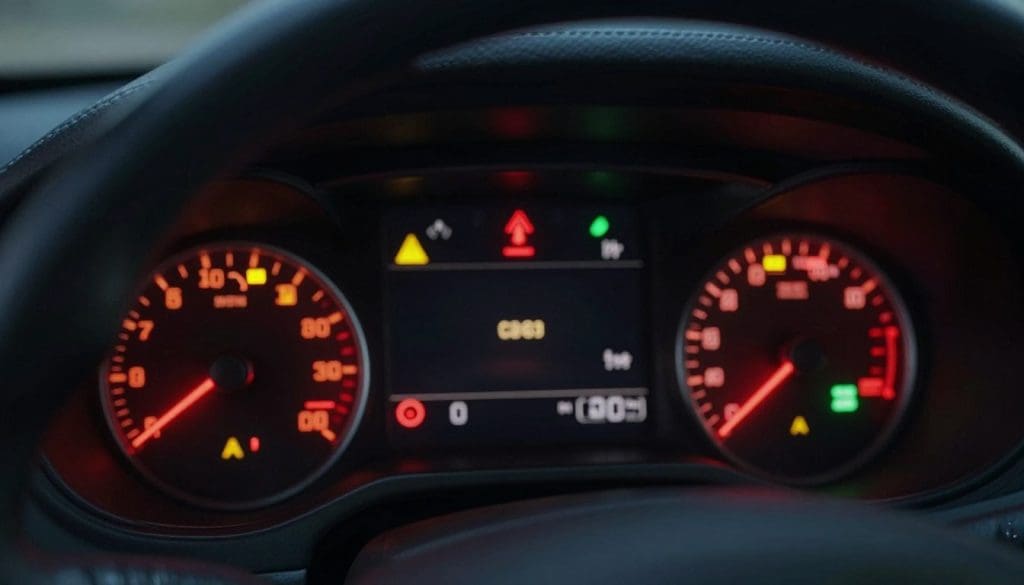
When a light turns on in your car, it’s not just a hint. It’s a way for your vehicle to tell you it needs attention. Knowing what dashboard light meanings are can help you avoid big repair costs.
Long-term Mechanical Damage Risks
Many think if the car runs, the problem can wait. But ignoring warning lights can cause cascading failures in other systems. For instance, ignoring a cooling system alert can damage your engine.
Learning about warning light colors helps prevent these costly problems. If you see a light, check your owner’s manual right away. This can save you from expensive repairs later on.
Safety Implications for You and Your Passengers
Ignoring your car’s warnings can also risk your safety. A faulty braking system or steering sensor can make driving dangerous. These alerts mean your car is not safe to drive.
The difference between a red vs yellow dash light is key for safe driving. Red lights mean stop right away. Yellow or amber lights mean you should get a check-up soon.
| Light Color | Urgency Level | Recommended Action |
|---|---|---|
| Red | Critical | Stop immediately and seek professional help. |
| Yellow/Amber | Cautionary | Schedule a diagnostic check soon. |
| Green/Blue | Informational | No action required; system is active. |
Modern Diagnostic Tools and Professional Repair
Seeing a warning light on your dashboard can be scary. You might think about using a basic scanner to find out what’s wrong. But these tools can only read basic engine codes. They can’t understand the details of warning light colors or the complex talks between modern car computers.
Using simple tools might not fix the problem fully. It could also miss important safety issues.
Why DIY Code Readers Have Limitations
Many basic scanners can only read simple engine codes. They struggle with advanced systems like ABS, SRS, or transmission modules. If you’re trying to figure out a red vs yellow dash light, a simple reader might not give you the right info.
These tools can’t do the needed system resets after fixing a part. Without the right tools, your dashboard light might stay on even after fixing the problem. This can be stressful and make you wonder if you really fixed it.
Here are some common problems with DIY tools:
- They can’t get to special data from car makers.
- They don’t work with advanced safety and control systems.
- They can’t do electronic parking brake service modes.
- They don’t get software updates for new cars.
The Value of Certified Automotive Technicians
Certified technicians have lots of training and use top-level software. They know how all the car’s sensors work together. They can find the real problem, not just the symptoms.
This professional expertise means your car gets fixed right the first time. It saves you time and money in the long run.
| Feature | DIY Scanner | Professional Diagnostic |
|---|---|---|
| System Coverage | Engine Only | Full Vehicle Systems |
| Data Depth | Basic Codes | Live Data & Graphs |
| Reset Capability | Limited | Full System Calibration |
Choosing a certified shop gives you peace of mind, specially with safety lights. Professionals make sure your car meets safety standards and runs well. Trusting the experts keeps your car reliable and safe.
Current Trends in Automotive Warning Technology
Imagine a car that warns you about service needs before it fails. The car industry is moving from just alerting you to proactive health monitoring. This change means less time stuck on the side of the road and more time driving smoothly.
Predictive Maintenance and Connected Vehicles
Today’s cars use advanced sensors to watch how parts wear out in real-time. They look at your driving and how the car performs to predict when parts will fail. This info goes to your car’s maker or local mechanic through the cloud.
Connected cars link your garage to the mechanic. No more waiting for a light to come on. Your mechanic can call you to set up service when it’s convenient. This seamless communication makes repairs less stressful and keeps your car in top shape.
The Future of Dashboard Interface Design
The old warning light setup is being replaced by digital displays. Future cars will have augmented reality screens that show important info on your windshield. This lets you see problems without looking away from the road.
These screens will show clear messages about what’s wrong and how to fix it. This user-centric design aims to make dashboard messages easy to understand, not confusing.
| Feature | Traditional Diagnostics | Predictive Systems |
|---|---|---|
| Alert Timing | After failure occurs | Before failure occurs |
| Data Access | Local to the vehicle | Cloud-connected |
| User Experience | Cryptic symbols | Actionable instructions |
| Maintenance | Reactive repair | Scheduled prevention |
Conclusion
Your car is like a complex network of sensors, all working to keep you safe. Paying attention to dashboard warning lights is key to keeping your car running well. It helps your car last longer and perform better.
Even small alerts can mean big problems if ignored. They warn of issues that could lead to costly repairs. Taking care of these alerts early on keeps your engine in top shape for years.
Heaven Automotive offers expert diagnostics for any concerns you have. Our team knows how to handle modern dashboard warning lights. We use the latest tools to find and fix your car’s problems.
Stop by 6645 Poss Rd. San Antonio, TX 78238 for a car check by our certified techs. Call (210) 682-3898 to book your appointment. Let us make sure your car is always reliable and safe for you.