

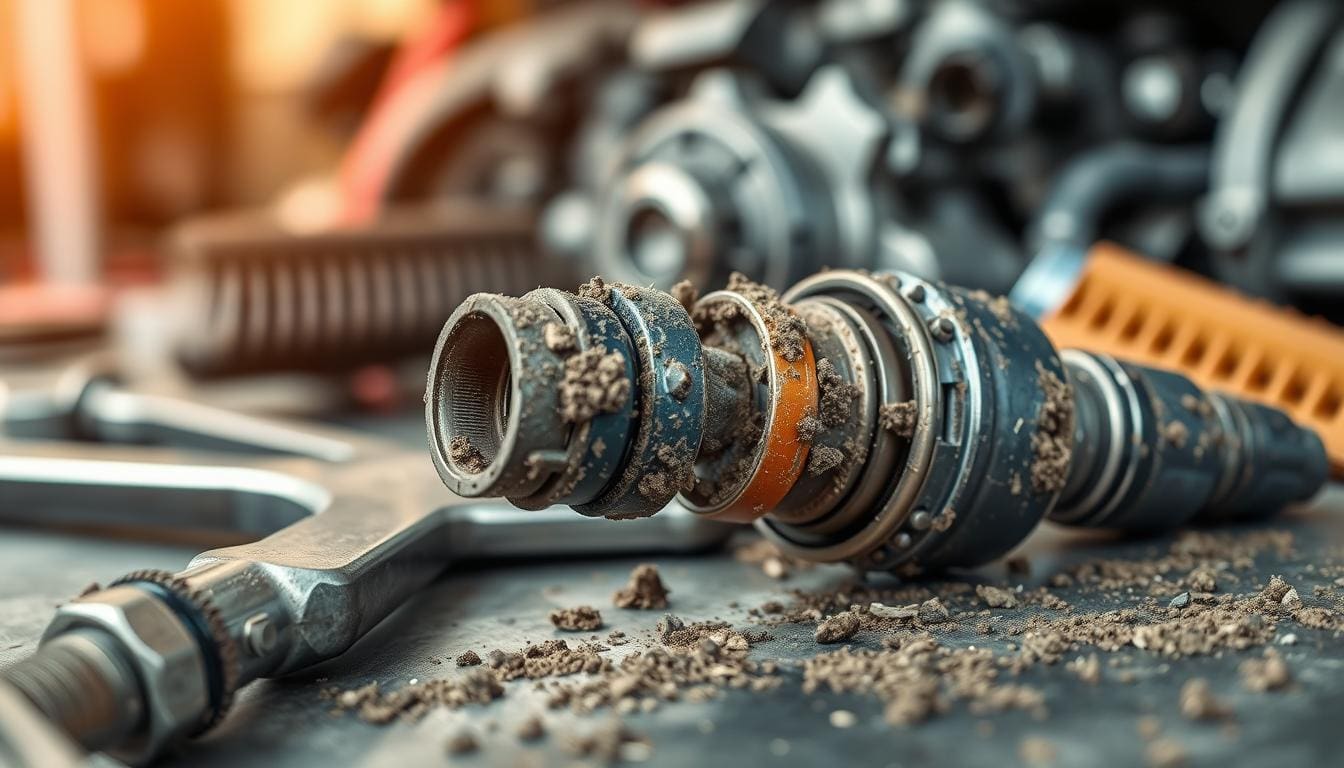
We see cars every day that feel sluggish, hesitate under load, or sip more gas than they should. At Heaven Automotive, we explain how clogged injector nozzles change a fine mist into a gloppy stream, which leads to incomplete ignition and lost power.
Drivers often notice symptoms before a warning light appears. Sluggish acceleration, rough idle, and lower mileage are clues that deposits are distorting spray patterns and upsetting combustion. These changes happen gradually as flow is restricted.
We recommend a multi-step approach when a thorough cleaning is needed: in-tank additives, warm-engine service, and intake treatment to address buildup in all areas. This complete method restores consistent delivery, steadier throttle response, and measurable gains in engine performance and efficiency.
If you want reliable drivability, bring your car to our shop. We’ll evaluate your vehicle, explain what’s happening, and show how a full service from Heaven Automotive can get power and mileage back where they belong.
Key Takeaways
- Clogged injectors change spray to a stream, causing poor combustion and lost power.
- Common signs: hesitation, reduced acceleration, and worse gas mileage.
- Effective fixes require a complete multi-step service, not just a single bottle.
- Keeping injectors clean prevents misfires and avoids avoidable repairs.
- Heaven Automotive offers targeted service to restore performance and drivability.
How Dirty Fuel Injectors Disrupt Fuel Delivery and Combustion
Let’s trace what happens from the gas tank to the spark plug and why it matters. The path runs from the gas tank through fuel lines and filters, past the fuel pumps, and into the tiny nozzles that meter spray into the engine. Each component plays a role in steady fuel delivery and reliable engine response.
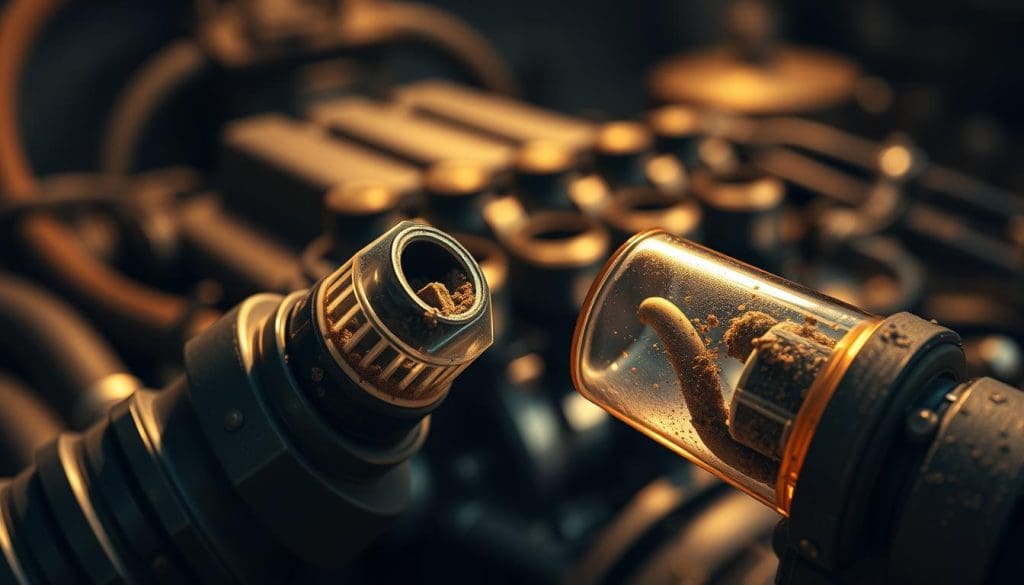
A quick overview of the key components
Fuel pumps push liquid through the lines while filters trap grit. The injectors sit at the end of that path and must produce an even cone-shaped mist so the spark can ignite the mixture quickly.
Why spray pattern matters
Injectors are precision parts. A fine mist fills the combustion chamber evenly. That gives better power, smoother idling, and improved efficiency.
What causes nozzles to degrade
Over time, varnish from fuel and heat-driven carbon deposits form on tiny orifices. Those deposits alter flow, turning mist into a weak stream that causes uneven cylinders and incomplete combustion.
We stress that using clean fuel helps, but it won’t stop buildup forever—short trips and stop-and-go driving accelerate deposit formation. In the next section, we translate these mechanics into the symptoms drivers report when delivery falters.
Signs Your Vehicle May Need Fuel System Cleaning
Early warning signs often show up as driveability hiccups before major repairs are needed. Catching them early saves time and prevents further damage.
- Loss of power and rough performance under load — trouble when merging, climbing hills, or towing.
- Hesitation on acceleration or a stumble when you press the throttle.
- Lower gas mileage from poor atomization and incomplete combustion.
- Hard starts, inconsistent idle, or occasional stumbling at startup.
- Knocking or pinging that can worsen with carbon deposits and hot spots.
Incomplete combustion raises emissions and can lead to a failed test in some states. Repeated hesitation or steady declines in engine performance usually mean the intake and injectors need attention.
Don’t ignore early issues. If symptoms are consistent, appear at certain RPMs or loads, or your maintenance history shows long gaps, bring the vehicle to Heaven Automotive. We’ll inspect your car and recommend the right service to restore power, improve fuel efficiency, and protect the engine.
How We Perform a Complete fuel system cleaning for Real-World Results
Our complete three-step service targets buildup from the tank to the intake so drivers notice real improvements. We design each step to remove deposits that harm engine performance and reduce fuel efficiency.
In-tank cleaner to help clean the gas tank, fuel lines, fuel pumps, and injectors
We add a professional-grade cleaner to the gas and run the engine so the solution circulates through the gas tank, fuel lines, pumps, and injectors. This first pass dissolves varnish and light deposits that alter spray patterns and reduce flow.
Warm-engine cleaning to break down combustion chamber gunk and carbon deposits
With the engine at operating temperature, we introduce a targeted cleaner that loosens combustion chamber carbon. This step helps eliminate pinging, rough idle, and misfires caused by stubborn deposits.
Hand-cleaning the air intake to restore airflow and improve efficiency
We hand-clean the intake tract with a dedicated product and brushes. Removing intake deposits restores smooth airflow and improves throttle response that drivers can feel on daily commutes.
Related services and scheduling guidance
Related work can include throttle body cleaning and intake valve cleaning for engines with heavier buildup. Many vehicles benefit from service near 30,000 miles, but we adjust timing for short trips, towing, or stop-and-go driving.
Real-world results mean a smoother idle, steadier acceleration, and noticeable gains in mileage. As preventative maintenance, this approach reduces the chance of costly repairs and helps preserve long-term engine health.
Conclusion
A full, targeted service restores the precise spray and steady flow your engine needs. , When injectors and the broader fuel system get dirty, the engine can’t deliver the even mist required for steady power and efficient combustion.
Our three-step approach—proactive in-tank treatment, warm-engine work, and intake attention—outperforms one-off fixes. This combination tackles deposits where they form and returns smoother idle, better acceleration, and improved efficiency.
Act sooner rather than later. If you notice hesitation, rough idling, or falling mpg, bring your car to Heaven Automotive. We’ll inspect your vehicle and perform the right fuel system cleaning to restore performance and protect long-term maintenance.