


We wrote this buyer’s guide to help drivers make clear choices about ride control and road feel. In real-world terms, better handling means confidence through corners, stability under braking, and predictable steering that reacts the way you expect.
We explain common paths—air systems, coilovers, shocks and struts, lowering springs, sway bars, and truck load-support options—and show which changes give the biggest gains first. Our focus is on typical U.S. driving: rough city streets, highway crosswinds, and twisty backroads.
Improved performance usually comes from a matched system, not a single part. We’ll point out how to avoid mismatched parts that make a ride harsh or bouncy and what to ask your shop before installation.
Heaven Automotive will diagnose weak points and recommend a balanced setup based on your budget and use case. If you want hands-on help, we invite you to contact us to tune your vehicle for safer, more confident driving.
Key Takeaways
- Better handling equals corner confidence, stable braking, and predictable steering.
- Major upgrade paths include air systems, coilovers, shocks/struts, springs, and sway bars.
- Real gains come from matched components, not random parts.
- We frame choices for U.S. roads: city, highway, and backroads.
- Heaven Automotive can diagnose, recommend, and install a balanced setup.
Why Better Handling Starts With the Suspension System
A vehicle’s ride control hardware sets the stage for confident cornering, stable braking, and steady steering at speed. We want readers to understand, in plain terms, how the system between the tires and chassis shapes real-world handling on city streets and highways.
How components manage weight transfer, steering response, and stability
The primary job of the suspension is to keep tires planted while it manages weight transfer — front-to-back under braking and side-to-side in turns.
Springs store and release energy, shocks and struts control motion, and sway bars limit roll. Aftermarket shocks and struts help fine-tune reactions to sudden braking and swerving, while chassis pieces work together to maintain a level attitude.
What balanced handling feels like during braking, swerving, and quick turns
Balanced handling is simple to describe: less nose-dive when you brake, reduced body roll in quick turns, and fewer steering corrections during lane changes or crosswinds.
- Predictable braking: tires stay in contact, shortening stopping distance.
- Smoother lane changes: fewer abrupt steering inputs needed.
- Stable on-ramps: the car feels planted, not floaty.
| Component | Primary Role | Effect on Handling |
|---|---|---|
| Springs | Support vehicle weight and set ride height | Controls roll and pitch; affects center of gravity |
| Shocks/Struts | Dampen motion and control rebound | Improves stability during braking and quick inputs |
| Sway Bars | Connect opposite wheels to limit body roll | Enhances cornering balance and steering feel |
We recommend a matched approach: parts designed to work together deliver the best control and long-term stability. When in doubt, have Heaven Automotive inspect your setup so we can recommend a balanced plan that fits your driving needs.
How We Define “Handling” for Real-World U.S. Roads
We measure handling by how the vehicle responds during real maneuvers—lane changes, sudden braking, and cornering on imperfect roads.
Handling goes beyond lap times. It includes steering precision, stability over bumps, predictable braking behavior, and the confidence to make quick transitions without surprises.
Cornering control often trades off with ride comfort. A very stiff setup sharpens turn-in but can hurt ride and noise on rough city streets. We help readers avoid setups that feel harsh on daily commutes.
Matching goals to real use
Most drivers fall into three goals: daily-driver comfort, spirited on-road performance, and off-road control. Each goal calls for different parts and tuning, and each affects how the ride feels.
- Daily comfort: softer damping for smoother travel over potholes and expansion joints.
- Spirited performance: firmer settings for sharper steering and reduced body roll.
- Off-road control: extra travel and progressive rates to manage rough terrain.
We present practical options and testing tips. After a change, you should feel immediate differences in turn-in and braking response, while fine-tuning and alignment will refine the overall driving experience.
Signs Your Stock Suspension Is Holding Your Vehicle Back
Small changes in how the vehicle moves under load can reveal big weaknesses in the factory setup. We want you to spot the symptoms early so you can decide whether to book an inspection with Heaven Automotive.
Excessive dive under braking and squat under acceleration
Nose-dive when you hit the brakes and rear squat on hard acceleration are classic signs the factory parts are overmatched.
Sudden braking should not cause severe forward pitch. If it does, worn shocks or sagging springs may be letting excess weight transfer go uncontrolled.
Body roll in turns and unstable lane tracking
Body roll often gets worse with passengers, cargo, or a trailer. That added mass increases lateral weight shift and hurts lane tracking.
When the car leans too much, steering inputs need correction. That reduces confidence and long-term stability.
Floating steering feel and longer braking distances under load
Floaty steering or a need for constant corrections is commonly reported when the rear sags under load. This also lengthens braking distance.
Those symptoms point to reduced tire contact and changing alignment angles. Expect faster tire wear and uneven handling if ignored.
- Common signs: nose-dive, rear squat, excess roll, loose steering, and longer stops.
- Safety risks: greater stopping distance, alignment shifts, and faster tire wear.
- How to tell: compare normal comfort tuning with clear wear—soft ride vs. loss of control.
| Symptom | Likely Cause | Immediate Risk |
|---|---|---|
| Nose-dive under braking | Worn dampers or weak springs | Reduced braking efficiency |
| Rear squat on acceleration | Sagging rear springs or no load support | Poor traction and unstable acceleration |
| Excessive body roll | Weak anti-roll control or aged components | Imprecise lane changes |
| Floaty steering | Rear sag, worn components, or poor geometry | Frequent steering corrections |
If you see more than one symptom, book a professional check. Handling problems often involve multiple parts, and our technicians can diagnose the root causes so you get the right fix.
Suspension Upgrades That Deliver the Biggest Handling Gains
We focus on the motions that matter: roll, pitch, and bounce. Fixing those gives the fastest gains in steering confidence, braking stability, and mid-corner composure.
Targeting roll, pitch, and bounce with the right upgrade path
Roll is the lean in corners. Pitch is the nose-dive or rear squat during braking and acceleration. Bounce is uncontrolled rebound over bumps.
Addressing each motion with the right part restores predictable tire contact and smoother responses.
Why matching parts matters to avoid a less than optimal ride
Our priority list makes planning simple:
- Step 1: restore damping control with shocks/struts.
- Step 2: reduce roll with sway bars and adjusted spring rates.
- Step 3: refine height and balance with springs, coilovers, or air.
Mixing random components can cause harshness, bounce, or unpredictable grip. That’s why full kits are often smarter—kits tune spring rate and damping together for coherent performance.
We help plan incremental versus full-system choices based on budget and intended use. Contact Heaven Automotive so we can match parts and tune for balanced control and real-world performance.
Air Suspension Systems for Adjustable Ride Height and Comfort
Air-based systems let you change a vehicle’s ground clearance with a switch or app, trading static springs for adjustable air springs.
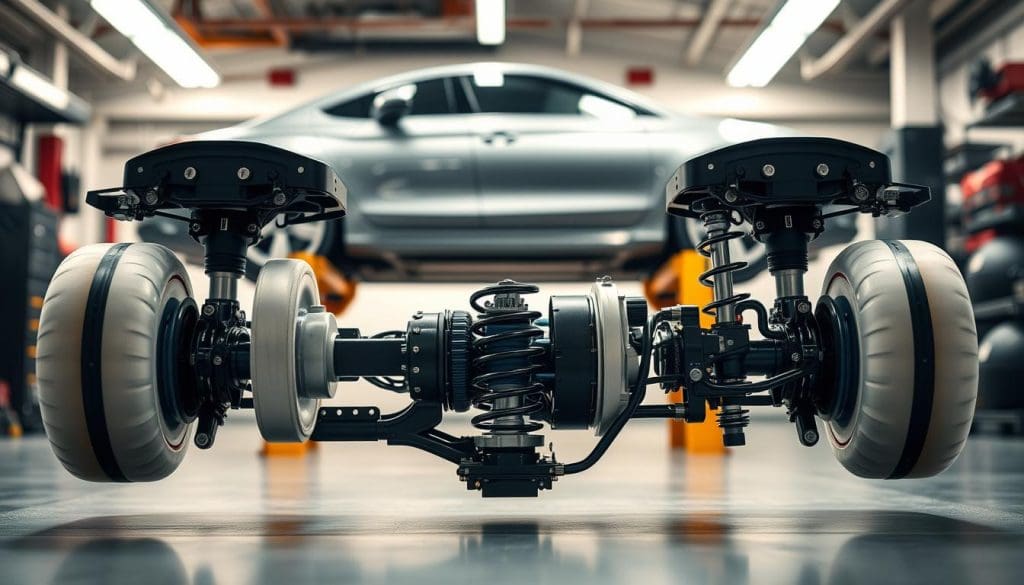
How it works: an air spring is a flexible rubber bellows that inflates or deflates on command. That pressure change raises or lowers the chassis, so you control height and stance instantly.
Best real-world uses
Clearance: lift for steep driveways or obstacles. Level: keep the vehicle even when hauling uneven loads. Show: lower for a uniform, event-ready look.
Ride benefits and buyer notes
Many drivers report improved ride quality on mixed terrain because the system soaks small bumps when tuned correctly.
Expect extra complexity: air lines, compressors, valves, and wiring add install time and require leak checks. Proper damping and geometry still matter—air alone won’t fix poor handling.
“For best results, have Heaven Automotive install and test any air setup to ensure safe routing and correct tune.”
- Decide by budget, maintenance tolerance, and how often you’ll change height.
- Professional installation reduces risk and improves long-term reliability.
Coilover Kits for Tunable Performance and Precise Control
Coilovers put spring and damper adjustments in one assembly, so handling and stance change together. For drivers who want both height control and sharper response, coilover kits offer an efficient path to measurable gains.
What a coilover combines
A coilover pairs a coil spring with a shock in a single unit. That integration makes adjustments faster and keeps ride dynamics consistent.
How tunable damping affects control and camber
Adjustable damping changes how the car reacts over bumps and during braking. Proper tuning reduces body motion and creates a more settled feel through quick turns.
Lowering height also changes camber potential, so alignment matters to keep even tire wear and consistent grip.
Lowering and weight transfer
Lowering with coilovers reduces center-of-gravity and limits weight transfer under braking and acceleration. When matched to the rest of the setup, the vehicle feels more planted and predictable.
Choosing quality for consistent performance
Look for durable finishes, rebuildability, and proven damping curves. Cheap kits can ride harsh or fade quickly; quality components deliver repeatable performance and longer service life.
We recommend professional setup and alignment — Heaven Automotive can tune coilovers so you get balanced handling and reliable results.
Shocks and Struts Upgrades to Improve Balance and Stability
Worn dampers are often the fastest way to notice a car losing composure in sudden maneuvers.
Aftermarket shocks and struts can give the most noticeable “tightening up” of handling, especially once factory dampers age.
Better shocks help control nose-dive during hard braking and reduce rebound over rough pavement. Matched struts tune steering feel and keep the front end settled during quick lane changes.
How new dampers affect sudden inputs
Quick inputs — panic stops, sharp turns, or potholes — show whether the system still controls motion. Properly valved shocks and struts soak energy quickly, restoring predictable contact and improved stability.
Planning replacements so parts work as a system
Springs set height and support; dampers control motion. Replacing one component without checking the others can cause bounce or a harsh ride.
- Decide between stock-like comfort or firmer performance damping.
- Inspect mounts, bushings, and alignment when changing shocks or struts.
- Let a professional handle spring compression and torque specs for safety.
“For safe, lasting results, have Heaven Automotive inspect and recommend matched components before installation.”
Lowering Springs as a Cost-Effective Handling Upgrade
For many drivers, a modest drop in ride height is the fastest way to feel sportier vehicle handling. Lowering springs change the center of gravity, reduce body roll, and give a more direct steering response with relatively low cost.
Why buyers choose lowering springs: they are fewer parts and simpler to fit than full adjustable systems. That makes them a budget-friendly entry to better performance without changing the whole setup.
What to confirm before you buy
- Expected drop and how it affects driveway clearance.
- Spring rate intent — comfort vs. firm track bias.
- Whether stock dampers can match the new spring rate or if upgraded shocks are recommended.
- Need for alignment after installation to prevent uneven tire wear.
We urge a pre-purchase inspection if the car shows bounce, uneven tire wear, or clunks. Lowering can amplify worn mounts or weak dampers, producing a worse ride and less control.
| Factor | Lowering Springs Effect | Buyer Action |
|---|---|---|
| Center of gravity | Reduced—improves turn-in | Confirm expected drop in inches |
| Compatibility with stock parts | Often OK if shocks are healthy | Have dampers inspected for valving and wear |
| Practical clearance | Less ground clearance at bump stops | Check ramps, driveways, and speed bumps |
“Lowering springs give big handling feel for a small investment, but fit and matching components matter.”
Sway Bars to Reduce Chassis Roll in Turns
A properly sized anti-roll bar firms the link between wheels and frame to keep a car flatter through bends. Sway bars cut roll by tying left and right sides together so the chassis resists leaning when you load the outside tire.
How they stiffen the chassis and keep the vehicle level
Sway bars work by transferring force across the chassis. When one wheel rises, the bar pushes the other side down to reduce tilt.
This keeps tires in a more consistent contact patch, improving grip and steering precision during quick transitions.
When they make the most difference
They help most on highway ramps, fast bends, and sudden left–right moves where roll spoils confidence. A right-sized bar sharpens handling and overall performance.
- Note: sway bars complement healthy shocks and alignment — they do not fix worn parts.
- Front vs rear changes alter balance; matching bars avoids twitchy understeer or oversteer.
- Proper end links, bushings, and torque specs keep the system quiet and reliable.
We recommend letting Heaven Automotive assess chassis needs and recommend sizing and installation so the result fits your road use and driving goals.
Spring Rate, Ride Height, and Load: The Buyer’s Checklist
We start by matching expected weight and use to measurable spring choices. Pick numbers first so parts work both empty and when carrying cargo.
Linear vs. progressive behavior
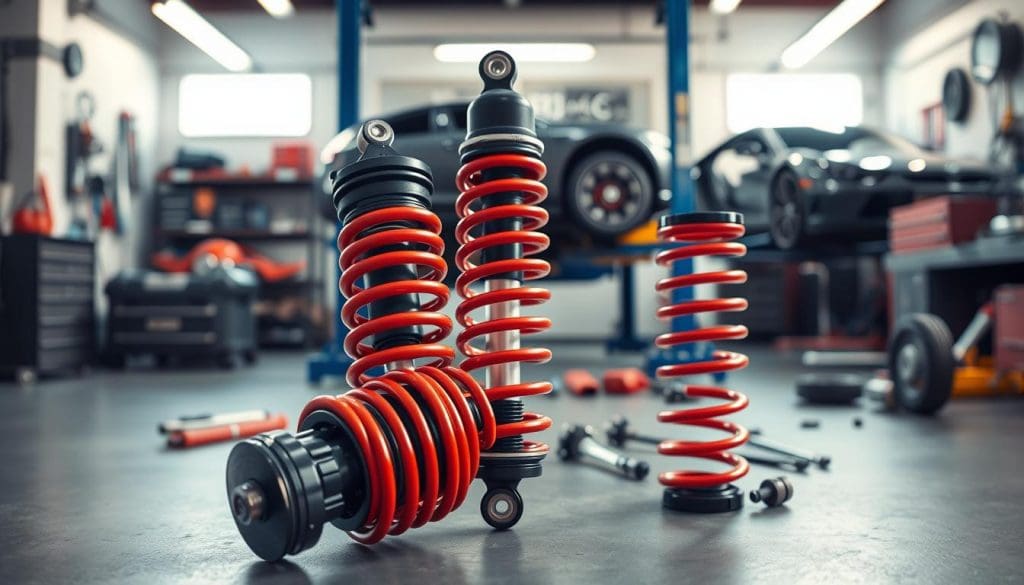
Spring rate means how much force it takes to compress a spring one inch. Linear springs keep the same rate as they compress. Leaf springs are commonly linear.
Progressive springs increase resistance as they compress. That makes the rear feel firmer as payload or tongue weight grows, keeping the vehicle more level under load.
Ride height goals and trade-offs
Decide whether you want to level for stance and headlight aim, lower for a lower center of gravity, or lift for extra clearance. Each choice affects ride quality and handling.
| Goal | Effect | Buyer note |
|---|---|---|
| Level | Restores even stance | Improves headlight aim and steering balance |
| Lower | Better cornering | May reduce comfort and clearance |
| Lift | More ground clearance | Can change steering and tire wear |
“Define your average payload before you buy; numbers prevent costly mismatches.”
- Confirm curb weight, payload, and tongue weight.
- Choose spring behavior to match your load profile.
- Match dampers and plan alignment and clearance checks.
We can verify specs and fitment at Heaven Automotive to ensure the chosen rate and setup suit your driving needs.
Towing and Hauling: Why Handling Changes Under Trailer Load
We see how towing alters driving the moment extra weight sits behind the rear axle.
What causes the rear to sag and the trailer to sway?
Added tongue weight compresses the rear, shifts mass, and changes steering geometry. That shift often causes delayed responses and more frequent steering corrections on the road.
How this feels and why it matters
- Rear-end sag: the truck may squat under load and produce a “floating” steering feel.
- Increased sway: crosswinds, passing vehicles, and rough pavement amplify trailer sway.
- Safety effects: longer braking distance, quicker tire wear, and alignment shifts reduce overall stability.
Even vehicles rated to tow can still squat noticeably; ratings don’t replace proper support when you haul heavy loads.
| Symptom | Cause | Result |
|---|---|---|
| Rear sag | Excess tongue weight | Loose steering feel |
| Trailer sway | Unsupportive rear springs or soft airbags | Reduced lane control |
| Uneven tire wear | Changed alignment under weight | Higher maintenance cost |
Next steps: we preview add-a-leaf, Hellwig, SuperSprings, airbags, and Timbren SES as solutions and recommend having Heaven Automotive set up and test any chosen support.
Helper Springs and Leaf-Spring Solutions for Trucks
For trucks that tow regularly, helper leaf systems are a practical way to restore level and control without a full air conversion. We compare common options so you can pick a fit-for-use solution and avoid surprises at install time.
Add-a-leaf upgrades to increase load capacity and reduce sag
Add-a-leaf kits insert an extra leaf into the pack to raise capacity and cut rear sag under heavy load. They are cost-effective and boost towing stability right away.
Trade-offs: aggressive fits can stiffen the unloaded ride and raise wear if not matched to the rest of the pack.
Hellwig Helper Springs for adjustable support
Hellwig helper springs give adjustability so drivers tune support for varying trailer weights. That makes them good where tongue weight changes often.
Expect a bit more install work and periodic checks to keep adjustment correct.
SuperSprings for self-adjusting load support and improved unloaded ride quality
SuperSprings clip to the leaf pack and self-adjust as the load rises. They often improve unloaded comfort versus some helper options and add modest capacity quickly.
They can cost more and have model fit limits, so verify year/make/model compatibility.
- Best fit: trucks that tow frequently but don’t want a full air system.
- Choose add-a-leaf for low-cost capacity gains when unloaded comfort is secondary.
- Choose Hellwig when you need adjustable support for varying loads.
- Choose SuperSprings for self-adjusting ease and better unloaded ride.
| Solution | Benefit | Consideration |
|---|---|---|
| Add-a-leaf | Higher load capacity | Can stiffen unloaded ride |
| Hellwig Helper Spring | Adjustable support | Needs tuning and install care |
| SuperSprings | Self-adjusting, better unloaded feel | Higher cost, fit limits |
We recommend verifying fitment by exact year/make/model and checking the current leaf pack condition before purchase. For safe, reliable results, let Heaven Automotive confirm compatibility and complete the installation.
Airbags for Truck Load Leveling and Handling Control
Adding airbags gives a truck adjustable rear support so loads don’t upset handling. Air helper bags act like adjustable springs you tune with pressure. They help keep the rear level and improve control when towing or hauling varying loads.
How adjustable air pressure helps stabilize towing setups
Proper pressure reduces rear sag, cuts bounce, and helps the truck track straighter. With the right tune, you get less sway and more predictable braking under load.
What to expect: installation, cost, and maintenance
Choices range from simple manual-fill bags to onboard compressor kits. Onboard systems cost more but add convenience and faster control.
| Option | Benefit | Consideration |
|---|---|---|
| Manual-fill bags | Lower cost, simple fit | Requires pump or shop visits |
| Onboard compressor kits | Fast pressure changes, on-the-fly level | Higher install cost, wiring and routing required |
| Brand examples | Proven reliability | Air Lift, Ride-Rite |
Installation often needs brackets, air lines, and careful routing away from heat. Expect extra labor for compressor wiring and secure mounts.
Maintain performance by checking for leaks, monitoring air pressure, and inspecting lines before long trips.
Deciding factor: choose airbags when loads change frequently. For one-off loads, a leaf or helper solution may be simpler.
When you want a clean, reliable install and precise control, contact us at Heaven Automotive — we handle fitment, testing, and safe tuning.
Hollow Rubber Springs and Timbren SES for Maintenance-Free Stability
Hollow rubber spring kits give progressive resistance that grows with the load to cut sway and rear sag. They act like a rising-rate spring, delivering more support as weight increases.
How progressive resistance reduces squat, sway, and roll
Progressive rubber compresses easily at first, then firms up as the truck carries weight. That behavior limits squat under acceleration and trims roll in corners.
Why Aeon rubber performs in extreme cold
Aeon compound stays resilient in low temperatures. Owners report steady ride feel and consistent damping even in cold climates.
Choosing Standard Service vs. Severe Service Timbren SES
| Option | Characteristic | When to pick |
|---|---|---|
| Standard Service | Double-convoluted Aeon, balance of comfort and capacity | Regular towing and mixed use |
| Severe Service | Single-convoluted, firmer rubber for max support | Frequent heavy towing or truck campers |
Fitment notes for stock-height trucks and lifted vehicles
Most stock-height trucks accept Timbren SES as a drop-in. Lifted trucks may need spacer kits so the helper engages correctly.
We recommend Heaven Automotive confirm fitment and install. This simple, maintenance-free path can be a smart suspension upgrade when you want reliable stability without compressors or gauges.
How to Choose the Right Suspension Upgrade Package for Your Car or Truck
Match your driving load and terrain first; the best kit solves your heaviest, most frequent need.
Best setups for daily driving and weekend performance
For everyday comfort and improved ride quality, we recommend refreshed shocks/struts, mild springs or stock springs, plus a tuned sway bar. This package keeps a car comfortable and predictable without harsh trade-offs.
Best setups for spirited handling
For weekend track or spirited road work, choose quality coilovers or matched spring/damper combos. Add a performance sway bar and post-install alignment to lock in handling gains and consistent steering response.
Best setups for towing and high center-of-gravity loads
For trucks that haul or carry campers, pick helper springs, airbags, or Timbren SES. We select the specific suspension kits based on whether you need adjustability or a set-and-forget solution for your vehicle and trailer loads.
Best setups for off-road and uneven terrain
Off-road options favor controlled damping and modest lift. Avoid overly stiff systems that reduce tire compliance; choose parts that keep wheels planted over ruts and rocks.
We provide package-style recommendations so you don’t mix mismatched parts. For tailored fitment and tuning, trust Heaven Automotive to specify, source, and install the complete kit for the use case you drive most.
| Use Case | Core Components | Primary Benefit |
|---|---|---|
| Daily Driver | Shocks/struts, mild springs, sway bar | Comfort and predictable handling |
| Spirited / Track | Coilovers or matched spring/damper, sway bar | Sharper turn-in and consistent balance |
| Towing / Hauling | Helper springs, airbags, Timbren SES | Load control and level stance |
| Off-Road | Long-travel dampers, modest lift, reinforced mounts | Wheel travel and traction over rough terrain |
Installation, Compatibility, and What We Recommend Before You Buy
Start with clear goals so each part in the kit contributes to predictable handling and safety.
Planning the system: avoiding mismatched parts that hurt performance
We treat an upgrade as a system, not a single part. Define use, confirm fitment, and match spring behavior to damping so new parts work together.
Common pitfalls include wrong spring rates for stock dampers, ride height that conflicts with wheel/tire clearance, and overlooked mounts or bushings.
When professional installation is the smarter option for safety and results
Some jobs save you time and deliver better quality only when done by a pro. Coilover setup, spring swaps, air bag plumbing, and any work needing specialty tools should be handled by a shop.
Heaven Automotive recommends a pre-buy inspection if you find clunks, uneven tire wear, or steering wander. Worn parts can mask the gain from new components.
| Task | Who should do it | Why it matters |
|---|---|---|
| Define goals and fitment | Owner + shop | Prevents wrong purchases and wasted time |
| Match springs to dampers | Technician | Ensures predictable handling and tire life |
| Air system plumbing & wiring | Professional | Complex install, requires leak checks and tuning |
| Post-install alignment and test | Shop | Corrects geometry; unlocks the full solution |
Plan for extra time for seized hardware, worn mounts, and alignment scheduling. Good install quality—correct torque and bushing preload—makes the difference between “okay” and excellent handling.
Conclusion
Good control comes from picking parts that work together for how you actually drive each week.
Address the basics—spring support, damping control, and roll management—to see the biggest gains in handling and real-world performance on U.S. roads.
Choose by need: air systems for adjustable height and comfort, coilovers for tunable performance, shocks and struts for balance, lowering springs for cost-effective control, and sway bars to cut body roll. For towing, keep the truck level to reduce sway, improve steering confidence, and protect tire wear.
Before you buy, have us inspect the vehicle for worn parts and plan install plus alignment so the kit performs as intended. Contact Heaven Automotive and let us diagnose, source, and fit the right suspension changes for safer, more confident driving.