

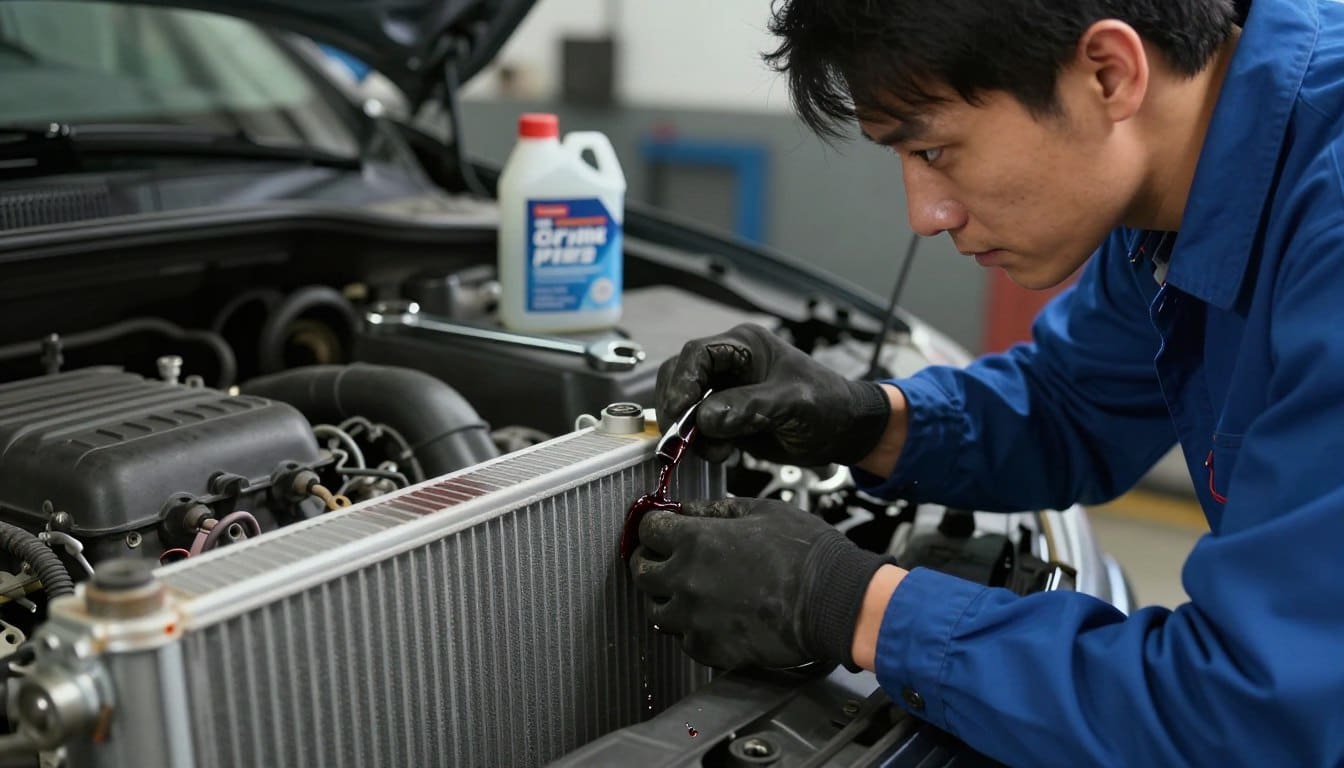
Your engine gets very hot every time you drive in San Antonio. The cooling system lowers the fluid temperature, keeping your engine running smoothly. Small problems can lead to big issues or even a breakdown.
It’s wise to watch for wet spots or rising gauges on your dashboard. If you see trouble, you need cooling system leak repair to protect your engine. At Heaven Automotive, we have the skills to keep your car running well.
Keeping your engine cool prevents damage to gaskets and metal parts. Let Heaven Automotive fix your car and give you peace of mind. Our repair team uses the latest tools for quick and accurate diagnoses.
Visit us at 6645 Poss Rd. San Antonio, TX 78238 or call (210) 682-3898. Our friendly team will make sure your radiator works great, even in the Texas heat.
Key Takeaways
- Coolant fluid prevents the engine from overheating and seizing.
- Brightly colored puddles under the car indicate a system failure.
- A rising temperature gauge on the dashboard requires immediate attention.
- Sweet, syrupy smells often point to escaping cooling fluids.
- Professional inspections identify cracks before they cause major damage.
- Heaven Automotive provides reliable diagnostics in San Antonio.
Understanding the Role of Your Vehicle Cooling System
Knowing how your vehicle’s cooling system works is important. It keeps your engine from overheating. This is vital to avoid damage.
The cooling system’s main job is to cool down the engine. It uses coolant, a radiator, a water pump, and hoses to do this. Coolant is key because it takes heat from the engine and moves it to the radiator.
The Function of Coolant in Engine Regulation
Coolant, or antifreeze, is a vital part of the cooling system. It keeps the engine at the right temperature by absorbing heat. It also stops corrosion in the engine and cooling system.
Coolant is a mix of water and antifreeze. This mix lowers the freezing point and raises the boiling point. This helps it keep the engine cool in different weather conditions.
Some key things coolant does include:
- Heat transfer: It takes heat from the engine and moves it to the radiator.
- Corrosion protection: It has additives that stop corrosion in the cooling system.
- Freezing protection: The antifreeze part stops the coolant from freezing in cold weather.
- Boiling protection: Its high boiling point stops it from boiling over in hot weather.
Components of the Modern Cooling Loop
The modern cooling loop has several important parts. These parts work together to keep the engine cool. They include:
- Radiator: It gets rid of heat from the coolant to the air.
- Water Pump: It moves coolant through the engine and cooling system.
- Hoses: Hoses connect the cooling system’s parts. They let coolant flow between them.
- Thermostat: It controls the engine’s temperature by managing coolant flow.
Knowing about these parts and their roles helps you spot problems. Issues like antifreeze loss symptoms might mean a radiator leak. Regular checks and maintenance can prevent these problems. This keeps your vehicle running well.
The Mechanics Behind a Radiator Leak
The radiator is key to your car’s cooling system. Leaks can happen for many reasons. Let’s explore what causes them.
Pressure Build-up and Structural Weakness
A leak often comes from pressure build-up in the cooling system. When the engine runs, coolant gets hot and expands. This creates pressure. If this pressure gets too high, it can cause leaks, mainly at weak spots like seams or joints.
Weak spots can come from bad manufacturing, wear, or damage. Regular checks can spot these issues before leaks start.
Corrosion and Wear in Radiator Fins
Corrosion is a big reason for leaks. Over time, the radiator fins can rust. This is because of air, water, and chemicals. The fins get weak and can break easily.
As corrosion gets worse, it can cause leaks. Also, damage from road debris or other things can harm the fins. Knowing about these issues is key for fixing radiator leak repair or cooling system leak repair.
Regular checks and upkeep are vital to catch problems early. Understanding radiator leaks helps prevent them. If you think there’s a leak, get professional help for radiator leak repair to avoid more damage.
Visual Indicators of Antifreeze Loss
Visual checks can show signs of antifreeze loss, a common sign of radiator leaks. Knowing what to look for is key to spotting issues early.
Identifying Coolant Colors and Textures
Coolant, or antifreeze, comes in different colors like green, orange, pink, or yellow. Checking the color can help spot leaks. Fresh coolant is usually bright, while old or dirty coolant looks different.
The texture should be smooth. Any odd texture might mean contamination or breakdown.
Checking the Coolant Reservoir Levels
Low coolant is a clear sign of a leak. When your engine is cold, open the radiator cap. Check if coolant is missing. The level should be at or near the “full” line.
If it’s below, you might have a leak. Regular checks can catch problems before they get worse.
Regular inspections are vital for your vehicle’s cooling system. Watching the coolant level and condition helps spot antifreeze loss early. This way, you can fix issues before they cause more damage.
Interpreting Puddles Under Your Vehicle
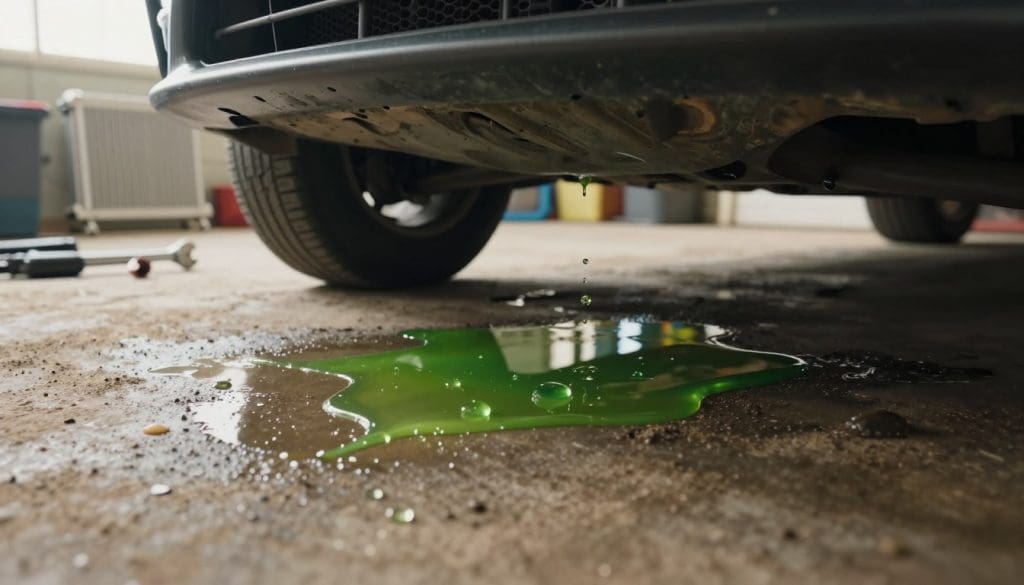
Seeing a puddle under your car can be scary. But, knowing what to look for can help you fix the problem. If you find a coolant puddle, it might mean your radiator is leaking.
Distinguishing Coolant from Other Automotive Fluids
To figure out if it’s coolant, check its color and feel. Coolant is often green, orange, or pink. It feels sweet and syrupy. Here are some important things to notice:
- Color: Coolant can be green, orange, or pink.
- Texture: It has a sweet, syrupy feel.
- Smell: Coolant often has a distinct, sweet odor.
Other car fluids are different. Engine oil is brown or black and thicker.
Locating the Source of the Drip
After identifying the coolant, find where it’s coming from. Look at the radiator and hoses for damage. Follow the puddle to find the leak’s source.
If you’re not sure, get a pro for a radiator leak repair. They can find the problem and fix it, so you can drive again.
The Sweet Smell of Engine Trouble
The scent of leaking antifreeze is unmistakable and often sweet. It signals engine trouble. When your radiator leaks, the escaping antifreeze can produce a distinct aroma that you might notice inside your vehicle.
This sweet smell is not just a minor annoyance. It’s a significant indicator of antifreeze loss symptoms. Antifreeze, or coolant, is designed to regulate your engine’s temperature. Its leakage can lead to serious engine problems if not addressed promptly.
Why Leaking Antifreeze Has a Distinctive Odor
Antifreeze contains ethylene glycol, a chemical that gives it a sweet, syrupy smell. When antifreeze leaks from the radiator, this sweet odor can fill the cabin of your vehicle. This is true, even if the leak is small or if the heating system is in use.
The reason this smell is so distinctive is that ethylene glycol is designed to be detectable even in small quantities. This characteristic helps drivers identify leaks early. It can prevent more severe damage to their vehicle’s engine.
Detecting Smells Inside the Cabin
You may notice the sweet smell of antifreeze inside your cabin under various conditions. For instance, if you’re using the heater, the warm air circulating through the vehicle can carry the scent of leaking antifreeze into the cabin.
To detect this smell, pay attention to any unusual odors when you start your vehicle or when you’re driving. If you notice a persistent sweet smell, it’s worth investigating further. Determine if it’s related to a radiator leak.
Being vigilant about unusual smells can help you catch issues early. If you suspect a leak based on the smell, inspect your radiator and cooling system. Look for any signs of leakage or damage.
Monitoring Your Dashboard Temperature Gauge
Your dashboard temperature gauge shows how well your engine is doing. Keeping an eye on it can spot problems early on.
A leak in the radiator can cause your engine to overheat. This is often shown by an unusual reading on your temperature gauge.
Recognizing Fluctuations in Engine Heat
Changes in engine heat might mean there’s a leak in the radiator. If your temperature gauge needle is moving a lot or is too high, it could mean your engine isn’t cooling right.
Normal engine operating temperature is between 195°F and 220°F. If your gauge is always near the top or goes over it, you should check it out.
Responding to Warning Lights and Indicators
Modern cars have lights and indicators for problems, like overheating. If a warning light comes on, don’t ignore it.
Stop safely and turn off your engine. Check the coolant and look for leaks. If you’re not sure, get radiator service from a mechanic.
Acting fast when you see these signs can prevent big engine damage. Regular checks and upkeep can save you from expensive fixes later.
Why You Need Professional Radiator Leak Repair
A radiator leak is a serious issue that needs immediate attention and expert help. Fixing a leaking radiator is not just about stopping the leak. It’s also about making sure your car’s cooling system works right to avoid more damage.
Before starting repairs, it’s key to understand how complex the job is. If you’ve found that the radiator is leaking, you must find and access all connections to it. This is important before you try to remove it.
The Risks of DIY Patching Methods
DIY fixes might seem like a cheap way to solve the problem, but they can cause more harm. Temporary fixes can lead to leaks again, and without the right tools and knowledge, you could damage your cooling system more.
- Risk of incomplete repairs
- Potential for further system damage
- Lack of guarantee on the repair
Ensuring System Integrity with Expert Service
Professional radiator leak repair services offer a complete fix. Experts have the tools and know-how to not only fix the leak but also check the whole cooling system. This makes sure your car is safe to drive and lowers the chance of future problems.
Benefits of professional service include:
- Thorough inspection of the cooling system
- Guaranteed repairs
- Use of high-quality parts
Choosing professional radiator leak repair means more than just fixing a leak. It’s about keeping your car’s cooling system healthy for a long time. This approach can save you from expensive repairs later and give you peace of mind while driving.
Common Causes of Cooling System Failure
The cooling system is key to your car’s health. Knowing why it fails is important. A good cooling system keeps your engine cool, stopping overheating and damage.
Modern radiators are built to last, up to 150,000 miles with care. But, many things can cause them to fail, needing cooling system leak repair.
Impact of Road Debris and Physical Damage
Physical damage from road debris is a big reason for cooling system failures. Rocks and gravel can hit your radiator, causing damage. This can lead to leaks.
Damage isn’t just to the radiator. Hoses and other parts can also get hurt. If not fixed quickly, it can cause more problems.
The Role of Aging Hoses and Clamps
Aging hoses and clamps are another big problem. Hoses can crack over time, and clamps can loosen or rust. It’s important to check and replace them often.
Regular checks of your cooling system are a must. Look for wear on hoses and clamps. Fixing small problems early can save you from big repairs and cooling system leak repair costs.
The Dangers of Ignoring Overheating Symptoms
Overheating symptoms are serious and can lead to engine failure. Coolant leaks mean less liquid to absorb heat. This can cause the engine temperature to rise, leading to damage.
Potential for Catastrophic Engine Failure
Potential for Catastrophic Engine Failure
Engine overheating raises the risk of failure. Engine parts are made to work within a certain temperature. If this is exceeded, they can warp or seize, leading to expensive repairs or needing a new engine.
The cooling system keeps the engine at the right temperature. Ignoring antifreeze loss symptoms can harm this balance. This can damage the engine block, cylinder head, and other key parts.
Warped Cylinder Heads and Blown Gaskets
Overheating can cause warped cylinder heads and blown head gaskets. A warped head can lead to poor engine performance, including misfires and loss of power.
A blown head gasket is another risk of overheating. This gasket fails when the engine overheats, letting coolant leak into the engine. This can cause more damage and might make your engine fail.
It’s important to address antifreeze loss symptoms quickly. Knowing the dangers of ignoring overheating symptoms helps protect your engine. This can save you from expensive repairs.
How to Safely Inspect Your Radiator
Knowing how to check your radiator safely is key for your car’s cooling system. A good check can spot problems early. This can save you from expensive radiator service later on.
First, park your car in a bright spot, like outside during the day. Let the engine cool down before you start. This step is important to avoid injuries and ensure a safe check.
Safety Precautions Before Opening the Hood
Before you inspect your radiator, take the right safety steps. Make sure your engine is cool. A hot engine can cause serious burns.
Wear gloves and safety glasses to protect yourself. This is to avoid cuts from sharp edges or debris.
Visual Inspection Techniques for Leaks
After you’re safe, start your visual check. Look for leaks or damage on the radiator. Green or yellow fluid on the ground or radiator means coolant is leaking.
Check the radiator hoses for wear or damage. Also, inspect the radiator cap for leaks.
Examine the radiator fins for blockages or damage. Use a soft brush or compressed air to clear debris. By doing this, you can find problems early. This helps you know if you need a pro for radiator service to fix leaks or damage.
Long-Term Consequences of Neglected Leaks
If you ignore a radiator leak, you’re not just risking minor issues; you’re inviting major problems. Neglecting a radiator leak repair can lead to a cascade of issues that affect your vehicle’s overall performance and longevity.
When a radiator leak is left unaddressed, it can cause your engine to operate outside its optimal temperature range. This not only affects the engine’s efficiency but also its performance.
Impact on Fuel Efficiency and Performance
A radiator leak can cause your engine to consume more fuel than usual. When the engine is not at the right temperature, it doesn’t burn fuel efficiently, leading to decreased mileage and increased emissions.
The impact on performance is also significant. An engine running too hot or too cold can lead to decreased power output and responsiveness. This is because modern engines rely on precise temperature control to operate efficiently.
| Issue | Effect on Vehicle | Long-Term Consequence |
|---|---|---|
| Radiator Leak | Engine Overheating | Major Engine Repairs |
| Coolant Loss | Decreased Fuel Efficiency | Increased Fuel Costs |
| Engine Running Hot/Cold | Reduced Performance | Potential for Engine Failure |
The Financial Burden of Major Engine Repairs
The financial implications of neglecting a radiator leak can be substantial. Major engine repairs, including replacing a damaged engine or fixing a warped cylinder head, can be very costly.
By addressing radiator leaks promptly, you can avoid these costly repairs and keep your vehicle in good condition. Regular maintenance, including checking for leaks and ensuring the cooling system is functioning correctly, is key to preventing these issues.
By doing this, you can keep your car in good condition and stop further damage. Timely radiator leak repair is an investment in your vehicle’s longevity and performance.
Preventative Maintenance for Your Cooling System
Preventative maintenance is key to avoiding costly repairs and ensuring your car’s longevity. Your vehicle’s cooling system is vital for its performance. Neglecting it can cause severe engine damage. Regular checks and maintenance can prevent radiator leaks and cooling system failures.
Regular Coolant Flushes
Regular coolant flushes are critical for cooling system maintenance. Over time, coolant can become contaminated and lose its effectiveness. This can cause corrosion and damage to system components. Flushing the coolant system at the recommended intervals helps maintain its integrity and prevents issues such as antifreeze loss symptoms.
The process involves draining the old coolant, flushing the system with a cleaning solution, and refilling it with fresh coolant. This maintains the coolant’s performance and helps identify any leaks or weaknesses in the system.
| Coolant Flush Interval | Benefits |
|---|---|
| Every 30,000 to 50,000 miles | Prevents corrosion and damage |
| As recommended by the manufacturer | Maintains system integrity |
| Upon noticing antifreeze loss symptoms | Early detection of issues |
Inspecting Belts and Hoses
Inspecting the belts and hoses is another critical aspect of preventative maintenance. Over time, these components can wear out, crack, or become brittle. Regular inspections can help identify these issues before they become major problems.
During routine service, have your mechanic inspect the belts and hoses. Look for signs of wear such as cracks, frays, or soft spots. Replacing these components at the first sign of wear can prevent more costly repairs down the line, including those related to cooling system leak repair.
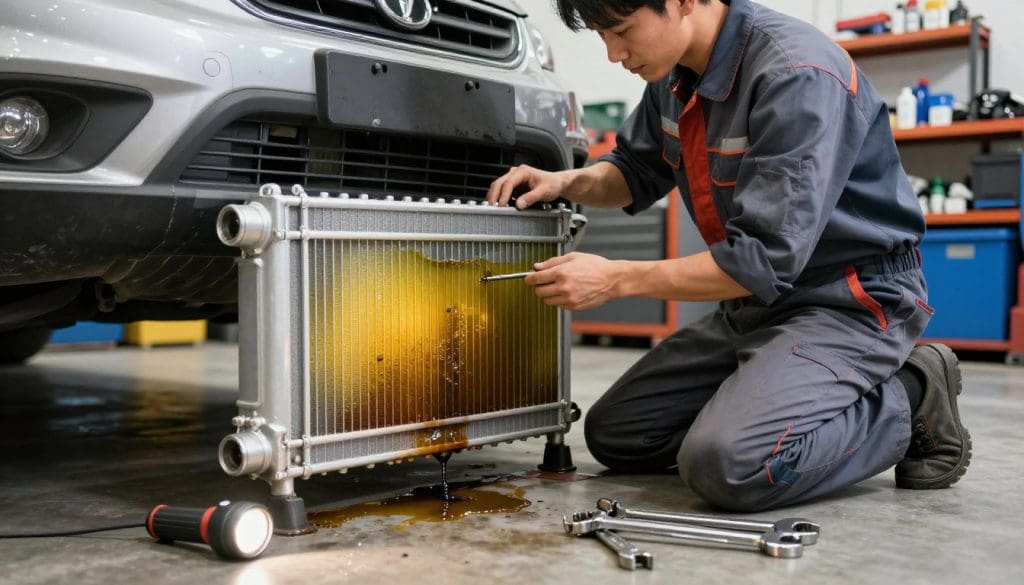
By staying on top of these maintenance tasks, you can significantly reduce the risk of radiator leaks and cooling system failures. This ensures your vehicle runs smoothly and efficiently.
When to Seek Emergency Automotive Assistance
If you notice any of these signs, you should get help fast. A radiator leak or cooling system failure can turn into a big engine problem quickly.
Signs of Immediate Engine Danger
Some signs show your engine is in danger. These include:
- A big drop in coolant levels without a clear leak
- The temperature gauge goes into the red zone or dashboard lights turn on
- A sweet, syrupy smell inside or outside your car, meaning antifreeze is leaking
- You see leaks around the radiator, hoses, or under the car
Ignoring these signs can cause serious engine damage, like a blown head gasket or engine seizure.
Contacting Heaven Automotive for Reliable Support
If you see any of these signs, it’s time to call a pro. At Heaven Automotive, our team is ready to fix radiator service and cooling system problems fast. For more on cooling system issues and how we solve them, check our page on common cooling system issues.
Visit Us at 6645 Poss Rd. San Antonio, TX 78238
Our place is easy to find at 6645 Poss Rd, San Antonio, TX 78238. We’re here to give you the best radiator service and support.
Call Our Team at (210) 682-3898
Don’t wait to call; dial (210) 682-3898 to schedule your service today! Our team is ready to get you safely back on the road.
Conclusion
Spotting and fixing radiator leaks is key to keeping your car running well. Look out for signs like puddles under your car and changes in the dashboard temperature gauge. These signs mean you need to act fast to avoid engine problems.
Fixing a cooling system leak is important for your car’s engine health. If you think you have a leak, get help from a pro right away. This will stop more damage from happening.
Heaven Automotive is ready to help with top-notch radiator service and leak repairs. Don’t wait until it’s too late. Take care of your car’s engine and performance now.
Stay alert and fix problems quickly to have a safe and smooth drive. For dependable radiator repair and service, count on Heaven Automotive to get you moving again.