

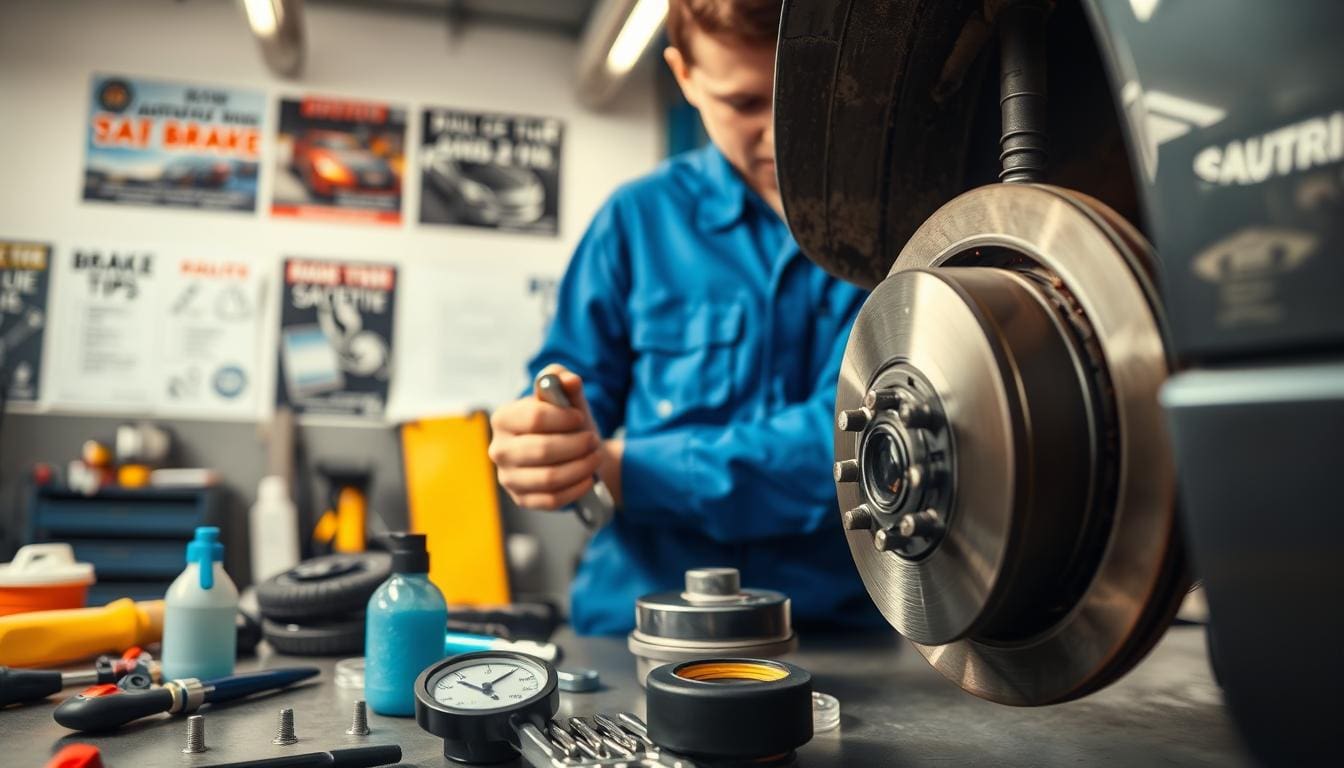
As a car owner, keeping your brakes in top shape is key for your safety. Brake maintenance is more than just replacing old parts. It’s about making sure your car can stop when you need it to.
If you hear squealing noises when braking or feel a spongy brake pedal, your brakes might need help. Heaven Automotive is ready to help you figure out and brake repair or brake service to keep you safe.
Key Takeaways
- Recognizing signs of brake wear is key for safety.
- Unusual noises or a spongy brake pedal mean brake problems.
- Regular brake checks can avoid expensive fixes.
- Heaven Automotive offers expert brake diagnosis and repair.
- Don’t wait for brake service to stay safe on the road.
Understanding Brake Functionality
Knowing how your car’s brakes work is key to spotting problems early. Your car’s brakes are made of many parts that work together. They help you stop safely.
How Your Braking System Works
Your car’s brakes use both mechanical and hydraulic parts. When you press the brake pedal, it pushes a piston in the master cylinder. This piston sends brake fluid through the system.
This fluid pressure goes to the brake calipers. There, it makes the brake pads press against the rotors or drums. This creates the friction needed to slow or stop your car.
The master cylinder is at the heart of this system, creating the pressure for braking. The brake lines and hoses carry this pressure to the calipers or wheel cylinders. Knowing how these parts work together is key to fixing brake problems.
Common Components of Brakes
Many important parts make up your car’s braking system. These include:
- Brake Pads: These are the friction material that contacts the rotors to slow your vehicle.
- Brake Rotors/Drums: These are the surfaces against which the brake pads press to create stopping friction.
- Brake Fluid: A hydraulic fluid that transmits pressure through the brake system.
- Brake Calipers: These house the brake pads and piston(s) that clamp the pads against the rotors.
- Master Cylinder: The component that generates hydraulic pressure when you press the brake pedal.
Regular checks and upkeep of these brake components are essential. They keep your vehicle’s brake functionality at its best. If you see any brake problems, get a mechanic like those at Heaven Automotive to look at it.
By knowing how your brakes work and keeping them in good shape, you ensure your car’s safety and performance. For any brake issues or maintenance, contact Heaven Automotive for expert help.
Warning Lights on Your Dashboard
Dashboard warning lights are key to your car’s safety. They tell you when something needs fixing, like brake maintenance. These lights help stop small problems from getting big.
Importance of Dashboard Indicators
Your car’s dashboard has many warning lights. Each light signals a different problem. These dashboard indicators keep your car running well by alerting you to hidden issues.
Not paying attention to these lights can cause big problems. It might even lead to safety risks and expensive fixes. So, it’s important to know what these lights mean and act fast.
What the Brake Warning Light Means
The brake warning light on your dashboard can mean several things. It could be because your brake pads are worn out, there’s a brake fluid leak, or an electronic brake issue.
When this light comes on, you should act quickly. First, check your brake fluid level. If it’s low, that’s why the light is on. But if the fluid is fine, it might be your brake pads or another part of the brakes.
- Check brake fluid level
- Inspect brake pads for wear
- Consult a professional mechanic if unsure
If you’re not sure what’s wrong or how to fix it, see a mechanic at Heaven Automotive. They can find out what’s wrong and fix it. This way, your car will be safe to drive.
Don’t ignore the signs your car is giving you. Fixing brake problems quickly can prevent accidents and save you money. Visit Heaven Automotive today to check and maintain your brakes.
Unusual Noises When Braking
Strange noises from your car’s brakes can mean many things. They can be small problems or big ones. If you hear odd sounds when you brake, finding out why is key to avoid more damage.
Types of Noises to Watch For
There are different sounds that can tell you about brake issues. Here are some common ones:
- Squealing or Squeaking: This usually means your brake pads or insulators are worn out.
- Grinding: This noise means your brake pads are very worn and are rubbing against the rotors.
- Clicking or Clunking: This could be because your brake parts are loose or old.
- Whirring or Whining: This might be because your brake rotors are warped or too worn.
When to Seek Brake Repair
If you hear odd brake noises, get your brakes checked by a mechanic. Here are times when you should get your brakes fixed:
| Noise Type | Possible Cause | Action Required |
|---|---|---|
| Squealing | Worn Brake Pads | Inspect and replace brake pads |
| Grinding | Severely Worn Brake Pads or Rotors | Replace brake pads and rotors if necessary |
| Clicking or Clunking | Loose Brake Components | Tighten or replace loose components |
If you hear odd noises when braking, call Heaven Automotive right away. Our experts can check and fix your brakes. We make sure your car is safe and works well.
Decreased Stopping Power
If your car takes longer to stop, it’s a serious problem. It means your brakes aren’t working right. This can make driving very unsafe.
Signs of Fading Brakes
Fading brakes show up in different ways. You might feel a spongy brake pedal or notice your car stops slower. You could also hear strange noises like grinding or squealing when you brake.
Another sign is if your car pulls to one side when you brake. This means your brakes are wearing unevenly or there’s a problem with the brake calipers. It’s important to fix these problems quickly to stay safe.
Factors Affecting Stopping Distance
Many things can change how fast your car stops. Road conditions, vehicle speed, and brake condition are key. For example, wet or icy roads and high speeds can make stopping harder.
Keeping your brakes in good shape is important. Check your brake pads, make sure the brake fluid is right, and fix any problems fast. At Heaven Automotive, we suggest regular brake checks to keep your car safe and running well.
If your car stops less well, get your brakes checked by a pro. At Heaven Automotive, our skilled team can find and fix brake problems. This makes sure your car is safe to drive. Call us today to book your brake check and repair.
Vibration or Pulsation When Braking
If your car vibrates or pulsates when you press the brake pedal, it’s a sign of a problem. This issue can be unsettling and may indicate a serious problem that needs fixing.
Brake vibration or pulsation can be caused by several factors. These include warped rotors, uneven brake pad wear, or issues with the brake calipers. Knowing the cause is key to fixing the problem.
What Causes Brake Vibration?
Brake vibration often comes from uneven wear on the brake rotors or pads. Warped or excessively worn rotors can make the brake pedal vibrate or pulsate. Other causes include loose or worn-out brake parts, or misaligned brake calipers.
- Warped or unevenly worn brake rotors
- Uneven brake pad wear
- Loose or worn-out brake components
- Misaligned brake calipers
How to Diagnose This Issue
Diagnosing brake vibration requires a detailed check of the braking system. At Heaven Automotive, our technicians are skilled in finding the problem’s source. They examine your vehicle’s brakes thoroughly, checking the rotors, pads, and calipers. They also make sure all brake parts are aligned and secure.
If you notice vibration or pulsation when braking, get your car checked by a pro. At Heaven Automotive, we have the skills and tools to fix brake issues quickly. Don’t risk your safety on the road; contact us today to schedule a brake inspection and repair.
Pulling to One Side
If your car pulls to one side when you brake, it’s a sign of trouble. This problem, called brake pulling, can stem from uneven brake pads, misaligned wheels, or faulty brake calipers.
Possible Causes of Pulling
Uneven brake pad wear is a common cause of brake pulling. When brake pads wear down unevenly, it makes the car pull towards the side with the worn pad. Another big factor is misaligned wheels. If your wheels are not aligned right, it can cause uneven tire wear and affect braking.
Other possible causes include worn or faulty brake parts, like calipers or rotors, and brake fluid system issues. It’s key to have a pro mechanic check your car to find the exact problem.
Importance of Wheel Alignment
Wheel alignment is key for your car’s safety and performance. Properly aligned wheels help your car track straight and tires wear evenly. But, misaligned wheels can cause problems like brake pulling, uneven tire wear, and lower fuel efficiency.
Regular brake maintenance is also critical. This includes checking brake pads, rotors, and fluid levels, and making sure wheels are aligned. By keeping up with these tasks, you can avoid brake pulling and keep your car safe to drive.
If you’re facing brake pulling or other brake issues, it’s time to see Heaven Automotive. Our skilled techs can find the problem and suggest the right fixes to make your car safe again.
Brake Fluid Leaks
If you think there’s a brake fluid leak, you must fix it fast. Brake fluid is key for your car’s brakes to work right. A leak can make driving very unsafe.
Signs of a Leak in the System
Finding a brake fluid leak early can stop bigger issues. Look out for these signs:
- A spongy brake pedal or one that goes all the way to the floor.
- Visible fluid leaks under your vehicle, around the wheels or brake lines.
- A low brake fluid level shown by your dashboard warning light.
Why a Leak Requires Immediate Action
A brake fluid leak is a big deal, not just a small problem. It can make your brakes less effective. This might mean you need longer to stop or even brake failure. It’s important to keep up with brake maintenance to catch and fix leaks early.
If you see signs of a brake fluid leak, call Heaven Automotive right away. Their skilled team can check and fix your brakes. They’ll make sure you’re safe while driving.
Brake Pad Wear
Your car’s brake pads are key for safe driving. It’s important to watch their wear closely. Brake pads wear out over time due to friction. Their condition affects your car’s stopping power.
Indicators of Worn Brake Pads
There are signs that show your brake pads are worn out. These include:
- Squealing or grinding noises when you apply the brakes
- A spongy brake pedal or one that feels soft
- Vibration or pulsation when braking
- Reduced stopping power or longer stopping distances
Regularly checking for these signs can help you identify worn brake pads early.
How to Inspect Your Brake Pads
Inspecting your brake pads is simple. First, remove the wheel to see the brake pads clearly. Then, look for the wear indicators on the pads. If they’re down to the indicator, it’s time for new ones.
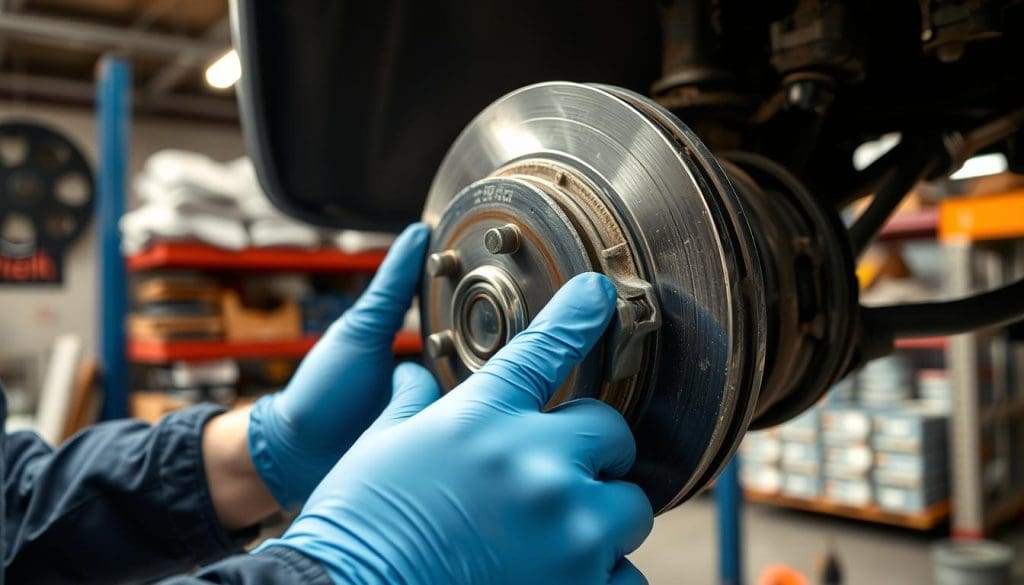
If you’re not sure how to check your brake pads or find they’re worn out, see a mechanic. At Heaven Automotive, our skilled technicians can check your brake pads. They’ll tell you what repairs you need to keep your car safe.
Don’t wait until it’s too late; book your brake inspection today. Make sure your vehicle’s brakes are in great shape.
Heat Build-Up During Use
When your brakes get too hot during braking, it’s a sign of trouble. This heat can make your brakes less effective. It might even cause safety issues on the road.
Signs of Overheating Brakes
There are clear signs your brakes are overheating. You might feel a spongy brake pedal or smell a burning smell when braking. Sometimes, you’ll see smoke from your wheels. These signs mean your brakes are too hot.
This heat can come from worn-out brake pads or warped rotors. It’s important to notice these signs and act fast. If you ignore them, your brakes could fail.
Risks of Ignoring Heat Issues
Ignoring brake heat problems is risky. Brake failure is a big risk because hot brakes can’t stop your car well. This could cause accidents, endangering everyone.
Also, ignoring brake care can lead to expensive repairs later. For example, warped rotors from heat might need replacement. This could cost a lot to fix.
If you notice heat during braking, get your brakes checked by a pro. At Heaven Automotive, our team can find out why your brakes are overheating. We’ll tell you what repairs you need to keep your car safe.
Don’t wait until it’s too late. Call Heaven Automotive today for a brake check. Keep your car safe to drive.
Odor and Smoke When Braking
Seeing a strange smell or smoke when you brake can be scary. It often means there’s a big brake problem. If you notice odd smells or smoke, it’s key to know why and fix it fast to keep your car safe and running well.
Types of Odors to Beware Of
Odors can point to different brake system issues. A burning smell might mean your brakes are too hot or the pads or rotors need fixing. A sweet smell could mean brake fluid is leaking, as it has a unique smell. Knowing these signs helps you find the problem right.
- Burning smell: Could indicate overheating brakes or worn brake pads.
- Sweet or syrupy smell: Might signify a brake fluid leak.
- Musty or moldy smell: Could be a sign of moisture accumulation within the brake system.
What to Do in Case of Smoke
If you see smoke when braking, act fast. First, make sure you’re in a safe spot away from cars. Then, turn off the engine and let the car cool down. Check the brakes for damage or wear. If you’re not sure, it’s best to get a mechanic’s help.
| Action | Description |
|---|---|
| Move to a safe location | Pull over to a safe area away from traffic. |
| Turn off the engine | Switch off the engine and let the vehicle cool. |
| Inspect the brake system | Look for signs of wear, damage, or leaks. |
| Consult a professional | If unsure, seek help from a qualified mechanic. |
If you’re getting odd smells or smoke when braking, Heaven Automotive can help. Our experts will find and fix the problem so your car is safe again. Contact us for a check-up.
Frequency of Brake Service
Regular brake service is key for your vehicle’s safety and performance. Keeping your brakes in top shape can prevent accidents and injuries. It also saves your vehicle from damage.
Recommended Service Intervals
The brake service schedule varies based on your vehicle and how you drive. Usually, brake checks are needed every 10,000 to 15,000 miles. But, always check your owner’s manual for the best schedule for your car.
- Check your owner’s manual for specific guidance on brake service intervals.
- Consider your driving habits; frequent city driving or driving in hilly terrain may require more frequent brake inspections.
- Be aware of signs that indicate your brakes need immediate attention, such as unusual noises or decreased stopping power.
When to Schedule Brake Inspections
Book a brake inspection if you see any odd signs or if it’s time for a check-up. For more details on when to get a brake inspection, visit Heaven Automotive’s guide on brake inspections. Regular brake maintenance keeps you safe and saves you money on repairs later.
At Heaven Automotive, we know how vital brake care is. Our team is committed to excellent brake service and upkeep. By choosing us, you can drive confidently, knowing your vehicle is well taken care of.
Choosing the Right Brake Repair Shop in San Antonio
Choosing the right brake repair shop is key for your car’s safety and performance. You need a shop that is both skilled and cares about its customers.
Key Considerations for Brake Repair Services
Experience and reputation are important. Look for a shop in San Antonio with ASE-certified techs and the latest tools. Heaven Automotive is known for its thorough brake checks and repairs.
Before you choose a service, ask about their inspection process, repair warranty, and costs. A good shop like Heaven Automotive will explain things clearly and give clear prices.
If you’re in San Antonio and need brake repair, think about Heaven Automotive. They are experts and focus on making customers happy. Call (210) 682-3898 or visit 6645 Poss Rd, San Antonio, TX 78238 to book. For more on brake checks and important signs, check their website.