

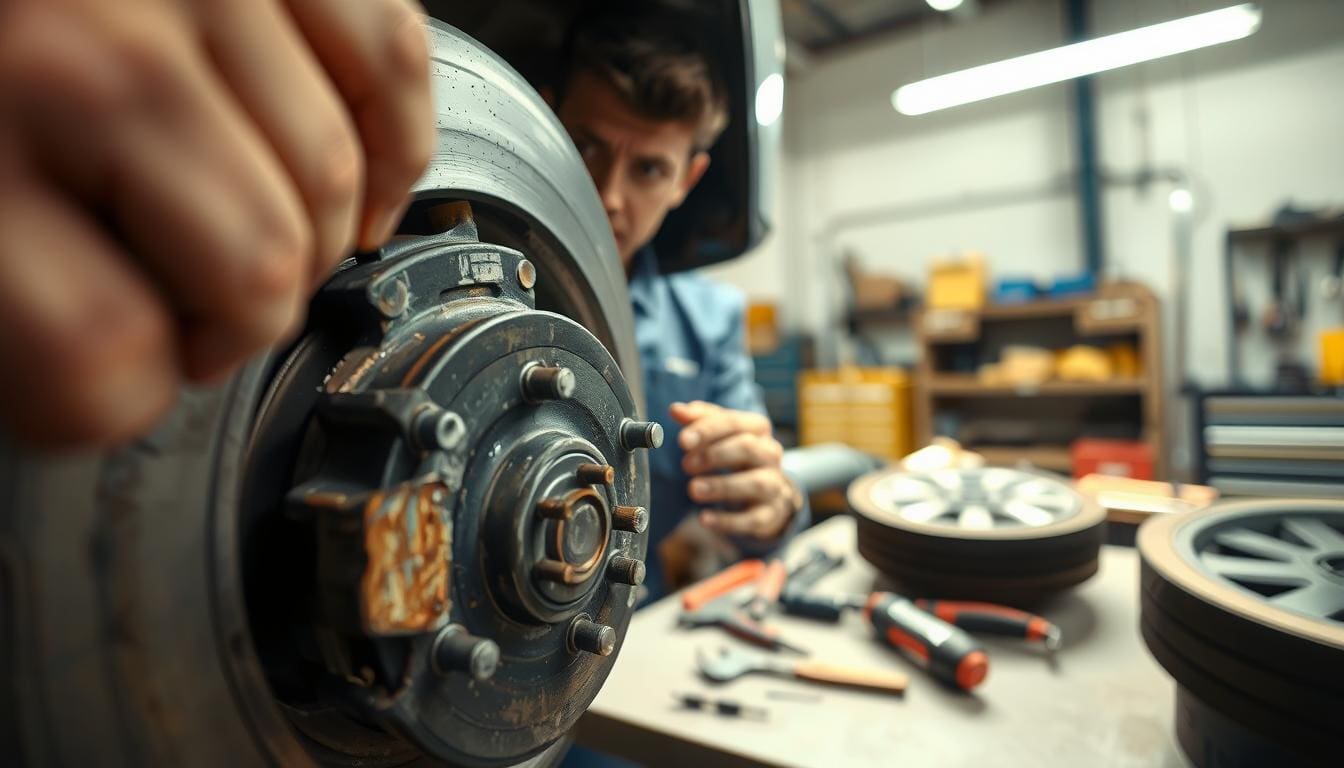
As a car owner, you know how vital brake maintenance is. Ignoring brake problems can cause bigger issues like vibration issues and uneven wear. These problems also point to the need for a tire balancing service.
Keeping your brakes in good shape is key for a smooth, safe drive. If your brakes aren’t working right, you might feel vibrations while driving. This not only hurts your car’s performance but also puts your safety at risk.
If you notice any odd signs with your brakes, act fast. At Heaven Automotive, located at 6645 Poss Rd, San Antonio, TX 78238, or by calling (210) 682-3898, you can get expert help.
Key Takeaways
- Neglecting brake issues can lead to vibration problems and uneven wear.
- Proper brake maintenance is vital for a safe drive.
- Vibrations while driving can signal brake problems.
- Quickly addressing brake issues is key for safety.
- Getting help from a pro like Heaven Automotive can fix brake issues.
Hire Heaven Automotive to fix your car and keep you safe on the road.
Understanding Brake Functionality
Knowing how your brakes work is key to spotting problems early. At Heaven Automotive, we stress the need for brake upkeep. It’s vital for your vehicle’s performance.
How Your Braking System Works
Your car’s brakes slow or stop it by turning kinetic energy into heat through friction. This involves several parts working together. When you press the brake pedal, it makes the brake calipers squeeze the brake pads against the rotors.
Proper wheel balancing is also key for your vehicle’s performance. Unbalanced wheels cause vibrations that hurt braking efficiency. At Heaven Automotive, we suggest regular wheel balancing for smooth rotation and even tire wear.
Common Components of Brakes
The braking system has important parts like brake pads, rotors, calipers, and brake fluid. Brake pads wear out and need to be replaced. Rotors can get warped or worn down, needing resurfacing or replacement.
- Brake Pads: Wear down over time, need periodic replacement
- Rotors: Can become warped or excessively worn
- Caliers: Clamp brake pads against rotors
- Brake Fluid: Transfers pressure through the braking system
Regular checks of these parts are essential for good braking. Proper tire care, like regular rotation and balancing, also helps your brakes work better.
Warning Lights on Your Dashboard
Dashboard warning lights are key to your car’s safety. They alert you to brake problems early. Knowing what these lights mean is vital for your car’s health and your safety.
Importance of Dashboard Indicators
Dashboard indicators, like warning lights, are very important. They show issues, like brake problems or vibration issues from unbalanced wheels. If you ignore these signs, you could face bigger problems, like poor car performance and higher accident risks.
Some important dashboard indicators to watch for include:
- The brake warning light, which means there’s a brake system problem.
- The tire pressure monitoring system (TPMS) light, which tells you if your tires are low, leading to tire balancing service needs.
- The ABS (Anti-lock Braking System) light, which warns of an ABS system malfunction, important for safe braking.
What the Brake Warning Light Means
The brake warning light is a critical sign of a brake system problem. If it lights up, you need to act fast. It could mean anything from worn brake pads to a brake fluid system issue.
When the brake warning light turns on, do the following:
- Check your brake fluid level to make sure it’s right.
- Look at your brake pads for wear, as worn pads can cause the light to come on.
- Get your car checked by a mechanic, like those at Heaven Automotive, at 6645 Poss Rd, San Antonio, TX 78238, or call (210) 682-3898.
Fixing brake problems quickly is key for your safety and your car’s life. By understanding and acting on dashboard warning lights, you can stop small problems from becoming big repairs.
Unusual Noises When Braking
Noticing unusual noises when you brake is a warning sign that shouldn’t be ignored. These noises can mean problems like worn brake pads or unbalanced wheels. They need quick attention to keep your vehicle safe and running well.
Types of Noises to Watch For
Different noises can signal various problems with your braking system. A grinding noise usually means your brake pads are worn out and need to be replaced. Squealing or squeaking sounds often point to brake pads wearing down or debris in the system. If you hear a clicking or clunking noise, it might be due to loose or worn-out parts.
At Heaven Automotive, experts can find and fix these issues. Proper tire care is also key for your vehicle’s braking performance. Uneven tire wear can affect how well your vehicle stops.
When to Seek Brake Repair
If you notice any unusual noises when braking, it’s important to get your vehicle checked by a pro. Ignoring these signs can lead to bigger problems, including safety risks on the road.
The following table summarizes the types of noises and their possible causes:
| Noise Type | Possible Cause | Recommended Action |
|---|---|---|
| Grinding | Worn-out brake pads | Replace brake pads |
| Squealing/Squeaking | Wearing down brake pads or debris in the system | Inspect and clean or replace brake pads |
| Clicking/Clunking | Loose or worn-out components, possibly related to wheel weights | Inspect and adjust or replace components |
If you’re experiencing any of these symptoms, it’s wise to get brake repair quickly. At Heaven Automotive, professionals are ready to diagnose and fix your vehicle’s braking system issues. They ensure your safety on the road.
Decreased Stopping Power
Your vehicle’s braking system is key for safety. If it stops slower than usual, it’s a warning sign. Pressing the brake pedal should make your car stop smoothly and fast.
Signs of Fading Brakes
Fading brakes show in different ways. The brake pedal might feel softer or need more pressure. If your car pulls to one side when braking, it could mean uneven brake wear.
Vibration issues when braking can also happen. This could mean warped rotors or other brake problems. If you notice these signs, get your brakes checked by a pro.
Factors Affecting Stopping Distance
Many things can change how fast your car stops. Worn brake pads are a big one, as they reduce friction. Tire balancing service is also important, as unbalanced tires can cause uneven wear.
Other factors include brake fluid condition, debris or corrosion in the braking system, and vehicle maintenance. Regular checks can prevent stopping power issues.
If your car stops slower, fix it fast. Call Heaven Automotive at (210) 682-3898 for expert brake repair. Make sure your car is safe to drive.
Vibration or Pulsation When Braking
A vibrating or pulsating feeling when you brake is not normal. It means you should look into why it’s happening. This issue often shows there’s a problem with your vehicle’s brakes.
What Causes Brake Vibration?
Brake vibration can come from a few things:
- Unbalanced wheels: If your wheels aren’t balanced, you might feel vibrations when braking. Making sure your wheels are balanced is key to tire care.
- Warped brake rotors: Rotors that are warped or too worn can make the brake pedal vibrate or pulse.
- Worn brake pads: Brake pads that are worn out can also cause vibrations. This is because they don’t make even contact with the rotors.
It’s important to fix brake vibration quickly. If you don’t, it could damage your vehicle’s brakes more.
How to Diagnose This Issue
To figure out brake vibration, you need to do some checks and tests. Here’s what you can do:
- Look at your wheel weights and make sure your wheels are balanced.
- Check your brake rotors for any warping or excessive wear.
- Check your brake pads for wear and replace them if needed.
If you’re not sure how to find or fix brake vibration, see a professional mechanic. For people in San Antonio, TX, Heaven Automotive at 6645 Poss Rd. is a good place for brake checks and repairs.
Pulling to One Side
If your car pulls to one side when you brake, it’s a big deal. It might mean a serious problem with your brakes. This feeling can be scary and shows something’s wrong with your car’s alignment or brakes.
There are many reasons why this happens. Knowing what causes it is key to fixing it right.
Possible Causes of Pulling
The feeling of pulling when you brake can come from a few things:
- Bad wheel alignment can cause uneven tire wear and steer your car off course.
- Unbalanced wheels lead to vibrations, which you feel when you brake.
- Worn-out brake parts, like pads or rotors, can make your car pull to one side.
A tire balancing service can solve vibration problems from unbalanced wheels. It’s important to keep your wheels balanced and aligned for safe driving.
Importance of Wheel Alignment
Having your wheels aligned right is key for your car’s health. It keeps your tires wearing evenly. If they’re not aligned, you might feel your car pulling to one side when you brake.
| Issue | Cause | Solution |
|---|---|---|
| Pulling to one side | Improper wheel alignment | Wheel alignment service |
| Vibration during braking | Unbalanced wheels or worn brake components | Tire balancing service or brake repair |
| Uneven tire wear | Misaligned wheels | Regular wheel alignment checks |
For expert help with brake and wheel alignment issues, check out Heaven Automotive. They can find and fix problems that make your car pull to one side. This ensures your car drives safely and smoothly.
Brake Fluid Leaks
Brake fluid leaks are a serious issue with your vehicle’s brakes. This fluid is key for your brakes to work right. It helps your car stop safely. A leak can make your brakes less effective, which might cause accidents.
Signs of a Leak in the System
Spotting a brake fluid leak early is vital for your safety and car’s performance. Look out for these signs:
- A spongy brake pedal means there’s air or low fluid in the system.
- Fluid leaks under your car, near the brake lines and master cylinder.
- A low brake fluid level warning light on your dashboard.
- A burning smell from the brakes, which could mean they’re overheating.
Regular tire care and checks can also spot brake problems early. Worn tires add stress to your brakes.
Why a Leak Requires Immediate Action
A brake fluid leak is a big deal and needs quick action. If ignored, it can cause:
| Consequence | Description |
|---|---|
| Reduced Braking Performance | Low brake fluid levels mean you’ll stop farther, raising accident risks. |
| Brake System Damage | Air in the system can damage the master cylinder and other parts. |
| Safety Risks | A car with bad brakes is a danger to everyone on the road. |
Keeping your brakes in check, including for leaks, is just as important as using the right wheel weights when changing tires. It keeps your car balanced and safe.
If you think you have a brake fluid leak, call a pro like Heaven Automotive for help. They’ll fix the problem fast and make sure your brakes work right.
Brake Pad Wear
Worn-out brake pads can make stopping harder, so it’s key to check them often. Brake pads are vital for your car’s brakes. Their wear can affect your safety.
Indicators of Worn Brake Pads
There are signs that show when brake pads need attention. These include:
- Squealing or grinding noises when you apply the brakes
- Vibration or pulsation when braking, which can be related to vibration issues
- A spongy brake pedal or one that feels soft when pressed
- Reduced stopping power, making it harder to stop your vehicle
If you see these signs, get your brake pads checked. Ignoring them can cause bigger problems, like damage to other brake parts.
How to Inspect Your Brake Pads
Checking your brake pads is easy:
- Look for wear indicators on the brake pads. These are usually metal tabs that make a noise when the pads are worn out.
- Check the thickness of the brake pads. If they are less than 1/8 inch thick, they need to be replaced.
- Inspect the brake pads for uneven wear. Uneven wear can be a sign of issues like misaligned wheels or problems with your vehicle’s suspension, which might require a tire balancing service.
| Brake Pad Condition | Thickness | Action Required |
|---|---|---|
| Good | More than 1/4 inch | None |
| Worn | 1/8 inch to 1/4 inch | Schedule inspection |
| Critical | Less than 1/8 inch | Replace immediately |
If you’re unsure about your brake pads or need help, visit Heaven Automotive. They have the skills to keep your brakes working right.
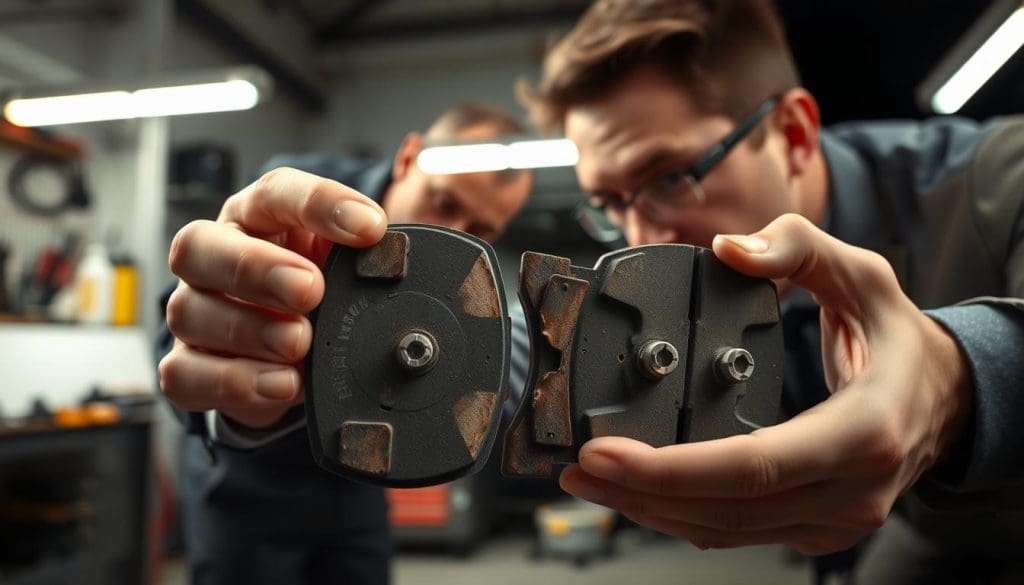
Heat Build-Up During Use
Excessive heat during braking is a serious safety issue. It can make your brakes less effective, leading to accidents. Keeping your brakes in good shape is key to avoiding these problems.
Signs of Overheating Brakes
There are signs your brakes might be overheating. Look out for a spongy brake pedal, strange noises, or a burning smell. If you notice any, get your brakes checked by a pro like Heaven Automotive.
Good tire care and the right wheel weights can help your brakes. Avoiding hard braking often can also help prevent overheating.
Risks of Ignoring Heat Issues
Ignoring brake heat issues can be dangerous. It can cause brake failure. Overheated brakes can also make stopping harder, risking everyone’s safety.
Don’t wait to fix brake overheating problems. Regular checks and maintenance can catch issues early. For top brake care, visit Heaven Automotive.
Odor and Smoke When Braking
Unusual odors and smoke from your brakes mean you need to check them fast. These signs can show serious problems. It’s important to find out what’s causing them to avoid more damage.
Types of Odors to Beware Of
A burning smell when you brake might mean your brake pads are worn out. Or, your brakes might be too hot. A smell like rotten eggs could be a sign of a bad catalytic converter. Ignoring these smells can lead to more severe issues, like brake failure.
To figure out the problem, you should:
- Check your brake pads for wear and tear.
- Inspect your brake fluid level and condition.
- Look for any signs of leakage in the brake system.
What to Do in Case of Smoke
If you see smoke from your brakes, it’s a big problem that needs quick action. Smoke means your brakes might be too hot. Pull over to a safe location as soon as possible and turn off the engine to let them cool down.
For a detailed check and fixes, call Heaven Automotive at (210) 682-3898. Their team can find the problem and fix it. They can also help with any vibration issues that might be causing the problem.
Regular brake checks can stop these problems before they start. Keeping your brakes in top shape is key to staying safe on the road.
Frequency of Brake Service
Regular brake service is key for your vehicle’s safety and performance. Your brakes are a critical safety feature. Neglecting them can lead to serious consequences.
Ensuring your brakes are serviced at the right intervals is vital. It prevents accidents and keeps your vehicle healthy.
Recommended Service Intervals
The brake service frequency depends on your vehicle’s make, driving conditions, and brake pads type. Brake pads should be checked every 10,000 to 15,000 miles. Always check your vehicle’s owner’s manual for the recommended service schedule.
Driving in heavy traffic or hilly areas may need more brake checks. Proper tire care is also important for brake maintenance. Uneven or improperly balanced tires can stress your brakes.
When to Schedule Brake Inspections
Get a brake inspection if you notice unusual noises, vibrations, or reduced stopping power. Also, during routine maintenance checks, have your brakes looked at. Regular inspections can catch issues early.
For expert brake service, visit Heaven Automotive at 6645 Poss Rd, San Antonio, TX 78238. Their team offers thorough inspections and repairs. Proper maintenance, including wheel weights and tire care, keeps your vehicle safe and efficient.
By keeping up with brake maintenance and addressing issues quickly, you ensure your vehicle’s safety and performance for years.
Choosing the Right Brake Repair Shop in San Antonio
Choosing a reliable brake repair service is key for your car’s safety and performance. You want a shop that can spot problems like vibrations and fix them right. They should also offer tire balancing services to prevent uneven wear.
Key Factors in a Repair Shop
Find a brake repair shop with skilled technicians and modern tools. They should check your brakes well and suggest the right fixes. A good shop will also give clear prices and a warranty on their work.
Essential Questions to Ask
Before you choose a brake repair service, ask a few important questions. Find out if they know how to work on your car’s make and model. Ask about their technicians’ qualifications and the parts they use.
Also, ask if they give detailed inspection reports and maintenance tips. This can help avoid future problems like uneven tire wear. If you’re in San Antonio, Heaven Automotive at 6645 Poss Rd. is a great choice. Their team can fix all sorts of brake issues, keeping your car safe. Call them at (210) 682-3898 to book a time. For more on tire balancing and its benefits, check their website.