

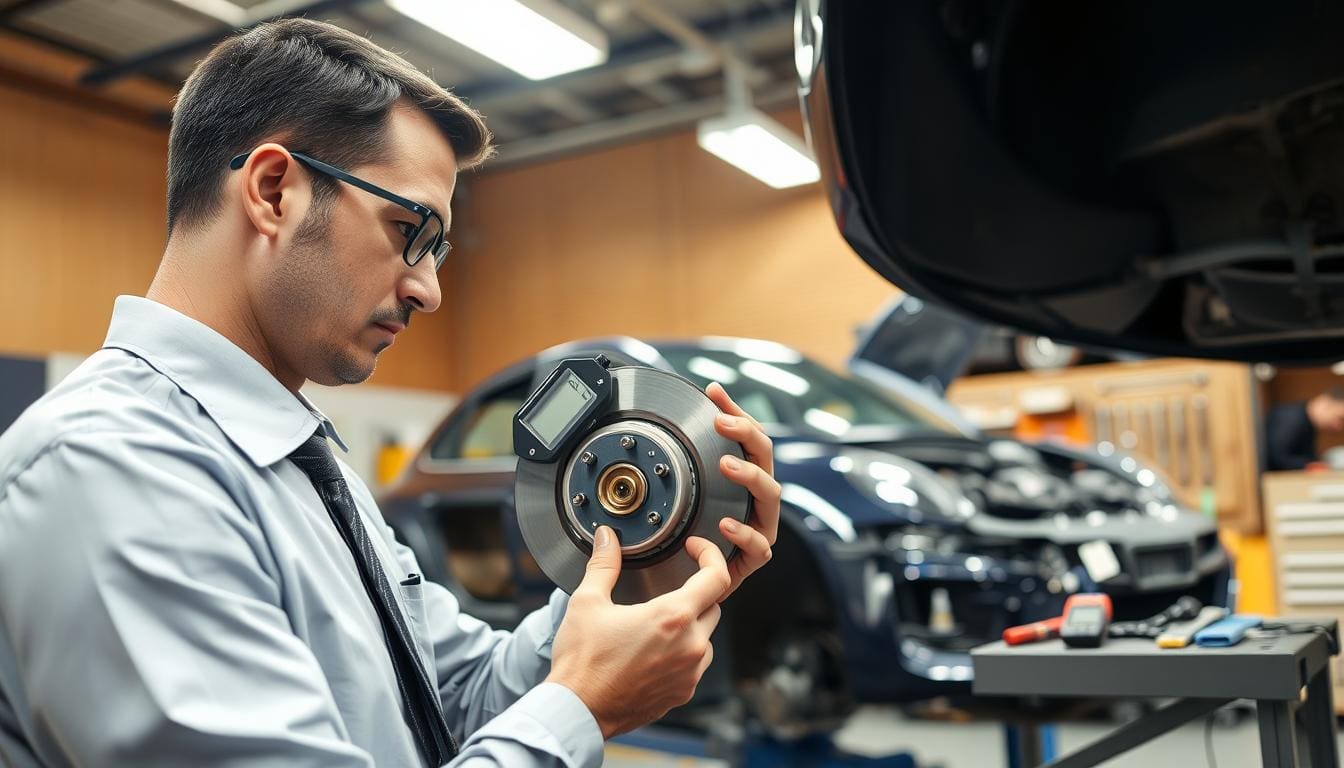
Your vehicle’s brakes are key to your safety. They need regular brake maintenance to work right. If you hear odd noises, feel vibrations, or struggle to stop, your brakes might need help.
Getting your brakes checked often can catch problems early. At Heaven Automotive, in San Antonio, TX, they’ll make sure your brakes are safe. Call (210) 682-3898 or visit 6645 Poss Rd to book a service interval today.
Key Takeaways
- Regular brake maintenance is key for safety.
- Odd noises or vibrations mean your brakes might be failing.
- It’s a bad sign if your car doesn’t stop as well as it used to.
- Heaven Automotive offers top-notch brake repair services.
- Don’t wait to book a service interval to avoid brake troubles.
Understanding Brake Functionality
Knowing how your car’s brakes work can make you safer on the road. The braking system slows or stops your vehicle. It has several parts that work together.
How Your Braking System Works
The braking system turns kinetic energy into heat through friction. When you press the brake pedal, it sends brake fluid to the brake calipers. The calipers then press the brake pads against the rotors, slowing or stopping your vehicle.
Regular inspections and maintenance are key. They help ensure your brakes work right. This includes checking brake fluid, brake pads, and rotors, and looking for leaks.
Common Components of Brakes
The main parts of your vehicle’s braking system are:
- Brake Pads: These are the friction material that contacts the rotors to slow or stop your vehicle.
- Brake Rotors: These are the metal discs that the brake pads clamp onto to create friction.
- Brake Calipers: These house the brake pads and clamp them against the rotors.
- Brake Fluid: This is the hydraulic fluid that transmits the force from the master cylinder to the brake calipers.
- Master Cylinder: This is the component that converts the non-hydraulic pressure from the brake pedal into hydraulic pressure.
At Heaven Automotive, your trusted mechanic in San Antonio, we stress the need for regular brake checks. Call us at (210) 682-3898 to book your appointment today.
Warning Lights on Your Dashboard
Your car’s dashboard is more than just a display of speed and fuel level. It’s a critical safety feature that warns you of impending brake issues. Dashboard indicators alert you to problems, including brake-related ones. Understanding these warnings can help you take timely action, potentially avoiding more severe problems down the road.
Importance of Dashboard Indicators
Dashboard warning lights are designed to notify you of various issues. They range from routine maintenance needs to critical system failures. When it comes to your brakes, these indicators can signal problems that require immediate attention. Ignoring these warnings can lead to more severe issues, compromising your safety on the road.
Dashboard indicators serve as an early warning system. They allow you to address brake-related issues before they become major problems. For instance, a brake warning light might indicate low brake fluid levels, worn brake pads, or issues with the ABS system. By understanding what these lights mean, you can take appropriate action, whether it’s checking your brake fluid or scheduling a service at a reputable repair shop like Heaven Automotive at 6645 Poss Rd, San Antonio, TX 78238.
What the Brake Warning Light Means
The brake warning light on your dashboard is typically represented by an exclamation mark within a circle or the word “BRAKE.” When this light illuminates, it could be signaling a variety of issues. These include worn brake pads, low brake fluid levels, or a problem with the brake system. It’s essential to consult your vehicle’s owner’s manual to understand the specific meaning of this light in your car.
If the brake warning light stays on after you’ve started your engine, it’s a clear indication that there’s a problem that needs to be addressed. In some cases, the light might flicker or stay on intermittently. This can indicate a more complex issue within the braking system. Regardless of the pattern, it’s critical to have your vehicle inspected by a professional mechanic to diagnose and resolve the issue.
Regular brake maintenance is key to ensuring your vehicle’s safety and performance. By paying attention to dashboard indicators and addressing issues promptly, you can help prevent more costly repairs down the line. For expert brake repair and maintenance, consider visiting a trusted service provider like Heaven Automotive.
Unusual Noises When Braking
Unusual noises when braking are not just annoying; they can signal serious brake problems. If you hear strange sounds while applying the brakes, it’s important to find out why. This can help prevent damage to your vehicle’s braking system.
Types of Noises to Watch For
Different noises can mean different brake issues. For example, a grinding noise often means your brake pads or rotors are worn out. A squealing or squeaking noise can mean your brake pads need to be replaced. If you hear a clunking or clicking noise, it might be because your brake parts are loose or worn out.
When to Seek Brake Repair
If you notice any unusual noises when braking, it’s best to get your vehicle checked by a mechanic. Ignoring these signs can lead to serious problems, like brake failure, which is dangerous. For a detailed brake inspection and repair, consider visiting Heaven Automotive. You can book an appointment by calling (210) 682-3898 or visit their website to learn more about their services, such as outlined in their guide on 5 signs you need a brake inspection.
Regular brake inspections can catch problems early, keeping you safe on the road. If you’re unsure about the noises your vehicle is making, don’t hesitate to seek professional help.
Decreased Stopping Power
Fading brakes can make stopping harder, which is risky. When brakes work well, you can stop quickly. But if your car takes longer to stop or needs more brake pedal pressure, your brakes are fading.
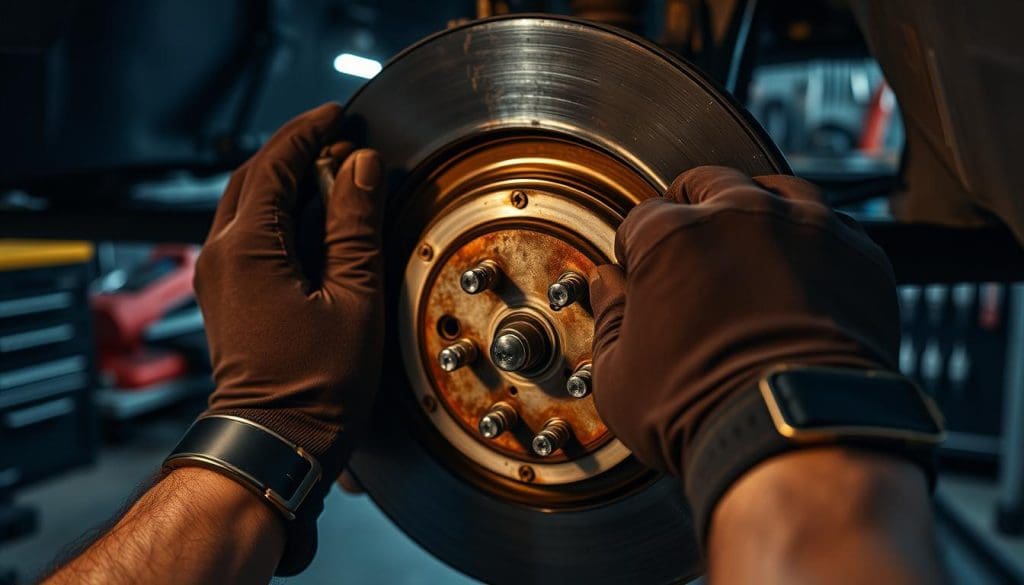
Signs of Fading Brakes
There are signs your brakes are fading. These include:
- A spongy brake pedal
- Increased stopping distance
- A grinding or squealing noise when applying the brakes
Regular brake maintenance is key to avoid these problems. Keeping your brake pads and rotors in good shape helps your car stop better.
Factors Affecting Stopping Distance
Many things can change how far it takes to stop your car. These include:
| Factor | Effect on Stopping Distance |
|---|---|
| Worn Brake Pads | Increases stopping distance due to reduced friction |
| Improper Brake Adjustment | Can lead to uneven braking, increasing stopping distance |
| Road Conditions | Wet or slippery roads can significantly increase stopping distance |
Knowing these factors and keeping up with brake maintenance helps. At Heaven Automotive, we stress the need for regular brake checks. Visit us for a detailed brake inspection and drive safely.
Vibration or Pulsation When Braking
When you press the brake pedal, you expect a smooth, consistent response. But if you feel a vibration or pulsation, it’s a sign of a problem. This issue can be annoying and concerning, as it may indicate a problem that needs immediate attention.
Brake vibration can be caused by several factors, including warped rotors or uneven brake pad wear. Understanding the root cause is key for effective repair.
What Causes Brake Vibration?
Brake vibration often results from issues related to the brake rotors or brake pads. Warped rotors, for instance, can cause the brake pedal to vibrate when pressed. This warping can occur due to excessive heat buildup during braking, leading to uneven surfaces that disrupt the smooth operation of the brakes.
Uneven brake pad wear is another common cause. When brake pads wear down unevenly, they can cause the brakes to vibrate. This uneven wear can be due to improper installation, worn-out brake hardware, or driving habits.
How to Diagnose This Issue
Diagnosing brake vibration involves a series of inspections and tests. First, a visual inspection of the brake rotors and pads can reveal signs of wear or warping. Measuring the thickness of the brake rotors and pads can also help determine if they are within the manufacturer’s specifications.
If you’re experiencing brake vibration, it’s advisable to have your vehicle inspected by a professional mechanic. They can perform the necessary inspections and recommend the appropriate repairs. Regular brake maintenance is key to preventing such issues and ensuring your vehicle’s safety on the road.
At Heaven Automotive, we’re here to help with all your brake issues. Whether you need a routine inspection or repair, our team is dedicated to providing top-notch service. Contact us now to schedule your appointment and ensure your vehicle’s braking system is in optimal condition.
Pulling to One Side
Feeling your vehicle pull to one side when braking is a warning. It could mean your brakes or wheel alignment need fixing. This problem might come from misaligned wheels or uneven brake wear.
Possible Causes of Pulling
There are several reasons why your vehicle might pull to one side while braking. These include:
- Uneven brake wear on the front or rear wheels
- Misaligned wheels, which can put uneven stress on your brakes
- Worn or loose brake components
- Improperly inflated tires or uneven tire wear
Finding the real cause is key to fixing the problem. For example, if it’s about misaligned wheels, adjusting the wheel alignment can fix it.
Importance of Wheel Alignment
Having your wheels properly aligned is vital. It prevents your vehicle from pulling to one side. It also ensures even tire wear and better vehicle handling.
Misaligned wheels can cause:
- Increased wear on brake components
- Reduced fuel efficiency due to increased resistance
- Compromised safety, as your vehicle may not respond as expected to steering inputs
Regular brake maintenance and inspections can spot issues like misaligned wheels or uneven brake wear early. For professional brake services, including wheel alignment checks, visit Heaven Automotive in San Antonio, TX.
Brake Fluid Leaks
Brake fluid leaks are a major concern for car maintenance. This fluid is key for your car’s brakes to work right. It helps the brakes stop your car safely. If there’s a leak, your brakes won’t work as well, which is a big safety risk.
Signs of a Leak in the System
Spotting a brake fluid leak early can stop bigger problems. Look out for these signs:
- A spongy brake pedal or one that goes all the way to the floor
- Visible fluid leaks under your vehicle, around the brake lines and master cylinder
- A low brake fluid level shown by your car’s dashboard warning lights
If you see any of these signs, get your brakes checked by a pro right away.
Why a Leak Requires Immediate Action
A brake fluid leak is serious and can cause brake failure if not fixed fast. The longer you wait, the more likely you are to have an accident because of brake failure. Also, ignoring a leak can lead to more expensive repairs later on. This is because other brake parts might get damaged without enough fluid.
Don’t wait; call Heaven Automotive for brake repair at (210) 682-3898. Keeping up with brake maintenance, like checking for leaks, is vital for your car’s safety and how well it runs.
Brake Pad Wear
It’s key to know how your brake pads are doing. Worn-out brake pads can hurt your car’s braking power. So, checking them often is a must for safe driving.
Indicators of Worn Brake Pads
There are clear signs that your brake pads need a change. Look out for:
- Squealing or grinding noises when applying the brakes
- Reduced stopping power
- Vibration or pulsation when braking
- Brake warning lights on your dashboard
If you see any of these signs, check your brake pads right away.
How to Inspect Your Brake Pads
Checking your brake pads is easy:
- Remove the wheel to get to the brake caliper.
- Look at the brake pad thickness through the caliper.
- Check for wear or damage on the brake pads and rotors.
Heaven Automotive offers expert brake inspection and repair services. Book an appointment today to keep your brakes in top shape.

| Inspection Item | Normal Condition | Worn Condition |
|---|---|---|
| Brake Pad Thickness | Above minimum specified thickness | Below minimum specified thickness |
| Brake Rotor Condition | Smooth surface | Scored or excessively worn surface |
| Brake Noise | No unusual noises | Squealing or grinding noises |
Regular checks on your brake pads can stop bigger issues. Like damage to the brake rotors, which can cost a lot to fix. Keeping up with brake care means your car stays safe and runs well.
Heat Build-Up During Use
When you press the brake pedal, you expect your vehicle to stop smoothly. But overheating brakes can ruin this basic safety feature. Overheating brakes are a big problem that can make stopping harder and even cause accidents.
Signs of Excessive Heat
There are several signs that show your brakes are overheating. These include:
- A burning smell when you brake
- A spongy brake pedal
- Visible signs of brake fade, such as a decrease in braking performance
If you see any of these signs, it’s important to get your brakes checked by a mechanic. Regular brake maintenance can stop overheating problems.
Risks of Ignoring Heat Issues
Ignoring signs of overheating brakes can lead to serious problems. These include:
- Brake fade, which makes stopping harder
- Increased risk of brake failure, which can cause accidents
- Premature wear on brake parts, leading to expensive repairs
To avoid these risks, follow the recommended service intervals for brake checks and maintenance. For reliable brake services, trust Heaven Automotive; call (210) 682-3898 to schedule an appointment.
Odor and Smoke When Braking
If you smell burning or see smoke when you brake, it’s a big warning sign. These smells can mean serious brake problems. These problems could make driving very unsafe.
At Heaven Automotive, we know how important it is to fix brake issues fast. We’re at 6645 Poss Rd, San Antonio, TX 78238. Our team is ready to make your car safe to drive again.
Types of Odors to Beware Of
There are different smells that can mean different brake problems. A burning smell might mean your brakes are too hot or your pads are worn out. A smell like fish or something acrid could mean a fluid leak or an electrical issue with your brakes.
- Burning smell: Often associated with worn brake pads or overheated brakes.
- Fishy or acrid smell: Could indicate a fluid leak or an electrical problem.
What to Do in Case of Smoke
If you see smoke from your brakes, act fast. First, slow down and pull over to a safe spot. Then, turn off the engine and let it cool down before you check the brakes.
Checking your brakes often can catch problems early. At Heaven Automotive, we do detailed brake checks. We look for worn parts, leaks, and other signs of wear.
| Symptom | Possible Cause | Recommended Action |
|---|---|---|
| Burning smell during braking | Worn-out brake pads or overheated brakes | Inspect brake pads and consider replacement if necessary. |
| Smoke while braking | Overheated brakes or brake fluid leak | Pull over safely, turn off the engine, and inspect the brakes. |
| Unusual odors (fishy or acrid) | Fluid leak or electrical issue | Schedule a brake inspection at a reputable service center. |
Don’t ignore strange smells or smoke when you brake. These signs mean serious problems that need quick action. For a detailed brake check and repair, visit Heaven Automotive in San Antonio.
Frequency of Brake Service
Brake service is key to keeping your vehicle safe. It makes sure your brakes work right. Don’t skip this important part of car care.
Knowing when to get your brakes checked is important. Most cars need brake checks every 10,000 to 15,000 miles. But, this can change based on your car and how you drive.
Recommended Service Intervals
Brake service needs vary by car. Most cars need new brake pads between 30,000 to 50,000 miles. But, your driving habits and road conditions can affect this.
Driving in heavy traffic or on hills can wear out brake pads faster. Also, some cars have special brakes that need more checks.
| Vehicle Type | Recommended Brake Inspection Interval | Brake Pad Replacement Interval |
|---|---|---|
| Standard Vehicles | 10,000 – 15,000 miles | 30,000 – 50,000 miles |
| Heavy-Duty Vehicles | 5,000 – 10,000 miles | 20,000 – 30,000 miles |
| Performance Vehicles | 5,000 – 10,000 miles | 15,000 – 25,000 miles |
When to Schedule Brake Inspections
Get your brakes checked if you hear odd noises or feel vibrations when stopping. Also, if your brake light comes on, get it checked right away.
At Heaven Automotive, we suggest getting your brakes checked today. It keeps you safe on the road. Call us at (210) 682-3898 to set up your appointment.
Choosing the Right Brake Repair Shop in San Antonio
When your car’s brakes need work, picking a good brake repair shop is key. It ensures your safety on the road. Regular checks and following service schedules are important for your brakes.
Key Considerations for Brake Repair
Look for a shop with experience on your car’s make and model. Their reputation and technician qualifications matter too. A good shop will give clear repair estimates and explain what needs to be done.
Preparing for Your Visit
Before you choose a brake service, ask about their inspection process and parts used. Know their warranty policies and what’s included in their inspections. This helps you make a smart choice.
In San Antonio, Heaven Automotive at 6645 Poss Rd. is a great choice for brake repairs. They have the knowledge to fix your brakes right.