

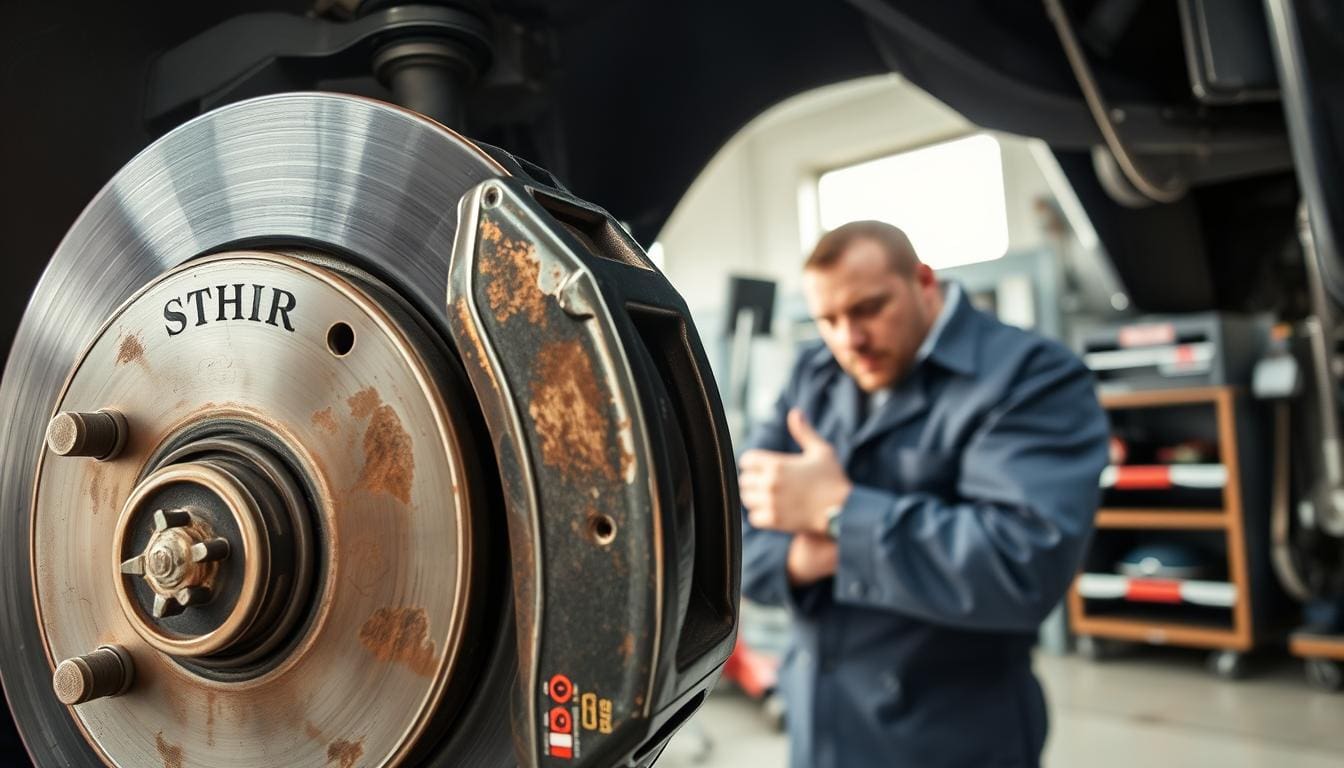
Keeping your vehicle’s brakes in good shape is key to your safety. If you ignore brake maintenance, you could face accidents and expensive fixes. Knowing when your brakes need help is vital.
Check your brakes often for signs of wear. Listen for odd noises, feel for vibrations, or notice if your car stops differently. At Heaven Automotive, at 6645 Poss Rd. San Antonio, TX 78238, they offer top-notch brake repair. Call them at (210) 682-3898 to keep your vehicle’s brake safety in check.
Key Takeaways
- Regular brake maintenance is key for safety.
- Ignoring brake issues can cause big problems.
- Odd noises or vibrations mean your brakes might need work.
- Getting your brakes fixed by pros keeps you safe.
- For expert brake care, reach out to Heaven Automotive.
Understanding Brake Functionality
A good braking system is key for your safety and others on the road. Knowing how it works and its parts helps spot problems early.
How Your Braking System Works
Your car’s braking system is complex. It slows or stops your vehicle. It uses several brake components together.
When you press the brake pedal, it starts. The pedal connects to the master cylinder. This turns non-hydraulic pressure into hydraulic pressure. Then, this pressure goes to the brake calipers.
The calipers have the brake pads. These pads press against the rotor to slow the car. The friction between them does the job.
Common Components of Brakes
The braking system has key brake components. These include brake pads, rotors, calipers, and brake fluid. Brake pads create friction to slow the car. They wear out and need to be replaced.
Brake rotors are the discs the pads press against. They can get warped or worn out. This means they might need to be resurfaced or replaced.
Brake calipers hold the brake pads. They are mounted on the car’s suspension or steering knuckle. They clamp the pads against the rotors.
For top-notch brake maintenance and repair, visit Heaven Automotive. They are at 6645 Poss Rd, San Antonio, TX 78238. Or call (210) 682-3898 for a consultation.
Warning Lights on Your Dashboard
Dashboard warning lights alert you to car problems. They are key to keeping your car running well and safe.
Importance of Dashboard Indicators
Dashboard indicators are like your car’s way of talking to you. They warn you of issues that need fixing. If you ignore these signs, you might face bigger problems. It’s smart to check your dashboard often and know what each light means.
At Heaven Automotive, at 6645 Poss Rd. San Antonio, TX 78238, you can get help with these warnings. Call them at (210) 682-3898 for advice or to book a service.
What the Brake Warning Light Means
The brake warning light is very important. It means there’s a problem with your brakes. This could be worn-out brake pads, low brake fluid, or a brake circuit issue. You should get your car checked by a mechanic right away.
Knowing why your brake light is on is very important for your safety. Here’s a quick look at common reasons and what they mean:
| Reason | Description | Action Required |
|---|---|---|
| Worn Brake Pads | Brake pads have worn down beyond the recommended limit. | Replace brake pads |
| Low Brake Fluid | The level of brake fluid has dropped below the minimum required. | Check for leaks and top up brake fluid |
| Brake Circuit Malfunction | There’s an issue with the electrical circuit controlling the brakes. | Inspect brake circuitry and repair as needed |
Preventive repair helps avoid expensive repairs later. Fixing problems shown by dashboard lights quickly keeps your car in good shape. It also lowers the chance of being stuck with a broken-down car.
Unusual Noises When Braking
Unusual noises when braking are not just annoying; they can signal serious problems with your vehicle’s braking system. When you hear strange sounds while braking, it’s vital to find out where they come from. This helps prevent further damage and keeps you safe on the road.
Types of Noises to Watch For
Different noises can mean different things for your brakes. For example, a grinding noise usually means your brake pads are worn out and need to be replaced. A squealing or squeaking noise can mean your brake pads are wearing down or there’s dirt on them. A clunking or clicking noise might point to a problem with the brake caliper or other parts.
If you hear a belt noise when braking, it could be because your serpentine belt is worn out or damaged. This can affect your vehicle’s performance. It’s important to have a professional mechanic check your vehicle to find out the exact cause of the noise.
When to Seek Brake Repair
If you notice any unusual noises when braking, it’s wise to get brake repair services right away. Ignoring these signs can lead to more serious problems, like brake failure, which is dangerous.
At Heaven Automotive, located at 6645 Poss Rd. San Antonio, TX 78238, you can get a detailed inspection and any needed repairs. Their skilled technicians can figure out the problem and fix it to make your brakes work right again. You can call them at (210) 682-3898 to set up an appointment.
Remember, unusual noises when braking are a warning sign that shouldn’t be ignored. Fixing the problem quickly can save you from more expensive repairs later and keep your vehicle safe.
Decreased Stopping Power
A drop in stopping power is a big warning sign that your brakes need fixing fast. If your brakes don’t work right, it can be very dangerous.
Signs of Fading Brakes
Your car might take longer to stop now. This could mean your brake pads are worn out or the brakes aren’t working right. Regular brake maintenance is key to avoid these problems.
You might also notice a spongy brake pedal or soft brakes. If you see these signs, get your brakes checked by a pro. Heaven Automotive, at 6645 Poss Rd. San Antonio, TX 78238, or call (210) 682-3898, can help.
Factors Affecting Stopping Distance
Many things can change how far it takes to stop your car. This includes the state of your brake pads, the brake fluid, and your engine accessories.
- The condition of your tires and their tread depth.
- The weight and load your vehicle is carrying.
- The road conditions, such as wet or dry surfaces.
Keeping your brakes in good shape is vital for your safety. By watching for signs of bad stopping power and knowing what affects it, you can keep your brakes working well.
Vibration or Pulsation When Braking
When your car vibrates or pulsates when you brake, it’s important to find out why. This can be scary and often means there’s a problem that needs fixing.
What Causes Brake Vibration?
Brake vibration can happen for a few reasons. It might be because your brake rotors are warped or your brake pads are wearing unevenly. It could also be a problem with the brake calipers.
Common Causes of Brake Vibration:
- Warped or uneven brake rotors
- Uneven or excessive brake pad wear
- Loose or worn brake components
- Issues with brake calipers
If your car vibrates when you brake, finding the cause is key. At Heaven Automotive, located at 6645 Poss Rd. San Antonio, TX 78238, experts can help. Call them at (210) 682-3898 for an appointment.
How to Diagnose This Issue
To figure out why your brakes vibrate, you need to check the brakes closely. Here’s how:
- Look at the brake rotors for any warping or wear.
- Check the brake pads to see if they’re wearing evenly.
- Check the brake calipers for any problems.
- Make sure all brake parts are tight.
By doing a detailed check, you can find out why your brakes are vibrating. Below is a table that shows common problems and what to do about them:
| Diagnostic Finding | Recommended Action |
|---|---|
| Warped Brake Rotors | Resurface or replace rotors |
| Uneven Brake Pad Wear | Replace brake pads |
| Loose Brake Components | Tighten or replace components |
| Caliper Issues | Repair or replace calipers |
Fixing brake vibration quickly is important for your car’s safety and how well it runs. If you’re not sure how to fix it, it’s best to get help from a mechanic.
Pulling to One Side
If your car pulls to one side when you brake, it’s a sign of a problem. This issue can be both annoying and dangerous. It might also cause your brakes and other parts to wear unevenly.
Possible Causes of Pulling
There are several reasons why your car might pull to one side when braking. These include:
- Uneven Brake Pad Wear: Worn-out brake pads can apply uneven pressure, causing pulling.
- Misaligned Wheels: Wheels that are not aligned right can make your car pull, mainly when braking.
- Faulty Brake Calipers: Malfunctioning brake calipers can also lead to uneven braking, causing the vehicle to pull.
- Warped Rotors: Uneven brake rotors can disrupt even braking, resulting in pulling.
Finding the cause of the problem is key to fixing it. Ignoring this can lead to more damage and risk your safety on the road.
Importance of Wheel Alignment
Proper wheel alignment is vital for even brake performance and safety. Misaligned wheels can cause uneven tire wear, lower fuel efficiency, and stress on your vehicle’s suspension and steering.
At Heaven Automotive, located at 6645 Poss Rd. San Antonio, TX 78238, the experts know how important proper wheel alignment is. Call them at (210) 682-3898 to book a service. Correctly aligned wheels can prevent brake pulling, improving your vehicle’s performance and safety.
Key benefits of proper wheel alignment include:
- Even Tire Wear: Proper alignment ensures your tires wear evenly, lasting longer.
- Improved Fuel Efficiency: Misaligned wheels can increase rolling resistance, lowering fuel efficiency.
- Better Vehicle Handling: Correct alignment improves your vehicle’s handling and stability, making it safer to drive.
Brake Fluid Leaks
A leak in your brake fluid system can make your brakes less effective. This increases the chance of accidents. Brake fluid is key for your brakes to work right. It helps your vehicle stop smoothly by sending pressure to the brake calipers.
Signs of a Leak in the System
Spotting a brake fluid leak early is important. Look out for these signs:
- A soft or spongy brake pedal
- Visible fluid leaks under your vehicle, near the wheels
- A low brake fluid level indicator on your dashboard
- A dragging sensation when you press the brake pedal
Why a Leak Requires Immediate Action
Ignoring a brake fluid leak can be very dangerous. It can lead to:
| Consequence | Description |
|---|---|
| Reduced Braking Performance | A leak can lower brake pressure, making stopping harder. |
| Increased Risk of Accidents | Bad brakes mean you’re more likely to crash. |
| Costly Repairs | Waiting to fix it can cause more damage, costing more. |
For top brake repair and maintenance, visit Heaven Automotive at 6645 Poss Rd. San Antonio, TX 78238. Or call them at (210) 682-3898.
Brake Pad Wear
Worn-out brake pads can be a serious safety risk. It’s important to check them regularly. Your vehicle’s brake pads are key to its braking system. Knowing their condition is vital for road safety.
Indicators of Worn Brake Pads
There are clear signs when your brake pads need attention. Look out for:
- Squealing or grinding noises when you apply the brakes
- Vibration or pulsation when braking
- A decrease in your vehicle’s stopping power
- A warning light on your dashboard indicating brake pad wear
If you see any of these signs, check your brake pads right away.
How to Inspect Your Brake Pads
Checking your brake pads is easy to do at home or by a pro. Here’s how:
- Start by removing the wheel to access the brake caliper.
- Use a C-clamp or a wrench to loosen the caliper and slide it off the rotor.
- Inspect the brake pads for wear, looking for signs of excessive wear or damage.
- Measure the thickness of the brake pads. If they’re below the manufacturer’s minimum specification, they need to be replaced.
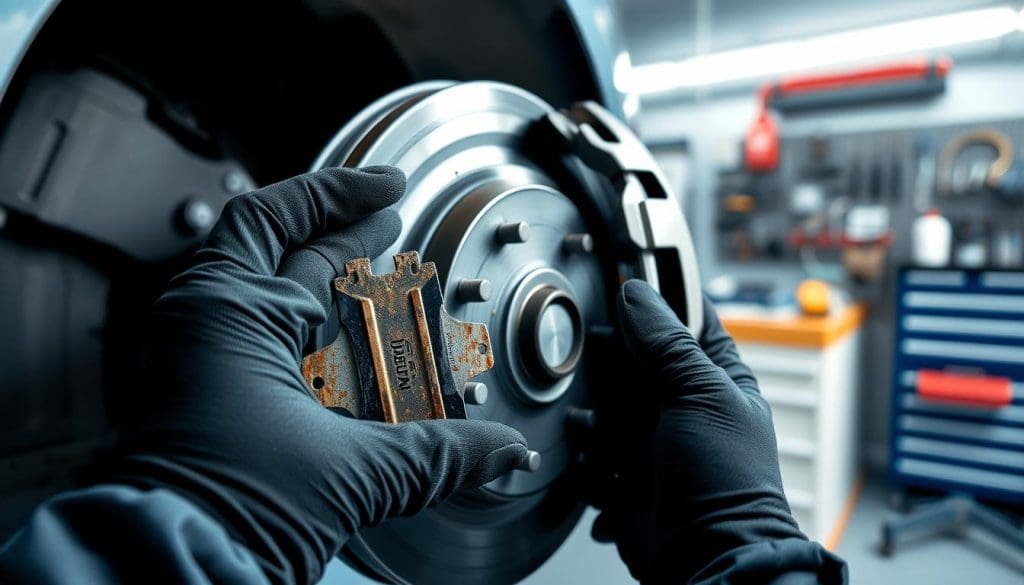
For a detailed check or if unsure, visit a trusted service center like Heaven Automotive. They are at 6645 Poss Rd. San Antonio, TX 78238, or call (210) 682-3898.
| Brake Pad Condition | Thickness | Recommended Action |
|---|---|---|
| Good | Above minimum spec | Continue regular inspections |
| Worn | At or below minimum spec | Replace brake pads |
Regular brake pad checks are key for your vehicle’s safety and performance. By keeping up with brake maintenance, you can avoid expensive repairs later. This ensures your safety on the road.
Heat Build-Up During Use
Overheating brakes are not just a minor issue; they can really affect your car’s performance and safety. When you drive, like in hilly areas or during heavy traffic, your brakes can get very hot.
This heat can make your brakes less effective. It’s important to know the signs of overheating brakes to avoid accidents.
Signs of Overheating Brakes
There are several signs that your brakes might be overheating. These include:
- A burning smell when you press the brake pedal
- Brake fade, where the brakes become less effective
- A spongy brake pedal
- Visible signs of brake rotor or pad wear
If you see any of these signs, get your brakes checked by a mechanic. At Heaven Automotive, located at 6645 Poss Rd. San Antonio, TX 78238, you can make an appointment by calling (210) 682-3898.
Risks of Ignoring Heat Issues
Ignoring brake heat issues can lead to serious problems. These include:
| Risks | Consequences |
|---|---|
| Brake Failure | Complete loss of braking capability, leading to accidents |
| Increased Stopping Distance | Longer distances needed to stop, increasing collision risk |
| Costly Repairs | Ignoring brake issues can lead to more expensive repairs later |
Regular brake maintenance is essential to avoid overheating. Keeping your brake pads, rotors, and other parts in good shape helps your brakes work well.
For more info or to schedule a brake check, contact Heaven Automotive today. Their team is ready to ensure your vehicle’s brakes are in great shape.
Odor and Smoke When Braking
Brake odor and smoke are not normal signs. They mean you need to check your brakes right away. If you smell burning or see smoke while braking, it’s a warning.
Types of Odors to Beware Of
Odors can tell you about brake problems. A burning smell might mean your brakes are too hot or worn out. A fishy smell could point to brake fluid issues or leaks.
Common Odors and Their Possible Causes:
- Burning smell: Overheating brakes, worn brake pads, or damaged rotors.
- Fishy or sulfurous smell: Brake fluid leak or contamination.
What to Do in Case of Smoke
If you see smoke while braking, pull over and turn off the engine. Look for brake damage or wear. If unsure, get professional help.
Steps to Take:
- Pull over safely and turn off the engine.
- Inspect your brakes for visible damage or wear.
- Contact a professional mechanic for a thorough inspection and repair.
In San Antonio, for reliable brake repair, visit Heaven Automotive at 6645 Poss Rd. San Antonio, TX 78238. Or call (210) 682-3898 for an appointment.
| Symptom | Possible Cause | Recommended Action |
|---|---|---|
| Burning smell during braking | Worn brake pads, damaged rotors | Inspect and replace brake pads or rotors |
| Smoke when braking | Overheating brakes, severe wear | Pull over, inspect, and seek professional help |
| Fishy or sulfurous smell | Brake fluid leak or contamination | Check brake fluid level, inspect for leaks |
Frequency of Brake Service
Regular brake service is key for your vehicle’s safety and performance. Your brakes are vital and need regular checks and maintenance. This ensures they work right when you need them.
To keep your brakes in top shape, follow the recommended service times. These times depend on your vehicle, how you drive, and the maker’s advice. Brake pads usually need replacing between 30,000 to 50,000 miles, but it can change.
Recommended Service Intervals
To find out when to service your brakes, check your owner’s manual. Most car makers have a maintenance guide that shows when brake service is needed. Brake checks are usually advised every 12,000 to 15,000 miles.
Things that can change when to service your brakes include:
- Driving in heavy traffic or hilly areas
- Driving in harsh weather
- Carrying heavy loads or towing a trailer
If you do any of these, you might need to service your brakes more often.
When to Schedule Brake Inspections
Get a brake inspection if you see any signs of wear or issues. Look out for:
- Squealing or grinding noises when braking
- Vibration or pulsation when applying the brakes
- A soft or spongy brake pedal
If you notice these signs, get your brakes checked by a pro mechanic fast. At Heaven Automotive, at 6645 Poss Rd. San Antonio, TX 78238, call (210) 682-3898 to book a brake inspection.
Regular brake service keeps you safe on the road and saves you money on repairs later. By keeping up with brake care, you’ll have a smoother, safer drive.
Choosing the Right Brake Repair Shop in San Antonio
When your car’s brakes need fixing, picking a good brake repair shop is key. A bad serpentine belt can cause engine problems, leading to brake issues. This belt powers important engine parts like the alternator and power steering pump.
Key Considerations
Find a shop with skilled technicians and a good reputation. Check online reviews and ask friends or family for recommendations. Make sure they use top-quality parts and offer a warranty.
Questions to Ask
Before you choose a brake repair service, ask about their experience with your car. Find out how they diagnose problems and what repairs will cost. Heaven Automotive, at 6645 Poss Rd. San Antonio, TX 78238, is a trusted choice. Call them at (210) 682-3898 for brake repairs.
For more on keeping your engine accessories in check, visit their website.