

Keeping your vehicle’s brakes in good shape is key to your safety on the road. If you ignore brake maintenance, you could face serious issues like accidents and expensive fixes. It’s important to know when your brakes need help right away.
Have you heard strange noises when you press the brake? Sounds like squeaking or grinding? These could mean your brake pads are worn out. If you notice your car takes longer to stop or the brake pedal vibrates, it’s a warning sign too. If you see any of these signs, get your brakes checked by a pro to stay safe. Check out Heaven Automotive for top-notch brake repair services.
Key Takeaways
- Unusual noises when braking can indicate a brake problem.
- Increased stopping distances may signal worn brake pads or low brake fluid.
- Vibrations in the brake pedal can indicate warped rotors or other brake issues.
- Regular brake inspections are vital for brake safety.
- Heaven Automotive offers free visual brake inspections to spot problems early.
Understanding Brake Functionality
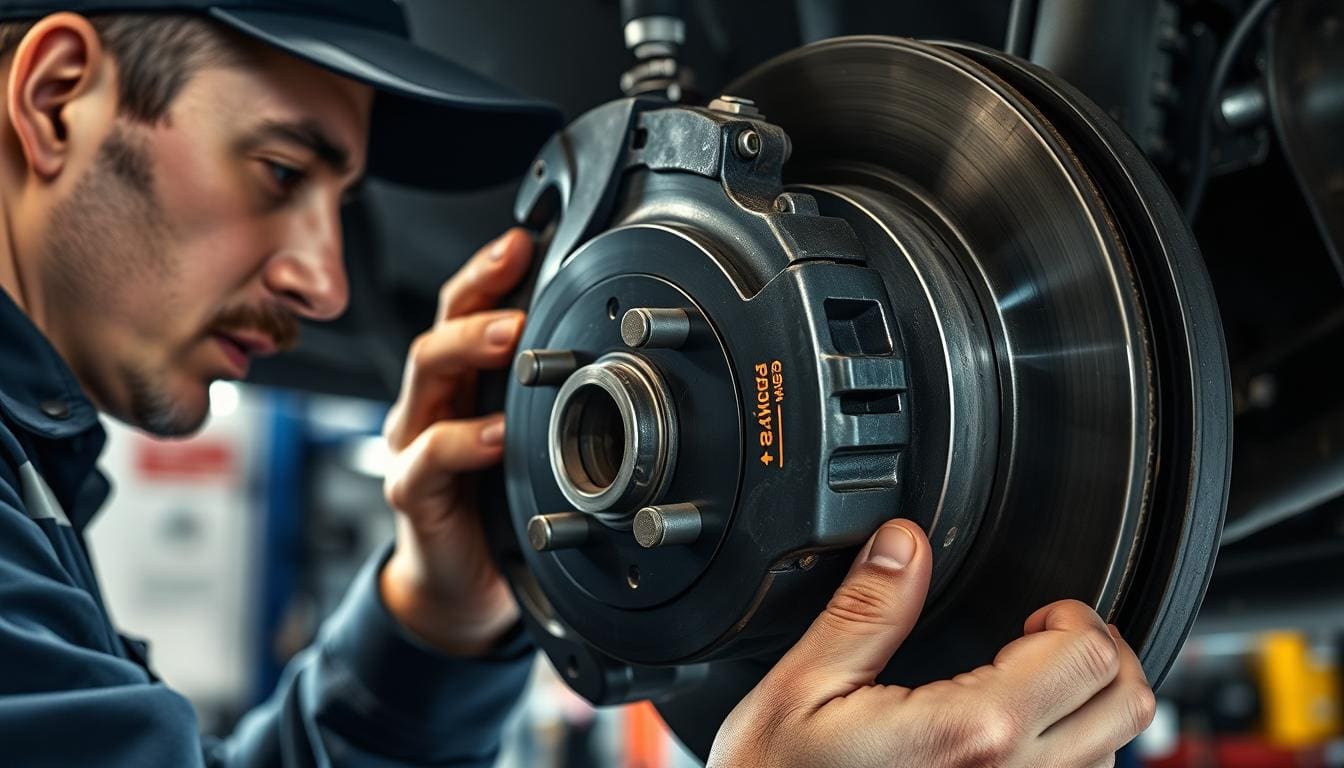
Knowing how your brakes work is key to spotting problems early. Your car’s brakes slow or stop it. They use several parts to do this.
How Your Braking System Works
The brakes turn kinetic energy into heat through friction. When you press the brake pedal, it sends fluid to the calipers. The calipers then press the pads against the rotors, slowing or stopping the car.
Common Components of Brakes
The braking system has important parts like brake pads, rotors, calipers, and fluid. Each part is vital for the system’s performance.
| Component | Function |
|---|---|
| Brake Pads | Create friction against the rotors to slow or stop the vehicle |
| Rotors | Discs that the brake pads clamp onto to create friction |
| Caliper | Houses the brake pads and applies pressure to the rotors |
| Brake Fluid | Transfers pressure from the master cylinder to the calipers |
Keeping these parts in good shape is important. Worn-out brake pads or dirty brake fluid can reduce stopping power. This could lead to accidents.
Regular inspections can catch problems early. This keeps your car safe to drive.
Warning Lights on Your Dashboard
Modern cars have dashboard warning lights to alert you to issues, like brake problems. These lights are key to keeping your car in good shape and safe on the road.
Importance of Dashboard Indicators
Dashboard indicators, like warning lights, tell you about problems early. The brake warning light alerts you to brake issues. Ignoring these warnings can lead to bigger safety risks.
When a warning light comes on, it’s important to know what it means and act fast. For example, a brake warning might mean your brake pads are worn, brake fluid is low, or there’s a serious brake problem.
What the Brake Warning Light Means
The brake warning light can mean several things, like worn brake pads or a brake fluid leak. It could also point to a problem with the brake’s electronic control system.
If the brake light comes on, check your brake fluid first. If the level is fine, it might mean a more serious issue that needs a pro to check. Always fix brake problems quickly to keep your car safe and running well.
Poor acceleration can be linked to brake issues, as brakes affect a car’s performance. So, if you notice poor acceleration with a brake warning light, your car needs help right away.
Unusual Noises When Braking
Unusual noises when braking are not just annoying; they can signal serious issues with your vehicle’s braking system. When you press the brake pedal, various components work together to slow down your vehicle. If any of these parts are worn out or damaged, they can produce unusual sounds.
Types of Noises to Watch For
Different noises can signal different problems. For instance, a grinding noise often indicates that your brake pads are worn down to the metal, causing them to scrape against the rotor. This can lead to costly repairs if not addressed promptly.
A squealing or squeaking noise can be a sign that your brake pads are wearing thin or that there’s a problem with the brake pad’s wear indicators. Sometimes, this noise can be due to dust or debris stuck in the braking system.
A clunking or clicking noise might suggest that there’s an issue with the brake caliper or other moving parts within the braking system. It’s essential to have these noises checked by a professional to prevent further damage.
When to Seek Brake Repair
If you notice any unusual noises when braking, it’s vital to have your vehicle inspected by a mechanic as soon as possible. Continuing to drive with faulty brakes can lead to reduced stopping power, increased risk of accidents, and more expensive repairs down the line.
When seeking brake repair, look for a reputable service center that can diagnose the issue accurately and provide a detailed estimate for the necessary repairs. Ensuring that your brakes are in good condition is vital for your safety and the safety of others on the road.
Decreased Stopping Power
If your car takes longer to stop, it’s a warning sign. Your brakes are losing stopping power. This is dangerous and needs to be fixed right away to keep you safe.
Signs of Fading Brakes
Fading brakes show up in different ways. You might feel the brake pedal feels softer or it takes longer to stop. These signs mean your brakes aren’t working right.
- Increased stopping distance
- Soft or spongy brake pedal
- Brake warning lights on the dashboard
Factors Affecting Stopping Distance
Many things can change how fast your car stops. Knowing these can help spot problems early.
- Condition of Brake Pads: Worn-out brake pads make stopping harder.
- Brake Fluid Quality: Bad brake fluid or low levels hurt your brakes.
- Road Conditions: Wet or slippery roads slow down stopping.
- Vehicle Load: Heavy loads make stopping longer.
Keeping your brakes in good shape is key to staying safe. Regular checks and quick fixes can stop problems with stopping power.
Vibration or Pulsation When Braking
If your car vibrates or pulsates when you brake, it’s important to find out why. This issue is not just annoying. It can also be a sign of serious brake problems that might put your safety at risk.
What Causes Brake Vibration?
Several things can cause brake vibration, including:
- Warped Brake Rotors: Rotors can warp if they get too hot or are installed wrong. This leads to vibration when you brake.
- Uneven Brake Pad Wear: If brake pads wear down unevenly, it can cause vibration or pulsation.
- Loose or Worn Brake Components: Loose or worn-out brake parts, like calipers or hardware, can also cause vibrations.
Knowing what causes this problem is key to fixing it right.
How to Diagnose This Issue
To figure out why your brakes vibrate, you need to do some checks:
- Visual Inspection: Look for any wear or damage on brake parts like rotors and pads.
- Brake Pad Inspection: Check how thick and in what condition your brake pads are. Look for uneven wear.
- Rotor Condition: Check the rotors for any warping or too much wear.
Getting a professional mechanic to check your brakes is also a good idea. They can give a more detailed look and suggest the right fixes.
Fixing brake vibration or pulsation quickly is important for your car’s safety and performance. By knowing the reasons and following a step-by-step check, you can find and fix the problem well.
Pulling to One Side
A vehicle that pulls to one side when braking is annoying and a sign of a problem. This issue, known as brake pulling, can stem from several factors in your vehicle’s braking system.
Possible Causes of Pulling
Uneven brake wear is a main reason for brake pulling. If your brake pads or shoes wear down unevenly, your vehicle will pull towards the more worn side. A malfunctioning brake caliper that doesn’t release properly can also cause drag on one side.
Issues with your vehicle’s wheel alignment can also lead to brake pulling. If your wheels are not aligned right, it causes uneven tire wear and extra stress on your brakes, making them pull to one side.
Importance of Wheel Alignment
Proper wheel alignment is key to avoiding brake pulling and ensuring even tire wear. It also keeps your vehicle’s handling and safety in check. Misaligned wheels can cause problems like reduced fuel efficiency and wear on suspension and steering systems.
It’s important to regularly check and adjust your vehicle’s wheel alignment. Also, have it checked after hitting a pothole or curb, as these can knock your wheels out of alignment.
Brake Fluid Leaks
A brake fluid leak is a serious issue that needs quick attention for your safety. Brake fluid is key for your car’s brakes to work right. A leak can make your brakes less effective.
Signs of a Leak in the System
Spotting a brake fluid leak early is vital to avoid damage to your brakes. Look out for these signs:
- A spongy brake pedal or one that goes all the way to the floor
- Visible fluid leaks under your vehicle, around the brake lines and master cylinder
- A low brake fluid level indicator on your dashboard
- A burning smell from the brakes, caused by fluid leaking onto hot parts
Why a Leak Requires Immediate Action
Ignoring a brake fluid leak can lead to big problems, including:
| Consequence | Description |
|---|---|
| Reduced Braking Performance | A leak can make your car stop less effectively. |
| Increased Risk of Accident | With bad brakes, you’re more likely to have an accident. |
| Costly Repairs | Not fixing a leak can cause more damage and cost more later. |
Immediate action is necessary to find and fix any leaks. Regular brake maintenance checks can catch problems early.
Brake Pad Wear
Your vehicle’s stopping power depends on the brake pads. It’s important to check them regularly. Worn-out brake pads can be a safety risk on the road.
Indicators of Worn Brake Pads
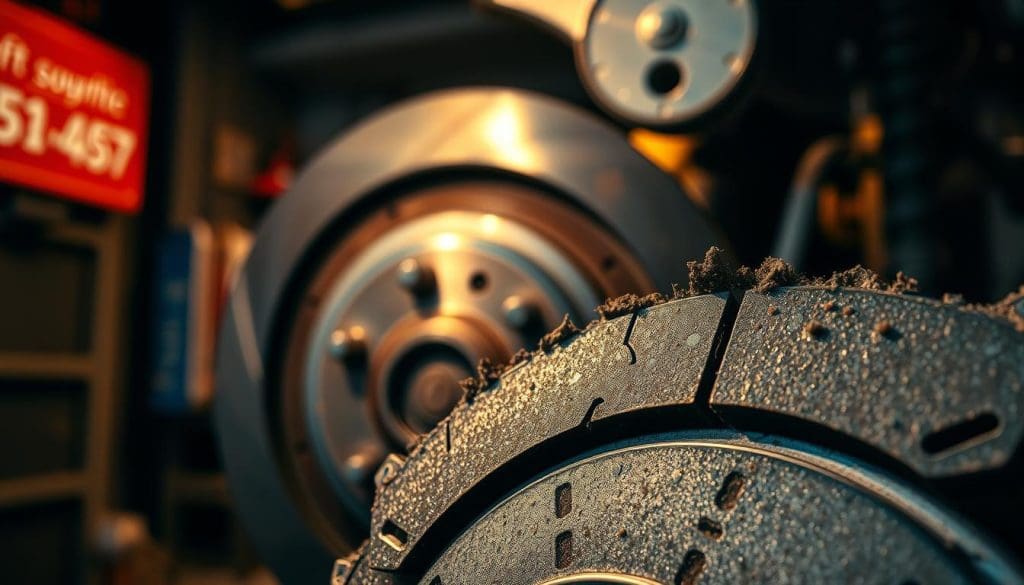
Worn brake pads show signs like a squealing or grinding noise when braking. You might also feel vibrations or pulsations when pressing the brakes. These could mean the pads are worn or the rotors are warped.
The brake warning light on your dashboard is another clue. It turns on when the brake pads are almost gone.
How to Inspect Your Brake Pads
Checking your brake pads is easy. Just look through the wheel spokes. If the pads are less than a quarter-inch thick, they need to be replaced.
For a closer look, remove the wheel. Check the pads and rotors for wear. Look for any uneven wear or warping on the rotors.
| Inspection Criteria | Acceptable Condition | Needs Replacement |
|---|---|---|
| Brake Pad Thickness | More than 1/4 inch | Less than 1/4 inch |
| Rotor Condition | Smooth, minimal wear | Warped, excessive wear |
| Noise When Braking | No unusual noises | Squealing, grinding |
Regular brake inspections catch problems early. This keeps your vehicle safe and avoids expensive repairs. Worn brake pads can also make your car drag, affecting its performance.
Heat Build-Up During Use
Excessive heat during braking is a warning sign that shouldn’t be ignored. When your brakes overheat, they work less well. This can also damage other parts of your vehicle.
Signs of Overheating Brakes
There are several indicators that your brakes are overheating. These include:
- A burning smell when you apply the brakes
- A spongy brake pedal or one that feels unusually soft
- Visible signs of brake fluid leakage
- A noticeable decrease in braking performance
If you experience any of these symptoms, it’s vital to have your brakes checked by a professional.
Risks of Ignoring Heat Issues
Ignoring brake overheating issues can lead to serious consequences, including:
- Brake Failure: Overheated brakes can fail, leading to a loss of control over your vehicle.
- Increased Stopping Distance: Overheating can cause your brakes to become less effective, increasing the distance it takes to stop your vehicle.
- Damage to Other Components: Excessive heat can damage other parts of your vehicle’s braking system, such as the brake fluid, rotors, and pads.
It’s essential to address brake overheating promptly to ensure your safety on the road and prevent costly repairs. Regular maintenance, including checking brake fluid levels and inspecting brake pads, can help prevent overheating issues.
By being proactive about brake maintenance and addressing signs of overheating early, you can significantly reduce the risk of brake-related problems.
Odor and Smoke When Braking
Noticing a strange smell or seeing smoke while braking means something’s wrong with your brakes. Brake odor and smoke are not normal and need to be checked quickly. This is to avoid more damage or safety risks.
Unusual smells can be like burning or smelling like rotten eggs. These smells can point to overheated brakes or a faulty part.
Types of Odors to Beware Of
Different smells can mean different brake problems. For example:
- A burning smell might mean your brakes are overheated or your brake pads are worn out.
- A smell like fish or rotten eggs could mean brake fluid is leaking or a part is not working right.
If you smell something odd, get your car checked by a mechanic right away.
What to Do in Case of Smoke
Seeing smoke when you press the brake pedal is a serious problem. Here’s what to do:
- Pull over to a safe spot as soon as you can.
- Turn off the engine to stop more damage.
- Look for any damage or wear on the brakes.
If you’re unsure or the problem doesn’t go away, get help from a professional mechanic.
| Symptom | Possible Cause | Action |
|---|---|---|
| Burning smell | Overheated brakes or worn-out brake pads | Inspect brake pads and rotors; replace if necessary |
| Fishy or rotten egg smell | Leaking brake fluid or malfunctioning component | Check brake fluid level; inspect for leaks |
| Smoke when braking | Excessive wear on brake pads or rotors; overheated brakes | Pull over; inspect brakes; consult a mechanic |
Frequency of Brake Service
Knowing when to service your brakes is vital for safety and to avoid expensive fixes. Keeping up with regular maintenance is essential for your vehicle’s brakes to work right.
Recommended Service Intervals
The brake service schedule varies based on your car’s type, how you drive, and the maker’s advice. Usually, brake checks are advised every 10,000 to 15,000 miles.
But, always check your car’s manual for the best schedule. Some cars need more frequent checks, like those driven a lot in the city or on hills.
| Driving Conditions | Recommended Inspection Interval |
|---|---|
| Normal Driving | 10,000 to 15,000 miles |
| Severe Driving (City, Hilly) | 5,000 to 10,000 miles |
| Extreme Conditions | As recommended by the manufacturer |
When to Schedule Brake Inspections
Book a brake check if you hear odd noises, feel vibrations, or notice your car doesn’t stop as well. Also, if it’s time for a routine check based on mileage or time, get your brakes looked at.
Signs you need a brake inspection include:
- Squealing or grinding noises when braking
- Vibration or pulsation when applying the brakes
- Spongy brake pedal or increased stopping distance
Regular brake checks can spot problems early, keeping you safe on the road.
Choosing the Right Brake Repair Shop in San Antonio
When your car’s brakes need fixing, picking a good brake repair shop in San Antonio is key. A professional service means quality work and your safety on the road.
Key Considerations for a Repair Shop
Find a shop with skilled technicians and a solid reputation. Check online reviews and ask friends for recommendations. A trustworthy shop will explain the work and give a detailed estimate.
Questions to Ask Before Hiring
Before you hire, ask if they know how to work on your car’s make and model. Inquire about the parts they use and their warranty. For top brake repair in San Antonio, think of Heaven Automotive at [insert address]. Their team offers great service. Call them at [insert phone number] for a chat or to book a time.
A faulty fuel system can hurt your car’s performance. A well-kept braking system is vital for safe driving. Let the experts handle your brake repairs.