

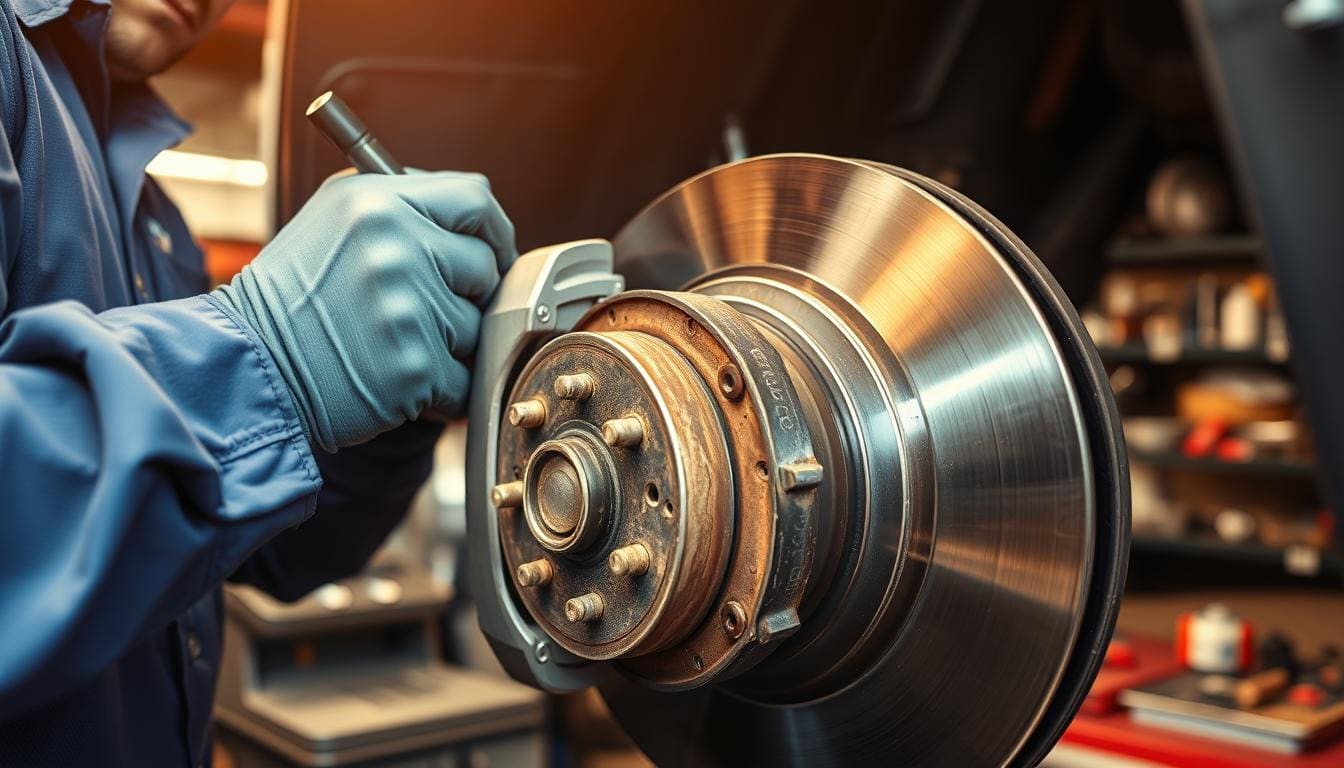
Your vehicle’s brakes are a key safety feature. They need regular brake maintenance to work right. If you ignore brake wear signs, you risk serious safety issues and high brake repair costs later.
Do you hear odd noises or feel vibrations when you brake? These could mean your brakes need help fast. At Heaven Automotive, at 6645 Poss Rd, TX 78238, our team can check your brakes and offer the right auto brake service.
Don’t delay if you see brake wear signs. Like spongy brake pedals or uneven braking? It’s time to get professional help.
Key Takeaways
- Regular brake maintenance is key for safety.
- Odd noises or vibrations mean brake trouble.
- Spongy pedals or uneven braking show brake wear.
- Heaven Automotive provides top brake checks and service.
- Quick brake care can avoid expensive fixes.
Understanding Brake Functionality
A good braking system is key for safety on the road. Knowing how it works helps you keep it in top shape. Your car’s ability to stop safely relies on many parts working together.
How Your Braking System Works
The braking system turns kinetic energy into heat through friction. When you press the brake pedal, it starts a chain of actions. This leads to the brake pads rubbing against the rotors or drums, slowing your car down.
Common Components of Brakes
Important brake components include:
- Brake Pads: These wear out and need to be replaced.
- Brake Rotors/Drums: These are where the brake pads press to stop the car.
- Brake Fluid: This fluid carries the force from the brake pedal to the calipers.
- Brake Calipers: These hold the brake pads and press them against the rotors.
- Master Cylinder: This is where brake fluid is stored and pressurized when you press the pedal.
Knowing about these auto brake parts and their roles helps spot issues early. This way, you can fix them before they become big problems.
Warning Lights on Your Dashboard
It’s key to know what the lights on your dashboard mean. These lights warn you of problems before they get worse.
Importance of Dashboard Indicators
Dashboard warning lights are vital for your safety. They tell you about everything from small issues to big safety risks. If you ignore these lights, you could face bigger problems and higher repair costs.
The check engine light can show many things, like a loose gas cap or a bad catalytic converter. Knowing what each light means helps you fix problems fast.
What the Brake Warning Light Means
The brake warning light is very important. It lights up if there’s a problem with your brakes, like worn pads or a leak.
If this light turns on, get your car checked by a mechanic right away. They can find out what’s wrong and fix it so your brakes work right.
Common Issues Indicated by Dashboard Warning Lights:
- Brake system problems
- Low tire pressure
- Engine issues
- Transmission problems
To learn more about dashboard warning lights and what they mean, check out this table:
| Warning Light | Indication | Recommended Action |
|---|---|---|
| Brake Warning Light | Issue with the braking system | Have a mechanic inspect the brakes |
| Check Engine Light | Engine or emissions issue | Check the gas cap; if persists, visit a mechanic |
| Tire Pressure Light | Low tire pressure | Check and adjust tire pressure |
For more details on dashboard warning lights and their meanings, visit this resource.
Unusual Noises When Braking
Unusual sounds when you brake can mean trouble with your car’s brakes. When you press the brake pedal, you might hear different noises. These sounds can tell you about various problems.
Types of Noises to Watch For
There are several brake noises you should know about. These include:
- Squealing or squeaking sounds, often due to worn-out brake pads.
- Grinding noises, which can indicate that your brake pads are excessively worn and are scraping against the brake rotors.
- Clicking or clunking sounds, potentially caused by loose or worn-out brake components.
Knowing these unusual brake sounds can help you spot problems early.
When to Seek Brake Repair
If you hear unusual noises when braking, it’s key to find out why. Auto brake repair experts can figure out the problem and suggest fixes.
| Noise Type | Possible Cause | Recommended Action |
|---|---|---|
| Squealing/Squeaking | Worn-out brake pads | Inspect and replace brake pads |
| Grinding | Excessively worn brake pads | Replace brake pads and inspect rotors |
| Clicking/Clunking | Loose or worn-out brake components | Inspect and tighten or replace components |
Ignoring brake noises can cause bigger problems, like safety risks on the road. If you’re not sure about the noise, it’s wise to talk to a auto brake repair expert.
Decreased Stopping Power
Your vehicle’s braking system is key for safety. If it takes longer to stop, it’s a warning sign. This means something is wrong.
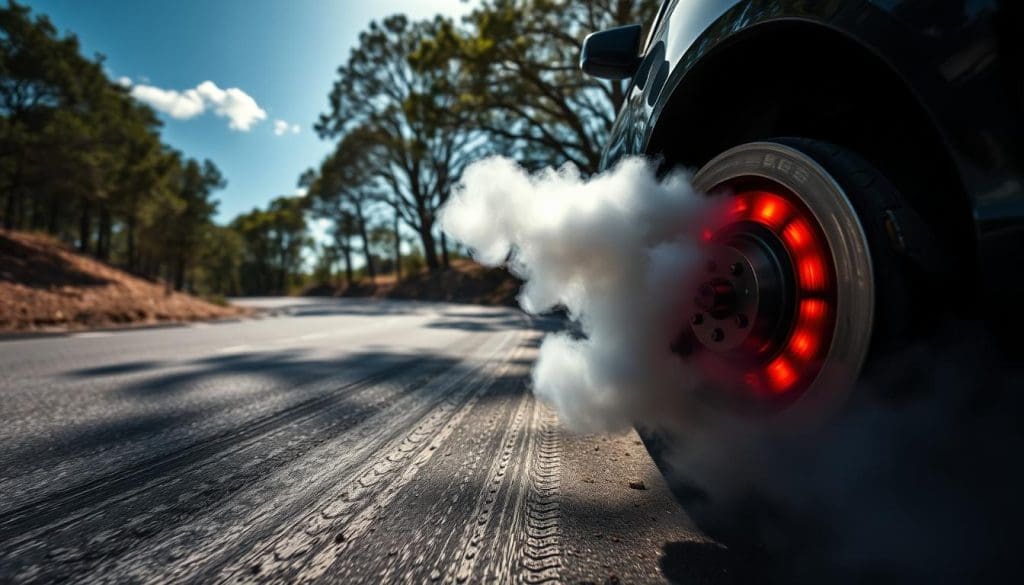
Signs of Fading Brakes
Fading brakes show in different ways. You might feel a spongy brake pedal or notice your car pulls when braking. These signs mean your brakes aren’t working right.
Other signs include a soft or low brake pedal and needing more time to stop. Seeing these signs means you should check your brakes.
Factors Affecting Stopping Distance
Many things can change how fast your car stops. The state of your brake pads, brake fluid leaks, and your braking system’s health are key.
| Factor | Description | Impact on Stopping Distance |
|---|---|---|
| Brake Pad Condition | Worn-out brake pads | Increases stopping distance |
| Brake Fluid Level | Low brake fluid due to leaks | Compromises brake effectiveness |
| Road Conditions | Wet or slippery roads | Lengthens stopping distance |
Knowing these factors helps keep your brakes in top shape. Regular checks and upkeep stop problems with stopping power.
Vibration or Pulsation When Braking
A pulsating or vibrating sensation when you apply the brakes can signal a problem that needs immediate attention. This issue can manifest in various ways, such as a vibration felt through the brake pedal or steering wheel, or even a pulsating motion that occurs when braking.
What Causes Brake Vibration?
Brake vibration can be caused by several factors, including:
- Warped Brake Rotors: Overheating or improper installation can cause brake rotors to warp, leading to a vibration when braking.
- Uneven Brake Pad Wear: If brake pads are not evenly worn, it can result in vibration or pulsation.
- Loose or Worn Brake Components: Components such as brake calipers or mounting hardware that are loose or worn can cause vibrations.
How to Diagnose This Issue
Diagnosing brake vibration involves a series of inspections and tests. Here’s a step-by-step guide:
- Inspect the brake rotors for warping or excessive wear.
- Check the brake pads for uneven wear and replace them if necessary.
- Examine the brake calipers and mounting hardware for any signs of looseness or wear.
| Symptom | Possible Cause | Recommended Action |
|---|---|---|
| Vibration through brake pedal | Warped brake rotors | Inspect and resurface or replace rotors |
| Pulsation when braking | Uneven brake pad wear | Inspect and replace brake pads |
| Vibration in steering wheel | Loose or worn brake components | Tighten or replace loose or worn components |
By understanding the causes of brake vibration and following a systematic diagnosis process, you can identify and address the issue. This ensures your vehicle’s braking system operates smoothly and safely.
Pulling to One Side
Brake pulling is when your car pulls to one side when you hit the brakes. It’s a sign that something’s wrong. Knowing why it happens is key to fixing it.
Possible Causes of Pulling
There are a few reasons why your car might pull to one side when braking. These include:
- Uneven brake pad wear
- Warped brake rotors
- Incorrect wheel alignment
- Issues with the brake calipers
Uneven brake pad wear and warped brake rotors can make the brakes pull. Also, incorrect wheel alignment can stress the brakes, causing them to pull.
Importance of Wheel Alignment
Having your wheel alignment right is important. It stops brake pulling and keeps your tires even. Misaligned wheels can wear out your brakes and other parts faster.
| Causes of Brake Pulling | Effect on Vehicle | Recommended Action |
|---|---|---|
| Uneven Brake Pad Wear | Pulling to one side, uneven noise | Inspect and replace brake pads |
| Warped Brake Rotors | Vibration, pulling to one side | Resurface or replace rotors |
| Incorrect Wheel Alignment | Pulling to one side, uneven tire wear | Get a professional wheel alignment |
Regular checks on your brakes and alignment can stop brake pulling. This keeps your car safe to drive.
Brake Fluid Leaks
A brake fluid leak is a big problem. It can make your brakes less effective and increase the chance of accidents. Brake fluid is key for your car’s brakes to work right. It helps transfer the force from the brake pedal to the calipers.
Signs of a Leak in the System
Spotting a brake fluid leak early is very important. It helps avoid damage to your car’s brakes. Here are some signs to watch for:
- Low Brake Fluid Level: If your brake fluid level keeps dropping, it might mean there’s a leak.
- Fluid Spots: Look for fluid on the ground or on brake parts.
- Spongy Brake Pedal: A soft brake pedal could mean there’s air in the system because of a leak.
- Warning Lights: Modern cars have dashboard lights that turn on when there’s a brake problem.
Why a Leak Requires Immediate Action
Not fixing a brake fluid leak can be very dangerous. It can lead to:
- Reduced Braking Performance: Low brake fluid can make your car stop less well, raising the risk of accidents.
- Brake System Damage: A leak can harm other brake parts, costing a lot to fix.
- Safety Risks: A car with bad brakes is a big danger to you and others on the road.
If you think you have a brake fluid leak, get your car checked by a mechanic fast. Regular checks can catch problems early and save you trouble.
Brake Pad Wear
As a vehicle owner, it’s key to spot brake pad wear signs for your safety. Brake pads are vital for stopping your car. Their wear can affect your car’s stopping power.
Indicators of Worn Brake Pads
There are signs your brake pads might need a change. These include:
- Squealing or grinding noises when you apply the brakes
- Vibration or pulsation in the brake pedal
- A decrease in the vehicle’s stopping power
- The brake warning light on your dashboard illuminating
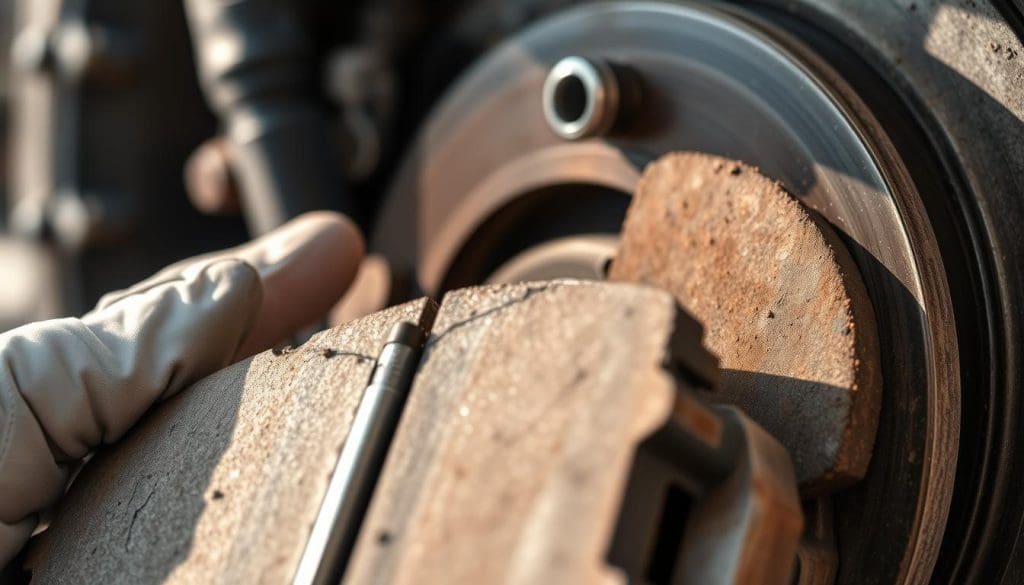
How to Inspect Your Brake Pads
Checking your brake pads is easy. You can do it at home or with a mechanic. Here’s how:
- Start by removing the wheel to get a clear view of the brake caliper and pads.
- Look for the brake pads through the caliper. If they’re worn down to less than 1/8 inch, they need to be replaced.
- Check for any signs of damage or wear on the brake rotors as well.
Regular auto brake inspection can prevent bigger brake problems. It keeps your vehicle safe to drive.
For a detailed check or if unsure about your brake pads, see a professional mechanic. They can give a full assessment and suggest any needed fixes.
Heat Build-Up During Use
Excessive heat during braking is not just a minor issue; it’s a warning sign of a bigger problem. When your brakes overheat, they work less well. This can be dangerous for you and others.
Signs of Overheating Brakes
Brake overheating might show as a spongy brake pedal or if your car pulls to one side when you brake. You might also smell burning or see smoke from your wheels.
It’s key to notice these signs early. Ignoring them can cause bigger problems. For example, overheating brakes can make your brake fluid break down faster. This can lead to a loss of braking performance.
Risks of Ignoring Heat Issues
Ignoring heat build-up in brakes can lead to brake failure. Overheated brakes can damage parts, costing a lot to fix. Also, it can make your car stop less well, raising the chance of accidents.
Brake overheating isn’t just about the brakes. It can also harm other parts like wheel bearings and calipers. This can lead to a series of costly repairs.
To stay safe, fix any brake overheating issues quickly. Regular checks on your brake pads, rotors, and fluid can catch problems early. This helps avoid major issues.
Odor and Smoke When Braking
Unpleasant odors or smoke from your brakes is a serious issue. It needs immediate attention for your safety on the road. When you notice such symptoms, it’s important to find the cause and take action.
Types of Odors to Beware Of
Different odors can mean different problems with your brakes. A burning smell might mean your brakes are overheating. It could also mean your brake pads or rotors are worn out.
A sweet or syrupy smell could mean a brake fluid leak. This is a critical issue that needs quick fixing.
It’s key to know these odors and what they mean. Ignoring them can lead to bigger problems. These problems could affect your vehicle’s safety and performance.
What to Do in Case of Smoke
If you see smoke when braking, pull over to a safe spot and turn off the engine. Smoke can mean your brakes are overheating. This could be because of too much use, worn-out brake pads, or a braking system problem.
Do not continue driving if you see smoke. This could cause a complete brake failure. It’s a big risk to you and others on the road. Instead, have a mechanic check your vehicle. They can find the problem and fix it.
In summary, unusual odors or smoke when braking are not normal. They need to be checked. Keeping your brakes in good shape is key for auto brake safety. Fixing these issues quickly helps keep your vehicle safe and running well.
Frequency of Brake Service
To keep your brakes working right, knowing when to service them is key. Regular brake care is critical for your safety and car’s performance.
Recommended Service Intervals
The brake service schedule varies based on your car’s type, how you drive, and the maker’s advice. Brake pads usually last between 30,000 to 50,000 miles. But, your driving style can change this.
Driving in busy areas or on hills can wear out brake pads faster. Always check your car’s manual for the best brake service schedule.
When to Schedule Brake Inspections
If you hear odd noises, feel vibrations, or notice poor braking, get your brakes checked. Regular checks can spot problems early.
Also, get your brakes looked at during routine car care, like oil changes or tire rotations. This keeps your brakes in top shape and ready when you need them.
Choosing the Right Brake Repair Shop in San Antonio
Finding a trustworthy brake repair shop is key. They should be able to find and fix problems well. Look for a place with skilled techs and a good service reputation.
Key Considerations
When looking for brake repair in San Antonio, check for certifications and read customer reviews. Make sure they use quality parts and explain the work clearly.
Preparing for Your Visit
Before you take your car to a brake service, make a list of questions. Ask about their experience with your car, repair costs, and warranty.
For the best brake repair in San Antonio, visit Heaven Automotive. They have expert techs and focus on making customers happy. Call them at (210) 682-3898 or go to 6645 Poss Rd, San Antonio, TX 78238.