

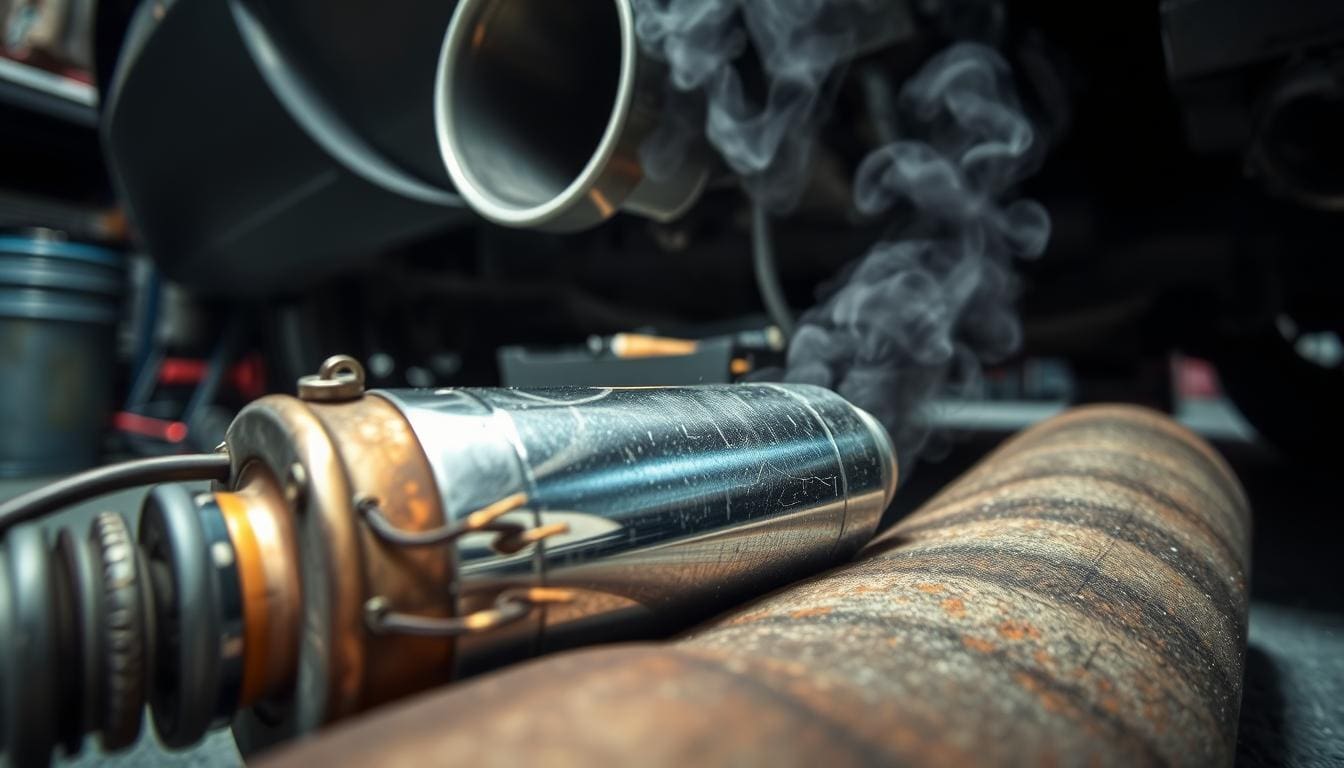
We begin by defining real-world signs you can feel, see, or smell before a full failure. Many drivers notice only small changes at first: a check engine light, sluggish acceleration, or a drop in fuel economy. These are early clues that a vital part of the exhaust system may be struggling.
Some problems seem vague because the part often lasts the life of the vehicle. A rotten-egg odor, misfires, or rattling from a damaged honeycomb are specific symptoms to log. We explain what to watch for, what to record, and how those notes help a shop diagnose the root cause.
Many signs mimic other engine faults, so we focus on patterns you can spot at home. We also note that emissions rules in the United States can make prompt diagnosis essential. When signs appear, trust Heaven Automotive to test carefully and avoid unnecessary replacement.
Key Takeaways
- Watch for dashboard warnings and drivability changes early.
- Note odors, sounds, and fuel economy drops for diagnosis.
- Many signs overlap with other engine faults—record patterns.
- Emissions compliance can require fast repair in many states.
- Heaven Automotive can confirm root cause and prevent unneeded parts.
How the catalytic converter protects your engine, exhaust system, and vehicle emissions
Between the engine and the tailpipe sits a key device that turns harmful combustion byproducts into safer gases.
What it does in the exhaust stream: Hot exhaust leaves the combustion chamber carrying pollutants. The unit sits downstream and acts as a last line of defense before gases exit the tailpipe.
How the catalyst changes harmful compounds
The honeycomb substrate is coated with precious metals such as palladium, rhodium, and platinum. Those metals speed chemical reactions that convert toxic molecules into water, oxygen, and carbon dioxide.
Why design and temperature matter
High surface area in the honeycomb lets more exhaust contact the coatings for efficient conversion. Under heavy load, temperatures can approach 800°F, which is normal but can damage the substrate if the unit is overloaded by excess fuel or misfires.
Emissions compliance and system health
A healthy unit reduces a large share of toxic output and keeps vehicle emissions within test limits in many U.S. states.
We link converter health to upstream sensors and mixture control because many faults that affect tailpipe output start elsewhere. When results are marginal, Heaven Automotive can explain test data and recommend repairs so the engine and exhaust system stay reliable.
Early catalytic converter issues we can identify before they get expensive
Small drivability changes often signal a growing restriction in the exhaust long before a hard fault appears.
Why it can feel “off” first
Minor hesitation, inconsistent power, or a sluggish throttle are common early signs. These symptoms come and go because a partial restriction reacts to temperature and load.
How restriction affects air, fuel, and efficiency
When exhaust flow slows, the engine cannot expel gases efficiently. This upsets air and fuel balance and lowers combustion quality.
Running rich to compensate adds extra fuel and can overheat the catalytic converter. Heat speeds internal breakdown and shortens service time.
“Catching these signs early often means a simple tune-up or sensor fix — not a full replacement.”
- Note when the issue happens: uphill, after idling, or during merges.
- Watch for intermittent loss of performance under load.
- Record patterns and bring the car in for a quick inspection.
We at Heaven Automotive confirm early-stage problems and stop small faults from becoming costly repairs.
Dashboard warnings and sensor clues that point to a bad catalytic converter
A glowing engine light may be the earliest clue that something downstream is changing. Modern vehicles use oxygen and air/fuel ratio sensors to watch exhaust gases and relay efficiency data to the computer.
When the check engine light is triggered by oxygen and air-fuel ratio sensors
How sensors trigger the warning
Oxygen and air fuel sensors compare measured gases to expected values. If readings stray, the engine light or check engine light can store a code. That code can point to reduced conversion efficiency or to a root cause harming the unit.
Why sensors may not catch converter symptoms right away
Sensors report averages and can miss slow or intermittent faults. The light may stay off while the vehicle shows subtle drivability changes. A stored code is useful, but not always instant proof of a bad catalytic or a failed converter.
What to document before we run a full check for emissions and exhaust issues
Note when the light appears, if it flashes, any fuel smell, loss of power, and whether the symptom changes when hot or cold. Record driving context: highway, uphill, or stop-and-go.
We at Heaven Automotive use that log to reproduce faults, separate sensor faults from true failure, and run full diagnostics for emissions compliance.
Performance and drivability symptoms from a clogged catalytic converter
When exhaust flow grows restricted, the car often loses pep and feels reluctant under load.
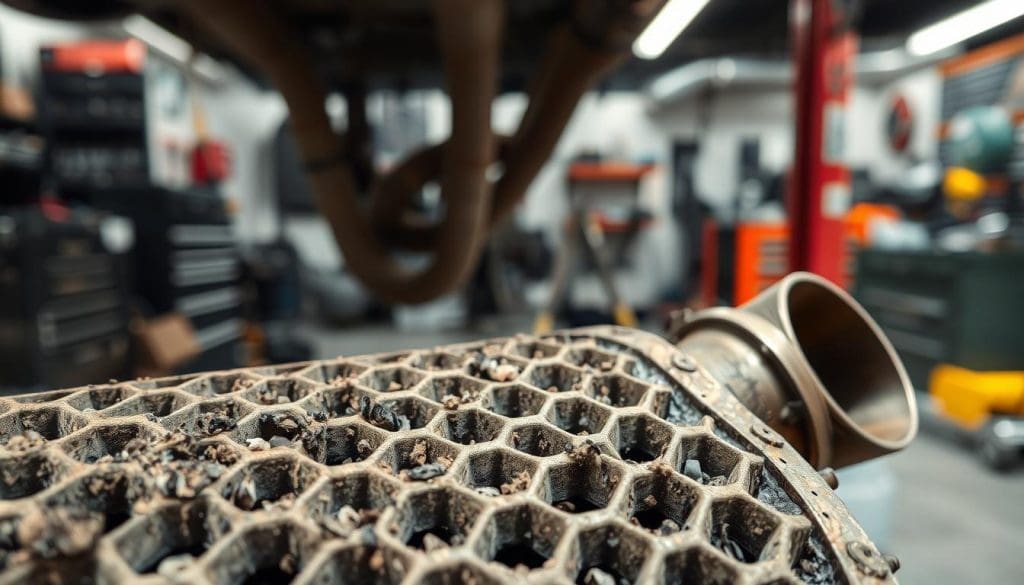
You may notice poor acceleration when merging, passing, or climbing hills. The engine struggles to pull and feels like it can’t “clear its throat.”
How restricted flow reduces performance
Restricted exhaust gases create backpressure. That backpressure limits how well the engine draws in fresh air for strong combustion.
Less air means weaker combustion and lower power output during normal driving.
Engine misfires and incomplete combustion
When cylinders burn fuel poorly, raw fuel can enter the exhaust and raise temperatures in the unit.
Engine misfires become more likely and can further damage the substrate, making the problem worse.
Hard starting and rough running
A blocked path makes cold starts harder and causes rough idle or hesitation off the line. Drivers may feel strain, vibration, or uneven running without special tools.
| Symptom | What you feel | What we check |
|---|---|---|
| Sluggish acceleration | Slow response during passing or hills | Backpressure test and exhaust inspection |
| Engine misfires | Stumbling, loss of power, higher rpm shake | Spark, fuel trim, and exhaust gas analysis |
| Hard starting / rough idle | Long cranks, rough idle, hesitation | Fuel pressure, ignition checks, and flow testing |
Stop the cycle early. A clogged catalytic converter can both result from and cause misfires and rich fueling. We recommend that Heaven Automotive test the unit and upstream fuel and ignition systems before recommending replacement. That avoids unneeded parts and protects your engine.
Fuel economy and smell signals you shouldn’t ignore
You may notice you’re filling up more often before any warning light shows. A steady drop in MPG often means the engine is running rich because sensor feedback is wrong or exhaust flow is restricted.
Fewer miles per gallon when the engine runs rich
Running rich means the engine uses more fuel than needed for the air it gets. Faulty sensors or a failing part downstream can tell the computer to add extra gas.
Rotten-egg or sulfur odor
A strong rotten-egg smell near the tailpipe happens when hydrogen sulfide isn’t being turned into harmless gases. That odor is a clear sign the emissions system is not processing properly.
Smoke and harsh exhaust smell
Thick black smoke, a burning smell, or harsh exhaust odors mean the exhaust and emissions system is under stress. These signs can be harmful to breathe and can speed damage to the unit.
Act quickly. If you notice fewer miles per tank, strong smells, or smoke, contact Heaven Automotive. We’ll diagnose whether sensor feedback, mixture control, or a bad catalytic converter is the root cause and advise the safest, most cost-effective fix.
How we test for catalytic converter failure in the shop today
Our first step is a quick thermal check to see if the exhaust flow is activating the core as it should.
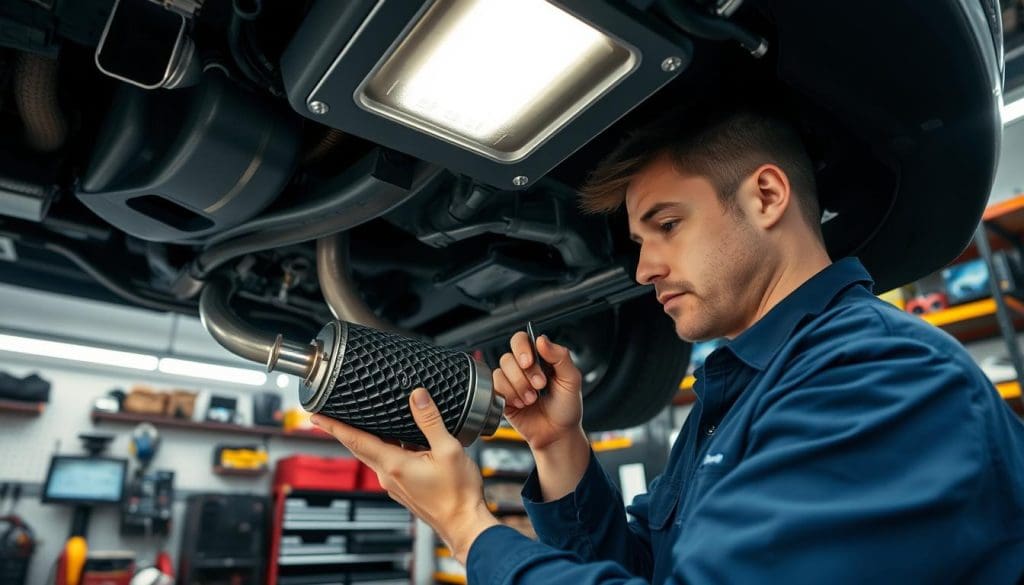
Infrared “light‑off” checks
We use an infrared thermometer to measure surface temps. Most units begin light‑off near 350°F and reach full activity around 500°F.
Front-to-rear temperature comparison
We read weld ring temps front to rear. A rear up to ~150°F hotter than the front is normal.
If the rear exceeds the front by more than ~150°F, that suggests an emissions or engine problem. If the rear is much cooler, the unit may not be lighting off and upstream fueling or a sensor could be wrong.
Overheat limits and physical inspection
We watch peak temps: ~1200°F is a typical upper range. Repeated runs above ~1600°F can degrade precious metal coatings; >1700°F can melt the substrate.
- Look for bronze/blue shell discoloration.
- Tap the shell for loose internal pieces.
- Inspect passages if the unit is removed.
| Test | Normal | Warning |
|---|---|---|
| Light‑off temp | 350–500°F | |
| Rear vs front | Rear ≤ +150°F | Rear > +150°F |
| Peak temp | ≤1200°F | >1600–1700°F |
We use these checks to make sure a replace bad decision is evidence‑based. This helps us protect your vehicle, preserve performance and avoid replacing a part that still works.
Conclusion
A quick recap helps you spot when the exhaust needs professional attention.
Watch for these clear symptoms: dashboard warnings like the check engine light, loss of power, falling fuel economy, sulfur smells, misfires, or rattling. These signs can lead to failed emissions testing and worsened damage if ignored.
The check engine light is a start, not a diagnosis. Sensors and mixture problems can mimic more serious faults. Document when and how symptoms occur; note smells, noises, and driving conditions.
Do not keep driving if you have severe power loss or a strong sulfur odor. Schedule a shop inspection. Proper testing—temperature checks, front-to-rear comparisons, and a physical look—lets us avoid unnecessary replacement and protects your engine and exhaust system.
Hire Heaven Automotive to confirm the root cause and fix your vehicle correctly the first time.