

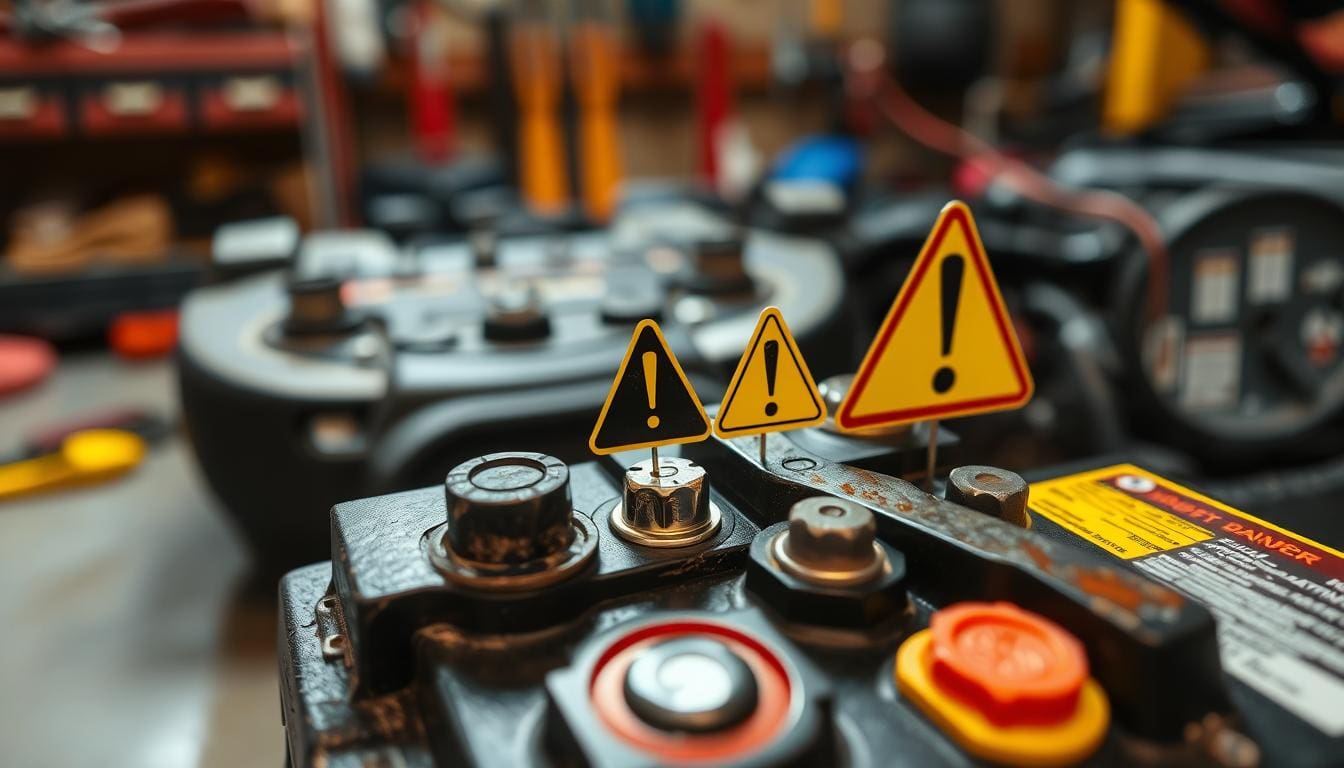
We help drivers spot early warning signs so you can avoid being stranded. At Heaven Automotive, we set clear expectations for what trouble looks like in real-world starting situations. That way, you can plan service before a no-start leaves you stuck at home, work, or a parking lot.
Modern vehicles place heavy electrical demands on systems today, so weaknesses show up sooner than many expect. We explain the most common early symptoms and why they often precede a complete failure.
We test and inspect to confirm the issue so you avoid unnecessary parts changes. Average lifespan guidance—often three to five years—varies with climate, driving habits, and equipment, so symptoms matter as much as age.
Use this practical checklist to decide when to schedule car battery replacement with Heaven Automotive. We frame the visit, outline what to expect, and help you choose the right time to book service rather than wait for a breakdown.
Key Takeaways
- Watch early signs that hint at failing starting power.
- Heaven Automotive tests to confirm issues before swapping parts.
- Electrical demand on modern vehicles can reveal weakness sooner.
- Average lifespan is 3–5 years but varies by climate and driving style.
- Schedule service today to avoid unexpected roadside problems.
Why Your Car Battery Matters to Starting and the Charging System
A healthy starting sequence needs storage, conversion, and generation of power — all three must perform reliably.
How the battery, starter, and alternator work together to crank the engine
The battery stores electrical energy ready for use. The starter converts that energy into mechanical force to turn the engine over. The alternator then produces current to replace what the starter used and to run accessories while the engine runs.
What today’s vehicle electrical loads mean for battery performance
Modern infotainment, advanced lights, safety sensors, and phone charging reduce reserve capacity. That exposes reduced performance sooner than old systems did.
- Weak storage can mimic starter or engine faults.
- Sluggish cranking often points to low output from the battery.
- A weak alternator or poor charging system can drain even a new battery.
- Dim lights at idle are an easy early clue of a system problem.
We evaluate the full starting and charging circuit at Heaven Automotive to find which component needs attention. That way you get the correct fix the first time.
Warning Signs Your Battery Is Weak and Could Leave You Stranded
We watch for clear, early warning behaviors so you can act before a no-start leaves you stranded. Below are the most common signs we see during inspections and customer reports.
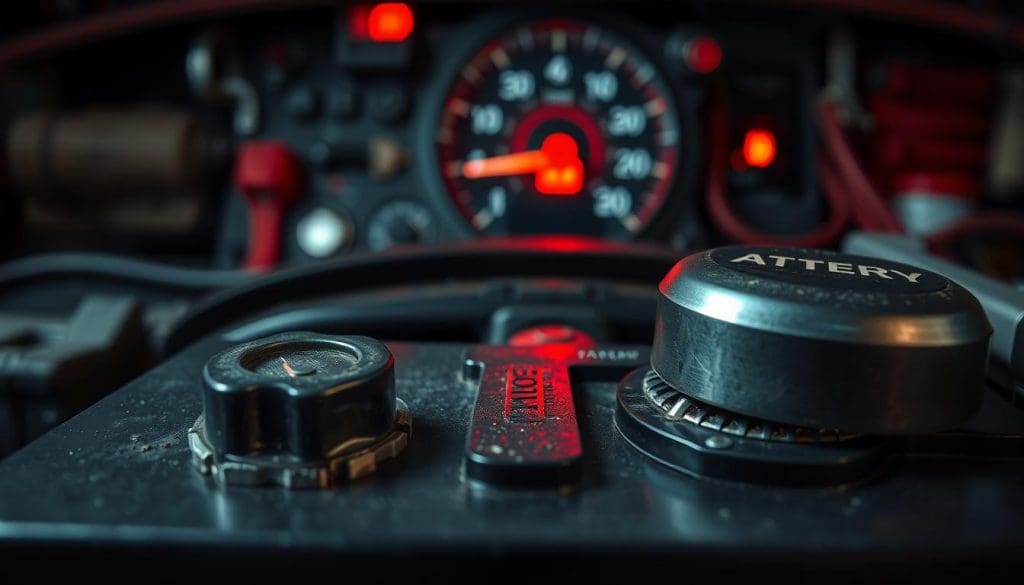
Slow cranking and longer start times
Slow engine crank, especially after the vehicle sits overnight or in cold weather, often points to reduced capacity. If it takes noticeably more time to start, bring the vehicle in for a test.
Clicking when you try to start
A rapid clicking noise means the starter isn’t getting enough current. Repeated clicking is urgent and should prompt immediate inspection.
Dim lights, dash warnings, and accessory issues
Dim headlights or interior lights at idle can indicate low voltage or charging faults.
If the check engine or battery light appears, don’t ignore it even when the engine still runs. Slowing windows, dragging wipers, or intermittent stereo faults are also early warning signs.
Fluid, leaks, and visible corrosion
Low fluid levels, leakage, or terminal corrosion raise safety and reliability concerns. Cleaning corrosion may help short-term, but we test the system to find the root cause.
| Symptom | Likely cause | When to see us |
|---|---|---|
| Slow start | Reduced capacity | After one slow start or repeated events |
| Clicking on start | Insufficient current | Immediately — risk of no-start |
| Dim lights / accessories | Low voltage or charging issue | At first occurrence |
| Leaks / corrosion | Damage or increased resistance | Prompt inspection recommended |
Bring your vehicle to Heaven Automotive so we can confirm the cause and prevent an unexpected breakdown. We test, diagnose, and advise the right next steps.
Common Causes of Battery Failure in the United States
High heat and frequent short trips combine to speed wear and shorten service life for many vehicle starting systems.
Heat and high temperatures that shorten life
Hot climates place extra stress on internal cells and fluids. In places like Tampa, where average summer temps near 90.1°F, heat accelerates corrosion and loss of capacity.
That means life often ends sooner than the nominal window in warm regions.
Age and what “normal” life looks like in years
Most batteries last about 3–5 years under typical conditions.
However, exposure to heat or heavy use can push that toward the lower end of the range. We monitor age closely so you don’t face a surprise failure.
Short trips and insufficient charging time
Repeated trips under 15–20 minutes rarely allow full charging after start-up. Stop-and-go driving today increases start cycles and electrical load.
That combination drains capacity over time and produces earlier symptoms in vehicles with many electronics.
“If your routine has short errands or you live in a hot climate, schedule an inspection before the next seasonal swing.”
We connect these common patterns to proactive service at Heaven Automotive and recommend inspections when conditions match those risk factors.
Car Battery Replacement: Testing, Fitment, and Installation We Handle
We begin every job with precise electrical testing so the repair targets the real problem. Our first step is battery testing and charging system evaluation to rule out alternator, cable, or starter faults.
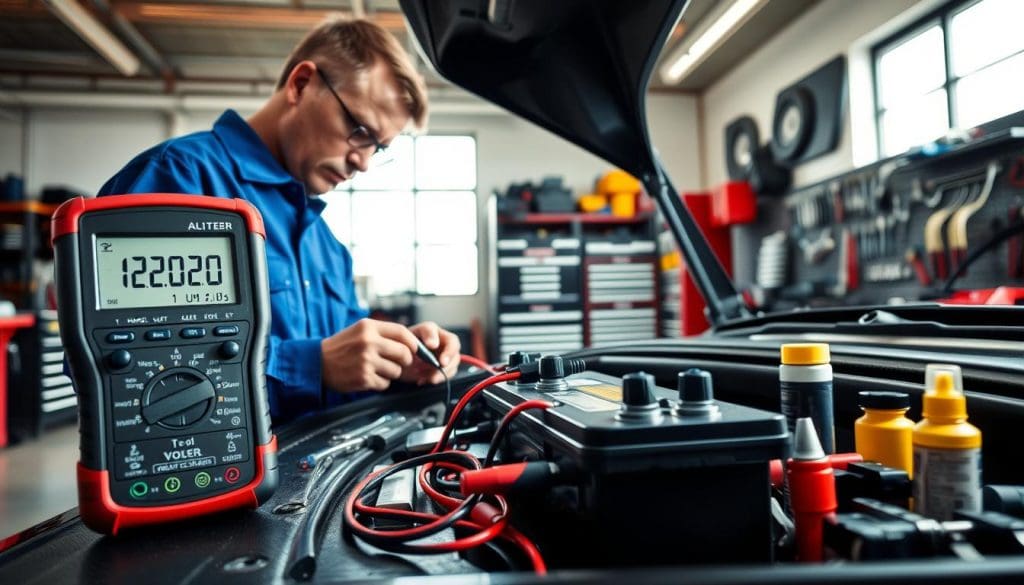
Confirming the issue with thorough testing
We use load and voltage tests to measure performance under real conditions. This testing tells us if the cell capacity is low or if charging is inconsistent.
Selecting the correct fit and specs
We match the correct type, size, terminal orientation, and cold cranking amps for your vehicle. Installing parts that meet or exceed manufacturer specs reduces early failures.
Safe installation, disposal, and final check
Our technicians follow safe disconnect procedures and protect electronics during installation. We secure the unit to prevent vibration damage and handle proper disposal of used batteries per regulations.
After service, we perform a post-service check to confirm stable starting and correct charging behavior. That way our services lower the chance of a comeback and extend long‑term reliability.
“We test first, install correctly, and verify the results.”
What to Expect: Service, Timing, and Cost Factors
Understanding cost drivers helps you budget and avoid surprises when service is needed.
Several items change the final price. Battery group size, required cold cranking amps (CCA), and construction type affect parts cost. Some vehicles need registration or programming after installation, which adds labor time.
What can change the cost from vehicle to vehicle
We factor parts, labor, and any special programming into estimates. Higher-capacity units and sealed designs cost more. If a vehicle needs sensor reprogramming or dealer-level coding, that raises the total.
When service is typically needed and how we help plan maintenance
Most units last about 3–5 years. Heat, short trips, and heavy electrical load can shorten life.
We combine testing with your usage pattern to recommend proactive maintenance and avoid a no-start during busy weeks or extreme weather.
How to book an appointment with Heaven Automotive
We keep scheduling simple: confirm testing, review options, get approval, complete installation, and verify performance.
- Call or use our online scheduler to set an appointment time.
- We prioritize quick turnaround while completing proper testing and final checks.
- Manage multiple vehicles by booking ahead of seasonal heat or road trips.
“We confirm findings, review options, install, and recheck — so you leave with reliable starting performance.”
Conclusion
Small starting issues often signal larger trouble. Catching odd sounds, slow cranks, dim lights, or fluid and corrosion early usually saves money and stress.
We evaluate the full starting and charging circuit so the true cause is fixed the first time. Decisions about battery replacement should consider symptoms, climate, trip length, and typical lifespan—not guesses.
Early action is nearly always cheaper than repeated jump-starts or an emergency tow. If you notice the warning signs, prompt replacement limits follow-on damage and restores reliable starting.
, Hire Heaven Automotive to fix your vehicle.