

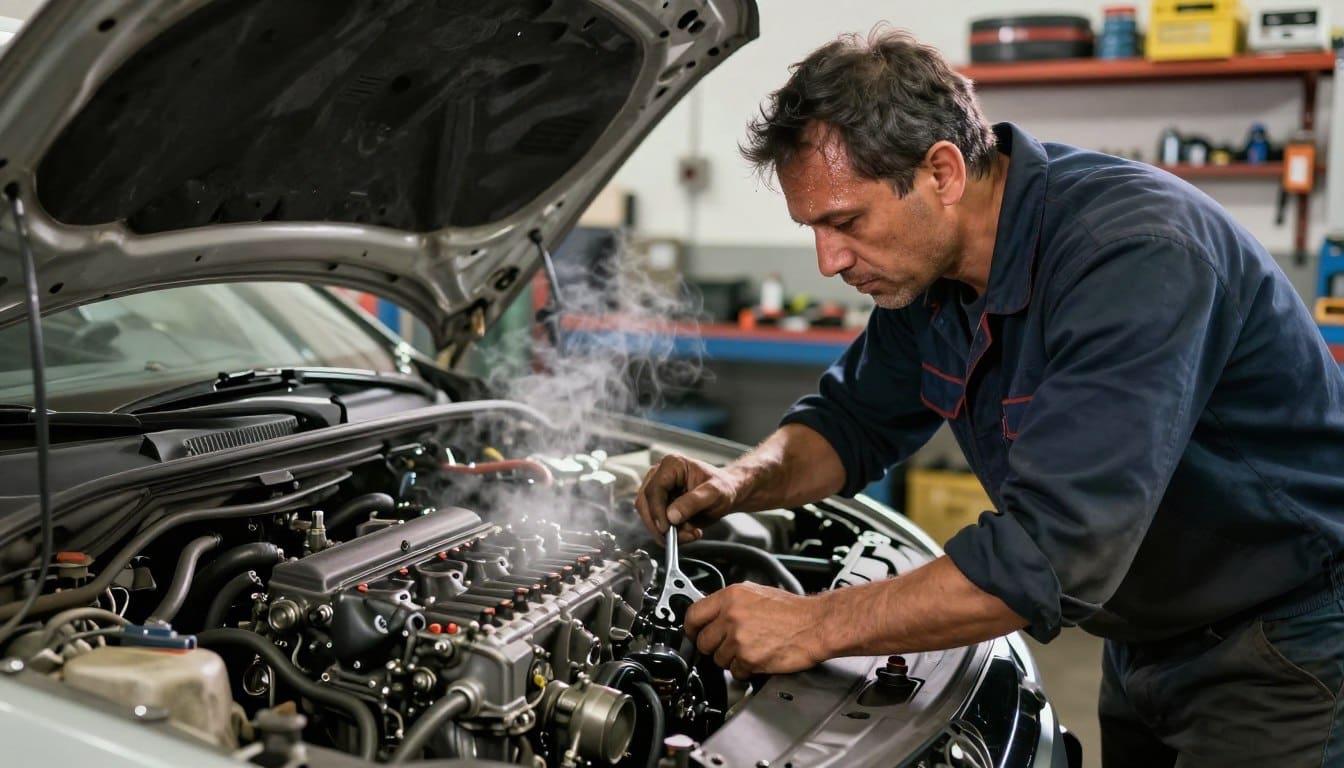
You might not think about your cooling system until the dashboard lights up. Keeping the temperature steady is vital for your car’s health and performance. When parts fail, heat builds up fast, causing serious damage.
A broken coolant circulator can lead to catastrophic failure in minutes. If you ignore signs of wear, you risk melting parts or warping metal. You might need a water pump replacement to avoid costly damage.
To prevent a total breakdown, stay ahead of the heat. Our team at Heaven Automotive offers expert engine overheating repair to keep your car running smoothly. Contact Heaven Automotive today to keep your vehicle cool and reliable.
Key Takeaways
- A functional cooling system is essential for engine health.
- Ignoring temperature spikes leads to expensive mechanical failures.
- Visible coolant leaks are a primary warning sign of trouble.
- Proactive maintenance significantly extends your vehicle’s lifespan.
- Heaven Automotive offers professional cooling system diagnostics.
- Warped engine blocks are often the result of extreme overheating.
The Critical Role of the Water Pump in Your Engine
The engine’s cooling system depends on the water pump to move coolant. Your engine gets very hot while running. Without coolant flow, temperatures could get too high.
The water pump pushes coolant through the engine, radiator, and heater core. This keeps the engine at a safe temperature.
How the Cooling Loop Maintains Thermal Equilibrium
The cooling loop is key to keeping your engine cool. It moves coolant from the engine to the radiator. This keeps the engine at the right temperature.
The water pump makes sure coolant keeps moving. This stops hot spots and keeps the engine safe.
The Relationship Between the Timing Belt and Pump Function
In many engines, the water pump runs on the timing belt. A broken timing belt can damage the water pump. Also, a bad water pump can stress the timing belt.
It’s important to know this to keep your engine running well. Regular checks and cooling system repair are key. They help avoid overheating and keep your car running smoothly.
Understanding the Mechanics of Cooling System Failure
The cooling system is vital for your engine’s health. Knowing how it fails helps prevent big damage. The water pump is key, keeping the engine at the right temperature by moving coolant.
When the water pump starts to fail, it can cause a chain of problems. These problems can lead to the engine overheating. The main reasons for this failure are seal wear, bearing damage, and impeller erosion.
Internal Seal Degradation and Bearing Wear
Seals wear out over time due to constant stress. When they fail, coolant leaks out. This makes it hard for the engine to cool down. A water pump leak is a serious issue that can lead to engine overheating repair if not fixed quickly.
- Signs of internal seal degradation include coolant leakage around the water pump.
- Bearing wear can cause unusual noises, such as whining or grinding sounds.
- Regular inspection can help identify these issues before they lead to catastrophic failure.
The Role of Impeller Erosion in Flow Restriction
The impeller is vital for moving coolant through the engine. Over time, it can wear down due to coolant flow and corrosion. Impeller erosion can block coolant flow, leading to overheating.
- Reduced coolant flow rate.
- Increased engine temperature.
- Visible signs of erosion on the impeller upon inspection.
Understanding these mechanics helps spot problems early. This can save you from expensive engine repairs later.
Common Signs Your Water Pump Is Failing
Your water pump is very important. Knowing when it fails is key to keeping your engine running well. If your water pump fails, it can damage your engine badly. So, it’s good to know the signs early.
Interpreting Unusual Whining or Grinding Noises
Unusual noises from the front of your engine might mean your water pump is failing. You might hear a whining or grinding sound. These sounds are often louder when your engine is cold or starting up.
Identifying the source of the noise is key. If the noise is from the water pump area, you need to check it out. Worn bearings can cause the pump to fail, leading to overheating and engine damage.
Visual Inspection of Coolant Puddles Under the Vehicle
Seeing coolant puddles under your car is another sign of a failing water pump. These puddles are usually near the front of the engine. Coolant leaks can make your engine overheat.
Checking for leaks often and fixing them quickly can stop bigger problems. Also, look for moisture or stains on the water pump and around it. These can be early signs of trouble.
To understand the signs of a failing water pump better, here’s a quick summary:
| Sign | Description | Potential Consequence |
|---|---|---|
| Unusual Noises | Whining or grinding sounds from the front of the engine | Worn bearings, possible water pump failure |
| Coolant Leaks | Visible coolant puddles under the vehicle or near the water pump | Cooling system not working well, engine overheating |
Watching for these signs can help you catch a failing water pump early. If you think your water pump is failing, get a professional to check it. They can do a water pump replacement or cooling system repair to protect your engine.
The Domino Effect of Overheating on Engine Components
When your engine overheats, it starts a chain reaction. This puts many engine parts at risk of serious damage. High temperatures can make internal parts warp, crack, or seize, leading to expensive fixes.
One major worry with overheating is the damage to the cylinder head. Thermal expansion happens when the engine gets too hot. This causes the metal to expand beyond its usual size.
Thermal Expansion and Cylinder Head Warping
Overheating can warp the cylinder head due to thermal expansion. This warping makes the engine surface rough. It also breaks the seal between the engine block and cylinder head.
The Risk of Blown Head Gaskets and Internal Seizure
A blown head gasket is often caused by engine overheating. When the seal fails, coolant can leak into the engine. This can cause more damage. In bad cases, the engine can seize, where parts get stuck due to heat.
If you think your engine is overheating or see signs of a water pump leak, act fast. This can prevent more damage.
Why Professional Water Pump Replacement Is Essential
To keep your engine running well, a professional water pump replacement is key. It’s not just about swapping out the pump. You need to know the cooling system inside out and spot problems early.
A pro mechanic will replace the pump and check the rest of the cooling system. They look for wear or damage on the timing belt, hoses, and more. This makes sure everything works right.
Ensuring Proper System Bleeding and Air Pocket Removal
Removing air pockets from the cooling system is a big part of water pump replacement. Air pockets can make the engine overheat, causing expensive fixes later. A skilled mechanic uses special tools to get rid of air pockets and make sure the system works well.
Proper system bleeding involves several key steps:
- Identifying the highest point in the cooling system to release trapped air
- Using a cooling system bleed tool to remove air pockets
- Monitoring the coolant level to ensure it remains at the recommended level
The Importance of Using OEM-Grade Components
Choosing OEM-grade parts for water pump replacement is vital to avoid future issues. OEM parts fit perfectly and work best. Aftermarket parts might not fit right or work as well, which can hurt your engine’s performance.
The benefits of OEM-grade components include:
- Ensured compatibility with your vehicle’s engine
- Optimal performance and efficiency
- Reduced risk of future failures and costly repairs
By picking a professional mechanic and OEM parts, you get a job done right. This reduces the chance of problems later and keeps your engine healthy.
The Financial Consequences of Ignoring Cooling System Repair
Ignoring cooling system repair can lead to big financial problems for car owners. The cooling system is key to your car’s engine. Without upkeep, you’ll face expensive repairs later.
Ignoring repairs can lead to big costs. A failing water pump can make your engine overheat. This can cause very expensive repairs.
Minor Repairs vs. Full Engine Rebuilds
Fixing a worn-out water pump is much cheaper than rebuilding the engine. A new water pump costs between $300 to $600. But, rebuilding the engine can cost $3,000 to $5,000 or more.
Long-Term Value of Proactive Maintenance
Regular cooling system checks save money and keep your car running well. Catching problems early can prevent engine overheating repair and water pump leak costs.
Regular maintenance is key. It keeps your car reliable and efficient for years.
Identifying the Early Warning Signs of a Water Pump Leak
Spotting a water pump leak early is key to keeping your engine running well. A leak can cause your engine to overheat and even fail if not fixed quickly.
To catch a water pump leak early, watch for warning signs. One good way is to check your coolant reservoir levels often. If the level drops, it might mean there’s a leak in the cooling system, possibly at the water pump.
Monitoring Coolant Reservoir Levels Regularly
It’s easy to check your coolant reservoir levels. Look at the minimum and maximum marks on the reservoir. If the level keeps dropping, it could mean a leak. Always check the level when the engine is cold to avoid hot coolant injuries.
Recognizing the Sweet Smell of Antifreeze
A sweet smell of antifreeze is another sign of a leak. Antifreeze smells sweet and is noticeable when it leaks. If you smell it while driving or after parking, check your water pump. It might be leaking, letting antifreeze out.
If you notice these signs, get your cooling system checked by a pro. Fixing it early can prevent expensive cooling system repair later.
How Engine Overheating Repair Differs from Routine Maintenance
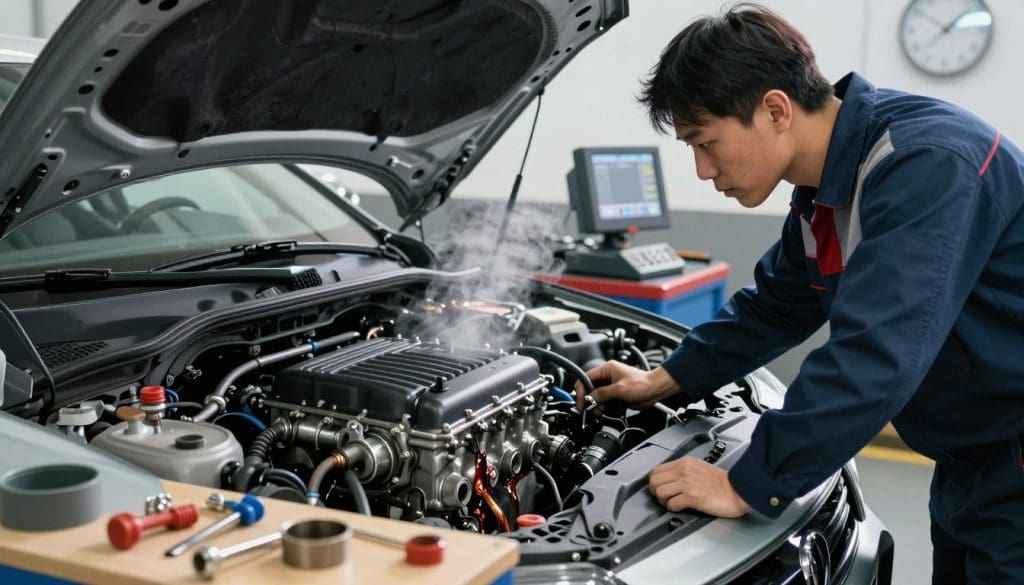
When your engine overheats, fixing it is much harder than regular maintenance. You need to find and fix any hidden damage. If you don’t act fast, overheating can cause big problems.
Repairing an overheated engine is different from regular maintenance. It needs detailed checks to find and fix the main issue. Routine maintenance follows a set plan, but overheating repair is more complex.
Diagnostic Procedures for Identifying Hidden Damage
To fix an overheated engine, you must do thorough tests. These tests include:
- Looking at the cooling system for leaks or damage
- Testing pressure to find system weaknesses
- Using thermography to spot temperature issues
These tests help find hidden damage. This could be damage inside the engine or problems with the cooling system.
Restoring System Integrity After a Thermal Event
After finding and fixing the overheating problem, you must fix the cooling system. This means:
| Component | Inspection Criteria | Restoration Action |
|---|---|---|
| Water Pump | Signs of leakage or wear | Replacement with OEM-grade component |
| Coolant System | Presence of leaks or corrosion | Flush and refill with appropriate coolant |
| Engine Block | Evidence of overheating damage | Repair or replacement as necessary |
Fixing the cooling system is key to avoid future overheating. By checking and fixing or replacing damaged parts, you keep your engine running well.
Key Takeaway: Fixing an overheated engine is a detailed job. It needs careful checks and fixing the cooling system to avoid more problems and keep your engine healthy.
The Impact of Coolant Quality on Pump Longevity
The life of your water pump depends a lot on your engine’s coolant. Keeping your coolant in top shape is key for your cooling system’s health.
As time goes by, coolant can break down and become harmful. This can damage your water pump and other engine parts. It can cause leaks and harm the cooling system.
Corrosion Due to Old Coolant
Old coolant can corrode metal parts, including the water pump. This can cause it to wear out faster and even fail if not fixed.
Several things can make old coolant corrosive. These include:
- The loss of corrosion inhibitors
- Debris and metals getting in
- Changes in the coolant’s pH level
The Importance of Periodic Coolant Flushes
To avoid problems with old coolant, regular coolant flushes are key. Flushing your cooling system regularly keeps your water pump and system in good shape.
Regular coolant flushes:
- Get rid of corrosive stuff that can harm your water pump
- Put in new coolant that protects your system
- Spot problems early to avoid big issues
By keeping your coolant quality up and flushing it often, you can make your water pump last longer. This also helps avoid expensive cooling system repairs and water pump leaks.
Technological Advancements in Modern Water Pump Design
Water pump design has changed a lot, making engines cooler and more reliable. When you think about water pump replacement, knowing these changes is key. They affect your car’s engine a lot.
New water pump tech aims to cool engines better. It meets the needs of today’s engines. This has brought big changes in how pumps work and are made.
Electric Versus Mechanical Water Pump Efficiency
Now, we see more electric water pumps than old mechanical ones. Electric water pumps are better in many ways. They use less energy and don’t waste power like mechanical pumps do.
They work only when needed, which saves fuel. This also means less wear on the engine. It could make your engine last longer and avoid engine overheating repair.
Materials Science and the Shift Toward Composite Impellers
Another big change is using new materials like composite impellers. Old metal impellers are being replaced by these new ones. They last longer and don’t rust as easily.
These materials let for more complex designs. This means better cooling and more efficient pumps. So, today’s pumps keep engines cooler and work better.
Safety Protocols When Dealing with Cooling System Issues
When you face cooling system problems, safety is key to avoid accidents. The cooling system is vital for your car’s engine. Handling it wrong can cause big problems.
Opening a pressurized cooling system is risky. It’s under pressure, and if you release it wrong, hot coolant can spray out. This can lead to burns and injuries.
The Dangers of Opening a Pressurized Cooling System
Opening a pressurized cooling system can be dangerous if not done right. The pressure can force coolant out, causing burns and injuries. It’s important to follow the right steps to release pressure safely.
To safely release pressure from the cooling system:
- Make sure the engine is cool before you start.
- Find the radiator cap and slowly turn it to the first stop to release pressure.
- After the pressure is gone, you can remove the cap fully.
Handling Toxic Coolant Fluids Responsibly
Coolant fluids are toxic and can harm you if you drink them or touch your skin. It’s important to handle them carefully to avoid accidents.
Here are some guidelines for handling coolant fluids safely:
| Precaution | Description |
|---|---|
| Wear protective gear | Use gloves and safety glasses to prevent skin contact and eye irritation. |
| Dispose of coolant properly | Take used coolant to a recycling center or an auto parts store that accepts used coolant for proper disposal. |
| Avoid ingestion | Keep coolant out of reach of children and pets, and avoid ingesting it yourself. |
By following these safety tips, you can reduce the risks of cooling system repair. This ensures a safe working environment.
Expert Advice on Preventing Catastrophic Engine Failure
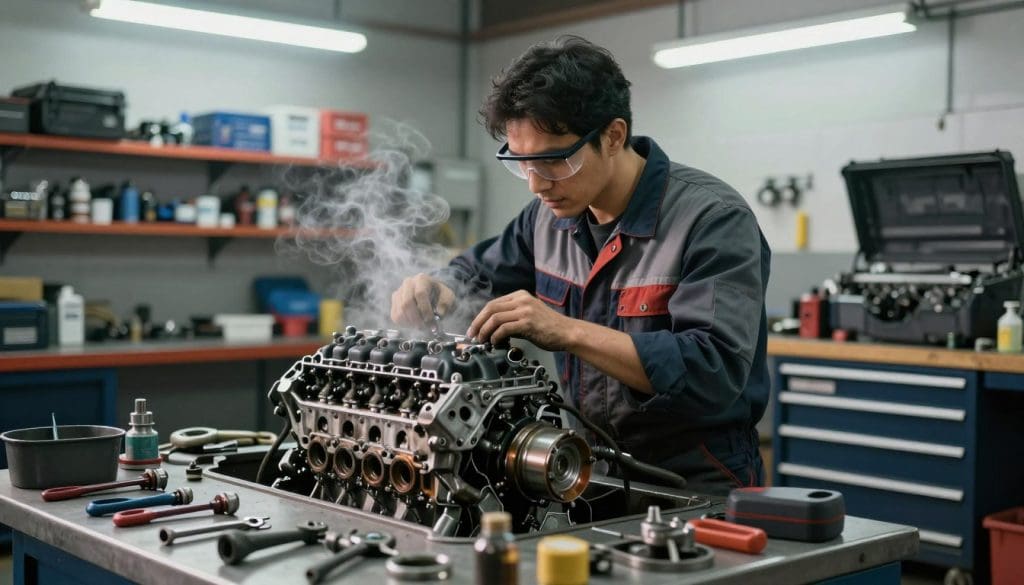
To avoid engine failure, start with a good maintenance routine. Simple habits and knowing when to get help can make a big difference. Spotting early signs and acting fast is key to a long-lasting engine.
Establishing a Reliable Maintenance Schedule
Having a solid maintenance plan is essential. Check your cooling system and water pump regularly. Look for wear and leaks on your water pump and replace it if needed. Regular water pump replacement can avoid expensive engine failure.
Also, make sure your coolant is good and your system has no leaks. Regular coolant flushes keep your cooling system healthy. By doing these tasks, you can prevent overheating and avoid engine overheating repair.
When to Seek Immediate Professional Intervention
It’s important to know when to get professional help. If your engine overheats or you see coolant leaks, get help fast. Also, if your car makes strange noises that might mean your water pump is failing, call a mechanic.
Acting quickly can save you from expensive repairs. A mechanic can find problems early and fix them, like water pump replacement, to keep your engine running well.
Conclusion
Your car’s cooling system is key to keeping the engine running well. A failing water pump can cause serious engine damage. But, knowing the signs and acting fast can avoid expensive fixes.
Spotting early signs of water pump failure and fixing cooling system problems quickly can stop overheating. This prevents damage to your engine. Regular checks and maintenance, like replacing the water pump and fixing the cooling system, help your car last longer.
If your car’s cooling system is acting up or you think the water pump is failing, get help fast. Heaven Automotive, at 6645 Poss Rd, San Antonio, TX 78238, is ready to help. Call (210) 682-3898 to book your service today.