

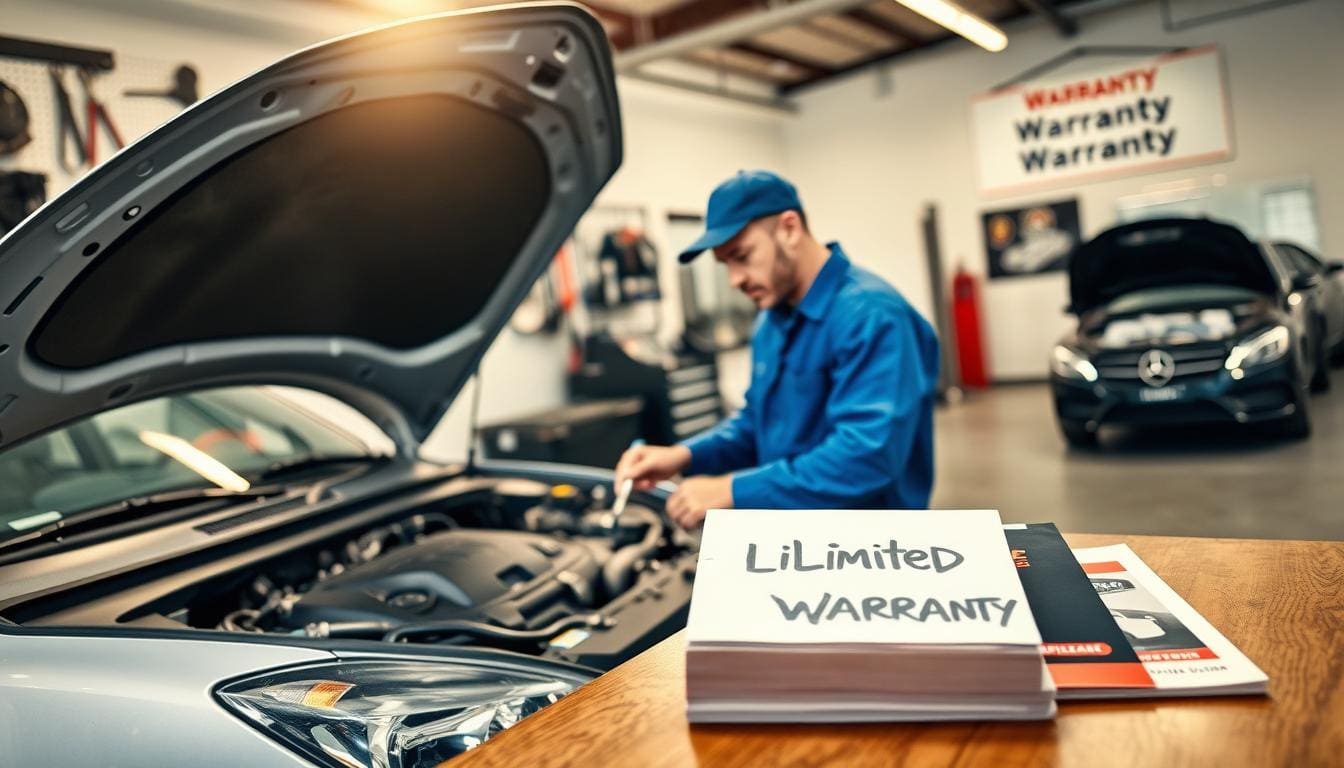
At Heaven Automotive, we stand behind the work we do and aim to make your post-service experience clear and fair. A limited warranty is a promise that covered parts and workmanship will be fixed if they fail within set months or miles. This matters when you choose a shop for vehicle service and repairs.
We explain coverage in plain terms so you know when to return to our location. Typical terms list months and miles, and those limits match common U.S. driving patterns. When a covered part or a workmanship issue appears, the policy helps you avoid paying twice for the same problem.
Details on your invoice matter: what we repaired, the parts used, and how the vehicle is driven affect what is honored. We ask customers to keep documents, understand the terms up front, and contact us promptly if they suspect an issue.
Key Takeaways
- Heaven Automotive backs our service with clear, limited coverage.
- Coverage usually runs by months and by miles.
- Keep your invoice and parts records to preserve coverage.
- Return to the original shop and contact us quickly if problems appear.
- Terms depend on the part, the repair, and vehicle use.
How a Limited Repair Warranty Works at Heaven Automotive
At Heaven Automotive, we set clear terms so you know exactly what our coverage promises and when to call us. Our goal is to protect you from paying twice for the same issue while being transparent about limits.

What “limited warranty” means in service and repair
Limited means a defined promise tied to specific months and miles, not an open-ended guarantee for every future vehicle issue.
Parts and labor coverage: what we stand behind
We cover defects in new parts and problems caused by improper installation or our workmanship. That parts labor protection usually applies only to the part named on your invoice and the work we performed.
Time and mileage limits
Most U.S. terms read like “12 months/12,000 miles, whichever comes first.” Some providers offer “3 years/36,000 miles, whichever occurs last” to extend protection.
Which structure affects you?
“Low-mileage drivers may hit months first; commuters often reach miles first.”
If you notice a covered issue, contact our shop and let us inspect the vehicle before other work is done. Keep your original invoice and service notes so we can confirm coverage quickly.
limited warranty auto repair Coverage Details: Time, Miles, and What’s Included
Understanding how time and miles affect coverage helps you avoid surprise costs after a visit. We list typical windows and explain why terms differ by service. This helps you compare what is normal in the U.S. market.

Typical coverage windows customers see in the U.S. market
Many programs use a baseline of 12 months/12,000 miles. Routine maintenance often has shorter protection, such as 3 months/3,000 miles for oil changes and 6 months/6,000 miles for some filters.
Service-to-service differences
Different services face different failure risks. A simple service like a fluid change gets a short term. A component swap, like a starter, often gets longer parts coverage than labor.
Defects in parts vs improper installation
A defective part fails because of a manufacturing issue. Improper installation comes from how the work was done. We diagnose symptoms to separate the two before we make a claim decision.
When a covered part proves unserviceable
If a covered part fails in the stated months or miles, we inspect the vehicle, confirm eligibility, and then replace or repair the part.
“Eligible parts that fail within the coverage window are often replaced at no additional parts or labor charge, subject to exclusions.”
How vehicle use can affect coverage
Commercial use, towing, racing, and heavy loads speed wear and may void coverage for related damage. Act quickly: contact our shop as soon as you notice symptoms so we can document and reduce secondary issues.
| Service Type | Common Months | Common Miles |
|---|---|---|
| Oil change | 3 months | 3,000 miles |
| Filters (selected) | 6 months | 6,000 miles |
| General parts replacement | 12 months | 12,000 miles |
| Major components (parts) | 24–36 months | 24,000–36,000 miles |
Limitations, Exclusions, and Your Rights as a Vehicle Owner
Every coverage plan has boundaries that affect whether a claim will be honored at our shop. At Heaven Automotive, we explain what those limits mean so you can make informed choices about service and repairs.
Common exclusions and limitations that can affect claims
Exclusions commonly include misuse, collision, and damage from outside events. Items like tires, wheels, and batteries often sit under separate protections.
Many policies also require a working odometer and timely presentation of the original invoice to verify months and miles of coverage.
Damage vs workmanship: wear, abuse, accidents, and pre-existing issues
We distinguish damage from a workmanship issue by looking at cause and timing. Collision, neglect, and pre-existing faults are not covered as workmanship.
Normal wear and consumables wear out over time and usually do not qualify as defects in parts or labor.
Documentation matters: why your original invoice is essential
Your invoice records the date, parts installed, and the stated time and miles of protection. Keep it safe—claims rely on those objective checks to process quickly.
Where warranty work is honored and how location impacts options
Some programs ask you to return to the selling shop; others allow repairs at network locations. Availability, distance, and parts can shape the process and timelines.
State-by-state consumer rights and why terms can vary
Consumer protections differ by state. You generally have the right to choose your shop, and some states limit contract terms that restrict that right.
If an issue falls outside coverage, we will provide clear cost options and estimates so you decide how to proceed.
Conclusion
When coverage standards are clear, handling a post-service issue becomes fast and fair.
We summarize that a warranty protects you when a covered issue shows up after a repair, while also setting clear boundaries tied to time and miles.
Keep your invoice and parts records. Those documents confirm what services and repairs are covered and speed any claim review.
Understanding basics helps you pick the right shop, ask better questions, and avoid surprise out-of-pocket costs. Coverage can depend on how the vehicle is used and maintained.
Contact us for transparent recommendations, quality parts, and dependable service at a convenient location. Hire Heaven Automotive to fix your vehicle — schedule service with our shop today so we can diagnose, complete the repair correctly, and stand behind our work.