

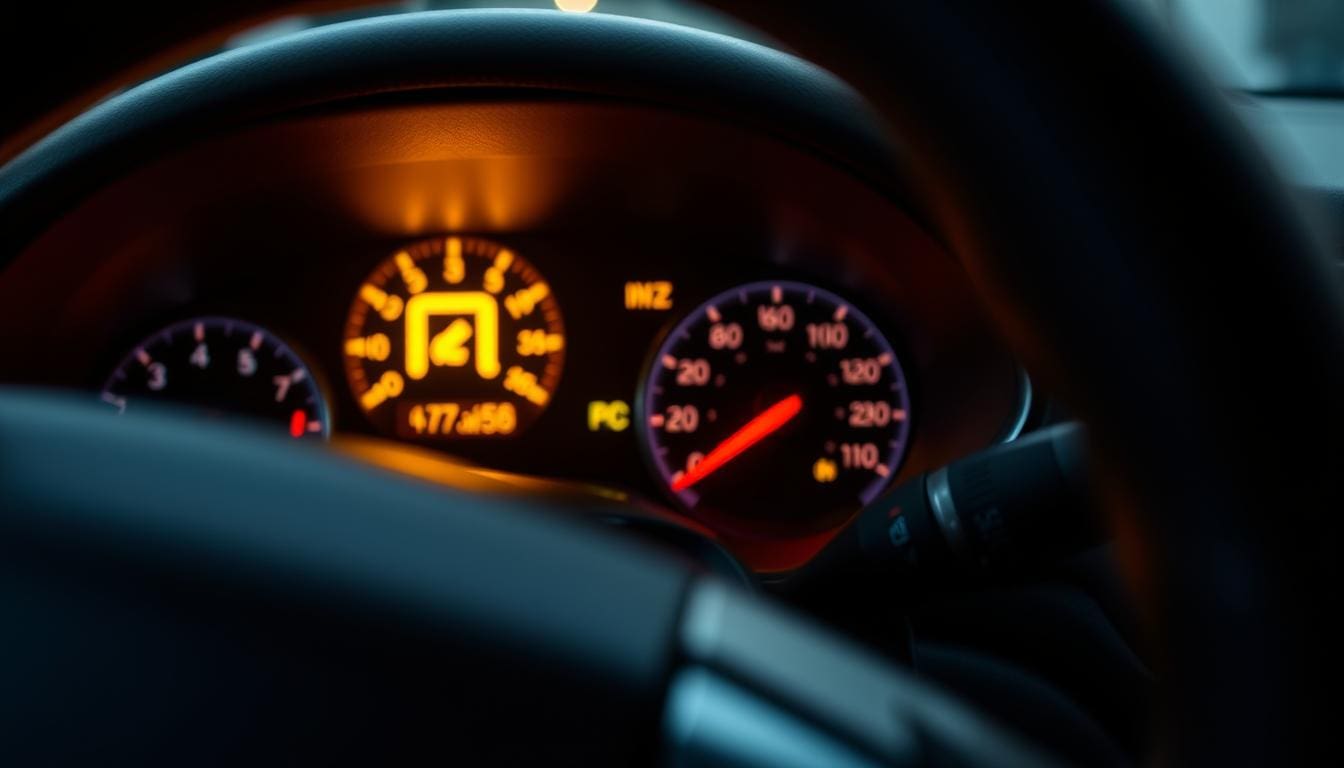
Your dashboard light is more than a nuisance—it’s a clue. A single warning can point to many possible faults, so guessing wastes time and money. We recommend prompt inspection to find the true cause.
Modern cars rely on onboard systems to monitor performance and emissions. Even if the vehicle seems to drive fine, a stored fault can hurt fuel economy or lead to bigger repair bills later.
At Heaven Automotive, we treat this page as our engine diagnostics service guide. We don’t just read a code—we confirm the real-world cause, explain findings in plain terms, and recommend repairs that match your priorities.
Key Takeaways
- Dashboard warnings need a professional inspection to find the specific fault.
- We diagnose issues thoroughly and translate results into clear next steps.
- Early checks can prevent unnecessary parts replacement and bigger bills.
- A steady light and a flashing light may signal different urgency; only testing reveals the cause.
- Drivers in san antonio can rely on us to diagnose accurately and repair correctly the first time.
Why the check engine light comes on and what it means for your vehicle
Warning lights are the vehicle’s first call for attention; they flag when vital systems run outside normal limits.
At Heaven Automotive, we explain what that signal means and why prompt testing matters. The check engine light can cover many different problems. A single code may point to fuel, ignition, or emissions faults.
When a warning light looks small but the problem isn’t
Minor alerts can hide major consequences. A faint dash light may seem harmless, yet it can reduce fuel economy or harm long-term performance. Ignoring that signal often raises repair costs later.
How onboard systems detect issues you can’t see
Modern cars use sensors to monitor air/fuel mix, timing, and emissions controls. The system compares readings to expected ranges and triggers a light when values fall outside limits.
“A warning light doesn’t guess — it reports data that needs review.”
- We scan codes, confirm real symptoms, and explain options.
- Early testing helps prevent secondary damage and preserves roadworthiness.
| Detected Area | What Triggers Light | Why It Matters |
|---|---|---|
| Fuel & Air | Sensor variance or leaks | Impacts economy and emissions |
| Ignition | Misfires or weak sparks | Can damage catalytic converter |
| Emissions | Control system faults | May fail inspection |
Schedule diagnostics with us to protect your car and keep maintenance on track. The next section explains how light behavior changes urgency.
Steady vs. flashing engine light and when to stop driving
Not all warnings are equal; how the light behaves tells us how urgent the problem is.
Steady engine light: A steady indicator signals an issue that needs prompt attention, even if the car still feels normal.
Delaying repair can lower fuel economy and let small faults turn into costly repairs. We recommend scheduling service soon so we can identify the root cause with proper checks.
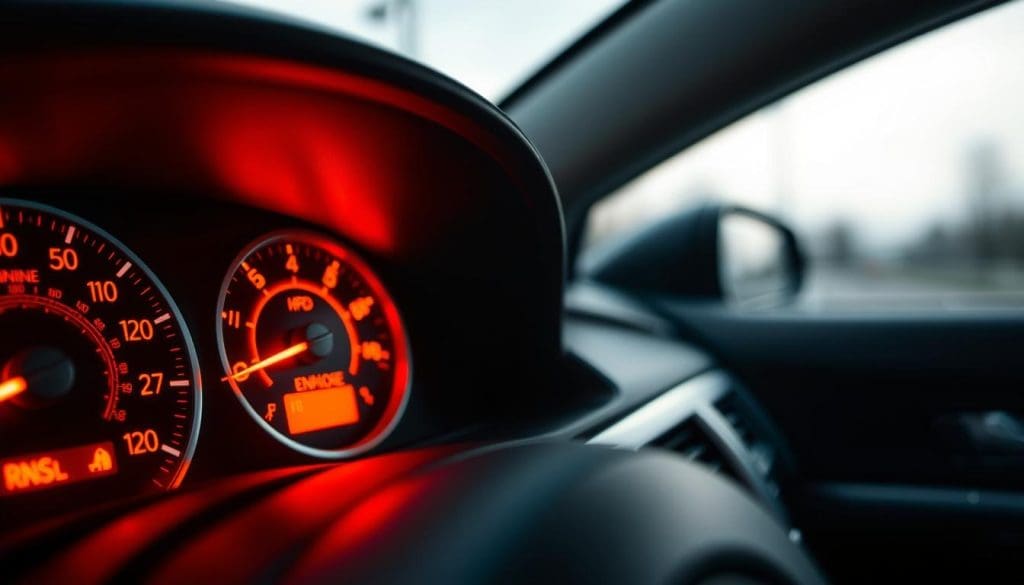
Flashing light: immediate action
A flashing engine light usually means a misfire. Continued driving can overheat and damage the catalytic converter and related systems.
If your vehicle runs rough, loses power, shakes severely, or smells strongly of fuel, pull off the road safely and stop driving.
- Avoid heavy loads and hard acceleration when the light is steady.
- If it flashes, get off the road and call for service or a tow.
- We verify the cause with diagnostics and give clear repair options based on real data.
“Stopping early can protect the engine and prevent a much larger repair bill.”
Bring the car to us and we will perform checks, explain findings, and recommend repairs that match the severity we find.
engine diagnostics San Antonio at Heaven Automotive
Our team at Heaven Automotive turns code data into clear repair plans so you can move on with confidence.
We are a local san antonio shop that pairs technician experience with modern diagnostic tools. Our technicians read onboard data, verify symptoms, and explain what the findings mean for your vehicle.
We listen first. Then we test, confirm the root cause, and propose a transparent service plan before any repair begins.
Local shop expertise backed by modern tools
Our technicians combine hands-on experience and up-to-date scanners to locate faults quickly. That means less downtime and fewer guess repairs.
How we help you get back on the road with confidence
We don’t throw parts at problems. We validate faults with testing so the repair is based on evidence, not hopes.
- Careful listening to your concerns and clear communication.
- Data-driven checks that reduce comebacks and repeat repair work.
- Services tailored for commuters and families who need reliable automotive repair.
“Accurate testing gives you predictable results and faster return to the road.”
What our diagnostic test checks across key vehicle systems
Our checklist targets the systems that most often cause drivability and emission failures.
We run a complete car diagnostic test that links codes to real-world symptoms.
Engine and performance-related components
We evaluate sensor inputs, misfire indicators, and fuel trim trends. This test looks for conditions that reduce power or harm fuel economy.
Transmission performance and shifting concerns
We inspect control-module data and shift behavior for slipping, hesitation, or harsh engagement. That helps pinpoint transmission faults before damage worsens.
Electrical, wiring, and battery/charging system health
Charging performance, poor connections, and wiring faults cause intermittent problems. Our car diagnostic test includes battery and alternator checks to find those hidden causes.
Emissions and exhaust-related systems
We verify what the emission control system reports and whether exhaust faults will trigger failed inspections or reduce efficiency.
Brakes and safety-adjacent system checks
While the check light targets powertrain systems, our broader test also flags brake or safety-adjacent issues that affect vehicle behavior.
“We connect codes and symptoms to a repair plan that restores dependable operation.”

Our diagnostic process and tools for accurate results
Our team follows a step-by-step protocol so code data leads to targeted, proven repairs.
We begin with a full computer scan to find stored and pending codes. That scan also captures freeze-frame data to show conditions when a fault occurred. This step is the foundation of any reliable car diagnostic.
Full computer scan to retrieve error codes
We pull codes from all control modules and log pending events. Our technicians review code history before deciding what to test next.
Live data monitoring and road testing for real-world symptoms
We watch live sensor data while the vehicle runs. Then we road test to confirm how the issue appears under normal driving.
Hands-on inspections that confirm the root issue
We inspect connectors, vacuum lines, and visible leaks. This hands-on check prevents unnecessary parts replacement and helps pinpoint the true cause.
Transparent recommendations based on data, not guesswork
We explain what we found and why a specific repair is needed. You get clear options, estimated parts and labor, and a suggested timeline so you can decide with confidence.
“A data-backed diagnostic service reduces wasted time and unnecessary repairs.”
| Step | What we do | Benefit |
|---|---|---|
| Full scan | Retrieve codes & freeze-frame | Targets the likely system |
| Live data & road test | Monitor sensors in real conditions | Validates symptom and severity |
| Hands-on inspection | Check connectors, hoses, leaks | Avoids unneeded parts replacement |
| Report & options | Clear findings and repair choices | Transparent cost and time estimate |
When a light comes on, book an appointment so we can check while the issue is active. Our technicians use a disciplined, data-backed approach so the final repair plan is evidence-based and effective.
Common problems we find when the check engine light turns on
A simple fault like a loose gas cap can show the same light as a failed catalytic converter. That’s why we test first and replace parts only when the data supports a repair.
Loose gas cap and evaporative system leaks
EVAP issues are common. A loose cap or small leak in the evaporative system will often trigger the light even when the car runs fine.
Next step: We pressure-test the EVAP system and confirm the leak before replacing parts.
Faulty oxygen sensor, mass airflow sensor, and airflow issues
Bad sensors upset the air–fuel mix and hurt fuel economy and emissions. Mass airflow and oxygen sensors are frequent culprits.
Next step: We monitor live data to see which sensor reads wrong and verify before any sensor repair.
Spark plugs, wires, and ignition coil failures
Ignition faults cause misfires and rough running. Left unchecked, they can damage the catalytic converter.
Next step: We test ignition components and replace only failed parts to restore smooth operation.
EGR valve problems and vacuum leaks
Unmetered air or a stuck EGR valve creates lean or rich conditions and erratic idle.
Next step: We inspect hoses and the EGR system and perform targeted repairs to correct air control.
Catalytic converter and emissions system malfunctions
A failing converter or emissions control fault raises costs quickly. Prompt testing protects expensive components.
Next step: We confirm converter condition with sensor data and exhaust checks before recommending replacement.
Fuel injector, fuel pump, and drivability concerns
Fuel delivery faults mimic other problems. Proper testing tells us if injectors or the pump are the root cause.
Next step: We run flow and pressure checks to isolate fuel system repairs from other fixes.
Weak battery, alternator, or starter-related electrical issues
Low voltage or charging faults cause odd codes and unstable systems. These electrical issues can look like unrelated faults.
Next step: We test battery and charging system performance and correct electrical faults before replacing unrelated parts.
| Common Problem | Typical Symptom | Heaven Automotive Next Step |
|---|---|---|
| Loose gas cap / EVAP leak | Emission code, no drivability issue | Pressure test EVAP; replace cap or seal leak |
| O2 / MAF sensor | Poor fuel economy, rough idle | Live-data check; replace sensor if confirmed |
| Ignition parts (plugs, coils) | Misfire, loss of power | Component testing; targeted replacement |
| Catalytic converter | Reduced power, failed emissions | Exhaust inspection and sensor verification |
| Fuel pump / injector | Stalling, hesitation | Pressure/flow tests; repair or replace as needed |
How long diagnostics take and why timely testing saves money
A timely check gives clarity fast and cuts the chance of repeat repairs. An initial code read often takes only a few minutes. That quick step tells us where to focus next.
Minutes for initial code checks vs. 30–60 minutes for deeper testing
A fast scan locates stored and pending codes in minutes. This gives immediate direction but rarely solves complex faults alone.
Most accurate work needs more time. A full car diagnostic test typically takes about 30–60 minutes. We monitor live data, run verification steps, and perform targeted checks.
Preventing expensive repairs by catching issues early
Spending the right time up front saves money later. Careful testing reduces the chance of replacing parts that aren’t the real cause.
- Faster clarity and fewer breakdowns when we test properly.
- Early detection prevents chain-reaction damage and lowers total repairs.
- Timely diagnostics support routine maintenance and help keep vehicle running reliably on the road.
| Check type | Typical time | Why it matters |
|---|---|---|
| Quick code check | 5–10 minutes | Fast triage to plan the next test |
| Car diagnostic test | 30–60 minutes | Live data and verification to find root cause |
| Full diagnostic test & inspection | 60+ minutes | Best for complex faults and avoiding repeat repair |
Book an appointment as soon as a light appears or new symptoms start. We set realistic expectations, provide a clear repair plan, and help you keep vehicle running with lower total cost and less downtime in San Antonio.
Conclusion
A dashboard light is a clear message from your vehicle — and it deserves a fast, factual response.
Professional diagnostics provide accurate answers, simple explanations, and a repair plan that restores performance and confidence on the road.
Steady and flashing lights mean different urgency. Acting quickly protects costly parts and lowers the risk of bigger repairs later.
We stand apart as a local shop with data-backed testing, experienced technicians, and transparent service so customers understand options and costs.
If you drive in san antonio and need reliable auto service, contact our team to schedule service. Hire Heaven Automotive to diagnose the issue and fix your vehicle so you can get back on the road with confidence.