


At Heaven Automotive, we offer a modern tune up service that restores smooth starts and steady daily driving for your car.
Our approach matches manufacturer specs and focuses on targeted inspection of ignition and engine components. We check parts that wear with time so your engine runs efficiently and reaches its expected lifespan.
We tailor each visit to mileage, symptoms, and the vehicle’s control system. That means less guesswork and more precise repairs when needed.
Expect a clear overview of what we inspect, what problems we solve, and which repairs we may recommend. We emphasize transparent prices and fair auto repair so drivers across our locations can count on quality and fewer breakdowns on the road.
Key Takeaways
- Heaven Automotive provides a modern, manufacturer-aligned tune up service.
- We focus on ignition and engine checks to restore fuel economy and performance.
- Services are customized by mileage and drivability symptoms.
- We promise clear recommendations, fair prices, and quality repairs.
- Our shop serves multiple locations to help keep you safe on the road.
Modern tune-ups vs. “old-school” tune-ups: what we focus on today
Modern maintenance shifts emphasis from frequent mechanical adjustments to targeted diagnostics that protect today’s engines.
What changed: Older cars needed routine mechanical tweaks. Now we verify ignition timing when applicable, inspect spark plugs and ignition components, and confirm filter and fuel cleanliness. We also scan the on-board system for codes that point to real problems.
These checks aim for clear outcomes: restored performance, better fuel economy, and longer engine life across a wide range of driving conditions.
How we work
- Compare old mechanical adjustments with modern diagnostics and targeted inspections.
- Use data from the engine management system to guide repairs and confirm fixes.
- Catch small inefficiencies early to prevent larger repair needs later.
Customer results include consistent starts, smooth idle, predictable acceleration, and fewer warning lights. We tailor our approach so each vehicle and car owner gets the right maintenance for today’s auto needs.
Signs your vehicle may need a tune-up service
Early warning signs in your car often show up as subtle losses in power or fuel economy. We encourage prompt action so small problems don’t become large, costly repairs.
Poor gas mileage and reduced overall performance
Dropping MPG or sluggish acceleration can come from ignition wear or a dirty air and fuel path. We inspect these items to find the underlying cause before the engine suffers more damage.
Check Engine or Service Engine light concerns
A lit dash light may mean a stored fault or an efficiency issue. Our mechanics read codes and test components so you’re not guessing what the check engine warning actually means.
Rough idle, stalling, misfires, and hard starting
Rough idle, frequent stalls, or misfires usually point to ignition, airflow, or fuel delivery problems. Hard starting is often a warning before a no-start or breakdown on the road.
Knocking on acceleration, power loss, or slow acceleration
Knocking sounds and sudden power loss are urgent symptoms. Quick attention and proper care can reduce the chance of cascading repairs and long-term engine harm.
“Addressing these signs early helps protect performance and avoids more extensive repair work.”
- We list the most common signs we see and prioritize them to prevent irreversible damage.
- Our approach is to pinpoint the cause and recommend the right next step, not to guess a single fix for every vehicle.
What’s included in our tune up service inspection
Our technicians start by checking common wear points to pinpoint the root of drivability complaints.
Engine component inspection identifies wear and efficiency losses that reduce fuel economy and performance.
Ignition timing, idle settings, and system checks
We check ignition timing and idle settings when the vehicle requires it. We then verify related system operation so the engine runs smoothly and consistently.
Spark plugs and ignition hardware
We inspect spark plugs, wire and coil boots, and on applicable models the distributor cap and rotor. Small parts often cause misfires and hard starts.
PCV valve and ventilation checks
PCV function affects crankcase ventilation and overall efficiency. We inspect and replace the PCV valve when needed to prevent oil contamination and performance loss.
Indicator lights and customer-reported issues
We document dash lights and the exact symptoms customers describe—hesitation, rough idle, or hard starts—so our mechanics can match tests to real-world problems.
- Transparent workflow: after the inspection we explain findings, show which parts need attention now, and recommend repair options based on evidence.
Key replacements and adjustments that restore engine performance
Replacing worn ignition parts and making precise adjustments restores how the engine responds on the road. We focus on targeted work that brings measurable improvements without unnecessary add-ons.
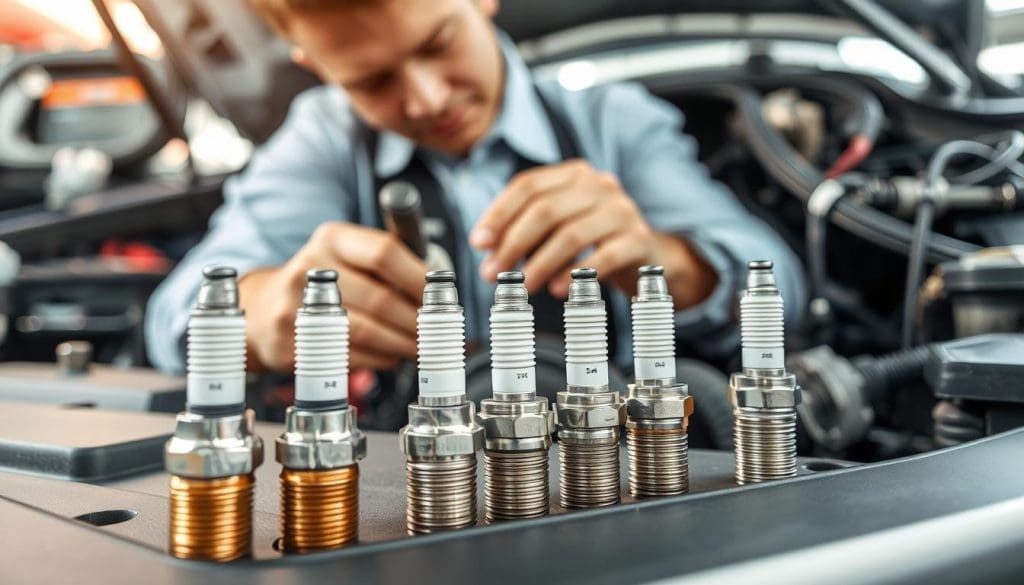
Spark plug replacement based on manufacturer specifications
Spark plug replacement follows the maker’s interval and gap specs. Degraded plugs lower fuel economy and cause misfires.
We replace only what is needed and use recommended plugs so the car runs as designed.
Ignition system checks to support clean starts and consistent power
Our mechanics inspect coils, boots, and wiring to confirm reliable ignition. We test components under load to verify steady power and few misfires.
Setting timing and idle to improve smooth running on the road
Where applicable, we adjust timing and idle as a precision job. Correct settings reduce hesitation and roughness and improve daily drivability.
- Outcomes: smoother acceleration, fewer misfires, and more confidence on longer drives.
- If additional faults appear during the check, we explain the needed repair and prioritize safety and reliability.
Fuel, air, and filtration services that keep your engine clean
Clean fuel and unobstructed airflow are core to reliable engine performance. We treat filtration and fuel-system care as essential maintenance that supports smooth starts and steady power.
Fuel system cleaning to help protect injectors and fuel lines
Fuel cleaning helps remove varnish and deposits that harm injectors and clog lines. We apply targeted cleaning steps so injectors spray correctly and hesitation is reduced.
Engine air filter checks to maintain proper airflow
Dirty air filters restrict airflow and worsen combustion. We inspect and replace the air filter when needed to preserve fuel economy and reduce driveability complaints on city streets or a back road trip.
Fuel filter replacement to reduce contamination and prevent damage
Fuel filters trap sediment and trash before it reaches sensitive engine parts. Regular replacement prevents costly repairs and protects the whole fuel delivery path.
- Keeping air and fuel pathways clean matters: a strong ignition can’t fix restricted airflow or contaminated fuel.
- We also check oil condition and may point out a tire or other item that affects safety and readiness.
How often you should schedule tune-up and maintenance services
Scheduling regular checks keeps problems small and repair costs lower. We recommend a plan based on your owner’s manual as the primary guide.

Following your owner’s manual and manufacturer-recommended intervals
The owner’s manual lists the baseline intervals the manufacturer recommends. Those intervals reflect what your engine and car need to run as designed.
How mileage, age, and driving conditions affect timing
Higher mileage and older vehicles usually require more frequent attention because wear builds over time.
Driving conditions matter too. Stop-and-go traffic, many short trips, towing, or dusty back road use shortens intervals and changes what the vehicle needs.
Why getting ahead of issues can help prevent costly repairs
Proactive maintenance catches small faults before they cause bigger damage. Changing oil, checking a tire, or addressing early symptoms often avoids larger repair work later.
We help choose a sensible range of auto repair services and repair services that match your mileage and driving habits. That keeps your car reliable and reduces unexpected downtime.
Conclusion
A clear diagnosis plus selective repair keeps your vehicle running reliably without unnecessary work. Modern inspections restore engine performance by combining targeted checks, spark plug replacement, timing and idle adjustments, fuel cleaning, and filter care. Drivers notice smoother starts, fewer drivability issues, and better fuel economy on the road.
Our mechanics focus on accurate findings and recommend only the repair services your car needs. We explain issues, outline the job, and keep prices straightforward so you can approve work with confidence.
Across our locations, the shop team pairs basic maintenance—oil, fluid, and a quick tire look—with preventive repair to reduce surprises. When your car needs attention, hire Heaven Automotive; our team is ready to inspect, diagnose, and fix your vehicle with professional auto repair.