


Guessing at repairs wastes time and money. At Heaven Automotive, we see cars come in after wrong fixes and repeated work. That frustrates owners and extends downtime.
Modern mechanic diagnostics are built to get to the root of the problem with proven tools and test steps. We use professional scan tools, step-by-step checks, and experienced technicians to find the real issue before parts are replaced.
Our approach reduces repeat repairs and speeds up reliable fixes. We frame every job as a data-driven service so owners leave with confidence in their vehicle.
On this page, we explain why guessing fails, how our diagnostic service works, when to book, what we can uncover, and why you should hire Heaven Automotive to fix your car right the first time. If you want fewer surprises on the road, call us today.
Key Takeaways
- Guesswork often causes extra repairs and costs.
- We use tests and tools to find the real issue.
- Heaven Automotive offers expert, data-backed services.
- Proper checks mean fewer repeat repairs and more reliability.
- Book our service today to fix your vehicle right the first time.
Why guessing fails and proper diagnostics protect your car
A quick parts-swap rarely solves complex system failures and costs drivers more. Modern vehicles rely on many linked computer controls, so a symptom in one area can come from another.
At Heaven Automotive we test the engine, transmission, fuel delivery, emissions, and electrical modules because these systems share inputs and outputs. A failing sensor or wiring fault can trigger a check engine event that points the wrong way.
Codes are a starting point, not the full answer
Diagnostic trouble codes give useful information, but a DTC is just the tip of the iceberg. Our technicians verify the conditions that set a code—often four to five distinct criteria—before we recommend any repair.
Accurate diagnosis saves time and money
Testing circuits and components first prevents needless parts replacement and avoids repeat repairs. That saves you time and money, and it restores performance and fuel efficiency.
- We focus on evidence, not assumptions.
- We confirm root cause with pinpoint testing.
- We document findings so repairs fix the real problem the first time.
Our mechanic diagnostics process at Heaven Automotive
First, we ask targeted questions to reproduce the concern and narrow the likely causes quickly. This initial consultation captures symptoms, driving history, and when the fault happens.
We start with your symptoms and driving history
We use that information to guide tests and to recreate the issue under the right conditions. Reproducing the problem reduces guesswork and gets us to the root cause faster.
OBD-II scan to retrieve codes and computer data
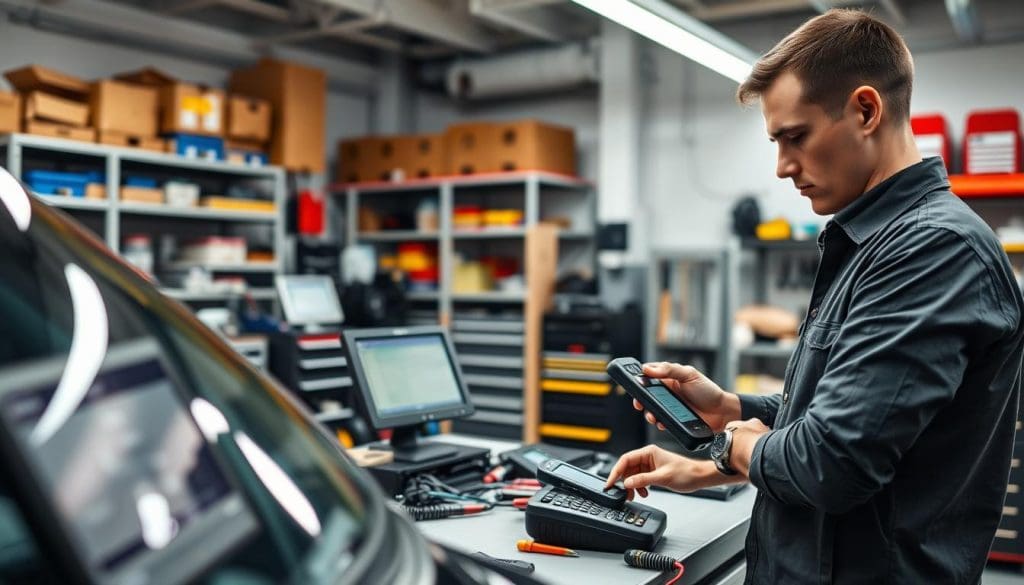
We run an OBD-II scan to collect diagnostic trouble codes, live computer data, and freeze-frame snapshots. That evidence directs subsequent checks.
System analysis and manual inspection
Next, we assess the engine, transmission, fuel delivery, and electrical system. We also perform a hands-on inspection for wiring, hoses, belts, and leaks that won’t always set a code.
Root-cause confirmation and report
Our technicians use pinpoint testing and professional repair information to confirm failures before recommending repairs. We then deliver a clear diagnostic report with repair and maintenance options.
“We don’t guess. We test, confirm, and document so repairs work the first time.”
| Step | What we do | Why it matters |
|---|---|---|
| Consultation | Record symptoms and driving history | Narrows likely causes fast |
| Scan & data | Read codes and live computer data | Targets systems for testing |
| Inspection & testing | Manual checks and pinpoint tests | Confirms root cause before repair |
| Report & final check | Recommend repairs, run final system check | Ensures vehicle is running smoothly |
When to book a diagnostic appointment
Don’t wait—book an appointment when your vehicle shows any signs of trouble on the road. Early checks protect safety and stop small problems from becoming costly repairs.
Check engine light or service engine soon light stays on or flashes
If a check engine light stays on, it means the system has detected an issue that needs evaluation. A flashing engine light signals a severe condition and requires immediate attention.
Any warning light should prompt you to book appointment time so we can read codes, confirm the cause, and advise the right service.
Poor fuel efficiency, rough idle, stalling, or hard starts
Reduced fuel efficiency or trouble starting often points to sensor, fuel delivery, or emissions faults.
We recommend an appointment when drivability drops. Testing saves you money at the pump and restores performance.
Unusual noises, vibrations, or performance loss on the road
Strange sounds or new vibrations can signal mechanical failures or system faults that get worse with time.
Book appointment time today if your car loses power or feels unsafe on the road. We’ll identify the problem, confirm the cause, and recommend the correct repair—no guesswork.
Schedule a diagnostic appointment today if you notice warning lights, drivability changes, or any unsafe symptoms.
What we can uncover with advanced diagnostic tools
High-resolution scans and targeted checks reveal problems standard code reads miss. Our diagnostics combine scan data with hands-on testing so we confirm root cause before any repair.
Engine performance and misfires
We trace misfires, air/fuel imbalances, and sensor feedback that reduce engine performance. Live data and waveform analysis show when a cylinder, ignition, or injector is out of spec.
Fuel, sensors, and emissions faults
Fuel pressure, delivery faults, or failing sensors often trigger warning lights. We test fuel rails, injector control, and emissions components to pinpoint the source and restore proper operation.
Transmission and drivability concerns
Shift complaints and power loss need data-backed confirmation. We read transmission data, torque input, and shift logic to avoid unnecessary overhaul and recommend the right repair.
Electrical, battery, and charging system checks
Battery/alternator output, voltage drops, and circuit faults can affect safety and reliability. Our electrical testing finds hidden faults so the vehicle leaves safe and road-ready.
“Targeted testing gives owners fewer surprises and faster, more reliable fixes.”
What happens when diagnostics get delayed
Ignoring early warning signs lets small faults grow into costly repairs over time. When an issue is left unchecked, related systems can take on extra stress and fail in turn.
Small faults cascade into major repairs
Minor problems often affect linked components. A simple sensor fault can change how an engine runs and wear other parts faster.
That cascade raises the chance of large, expensive repairs later rather than a quick, low-cost fix now.
Reduced safety when critical systems fail
Electrical faults, drivability hiccups, or failing sensors may not warn you before a critical system stops working.
Safety can decline without obvious signs, so quick checks protect passengers and reduce the risk of roadside failures.
Lower performance and hidden reliability loss
Your vehicle may still drive, but fuel economy and responsiveness can degrade subtly over weeks or months.
Delaying a check costs you time and money through reduced performance and unplanned downtime.
“Addressing concerns early is usually the most cost-effective path for the vehicle owner.”
We recommend prompt attention to warning lights or strange behavior. Early action prevents towing, long repairs, and avoidable auto expenses.
What to expect from our diagnostic service
We dedicate focused time to testing so every warning is checked against real-world conditions. A proper diagnostic fee covers the labor needed to confirm the true cause of a warning light rather than guessing from a code alone.
Thorough testing focused on conditions that set codes
Codes set only when specific criteria are met. We reproduce the exact condition and run targeted checks to verify the fault before any parts are recommended.
Technical Service Bulletin research and repair information
Our technicians consult professional repair information systems and TSBs to spot known patterns and updated procedures. That information guides accurate testing and faster resolution.
OEM-aligned procedures and clear next steps
We follow OEM-aligned steps so repairs are done right the first time. After testing, we present clear options: repair choices, maintenance tips to prevent repeat trouble, and scheduling at our shop or nearby location.
- What you receive: confirmed cause, recommended next-step options, and written information to support decisions.
- Convenient contact at our shop and local scheduling to plan repairs or maintenance.
- Work done by trained technicians and an expert approach that protects your vehicle.
| Item | What we do | Why it matters |
|---|---|---|
| Focused time | Reproduce fault and run targeted checks | Confirms cause before parts are ordered |
| TSB & repair info | Check manufacturer guidance and updates | Avoids known failure traps and improves accuracy |
| OEM procedures | Follow factory-aligned test steps | Helps ensure the right fix the first time |
| Report & options | Explain findings and next-step choices | Gives owners clear decisions and maintenance guidance |
“Expert testing protects the vehicle and helps ensure the right fix the first time.”
Conclusion
When we confirm the cause, your vehicle gets the right repair the first time.
Proper testing stops us from swapping parts needlessly. That difference matters when an engine or computer system hides the real problem.
Accurate work lowers repeat repairs, gives clearer service recommendations, and supports long-term reliability. Routine upkeep, including timely oil checks, pairs with prompt testing to keep the engine running at peak performance.
We offer focused service, verified repair, and a final check so your car leaves safe and running smoothly.
If you have an issue or warning light, hire Heaven Automotive for trusted auto repair and services—contact us to schedule service and get your vehicle back to reliable operation.