

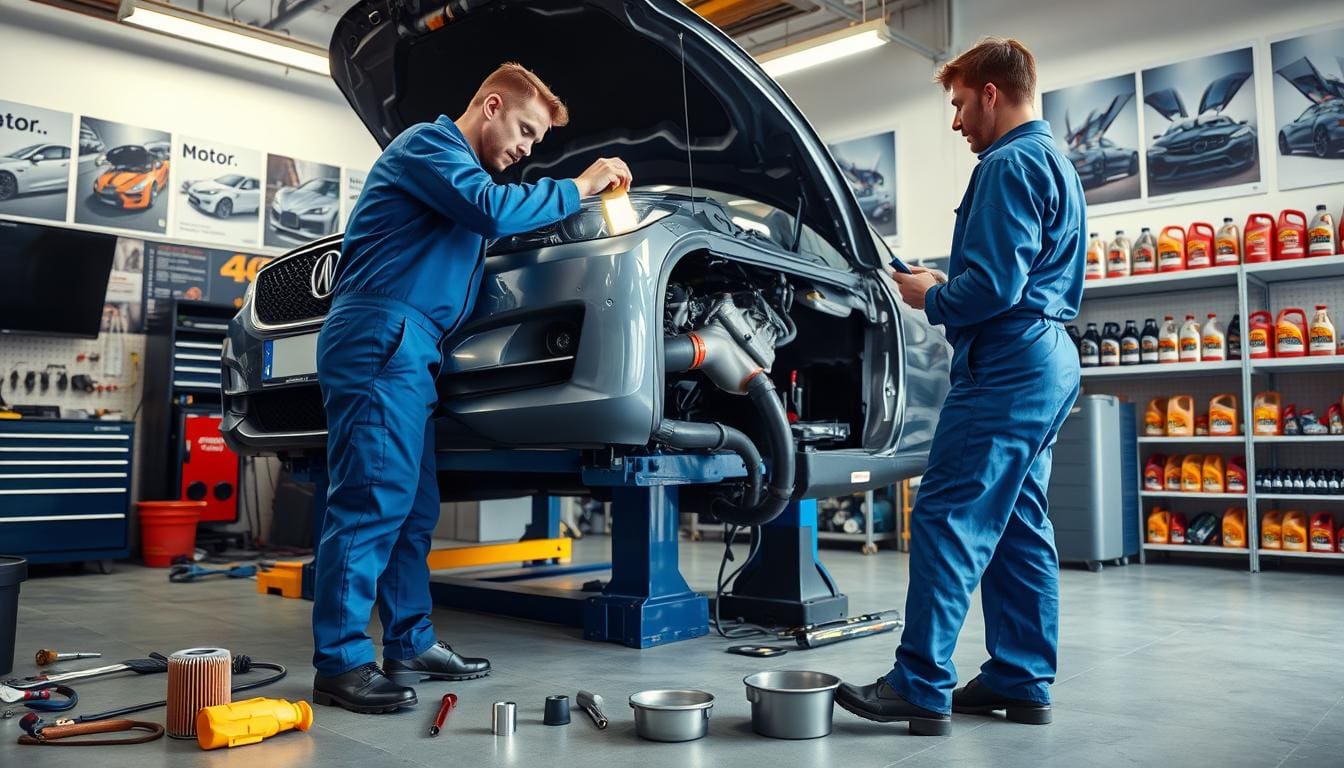
We promise practical savings. At Heaven Automotive, our routine oil change service is designed to stop small issues from becoming costly repairs. Regular service keeps moving parts lubricated and helps trap dust and debris before they damage the engine.
Preventive maintenance is simple, but powerful. Skipping intervals lets lubrication break down, which raises heat and wear. That leads to noises, overheating, and surprise breakdowns that cost far more than a proper service.
We explain what a money-saving oil change looks like: correct fluid, the right filter, and smart checks that match your driving in san antonio. Our approach favors long-term protection over shortcuts, so your vehicle runs cleaner and lasts longer.
Key Takeaways
- Regular oil change service prevents wear and costly engine repairs.
- Proper fluids and filters matter more than the lowest price.
- Staying on schedule keeps contaminants from harming engine parts.
- Our process reduces the risk of overheating and sudden breakdowns.
- Hire Heaven Automotive to protect your vehicle and save over time.
Oil changes are the foundation of preventive maintenance for your vehicle
We view regular lubrication as the backbone of vehicle care. A clean fluid film keeps metal parts separated so bearings, cams, and pistons move smoothly without grinding. That simple protection reduces wear that often leads to costly repairs.
How engine oil lubricates moving parts to reduce wear
Oil forms a thin, protective layer between components. This film cuts friction and lowers heat, which means fewer overheating events and quieter operation for drivers.
How oil and the oil filter capture dirt, dust, and road debris
The filter works with fluid to trap particles before they circulate. Daily driving kicks up grit and construction dust; without proper filtration, those contaminants accelerate abrasion inside the engine.
What happens when oil breaks down over time and heat
Heat and time change viscosity and deplete additives. When protection drops, parts run hotter and wear speeds up — turning a routine service into an urgent repair risk.
- Result: Consistent service keeps engines cooler, quieter, and longer-lived.
How skipping oil changes leads to expensive engine repairs
Skipping routine service often turns small lubrication problems into a full-blown engine emergency. Overdue maintenance reduces protection between metal parts, so the engine works harder and runs hotter. That heat damages seals and gaskets and speeds wear on bearings and pistons.
Overheating risks when lubrication is compromised
Low or degraded oil raises friction and temperature. Over time, that increases the chance of overheating events that warp components and lead to costly repairs.
Grinding or tapping noises that signal danger
Metal-on-metal sounds often mean oil level or condition is too poor to protect moving parts. If you hear grinding or tapping, bring the vehicle in for immediate inspection to avoid irreversible damage.
Small leaks, big consequences
A slow leak can drop oil level without obvious warning. Left unchecked, starvation events can destroy an engine far faster than most drivers expect.
- Look for stains under the car, blue exhaust smoke, or a burning smell as early clues.
- Regular inspection during routine visits is one of the cheapest ways to catch problems early.
- We perform preventive maintenance checks so you can plan repairs instead of reacting to a breakdown.
Cheap oil change San Antonio options at Heaven Automotive without cutting corners
At Heaven Automotive we balance sensible pricing with thorough, manufacturer-aligned work. Our goal is to offer value-driven service that protects your car long term. We do the basics right so you avoid costly repairs later.
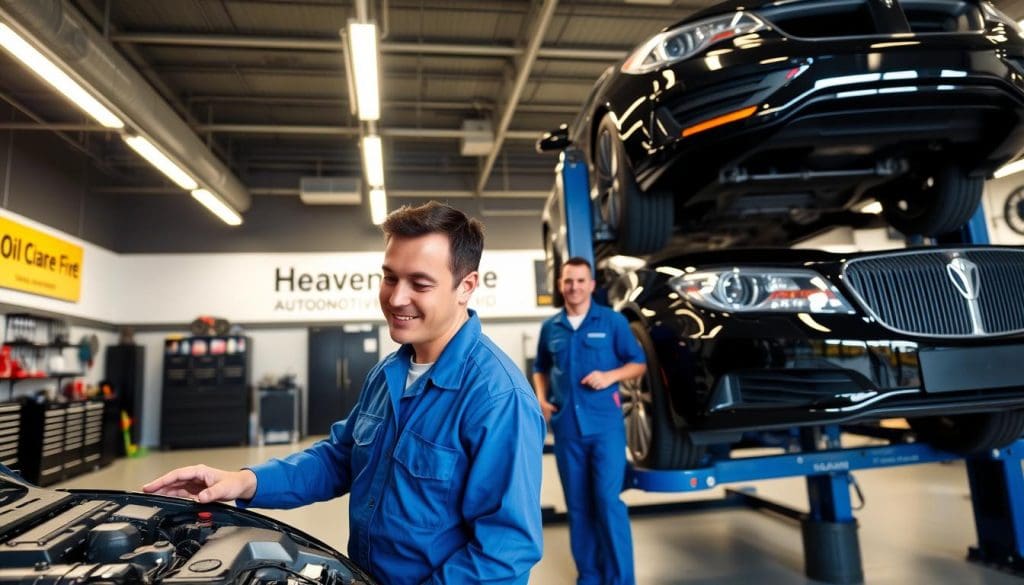
What we include with every oil change service
Every visit includes the correct oil, a quality filter, and key under-hood checks. We top off fluids, verify tire pressure, and inspect for leaks.
How our technicians help you choose the right oil
Our technicians review the manufacturer specs and your driving habits. We recommend the best option for highway miles or stop-and-go traffic, not a one-size-fits-all upsell.
What “cheap” should mean in 2026
Cheap should mean transparent pricing, clear recommendations, and work that matches factory specs. Our team explains what’s included and why it matters.
| Included | Why it matters | Typical benefit |
|---|---|---|
| Correct oil | Protects bearings and seals | Reduced wear |
| Quality filter | Captures debris | Cleaner performance |
| Key checks | Catch leaks and issues | Fewer surprises |
When you want an affordable oil change that still protects your car, we’re ready to schedule you and keep your maintenance plan on track.
Choosing the right oil type for your car, mileage, and warranty
Choosing the correct lubricant depends on your car’s design, miles, and factory specs. We walk customers through options so they get the right protection and keep warranty terms intact.
Conventional oil basics
Conventional motor oil comes from refined crude plus additives. It suits some older engines and drivers with light duty use.
We confirm suitability against the owner’s manual before recommending a conventional option.
Synthetic blend vs. full synthetic for modern engines
Synthetic blend mixes conventional and synthetic base stocks to improve protection at a modest cost. Full synthetic oil uses engineered molecules that resist breakdown under heat.
Many modern engines are built for synthetic oil and longer intervals. We explain which choice matches your driving pattern and maintenance plan.
High mileage oil for 75,000+ miles
High mileage formulations include anti-wear and seal-conditioning additives. They help reduce leaks and consumption in vehicles with 75,000 miles or more.
We’ll recommend high mileage options only when they fit the car’s condition and the manufacturer’s guidance.
Why the owner’s manual matters
The owner’s manual specifies the oil grade and service interval that protect warranty and engine life. Brand names matter less than meeting the spec.
| Option | When to use | Key benefit |
|---|---|---|
| Conventional | Older engines, budget-focused owners | Basic protection, lower cost |
| Synthetic blend | Mixed driving, moderate protection needs | Better heat resistance than conventional |
| Full synthetic oil | Modern engines, high heat or towing | Superior stability and longer intervals |
| High mileage | 75,000+ mileage vehicles | Seal care, less consumption |
At Heaven Automotive we guide you to the best long-term value—not just the lowest sticker price—so your next oil change supports performance and warranty protection.
Oil change intervals in San Antonio driving conditions
We set interval guidance for your vehicle by pairing factory specs with local driving realities. Heat, idling in traffic, and frequent short trips in san antonio all shorten the effective life of lubricants. We tailor recommendations so you avoid under- or over-servicing.
Typical modern intervals: 5,000 to 7,500 miles and beyond with synthetics
For many recent cars, manufacturers suggest 5,000 to 7,500 miles between services, and full synthetic can extend that span. We confirm the spec and your driving pattern before advising a longer interval.
When 3,000-mile intervals still apply for older vehicles and certain engines
Certain older engines and high-mileage vehicles still benefit from 3,000-mile changes. We recommend this schedule when sludge, consumption, or wear risk is higher.
How dashboard oil life monitors adjust for real-world driving
Modern monitors track actual conditions and trigger reminders based on use. Responding to the dashboard prompt is smarter than using a fixed rule alone.
- Bring your maintenance history so we can set the next service date precisely.
- We build a plan that fits local traffic, climate, and your driving habits.
- Schedule services with us and keep repair risk low while avoiding needless visits.
What we inspect during service to prevent bigger problems
Our technicians treat an oil service as a full prevention checkpoint for your vehicle. We run a short, focused inspection to catch issues early and keep repair costs down.
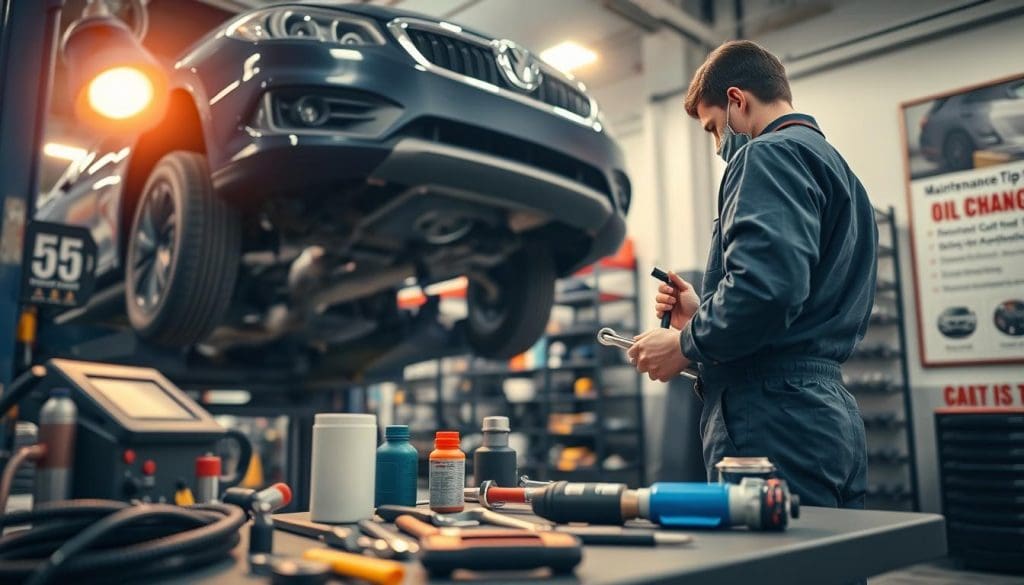
Checking for leaks and warning signs
We scan for fresh stains beneath the car, residue on components, and any burning-oil smell. Catching a leak early prevents low levels and engine damage.
Fluid top-offs that protect key systems
We top off coolant for temperature control and windshield washer fluid for visibility. These small fluid checks support safe, reliable driving.
Tire pressure and tread care
We verify tire pressure to improve safety and promote even tread wear. Proper inflation helps tires last longer and saves you money over time.
Filter options for cleaner performance
We inspect the engine air and cabin filters and recommend replacement when needed. A clean filter reduces contamination and improves efficiency.
Quick under-hood checks
Battery health, belt condition, and hose integrity are all part of our rapid review. Finding a worn belt or weak battery early avoids roadside failures.
| Inspection area | What we look for | Why it matters | Typical action |
|---|---|---|---|
| Oil system | Leaks, residue, low level | Prevents engine wear | Seal repair, top-off |
| Fluids | Coolant, washer, brake | Controls temp and visibility | Top-off, recommend service |
| Tires | Pressure, tread | Safety and even wear | Inflate, rotate plan |
| Filters & belts | Clogged filter, cracked belt | Protects systems, prevents failures | Replace parts as needed |
We focus on value: this service is not just about new oil and an oil change. It’s a short, smart inspection that protects the whole vehicle so you can drive with confidence.
Time, convenience, and getting you back on the road
You shouldn’t have to choose between speed and quality when you need routine maintenance. We design visits so you get a prompt oil change and the confidence that important checks were done. Short waits matter, but so does doing the job right.
Fast expectations vs. thorough service checks
Some quick-lube options promise ultra-fast service and let you stay in the car. That is very convenient.
But a rushed visit can skip fluid top-offs, tire pressure checks, and a visual inspection that finds early problems. Those small steps prevent many costly repairs.
We prioritize doing things correctly while respecting your schedule. Our process is streamlined: clear communication at drop-off, a consistent checklist during the visit, and a quick summary when you return.
- We explain what a speedy visit includes and what it does not.
- We balance efficiency with essential inspections so you can drive away with confidence.
- As a local san antonio shop, our team focuses on fast turnaround without skipping basics.
If you’re weighing options, call us and ask what each shop includes so you choose by value—not just minutes.
Bundling services to save more money over the life of your car
Scheduling related work together gives our technicians a full view of your vehicle. That lets us spot small faults before they grow into costly repairs.
Bundling services around a regular oil appointment reduces total ownership cost. Fewer visits mean less labor overlap, earlier problem detection, and longer component life.
Tire rotation planning to maximize tire life and improve ride quality
We schedule tire rotation at intervals that fit your driving. Proper rotation evens wear, improves ride quality, and extends usable tread life.
Even wear also supports safer handling and delays premature replacement of tires.
Brake system care that prevents costly repairs: inspections, fluid exchange, and replacement
Brake system service is high ROI. Regular checks let us measure pad wear and stop rotor damage early.
A brake fluid exchange includes a visual system check, fresh fluid that meets or exceeds specs, and proper disposal. When replacement is required, we explain options: pads, shoes, rotors, or drums.
| Bundled Item | What we do | Customer benefit |
|---|---|---|
| Tire rotation | Rotate positions, check pressure | Longer tire life, smoother ride |
| Brake service | Pad check, fluid exchange, parts replace | Reliable stopping, avoids rotor damage |
| Multi-point review | Systems check by technicians | Fewer surprise repairs, lower lifetime cost |
We coordinate these services so your maintenance plan is practical and cost-effective. As a local san antonio shop, we keep repairs predictable and your car on the road.
Conclusion
A steady maintenance rhythm is the most cost-effective way to protect your engine. Regular oil changes cost far less than repairs from overheating, internal wear, or catastrophic failures caused by neglected lubrication.
Choose the right oil and follow manufacturer intervals and dashboard reminders. Doing so limits heat, reduces contamination, and preserves long‑term performance for your vehicle.
Look for transparent recommendations, correct oil/filter pairing, and practical checks that spot leaks and early warning signs. Bundling basics like tire rotation and brake care further lowers lifetime costs and reduces emergency repairs.
When you’re ready for an affordable, thorough oil change and a maintenance plan you can trust, hire Heaven Automotive to fix your vehicle and help you stay safely on the road.