

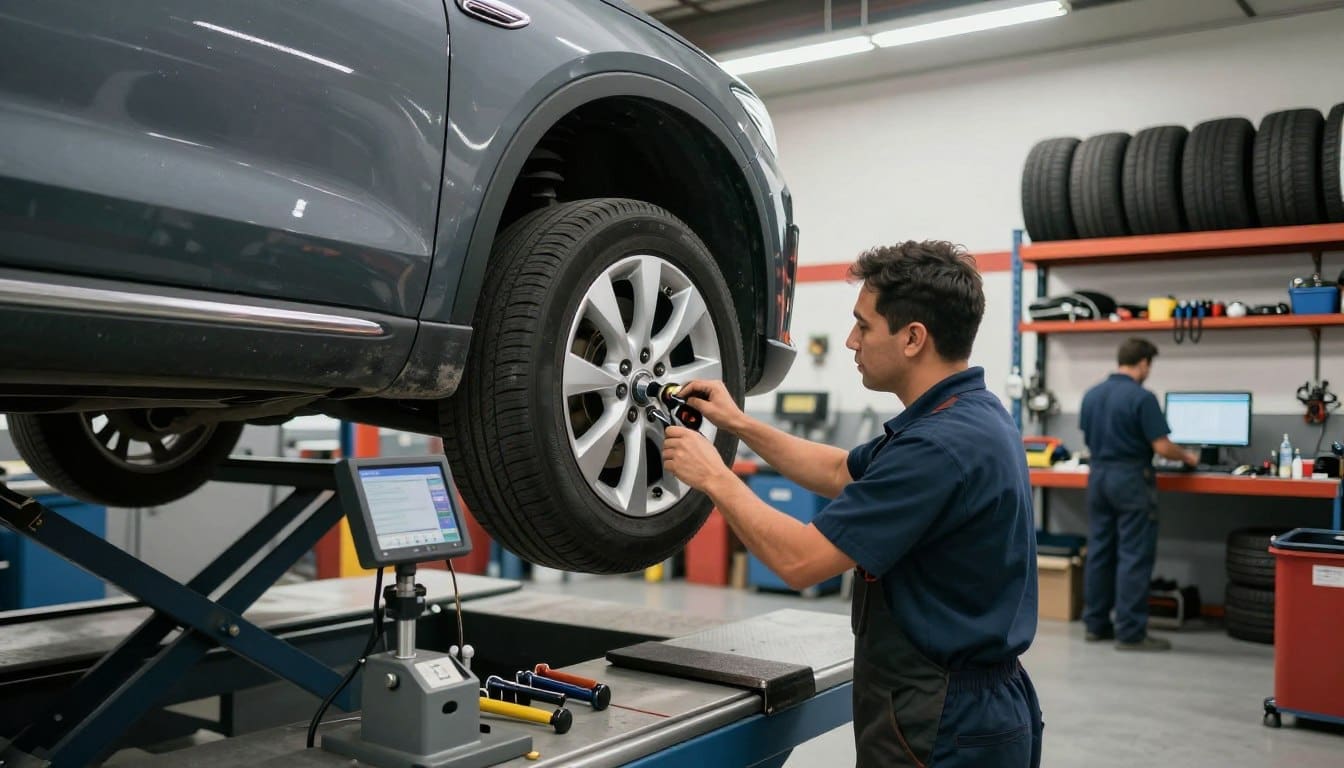
Your vehicle needs precise settings to stay safe on the road. When these settings get off track, your tires pay the price. You might not notice until you see uneven wear or feel your car pull to one side.
Ignoring these signs can lead to costly repairs and early tire wear. You want a smooth ride that saves your money. Keeping your car in top shape is key for every mile.
If your car pulls to one side, it’s time to get help. Wheel Alignment San Antonio experts at Heaven Automotive can fix this. They ensure your car is safe and handles well on the road.
Key Takeaways
- Improper suspension settings cause rapid and uneven tire wear.
- Misalignment acts as a silent threat to your vehicle’s safety.
- Regular maintenance saves you money on expensive tire replacements.
- Professional inspections ensure your car handles correctly in all conditions.
- Heaven Automotive offers expert care to keep your vehicle running smoothly.
What is Wheel Alignment?
Wheel alignment is more than just a simple tweak. It’s a precise calibration of your vehicle’s suspension geometry. When your car leaves the factory, its wheels are set to specific angles. These angles ensure the best contact with the road.
But, daily driving and road conditions can change these settings. This leads to handling problems.
Definition of Wheel Alignment
Alignment focuses on three main angles: camber, caster, and toe. Camber is the tilt of the tire when viewed from the front. Caster is the angle of the steering axis from the side, affecting steering stability.
Toe shows how much the tires turn inward or outward from above. These angles work together to keep your vehicle straight and responsive to steering.
Importance of Proper Alignment
Keeping your alignment correct is key for your vehicle’s health and performance. Proper alignment means your tires touch the road evenly. This boosts traction and stability.
It also helps your car handle corners better and stay straight on highways. Ignoring alignment can cause premature tire wear and damage your suspension. By keeping your wheels aligned, you protect your car and enjoy a smoother ride.
Signs of Poor Wheel Alignment
Your vehicle often tells you about its health through small changes in how it drives. By noticing these changes, you can spot problems early. This helps you avoid expensive repairs and keeps you safe on the road.
Uneven Tire Wear
Uneven tire wear is a common sign of alignment issues. When wheels are misaligned, tires wear down unevenly. You might see the inside or outside edges wearing faster than the rest.
Regularly checking your tires can help you catch this early. Bald spots or uneven patterns mean your suspension needs a check. Ignoring these signs can lead to early tire wear.
Steering Wheel Misalignment
Another sign is a misaligned steering wheel on a straight road. If it’s not centered, you’re facing steering problems. You’ll need to adjust your steering constantly to stay straight.
You might also feel your car pulling to one side. This is not just annoying; it means your vehicle’s geometry is off. Fixing this quickly prevents damage to your steering parts.
Vibration or Noise
Feel or hear the effects of poor alignment through the steering wheel or floorboards. Steering problems can cause a vibration that gets worse with speed. If you hear a humming or shaking, it’s time for a technician to check your alignment.
These sounds happen because tires are fighting each other instead of rolling smoothly. Listening to your car is key to maintenance. Acting on these signs can prevent bigger mechanical failures later.
How Wheel Alignment Affects Tire Health
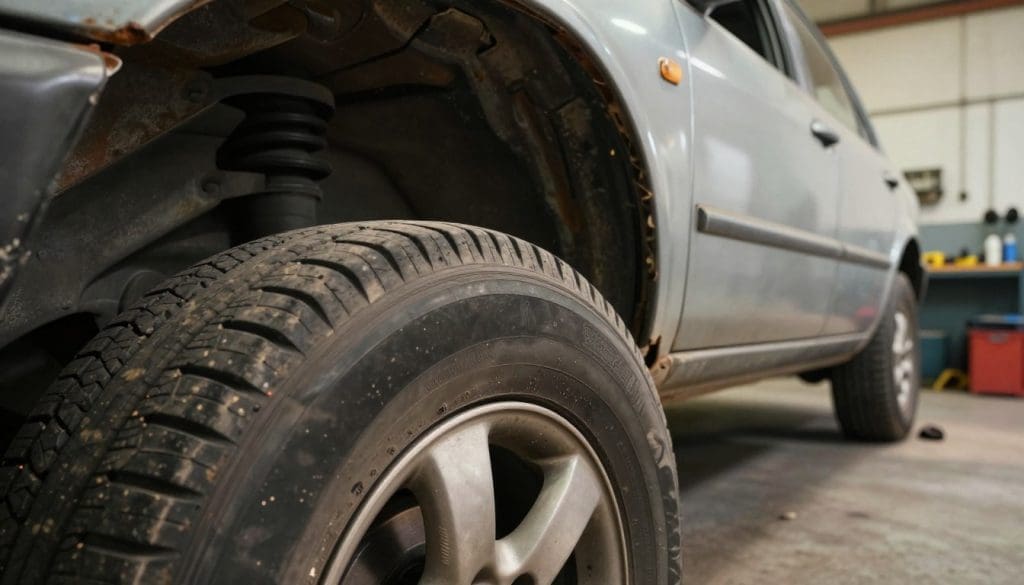
The angle of your wheels affects your tire tread’s health. If your vehicle is out of alignment, your tires don’t roll straight. This causes them to rub against the road, leading to uneven tire wear and poor vehicle performance.
Impact on Tire Lifespan
When your tires are not aligned right, they work too hard. Dragging on the pavement generates heat, which damages the rubber. This leads to premature tread loss, making you replace your tires sooner than needed.
Ignoring alignment problems can lead to several issues:
- Rapid and uneven tire wear patterns.
- Reduced traction on wet or slippery roads.
- Increased risk of sudden tire failure or blowouts.
Relationship with Fuel Efficiency
Your vehicle’s alignment also affects fuel economy. Misaligned wheels increase rolling resistance, making your engine work harder. This means you use more fuel, costing you money at the pump.
| Condition | Tire Health | Fuel Efficiency |
|---|---|---|
| Proper Alignment | Even wear | Optimal |
| Minor Misalignment | Accelerated wear | Slightly reduced |
| Severe Misalignment | Rapid, uneven wear | Significantly reduced |
By aligning your wheels correctly, you reduce resistance and improve efficiency. Protecting your tires through regular maintenance saves money and enhances your driving experience.
Common Causes of Misalignment
Understanding why your vehicle loses its factory settings is key to better performance. Over time, your suspension’s complex geometry can shift. This leads to uneven tire wear and poor handling. By identifying these triggers, you can protect your investment.
Potholes and Road Hazards
Daily driving often involves navigating rough terrain. This puts immense stress on your vehicle. Striking a deep pothole, hitting a curb, or driving over debris can cause damage to your steering linkage.
These sudden impacts force your wheels out of their intended position. This often results in noticeable pulling while driving.
Tire Installation Issues
Sometimes, misalignment starts in the shop, not on the road. If tires are not mounted or balanced correctly, they can cause uneven pressure points. This improper installation often accelerates tire wear.
It makes it difficult for your vehicle to maintain a straight path on the highway.
Suspension Problems
Beyond external impacts, your vehicle’s natural aging affects alignment health. Components like bushings, ball joints, and struts suffer from gradual wear and tear after thousands of miles. As these parts lose their structural integrity, they allow for extra movement in the suspension.
This inevitably leads to misalignment and uneven tire wear.
The Wheel Alignment Process
When you go to a shop for a alignment service, the techs follow a detailed process. This ensures your car handles well and is safe on the road. By using experts, you know every tweak is done with precision and accuracy.
Initial Assessment
The first step is a detailed check of your car’s suspension and steering parts. They look for worn-out parts like bushings or ball joints. Finding these problems early is crucial because they can stop a proper alignment.
Adjustments and Calibration
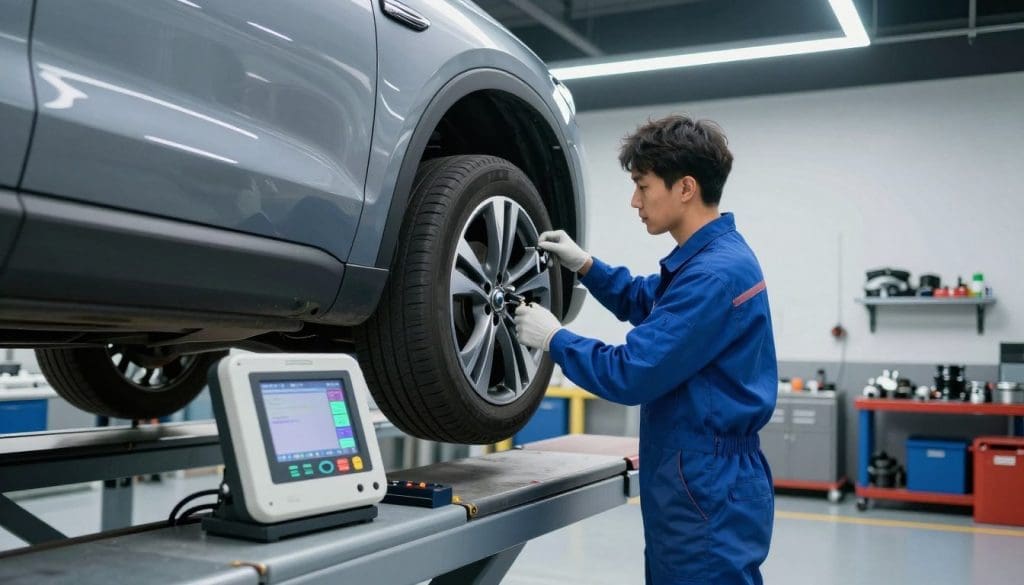
After checking, your car goes on a special alignment rack. Advanced sensors and software measure your wheels against the maker’s specs. A top-notch alignment service adjusts camber, caster, and toe to get them right.
Testing the Alignment
The last step is a road test. This makes sure your car goes straight and the steering wheel is centered. If it pulls or feels off, the tech will fine-tune it for optimal performance.
| Alignment Type | Best For | Key Focus |
|---|---|---|
| Front-End | Older vehicles | Front wheels only |
| Thrust | Solid rear axles | Rear axle alignment |
| Four-Wheel | Modern sedans/SUVs | All four wheels |
When to Get a Wheel Alignment
Timing is key for your tires and steering. Being proactive with car care saves money and improves your drive. Getting a alignment service at the right time is essential.
Recommended Frequency
Experts say check your car every 6,000 miles. If you drive on rough roads, you might need to go more often. Consistency is vital for your car’s health.
Many people get their car checked during oil changes or tire rotations. This makes it easier to remember when it’s time for a alignment service. Keeping a maintenance log helps you stay on schedule.
After Specific Events
After hitting a pothole, striking a curb, or being in a small crash, get your car checked. These incidents can quickly throw your wheels out of alignment.
Also, always get an alignment when you get new tires. This ensures they wear evenly and last longer. Protecting your new tires from the start is wise and saves money.
How to Maintain Proper Wheel Alignment
Checking your vehicle every month can save you from expensive repairs. You don’t need to be a mechanic to spot early signs of misalignment. By being observant, you keep your car safe and efficient for every trip.
Regular Inspections
Looking at your tires is the best way to catch alignment issues early. Look for uneven tread wear, where one side wears down faster. If the inner or outer edges are bald, it’s time for a professional check.
Also, check your car’s stance on level ground. If it leans or the wheels don’t look straight, there might be a problem. Use this simple checklist to keep your vehicle in good shape:
- Check tire pressure monthly to ensure even contact with the road.
- Inspect tire treads for irregular patterns or bald spots.
- Look for any visible damage to suspension components like struts or shocks.
- Keep a log of your last alignment service to track when you are due for a checkup.
Staying Alert to Changes
Your car often tells you something is wrong through its handling and performance. Pay attention to the steering wheel while driving on a straight, flat road. If it’s slightly off-center or pulls to one side, your alignment needs adjusting.
Don’t ignore small changes in how your car responds to steering. If the steering feels loose or you hear unusual vibrations at high speeds, your wheels are not aligned right. Being proactive helps avoid damage to your tires or suspension system.
| Maintenance Task | Frequency | What to Look For |
|---|---|---|
| Tire Pressure Check | Monthly | Consistent PSI levels |
| Tread Inspection | Every 3,000 miles | Even wear across the tire |
| Steering Feel Test | Every drive | No pulling or vibration |
Regular monitoring is key to responsible vehicle ownership. By staying alert to these changes, you protect your investment and ensure a smoother, safer drive for everyone.
Benefits of Regular Wheel Alignment
Did you know a simple alignment check can change your daily drive? Many drivers overlook their suspension’s geometry. But it’s key to how your car handles the road. Keeping your vehicle aligned ensures all parts work together smoothly.
Improved Handling
Properly aligned wheels make your car respond to steering with remarkable precision. You’ll find your car stays straight on the highway without constant adjustments. This makes driving more relaxed and enjoyable, perfect for long trips.
Also, balanced alignment eases the strain on your steering system. Your car becomes more agile and responsive in turns. This control is key for feeling confident in different traffic situations.
Enhanced Safety Features
Proper alignment is key to your vehicle’s safety. It ensures your tires grip the road well, vital for braking and acceleration. If your alignment is off, your car may struggle to stop or turn sharply.
Having a well-maintained vehicle means predictable performance. Correct suspension alignment lets your car’s stability systems work right. Safety should always be your top priority. Regular alignment checks keep your vehicle reliable when you need it most.
| Performance Metric | Properly Aligned | Misaligned |
|---|---|---|
| Steering Response | Sharp and Direct | Sluggish or Pulling |
| Tire Contact | Even Distribution | Uneven Wear Patterns |
| Braking Stability | Predictable and Firm | Reduced Traction |
| Fuel Efficiency | Optimal | Decreased |
DIY vs. Professional Wheel Alignment
Modern cars have complex suspension systems. They need special laser tools for correct alignment. DIY methods often can’t match the precision needed.
Trying to align your car yourself might seem like a good idea. But, it can lead to steering problems. These issues can affect your car’s safety and how it handles.
Pros and Cons of DIY
DIY alignment might save you money. Some people use simple tools to make small adjustments. But, these methods can’t match the micro-millimeter accuracy needed today.
Doing it yourself can cause uneven tire wear or steering problems. You might damage your car’s suspension if you don’t have the right tools or know-how. The effort might not be worth the limited results.
| Feature | DIY Approach | Professional Service |
|---|---|---|
| Precision | Low | High |
| Equipment | Basic Tools | Laser Calibration |
| Safety | Risk of Error | Guaranteed Accuracy |
When to Seek Professional Help
If your car pulls to one side or the steering wheel is off-center, get help. These signs mean you have steering problems. A certified tech can fix it with a computerized alignment rack.
Choosing a professional ensures your car is safe and efficient. They can also find and fix other issues your car might have. Prioritizing professional expertise keeps your car in top shape.
FAQs About Wheel Alignment
Getting your wheels aligned is a common part of car care. Many drivers wonder how it fits into their busy lives and affects their vehicle’s systems. Understanding these details helps you make better choices for your car’s health.
How Long Does Wheel Alignment Take?
For most cars, a wheel alignment takes 45 minutes to an hour. This assumes no extra issues like seized bolts or damaged parts. If your car has a complex setup, it might take longer for precise calibration.
It’s wise to call your local shop to get a precise estimate. The shop’s workload and your car’s make can affect the time. Planning ahead means you won’t be surprised during your visit.
Can Bad Alignment Affect Brakes?
Alignment affects your tires’ angle, but it also impacts your brakes. If your wheels are off, your car might pull to one side. This can cause uneven wear on brake pads and other parts.
Also, bad alignment can stress wheel bearings and hubs. Worn-out parts can make braking less effective. Regular alignment checks are a proactive way to protect your car and ensure safe braking.
| Maintenance Task | Typical Frequency | Primary Benefit |
|---|---|---|
| Wheel Alignment | Every 6,000 Miles | Even Tire Wear |
| Tire Rotation | Every 5,000 Miles | Extended Tire Life |
| Brake Inspection | Every 10,000 Miles | Improved Safety |
| Suspension Check | Annually | Better Handling |
Finding Wheel Alignment Services in San Antonio
Choosing the right experts for your vehicle’s maintenance is key. You want a smooth ride and long-lasting tires. The right tools make a big difference in your driving experience.
Top Rated Local Shops
Look for a shop that values precision and cares about customers. A good Wheel Alignment San Antonio shop uses modern laser technology. This ensures your car meets factory standards.
Check online reviews to see what other drivers say. This helps you find a trusted local technician.
Selecting Your Service Provider
Experience is important when you need a reliable alignment service. Skilled mechanics know how to handle suspension systems and tire wear. They should explain the work they do clearly.
Heaven Automotive is here to help with your suspension and tire needs. Our team uses the latest equipment to get your vehicle running smoothly. Visit us at 6645 Poss Rd. San Antonio, TX 78238 or call (210) 682-3898 to fix your vehicle today.